P. G. Walsh - Böcker
Visar alla böcker från författaren P. G. Walsh. Handla med fri frakt och snabb leverans.
18 produkter
18 produkter
875 kr
Skickas
This is the sixth volume in the Oxford Classical Texts series of Livy and contains a Latin text (without translation), together with full apparatus criticus and Latin introduction, of Books 36-40, which cover the period from 192 to 179 BC. This momentous era in the history of Republican Rome begins with the war with Antiochus, which resulted in Rome's indirect control of Greece and Asia, and concludes with the death of Philip V of Macedon, foreshadowing the Third Macedonian War. During these years Rome also struggled for the increasing dominance of northern Italy and Spain. On the domestic front, Livy depicts this period as the beginning of Roman moral decline, as reflected in such events as the trials of the Scipios, the censorship of Cato, and the Bacchanalia. Since much of the account by Polybius is fragmentary, Livy's narrative is the main source for the history of the period.
2 454 kr
Skickas inom 5-8 vardagar
De bono coniugali and De sancta virginitate were written in the same year (AD 401). In them Augustine rebuffs the Manichees, who argued that marriage was evil, and the fellowers of Jovinian, who argued that the married state was as meritorious as that of virginity. The first work analyses why marriage is good, and the second why virginity is a higher good. Both are closely related to present-day controversies amongst theologians and social historians. These two treatises have been neglected until recently, but lately there has been an outpouring of books and articles on the role of women in the societies of Rome and early Christianity. Moreover, Augustine has received and is continuing to receive enhanced attention in the English-speaking world. No new edition of these works has been published since 1900, and there is no contemporary English translation in print. This new translation and edition of the text will be of value both to readers who wish to consult the original Latin, and to those interested in the social history of early Christianity, and in the intellectual development of Augustine in his early years as bishop of Hippo.
435 kr
Skickas inom 7-10 vardagar
The Summa Theologiae ranks among the greatest documents of the Christian Church, and is a landmark of medieval western thought. It provides the framework for Catholic studies in systematic theology and for a classical Christian philosophy, and is regularly consulted by scholars of all faiths and none, across a range of academic disciplines. This paperback reissue of the classic Latin/English edition first published by the English Dominicans in the 1960s and 1970s, in the wake of the Second Vatican Council, has been undertaken in response to regular requests from readers and librarians around the world for the entire series of 61 volumes to be made available again. The original text is unchanged, except for the correction of a small number of typographical errors.
444 kr
Skickas inom 5-8 vardagar
516 kr
Skickas inom 10-15 vardagar
Walsh's book should be a vade mecum for anyone who would teach the Carmina Burana on any level and be of considerable value in general to medievalists, comparatists, and those in related disciplines.""-- New England Classical Newsletter and Journal ""Teachers, students, and any reader interested in medieval lyric will find this volume a clear and useful approach to intrinsically interesting texts.""-- Renaissance Quarterly ""The most scholarly and most helpful presentation of a group of these captivating lyrics that has yet appeared in English.""--Peter Dronke, University of Cambridge ""A superb volume, fully worthy of these famous but often misunderstood poems. P. G. Walsh's unmatched erudition in Latin literature furnishes lucid grammatical explanations, incisive analysis of goliardic literary values and technique, and illuminating references to ancient and medieval parallels. His prose translations make the poems accessible also to those with little or no Latin.""--Janet M. Martin, Princeton University
1 254 kr
Skickas inom 7-10 vardagar
This edition of Books I & II of St Augustine's The City of God (De Civitate Dei) is the only edition in English to provide a text and translation as well as a detailed commentary of this most influential document in the history of western Christianity. In these books, written in the aftermath of the sack of Rome in AD 410 by the Goths, Augustine replies to the pagans, who attributed the fall of Rome to the Christian religion and its prohibition of the worship of the pagan gods. Latin text with facing-page English translation, introduction and commentary.
456 kr
Skickas inom 7-10 vardagar
This edition of Books I & II of St Augustine's The City of God (De Civitate Dei) is the only edition in English to provide a text and translation as well as a detailed commentary of this most influential document in the history of western Christianity. In these books, written in the aftermath of the sack of Rome in AD 410 by the Goths, Augustine replies to the pagans, who attributed the fall of Rome to the Christian religion and its prohibition of the worship of the pagan gods. Latin text with facing-page English translation, introduction and commentary.
397 kr
Skickas inom 7-10 vardagar
This edition of St Augustine's The City of God (De Civitate Dei) is the only one in English to provide a text and translation as well as a detailed commentary of this most influential document in the history of western Christianity. In these books Augustine offers a Christian perspective on the growth of Rome, which its pagan apologists attribute to the providential protection of its gods. Book III spotlights both the injustices inflicted and the privations endured by the Romans, thus rebutting such claims. Book IV offers a withering account of the Roman deities, basing its analysis on the researches of Terentius Varro. This section of The City of God is a vital document for students of Roman history, and especially of Roman religion, for it provides the most detailed evidence of Varro’s learned works. Latin text with facing-page English translation, introduction and commentary.
396 kr
Skickas inom 7-10 vardagar
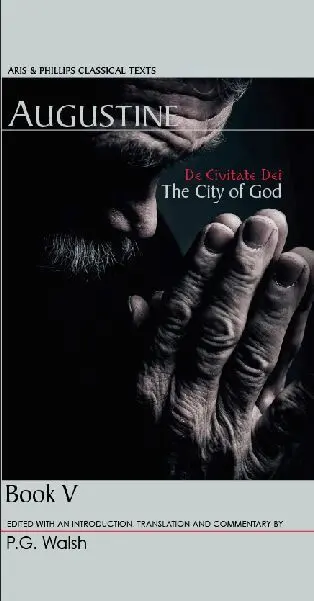
This edition of St Augustine's The City of God (De Civitate Dei) is the only one in English to provide a text and translation as well as a detailed commentary of this most influential document in the history of western Christianity. In Book V Augustine searches out and presents an answer to the question which lies behind the earlier books. In spite of the moral bankruptcy of the Roman state, and in spite of the disasters and injustices which have marked her history since the foundation, Rome has extended her imperial sway throughout Europe and the Near East. If the pagan gods have not guided her to this terrestrial eminence, how has this success been achieved? Augustine divides his response into four main sections: addressing the pagan notion of fate; arguing that God aided the Romans to imperial glory because a minority of them were virtuous even though they did not worship him; stating explicitly that the Roman Empire was set in place by God and is governed by his providence; and devoting the final section to the advent of Christian Emperors. Latin text with facing-page English translation, introduction and commentary.
1 091 kr
Skickas inom 7-10 vardagar
This edition of St Augustine's The City of God (De Civitate Dei) is the only one in English to provide a text and translation as well as a detailed commentary of this most influential document in the history of western Christianity. In Book V Augustine searches out and presents an answer to the question which lies behind the earlier books. In spite of the moral bankruptcy of the Roman state, and in spite of the disasters and injustices which have marked her history since the foundation, Rome has extended her imperial sway throughout Europe and the Near East. If the pagan gods have not guided her to this terrestrial eminence, how has this success been achieved? Augustine divides his response into four main sections: addressing the pagan notion of fate; arguing that God aided the Romans to imperial glory because a minority of them were virtuous even though they did not worship him; stating explicitly that the Roman Empire was set in place by God and is governed by his providence; and devoting the final section to the advent of Christian Emperors. Latin text with facing-page English translation, introduction and commentary.
467 kr
Skickas inom 7-10 vardagar
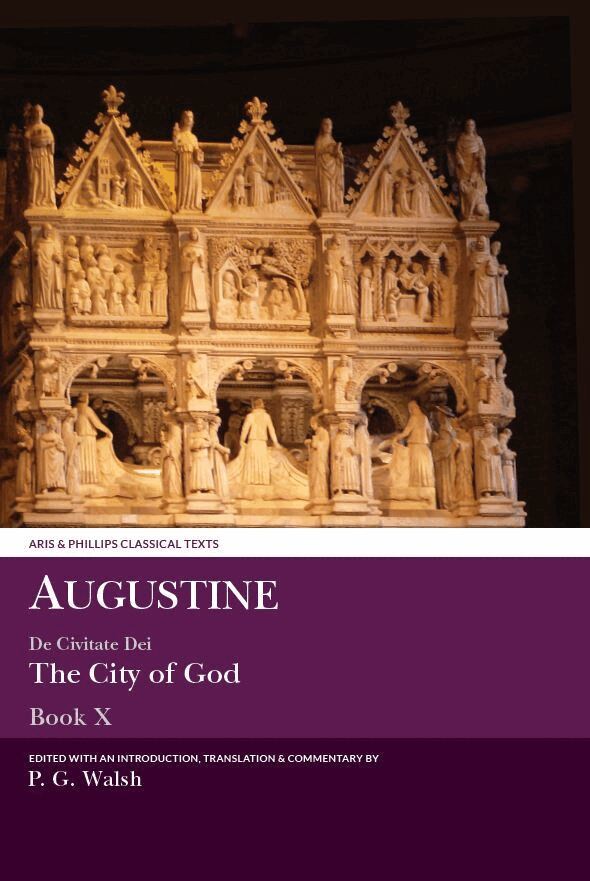
This edition of St Augustine’s The City of God (De Civitate Dei) is the only one in English to provide a text and translation as well as a detailed commentary of this most influential document in the history of western Christianity. In these books, written in the aftermath of the sack of Rome in AD 410 by the Goths, Augustine replies to the pagans, who attributed the fall of Rome to the Christian religion and its prohibition of the worship of the pagan gods.Following on from Book IX, this book discusses the issue of demons and their role in Platonism as being partly identical with the lesser gods. Having previously argued that in order to achieve the blessed life, we must worship one true God alone, Augustine now continues his discussion using the celebrated Neoplatonist Porphyry as his main source.Whilst applauding aspects of Porphyry’s views, Augustine’s main concern is to deliver his message that the sole path to blessedness after death is acknowledgement of the Incarnation and Christ as Mediator. Increasingly concerned with promoting the Christian message, Augustine cites the Bible frequently in Book X. Latin text with facing-page translation, introduction and commentary.
1 613 kr
Skickas inom 7-10 vardagar
This edition of St Augustine’s The City of God (De Civitate Dei) is the only one in English to provide a text and translation as well as a detailed commentary of this most influential document in the history of western Christianity. In these books, written in the aftermath of the sack of Rome in AD 410 by the Goths, Augustine replies to the pagans, who attributed the fall of Rome to the Christian religion and its prohibition of the worship of the pagan gods.Following on from Book IX, this book discusses the issue of demons and their role in Platonism as being partly identical with the lesser gods. Having previously argued that in order to achieve the blessed life, we must worship one true God alone, Augustine now continues his discussion using the celebrated Neoplatonist Porphyry as his main source.Whilst applauding aspects of Porphyry’s views, Augustine’s main concern is to deliver his message that the sole path to blessedness after death is acknowledgement of the Incarnation and Christ as Mediator. Increasingly concerned with promoting the Christian message, Augustine cites the Bible frequently in Book X. Latin text with facing-page translation, introduction and commentary.
467 kr
Skickas inom 7-10 vardagar
This edition of St Augustine's The City of God (De Civitate Dei) is the only one in English to provide a text and translation as well as a detailed commentary of this most influential document in the history of western Christianity. In these books, written in the aftermath of the sack of Rome in AD 410 by the Goths, Augustine replies to the pagans, who attributed the fall of Rome to the Christian religion and its prohibition of the worship of the pagan gods.Before his conversion to Christianity in 386, Augustine had devoted himself to the study of Platonism. In books VIII and IX of De Civitate Dei, Augustine renews his acquaintance with this philosophy, which had played such a fundamental role in his conversion.The main topic of these books is demonology, with Augustine using the De Deo Socratis of Apuleius, which places demons as the intermediaries between gods and men, as the foundation of his exploration into this theme. Augustine is keen to point out the similarities between Platonism and Christianity and therefore puts forward the theory that the ideal mediator between God and man is Christ - he who shares temporary mortality with humans and permanent blessedness with God and can therefore lead men from wretchedness to eternal bliss. Latin text with facing-page English translation, introduction and commentary.
1 613 kr
Skickas inom 7-10 vardagar
This edition of St Augustine's The City of God (De Civitate Dei) is the only one in English to provide a text and translation as well as a detailed commentary of this most influential document in the history of western Christianity. In these books, written in the aftermath of the sack of Rome in AD 410 by the Goths, Augustine replies to the pagans, who attributed the fall of Rome to the Christian religion and its prohibition of the worship of the pagan gods.Before his conversion to Christianity in 386, Augustine had devoted himself to the study of Platonism. In books VIII and IX of De Civitate Dei, Augustine renews his acquaintance with this philosophy, which had played such a fundamental role in his conversion.The main topic of these books is demonology, with Augustine using the De Deo Socratis of Apuleius, which places demons as the intermediaries between gods and men, as the foundation of his exploration into this theme. Augustine is keen to point out the similarities between Platonism and Christianity and therefore puts forward the theory that the ideal mediator between God and man is Christ - he who shares temporary mortality with humans and permanent blessedness with God and can therefore lead men from wretchedness to eternal bliss. Latin text with facing-page English translation, introduction and commentary.
467 kr
Skickas inom 7-10 vardagar
In Books I–V of De Civitate Dei, Augustine rejects the claim that worship of the pagan gods had brought success in this life, and in Books VI–X, the prospect of a happy afterlife. In Books XI–XII, Augustine turns from attack to defence, for at this point he initiates his apology for the Christian faith. Books XI and XII document the initial phase of the rise of the two cities, the city of God and the city of this world, beginning with the creation of the world and the human race. In Book XI, Augustine rejects the theories of Aristotle, Plato and the Epicureans on the creation of the universe and addresses the creation of angels, Satan, the role of the holy Trinity and the importance of numerology in the Genesis account. In Book XII Augustine is chiefly concerned with refuting standard objections to the Christian tradition, returning to discussion of the Creation, including his calculation, based on the scriptures, that the world was created less than 6,000 years ago. Peter Walsh’s acclaimed edition of The City of God is the only edition in English that provides not only a text but also a detailed commentary on one of the most influential documents in the history of western Christianity. Before his death in 2013 he had completed up to Book XVI; it is intended to complete all twenty-two books. Latin text, with facing-page English translation, introduction, notes and commentary.
1 613 kr
Skickas inom 7-10 vardagar
In Books I–V of De Civitate Dei, Augustine rejects the claim that worship of the pagan gods had brought success in this life, and in Books VI–X, the prospect of a happy afterlife. In Books XI–XII, Augustine turns from attack to defence, for at this point he initiates his apology for the Christian faith. Books XI and XII document the initial phase of the rise of the two cities, the city of God and the city of this world, beginning with the creation of the world and the human race. In Book XI, Augustine rejects the theories of Aristotle, Plato and the Epicureans on the creation of the universe and addresses the creation of angels, Satan, the role of the holy Trinity and the importance of numerology in the Genesis account. In Book XII Augustine is chiefly concerned with refuting standard objections to the Christian tradition, returning to discussion of the Creation, including his calculation, based on the scriptures, that the world was created less than 6,000 years ago. Peter Walsh’s acclaimed edition of The City of God is the only edition in English that provides not only a text but also a detailed commentary on one of the most influential documents in the history of western Christianity. Before his death in 2013 he had completed up to Book XVI; it is intended to complete all twenty-two books. Latin text, with facing-page English translation, introduction, notes and commentary.
1 843 kr
Skickas inom 7-10 vardagar
This edition of St Augustine's The City of God (De Civitate Dei) is the only one in English to provide a text and translation as well as a detailed commentary of this most influential document in the history of western Christianity. In these books, written in the aftermath of the sack of Rome in AD 410 by the Goths, Augustine replies to the pagans, who attributed the fall of Rome to the Christian religion and its prohibition of the worship of the pagan gods.Books VI and VII focus on the figure of Terentius Varro, a man revered by Augustine’s pagan contemporaries. By exploiting Varro’s learned researches on Roman religion, Augustine condemns Roman religious practices and beliefs in order to refute pagan claims that the Roman deities had guaranteed a blessed life in the hereafter for their devotees. These books are therefore not only an invaluable source for the study of early Christianity but also for any student of Classical Rome, who is provided here with a detailed account of one of the most learned figures of Roman antiquity, whose own works have not survived in the same state. Latin text with facing-page English translation, introduction and commentary.
469 kr
Skickas inom 10-15 vardagar
"The Satyricon" of Petronius and the "Metamorphoses" (or "The Golden Ass") of Apuleius are the only novels written at Rome before AD 200 to have survived. The genre is the comic romance, the literature of relaxation in the ancient world. This study defines the genre and sets it in the context of other forms of fiction of the period. It shows that both Petronius and Apuleius introduced important innovations into the traditional comic romance. A critical study of "The Satyricon" is included, with a separate chapter on Trimalchio's feast, a central comic episode of the book. "The Golden Ass" is similarly examined, again with special analysis of its centre piece, the story of Cupid and Psyche. The book assesses the later influence of the two novels on the mainstream of European picaresque fiction.