Pamela D. Winfield - Böcker
Visar alla böcker från författaren Pamela D. Winfield. Handla med fri frakt och snabb leverans.
8 produkter
8 produkter
1 531 kr
Skickas inom 5-8 vardagar
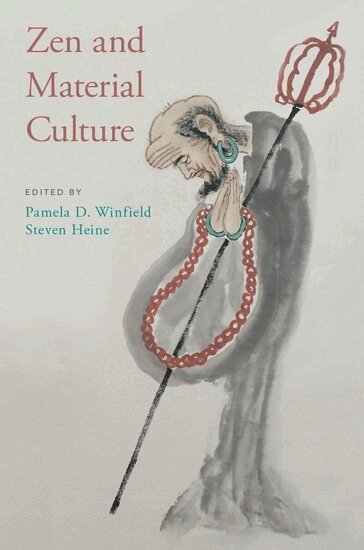
The stereotype of Zen Buddhism as a minimalistic or even immaterial meditative tradition persists in the Euro-American cultural imagination. This volume calls attention to the vast range of "stuff" in Zen by highlighting the material abundance and iconic range of the Sōtō, Rinzai, and Ōbaku sects in Japan. Chapters on beads, bowls, buildings, staffs, statues, rags, robes, and even retail commodities in America all shed new light on overlooked items of lay and monastic practice in both historical and contemporary perspectives. Nine authors from the cognate fields of art history, religious studies, and the history of material culture analyze these "Zen matters" in all four senses of the phrase: the interdisciplinary study of Zen's matters (objects and images) ultimately speaks to larger Zen matters (ideas, ideals) that matter (in the predicate sense) to both male and female practitioners, often because such matters (economic considerations) help to ensure the cultural and institutional survival of the tradition.Zen and Material Culture expands the study of Japanese Zen Buddhism to include material inquiry as an important complement to mainly textual, institutional, or ritual studies. It also broadens the traditional purview of art history by incorporating the visual culture of everyday Zen objects and images into the canon of recognized masterpieces by elite artists. Finally, the volume extends Japanese material and visual cultural studies into new research territory by taking up Zen's rich trove of materia liturgica and supplementing the largely secular approach to studying Japanese popular culture. This groundbreaking volume will be a resource for anyone whose interests lie at the intersection of Zen art, architecture, history, ritual, tea ceremony, women's studies, and the fine line between Buddhist materiality and materialism.
616 kr
Skickas inom 5-8 vardagar
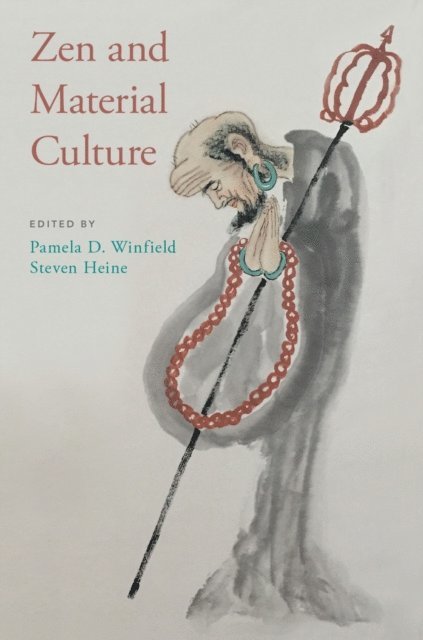
The stereotype of Zen Buddhism as a minimalistic or even immaterial meditative tradition persists in the Euro-American cultural imagination. This volume calls attention to the vast range of "stuff" in Zen by highlighting the material abundance and iconic range of the Sōtō, Rinzai, and Ōbaku sects in Japan. Chapters on beads, bowls, buildings, staffs, statues, rags, robes, and even retail commodities in America all shed new light on overlooked items of lay and monastic practice in both historical and contemporary perspectives. Nine authors from the cognate fields of art history, religious studies, and the history of material culture analyze these "Zen c matters" in all four senses of the phrase: the interdisciplinary study of Zen's matters (objects and images) ultimately speaks to larger Zen matters (ideas, ideals) that matter (in the predicate sense) to both male and female practitioners, often because such matters (economic considerations) help to ensure the cultural and institutional survival of the tradition.Zen and Material Culture expands the study of Japanese Zen Buddhism to include material inquiry as an important complement to mainly textual, institutional, or ritual studies. It also broadens the traditional purview of art history by incorporating the visual culture of everyday Zen objects and images into the canon of recognized masterpieces by elite artists. Finally, the volume extends Japanese material and visual cultural studies into new research territory by taking up Zen's rich trove of materia liturgica and supplementing the largely secular approach to studying Japanese popular culture. This groundbreaking volume will be a resource for anyone whose interests lie at the intersection of Zen art, architecture, history, ritual, tea ceremony, women's studies, and the fine line between Buddhist materiality and materialism.
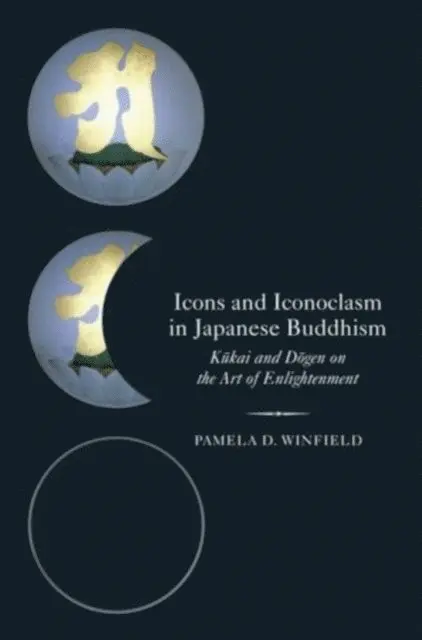
Icons and Iconoclasm in Japanese Buddhism
Kukai and Dogen on the Art of Enlightenment
Inbunden, Engelska, 2013
1 932 kr
Skickas inom 5-8 vardagar
Pamela D. Winfield offers a fascinating juxtaposition and comparison of the thoughts of two pre-modern Japanese Buddhist masters on the role of imagery in the enlightenment experience. Kukai (774-835) believed that real and imagined forms were indispensable to his new esoteric Mikkyo method for ''becoming a Buddha in this very body'' (sokushin jobutsu), yet he deconstructed the significance of such imagery in his poetic and doctrinal works. Conversely, Dogen (1200-1253) believed that ''just sitting'' in Zen meditation without any visual props or mental elaborations could lead one to realize that ''this very mind is Buddha'' (sokushin zebutsu), but he too privileged select Zen icons as worthy of veneration. In considering the nuanced views of Kukai and Dogen, Icons and Iconoclasm in Japanese Buddhism updates previous comparisons of their oeuvres and engages their texts and images together for the first time in two decades. Winfield liberates them from sectarian scholarship, which has long pigeon-holed them into iconographic/ritual vs. philological/philosophical categories, and restores the historical symbiosis between religious thought and artistic expression that was lost in the nineteenth-century disciplinary distinction between religious studies and art history. Winfield breaks new methodological ground by proposing space and time as organizing principles for analyzing both meditative experience as well as visual/material culture and presents a wider vision of how Japanese Buddhists themselves understood the role of imagery before, during, and after awakening.
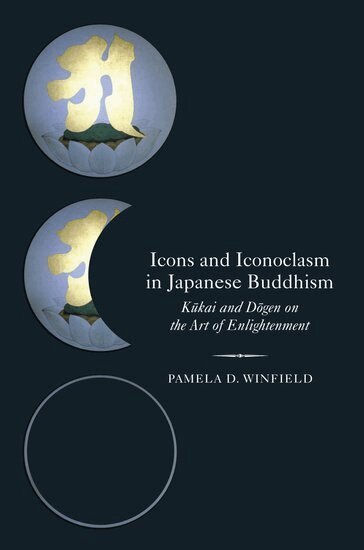
Icons and Iconoclasm in Japanese Buddhism
Kukai and Dogen on the Art of Enlightenment
Häftad, Engelska, 2013
425 kr
Skickas inom 5-8 vardagar
Pamela D. Winfield offers a fascinating juxtaposition and comparison of the thoughts of two pre-modern Japanese Buddhist masters on the role of imagery in the enlightenment experience. Kukai (774-835) believed that real and imagined forms were indispensable to his new esoteric Mikkyo method for ''becoming a Buddha in this very body'' (sokushin jobutsu), yet he deconstructed the significance of such imagery in his poetic and doctrinal works. Conversely, Dogen (1200-1253) believed that ''just sitting'' in Zen meditation without any visual props or mental elaborations could lead one to realize that ''this very mind is Buddha'' (sokushin zebutsu), but he too privileged select Zen icons as worthy of veneration. In considering the nuanced views of Kukai and Dogen, Icons and Iconoclasm in Japanese Buddhism updates previous comparisons of their oeuvres and engages their texts and images together for the first time in two decades. Winfield liberates them from sectarian scholarship, which has long pigeon-holed them into iconographic/ritual vs. philological/philosophical categories, and restores the historical symbiosis between religious thought and artistic expression that was lost in the nineteenth-century disciplinary distinction between religious studies and art history. Winfield breaks new methodological ground by proposing space and time as organizing principles for analyzing both meditative experience as well as visual/material culture and presents a wider vision of how Japanese Buddhists themselves understood the role of imagery before, during, and after awakening.
207 kr
Skickas inom 10-15 vardagar
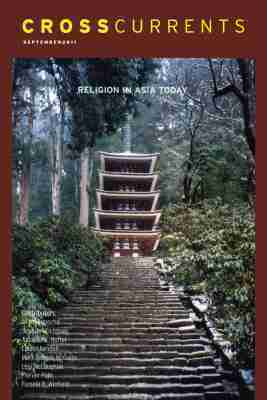
CrossCurrents connects the wisdom of the heart with the life of the mind and the experiences of the body. The journal is operated through its parent organization, the Association for Public Religion and Intellectual Life (APRIL), an interreligious network of academics, activists, artists, and community leaders seeking to engage the many ways religion meets the public. Contributions to the journal exist at the nexus of religion, education, the arts, and social justice. In the September 2 issue of CrossCurrents: "Introduction: Religion in Asia Today" by Pamela D. Winfield "In the Wake of the Tsunami: Religious Responses to the Great East Japan Earthquake" by Levi McLaughlin "Making a Space for Hope: Representing the Creative Reinvention of Japanese Mountain Asceticism in the Documentary Shugend Now" by Mark Patrick McGuire "The Contraction and Expansion of Shamanic Landscapes in Contemporary South Korea" by Laurel Kendall "Prominent Nuns: Influential Taiwanese Voices" by Jennifer Eichman "Hinduism Without Religion: Amma's Movement in America" by Amanda J. Huffer "Negotiating Religious and National Identities in Contemporary Indonesian Islamic Education" by Florian Pohl "An Interview with Arjia Rinpoche" by Pamela D. Winfield
207 kr
Skickas inom 10-15 vardagar
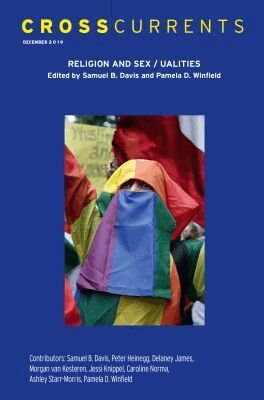
CrossCurrents connects the wisdom of the heart with the life of the mind and the experiences of the body. The journal is operated through its parent organization, the Association for Public Religion and Intellectual Life (APRIL), an interreligious network of academics, activists, artists, and community leaders seeking to engage the many ways religion meets the public. Contributions to the journal exist at the nexus of religion, education, the arts, and social justice. In the December 2 9 issue of CrossCurrents: "Introduction" by Samuel B. Davis and Pamela D. Winfield "Rumi: The Homoerotic Sufi Saint" by Delaney James "Leah and Hagar: An Intergenerational Conversation of Belonging" by Ashley Starr-Morris "Queer Nuns and Genderbending Saints: Genderf*cking Notions of Normativity" by Jessi Knippel "Need We Still Ask Why? Theodical Futurism and the Sinthomosexual God" by Samuel B. Davis "The First MeToo Activists: Contemporary Campaigning in Support of the Former Japanese Military 'Comfort Women'" by Caroline Norma "Interview with Dr. Robert Orsi (Northwestern University)" by Samuel B. Davis and Pamela D. Winfield "Best of Brothers, Finest of Men, Or 823 ?" by Peter Heinegg
956 kr
Skickas
The Religious Body Imagined examines the ways in which the human body has been imagined, imaged, and discursively produced in particular places, times, and religious traditions.This book brings together representative papers from most of the world’s major traditions and geo-historical locations, and explores the religious body’s various functions, roles, and transformative effects through a range of disciplinary and theoretical lenses (e.g. visual culture, literary, performance and cultural studies, ethnography, space / place, ritual, postcolonial theory and social justice as it pertains to embodiment). Most significantly, it is organized according to novel, thought-provoking thematic foci that advance the field and can be generative for classroom use. Specifically, it includes twelve chapters organized into sections on the Gendered Body, LGBTQ Bodies, Migrating Bodies, Host Bodies, Sensational Bodies, and National Bodies.The Religious Body Imagined contributes new and original research as well as theoretical insights that can substantially help to expand our understanding of the interdisciplinary field of religion and body in general.
345 kr
Skickas
The Religious Body Imagined examines the ways in which the human body has been imagined, imaged, and discursively produced in particular places, times, and religious traditions.This book brings together representative papers from most of the world’s major traditions and geo-historical locations, and explores the religious body’s various functions, roles, and transformative effects through a range of disciplinary and theoretical lenses (e.g. visual culture, literary, performance and cultural studies, ethnography, space / place, ritual, postcolonial theory and social justice as it pertains to embodiment). Most significantly, it is organized according to novel, thought-provoking thematic foci that advance the field and can be generative for classroom use. Specifically, it includes twelve chapters organized into sections on the Gendered Body, LGBTQ Bodies, Migrating Bodies, Host Bodies, Sensational Bodies, and National Bodies.The Religious Body Imagined contributes new and original research as well as theoretical insights that can substantially help to expand our understanding of the interdisciplinary field of religion and body in general.