Pamela Lothspeich – författare
Visar alla böcker från författaren Pamela Lothspeich. Handla med fri frakt och snabb leverans.
8 produkter
8 produkter
1 381 kr
Kommande
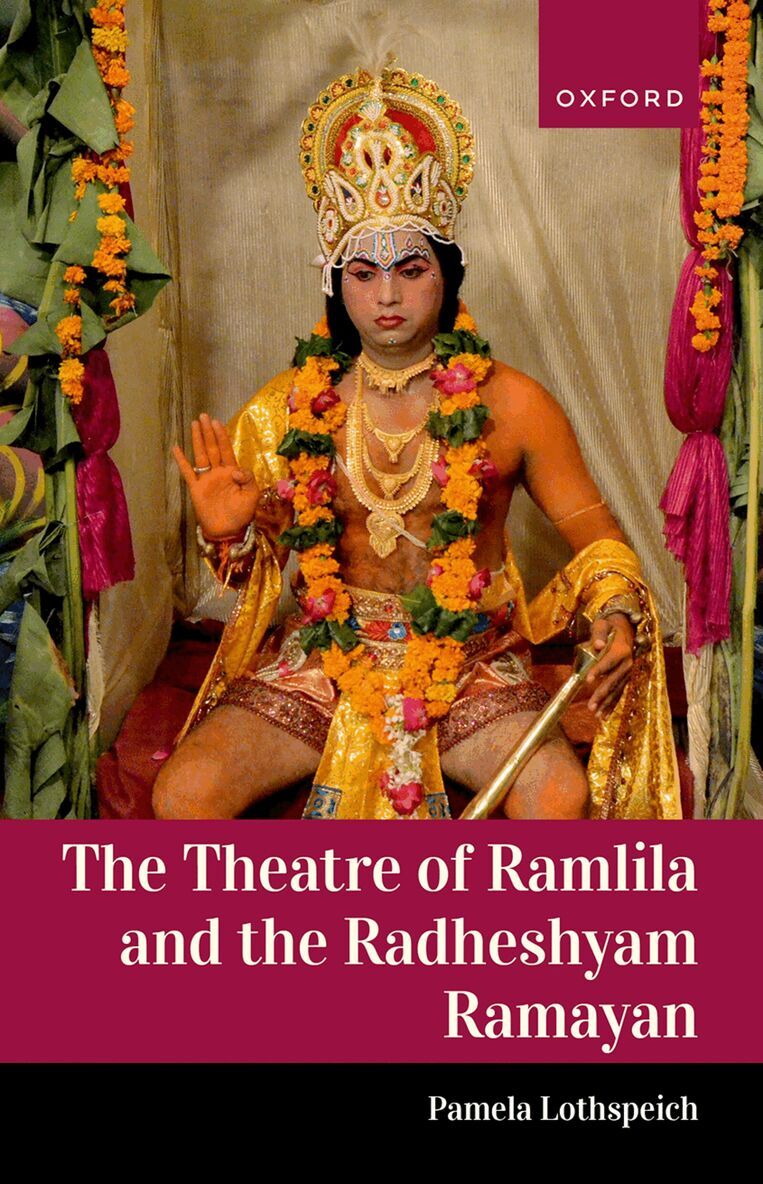
Continuing the narrative from the author's previous book, The Radheshyam Ramayan in Text and Performance (2025), this book gives a brief general history of Ramlila, and delves into the local histories and staging practices of five Ramlilas in Rohilkhand, Radheshyam Kathavachak's homeland. It explains how modernizing processes brought Ramlilas from temple courtyards and unbounded fields onto outdoor proscenium stages, reflecting major stylistic and ontological shifts. It considers Ramlila primarily as a form of contemporary theatre, not as an embodied expression of classical theory or as religious ritual alone. It does not tell the story of Ramlila “from above,” but rather on the ground as explained and performed by its everyday practitioners. Based on the author's observations and interviews over seven Ramlila cycles, The Theatre of Ramlila and the Radheshyam Ramayan illustrates that Ramlila is still a vibrant medium in our media-saturated age, and that Ramlila Grounds are increasingly open to a wider set of actors and organizers, even as professional troupes continue to gain ground over amateur teams.
1 852 kr
Skickas inom 7-10 vardagar
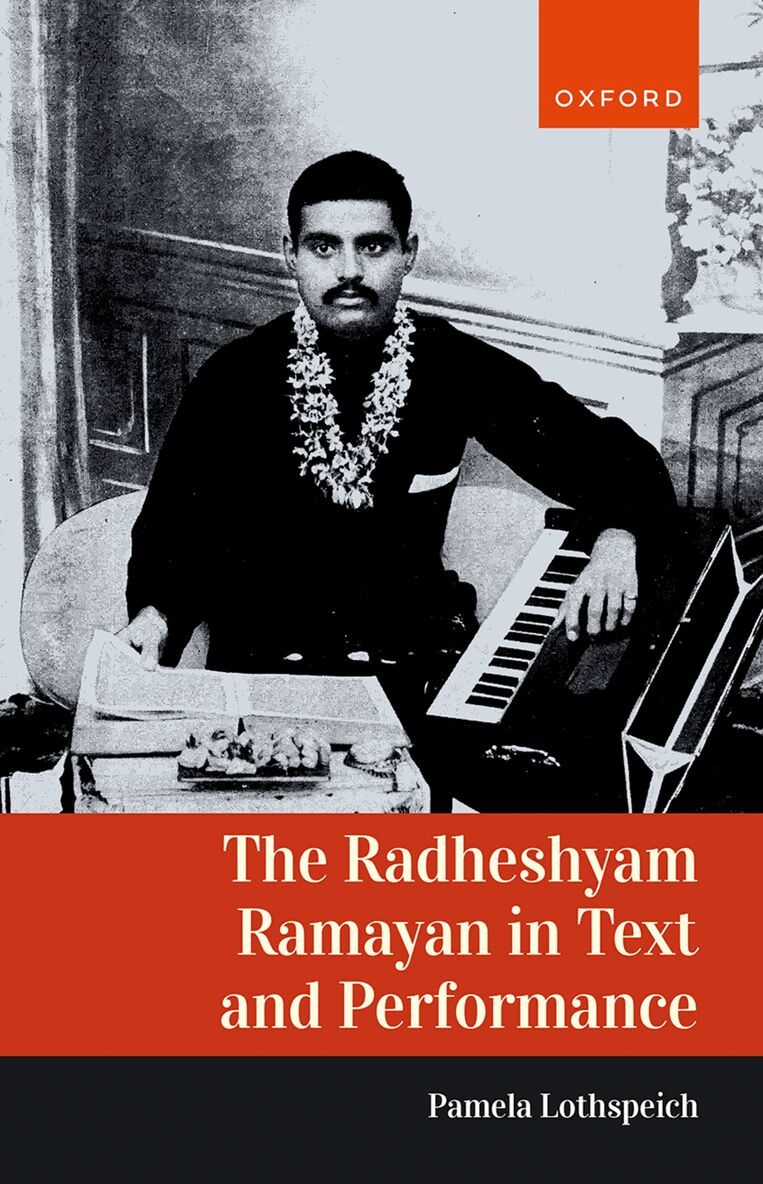
A new Ramayan for a new age. In the early twentieth century, the poet and singer-storyteller Pandit Radheshyam Kathavachak reimagined and published the classic story of the Ramayan with stunning success. Guided by Tulsidas's sixteenth-century Rāmcaritmānasin Avadhi, Kathavachak composed his religious epic, the Radheshyam Ramayan, in Hindi-Urdu to make it comprehensible to modern audiences and to be able to sing and explicate it in devotional concerts (kathā). Even so, the work was quickly incorporated into the scripts of annual Ramlila theatrical productions in the Rohilkhand region and beyond.Based on extensive literary, archival, and ethnographic research,The Radheshyam Ramayan in Text and Performancetakes readers on a journey through Kathavachak's hometown of Bareilly and his cosmopolitan world of Hindi letters and performance. The book demonstrates how Kathavachak's Ramayan, a purported translation, departs significantly from Tulsidas's famous Ramayan, and includes personal vignettes of actors who have declaimed Kathavachak's verses on a Ramlila stage in Bareilly. While Kathavachak is primarily known for his mythological plays and contributions to the commercial theatre, The Radheshyam Ramayan in Text and Performance reveals other aspects of Kathavachak's world, illustrating how he left an indelible mark on India's distinctive "epic modernity."
3 856 kr
Skickas inom 10-15 vardagar
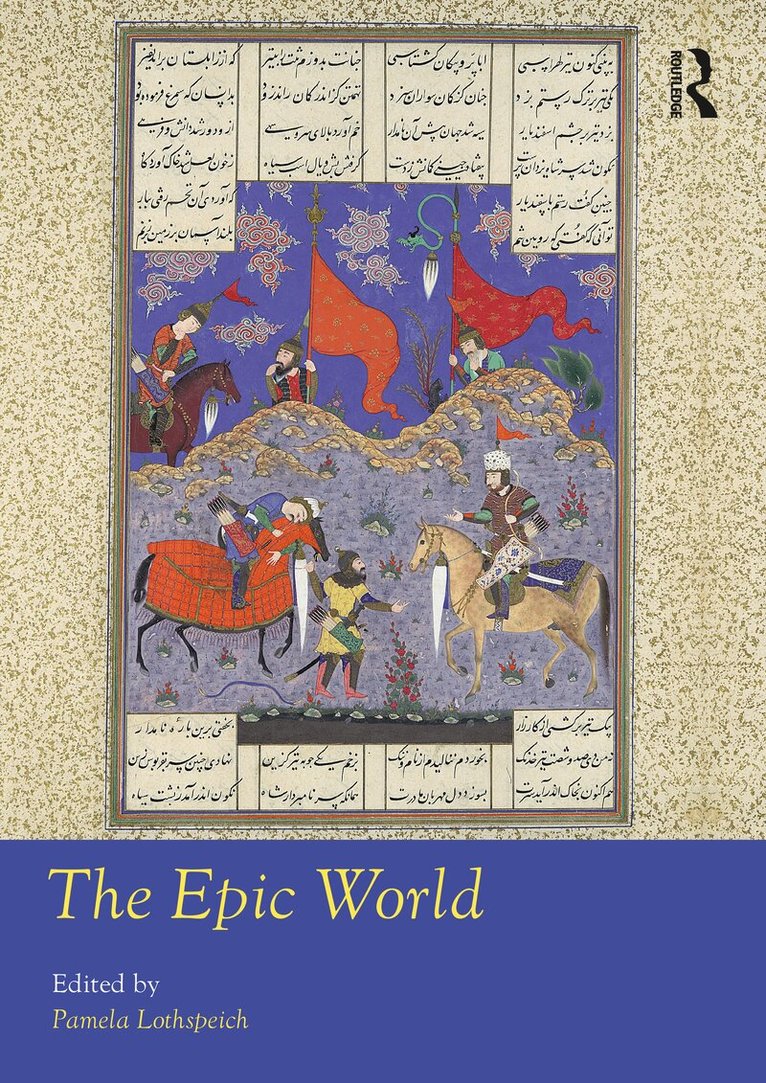
Reconceptualizing the epic genre and opening it up to a world of storytelling, The Epic World makes a timely and bold intervention toward understanding the human propensity to aestheticize and normalize mass deployments of power and violence. The collection broadly considers three kinds of epic literature: conventional celebratory tales of conquest that glorify heroism, especially male heroism; anti-epics or stories of conquest from the perspectives of the dispossessed, the oppressed, the despised, and the murdered; and heroic stories utilized for imperialist or nationalist purposes.The Epic World illustrates global patterns of epic storytelling, such as the durability of stories tied to religious traditions and/or to peoples who have largely "stayed put"; the tendency to reimagine and retell stories in new ways over centuries; and the imbrication of epic storytelling and forms of colonialism and imperialism, especially those perpetuated and glorified by Euro-Americans over the past 500 years, resulting in unspeakable and immeasurable harms to humans, other living beings, and the planet Earth.The Epic World is a go-to volume for anyone interested in epic literature in a global framework. Engaging with powerful stories and ways of knowing beyond those of the predominantly white Global North, this field-shifting volume exposes the false premises of "Western civilization" and "Classics," and brings new questions and perspectives to epic studies.
758 kr
Skickas inom 5-8 vardagar
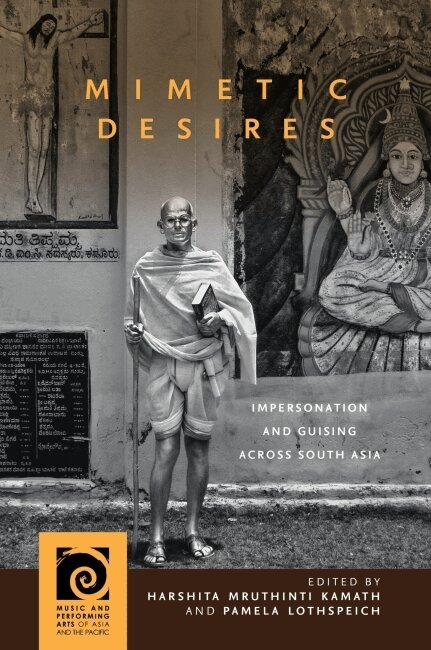
Through an exploration of subjects such as Gandhi impersonators, "God-men," performance artists, and participants in ritual enactments of sacred stories through dance and theatre, Mimetic Desires makes an intervention toward understanding the phenomenon of impersonation and guising in South Asia and the world. This volume defines impersonation as the temporary assumption of an identity or guise in performance that is perceived to be not one’s own, regardless of whether this assumption is deliberate, intentional, and conscious or not. Interrogating the legitimacy of the purported dialectic between the "real/original" and "fake/dupe," Mimetic Desires refutes any ordering of identity along the lines of a binary or dichotomy that presupposes the myth of an original identity. Guising captures sartorial and kinetic play more generally. By peeling back the layers of performative masks to reveal the process of the masquerade itself, we can see that those with the most social capital are often those with the most power and opportunities to impersonate "up"—and "down"—social hierarchies. The twelve chapters in Mimetic Desires disclose sites and processes of socio-political power facilitated by normative markers of social status relating to race, ethnicity, gender, caste, class, and religion—and how those markers can be manipulated to express and enhance individual and group power. The first comprehensive study to focus on impersonation in South Asia, Mimetic Desires expands on previous scholarship on impersonation and guising in vernacular theatre, dance, public processions, and religious ritual. It is particularly in conversation with the robust scholarship on gender performance and trans-kothi-hijra engagement in theatrical and dance forms in South Asia. Mimetic Desires explores some of the contexts and forms of impersonation in South Asia, with its remarkable array of performing arts, to gain insight into the very human and quotidian practices of impersonation and guising.
294 kr
Skickas inom 5-8 vardagar
Through an exploration of subjects such as Gandhi impersonators, performance artists, and ritual participants, Mimetic Desires makes an intervention toward understanding the phenomenon of impersonation and guising in South Asia and the world. This volume defines impersonation as the temporary assumption of an identity or guise in social and aesthetic performance that is perceived as not one’s own, and guising as sartorial and kinetic play more generally. Interrogating the legitimacy of the purported dialectic between the "real/original" and "fake/dupe," Mimetic Desires refutes the ordering of identity along the lines of a binary or dichotomy that presupposes the myth of an original identity. By peeling back the layers of performative masks to reveal the process of the masquerade itself, we can see that those with the most social capital are often those with the most power and opportunities to impersonate "up" and "down" social hierarchies.The book’s twelve chapters disclose sites and processes of sociopolitical power facilitated by normative markers of social status relating to race, ethnicity, gender, caste, class, and religion—and how those markers can be manipulated to express and enhance individual and group power. The first comprehensive study to focus on impersonation in South Asia, Mimetic Desires expands on previous scholarship on impersonation and guising in vernacular theatre, dance, public processions, and religious rituals. It is particularly in conversation with the robust scholarship on gender performance in South Asia’s theatrical and dance forms. Mimetic Desires explores some of the contexts and forms of impersonation in South Asia, with its remarkable array of performing arts, to gain insight into the very human and quotidian practices of impersonation and guising.
762 kr
Skickas inom 10-15 vardagar
Reconceptualizing the epic genre and opening it up to a world of storytelling, The Epic World makes a timely and bold intervention toward understanding the human propensity to aestheticize and normalize mass deployments of power and violence. The collection broadly considers three kinds of epic literature: conventional celebratory tales of conquest that glorify heroism, especially male heroism; anti-epics or stories of conquest from the perspectives of the dispossessed, the oppressed, the despised, and the murdered; and heroic stories utilized for imperialist or nationalist purposes.The Epic World illustrates global patterns of epic storytelling, such as the durability of stories tied to religious traditions and/or to peoples who have largely "stayed put"; the tendency to reimagine and retell stories in new ways over centuries; and the imbrication of epic storytelling and forms of colonialism and imperialism, especially those perpetuated and glorified by Euro-Americans over the past 500 years, resulting in unspeakable and immeasurable harms to humans, other living beings, and the planet Earth.The Epic World is a go-to volume for anyone interested in epic literature in a global framework. Engaging with powerful stories and ways of knowing beyond those of the predominantly white Global North, this field-shifting volume exposes the false premises of "Western civilization" and "Classics," and brings new questions and perspectives to epic studies.
1 299 kr
Kommande
427 kr
Kommande
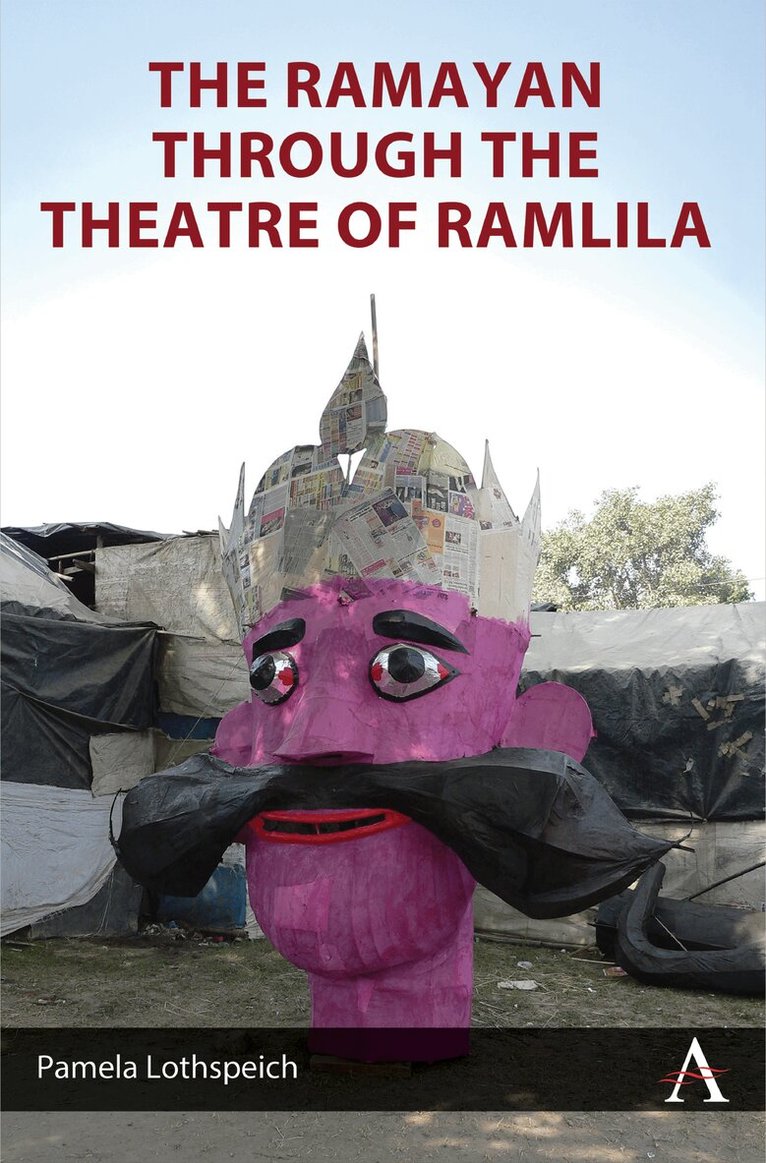
This book tells the story of the epic Ramayan as contemporary theatre practitioners and audiences in one Hindi-speaking region of North India know and remember it—not through premodern textual sources, but through Ramlila, a Hindu theatre festival in which community groups and professional troupes enact the story of the god Ram across North India every fall. Over 50 photographs of Ramlilas shot between 2010 and 2019 in four cities and towns in the region of Rohilkhand, vividly animate the story of the Ramayan. The accompanying narrative, meanwhile, explains the plot, staging practices, and the influence of an early twentieth-century work, the Radheshyam Ramayan, on the performances featured in the book. Richly illustrated and accessibly written, this book is designed for both those new to the Ramayan and those already well-versed in it. It also explains the Ramlila tradition for students and scholars of Hinduism, as well as all those interested in epic storytelling and theatre.