Christian Lee Novetzke - Böcker
Visar alla böcker från författaren Christian Lee Novetzke. Handla med fri frakt och snabb leverans.
9 produkter
9 produkter
1 110 kr
Skickas inom 7-10 vardagar
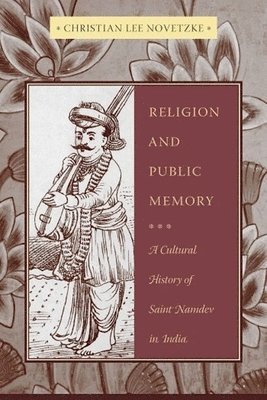
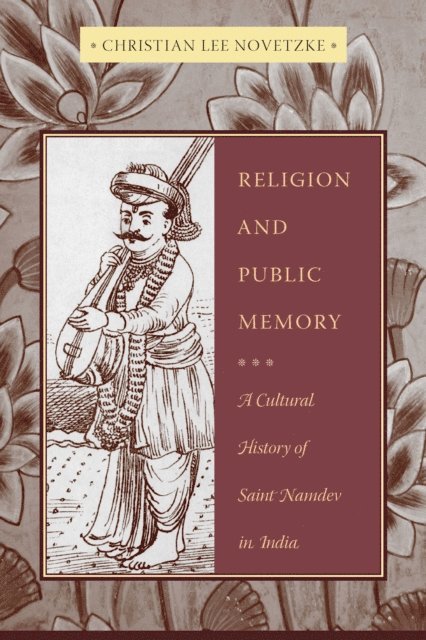
Namdev is a central figure in the cultural history of India, especially within the field of bhakti, a devotional practice that has created publics of memory for over eight centuries. Born in the Marathi-speaking region of the Deccan in the late thirteenth century, Namdev is remembered as a simple, low-caste Hindu tailor whose innovative performances of devotional songs spread his fame widely. He is central to many religious traditions within Hinduism, as well as to Sikhism, and he is a key early literary figure in Maharashtra, northern India, and Punjab. In the modern period, Namdev appears throughout the public spheres of Marathi and Hindi and in India at large, where his identity fluctuates between regional associations and a quiet, pan-Indian, nationalist-secularist profile that champions the poor, oppressed, marginalized, and low caste. Christian Lee Novetzke considers the way social memory coheres around the figure of Namdev from the sixteenth century to the present, examining the practices that situate Namdev's memory in multiple historical publics.Focusing primarily on Maharashtra and drawing on ethnographies of devotional performance, archival materials, scholarly historiography, and popular media, especially film, Novetzke vividly illustrates how religious communities in India preserve their pasts and, in turn, create their own historical narratives.
578 kr
Skickas inom 3-6 vardagar
Namdev is a central figure in the cultural history of India, especially within the field of bhakti, a devotional practice that has created publics of memory for over eight centuries. Born in the Marathi-speaking region of the Deccan in the late thirteenth century, Namdev is remembered as a simple, low-caste Hindu tailor whose innovative performances of devotional songs spread his fame widely. He is central to many religious traditions within Hinduism, as well as to Sikhism, and he is a key early literary figure in Maharashtra, northern India, and Punjab. In the modern period, Namdev appears throughout the public spheres of Marathi and Hindi and in India at large, where his identity fluctuates between regional associations and a quiet, pan-Indian, nationalist-secularist profile that champions the poor, oppressed, marginalized, and low caste. Christian Lee Novetzke considers the way social memory coheres around the figure of Namdev from the sixteenth century to the present, examining the practices that situate Namdev's memory in multiple historical publics.Focusing primarily on Maharashtra and drawing on ethnographies of devotional performance, archival materials, scholarly historiography, and popular media, especially film, Novetzke vividly illustrates how religious communities in India preserve their pasts and, in turn, create their own historical narratives.
Quotidian Revolution
Vernacularization, Religion, and the Premodern Public Sphere in India
Inbunden, Engelska, 2016
1 177 kr
Skickas inom 3-6 vardagar
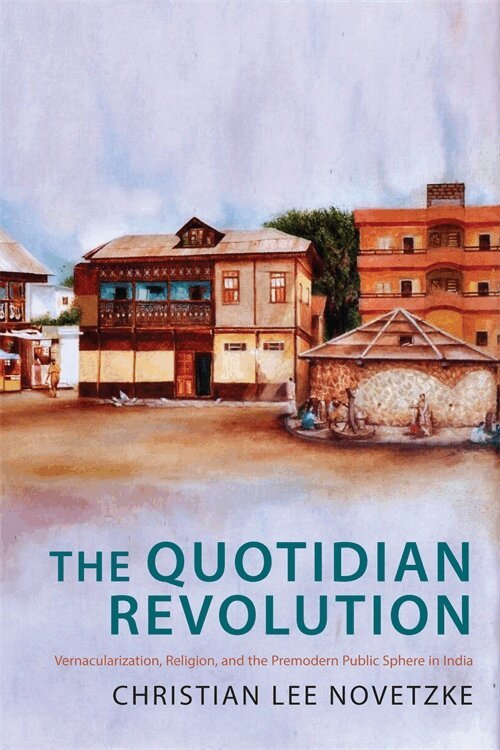
In thirteenth-century Maharashtra, a new vernacular literature emerged to challenge the hegemony of Sanskrit, a language largely restricted to men of high caste. In a vivid and accessible idiom, this new Marathi literature inaugurated a public debate over the ethics of social difference grounded in the idiom of everyday life. The arguments of vernacular intellectuals pushed the question of social inclusion into ever-wider social realms, spearheading the development of a nascent premodern public sphere that valorized the quotidian world in sociopolitical terms. The Quotidian Revolution examines this pivotal moment of vernacularization in Indian literature, religion, and public life by investigating courtly donative Marathi inscriptions alongside the first extant texts of Marathi literature: the Lilacaritra (1278) and the Jnanesvari (1290). Novetzke revisits the influence of Chakradhar (c. 1194), the founder of the Mahanubhav religion, and Jnandev (c. 1271), who became a major figure of the Varkari religion, to observe how these avant-garde and worldly elites pursued a radical intervention into the social questions and ethics of the age.Drawing on political anthropology and contemporary theories of social justice, religion, and the public sphere, The Quotidian Revolution explores the specific circumstances of this new discourse oriented around everyday life and its lasting legacy: widening the space of public debate in a way that presages key aspects of Indian modernity and democracy.
1 110 kr
Skickas inom 7-10 vardagar
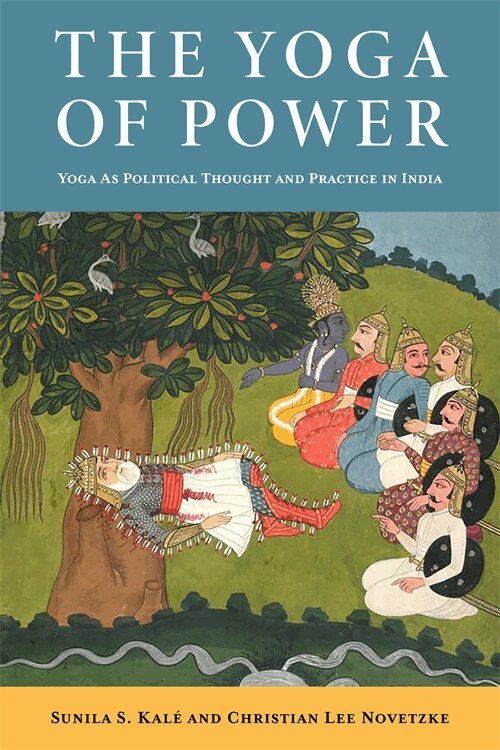
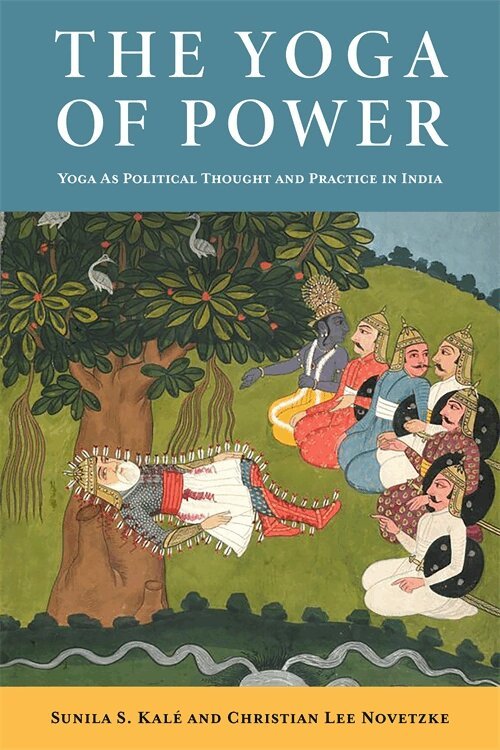
In Indian languages from Sanskrit to Marathi, yoga has an enormous range of meanings, though most often it refers to philosophy or methods to control the mind and body. This book argues for a wider understanding, demonstrating that yoga has long expressed political thought and practice. The political idea of yoga names the tools of kings, poets, warriors, and revolutionaries. It encodes stratagems for going into battle and for the demands of governance. This idea suggests routes to self-rule even when faced with implacable obstacles, and it defines righteous action amid the grime and grief of politics and war.Sunila S. Kalé and Christian Lee Novetzke chart a new genealogy of yoga, beginning with uses of the term in the Ṛg Veda, the Mahābhārata, the Bhagavad Gītā, and the Arthaśāstra. In the world of these texts, yoga names everything from war and battle strategy to good governance, espionage, taxation, and welfare. Kalé and Novetzke follow this trail into the modern period, examining the writings and speeches of thinkers such as Gandhi, Tilak, Aurobindo, and Ambedkar as well as the extraordinary story of the Princely State of Aundh, whose ruler saw the Surya Namaskar (Sun Salutation) as a tool for sovereignty. Offering a novel interpretation of yoga that embraces its long-standing political conceptualization, this book sheds light on South Asian political thought and history from its earliest texts to the present day.
283 kr
Skickas inom 7-10 vardagar
In Indian languages from Sanskrit to Marathi, yoga has an enormous range of meanings, though most often it refers to philosophy or methods to control the mind and body. This book argues for a wider understanding, demonstrating that yoga has long expressed political thought and practice. The political idea of yoga names the tools of kings, poets, warriors, and revolutionaries. It encodes stratagems for going into battle and for the demands of governance. This idea suggests routes to self-rule even when faced with implacable obstacles, and it defines righteous action amid the grime and grief of politics and war.Sunila S. Kalé and Christian Lee Novetzke chart a new genealogy of yoga, beginning with uses of the term in the Ṛg Veda, the Mahābhārata, the Bhagavad Gītā, and the Arthaśāstra. In the world of these texts, yoga names everything from war and battle strategy to good governance, espionage, taxation, and welfare. Kalé and Novetzke follow this trail into the modern period, examining the writings and speeches of thinkers such as Gandhi, Tilak, Aurobindo, and Ambedkar as well as the extraordinary story of the Princely State of Aundh, whose ruler saw the Surya Namaskar (Sun Salutation) as a tool for sovereignty. Offering a novel interpretation of yoga that embraces its long-standing political conceptualization, this book sheds light on South Asian political thought and history from its earliest texts to the present day.
576 kr
Skickas inom 7-10 vardagar
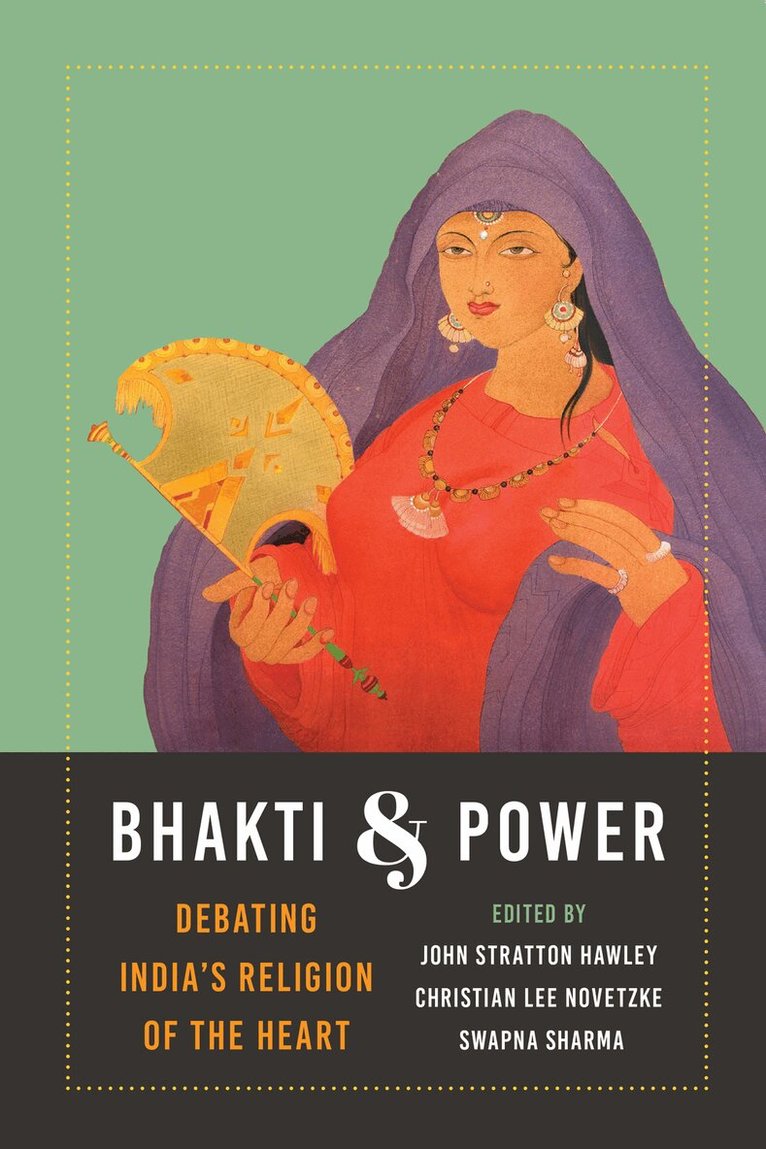
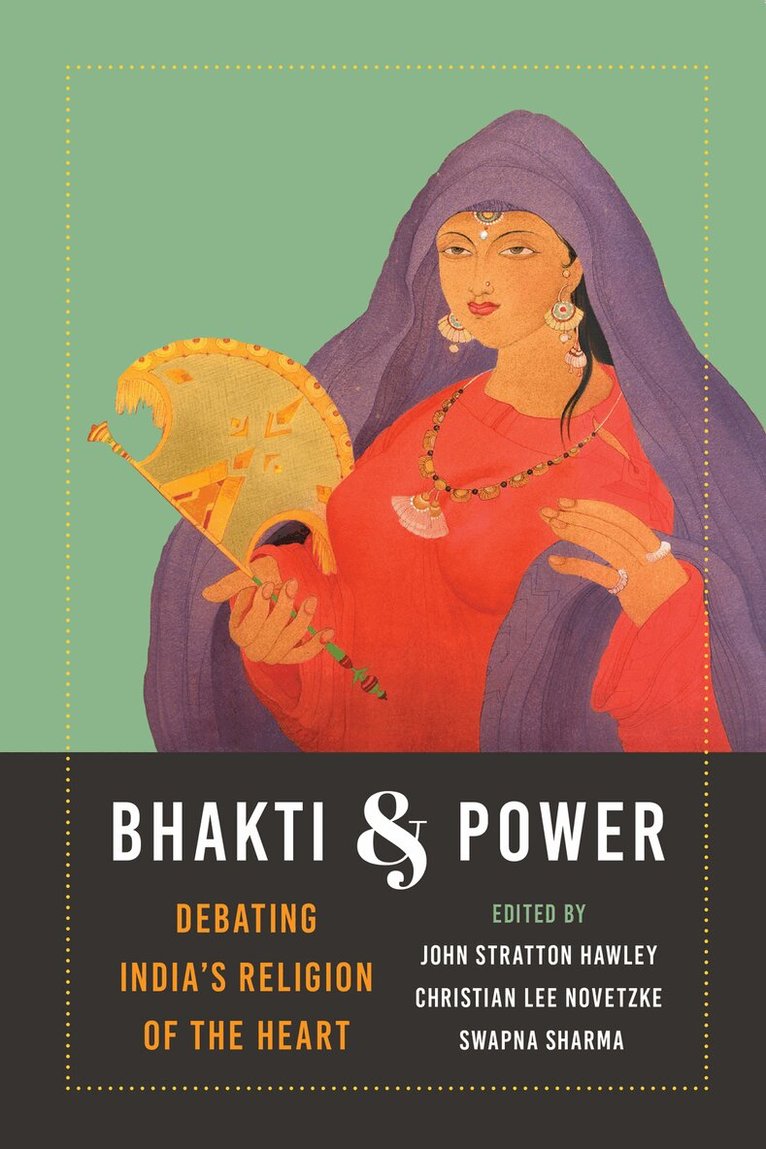
Bhakti, a term ubiquitous in the religious life of South Asia, has meanings that shift dramatically according to context and sentiment. Sometimes translated as “personal devotion,” bhakti nonetheless implies and fosters public interaction. It is often associated with the marginalized voices of women and lower castes, yet it has also played a role in perpetuating injustice. Barriers have been torn down in the name of bhakti, while others have been built simultaneously.Bhakti and Power provides an accessible entry into key debates around issues such as these, presenting voices and vignettes from the sixth century to the present and from many parts of India’s cultural landscape. Written by a wide range of engaged scholars, this volume showcases one of the most influential concepts in Indian history—still a major force in the present day.
2 014 kr
Skickas inom 7-10 vardagar
Bhakti, a term ubiquitous in the religious life of South Asia, has meanings that shift dramatically according to context and sentiment. Sometimes translated as “personal devotion,” bhakti nonetheless implies and fosters public interaction. It is often associated with the marginalized voices of women and lower castes, yet it has also played a role in perpetuating injustice. Barriers have been torn down in the name of bhakti, while others have been built simultaneously.Bhakti and Power provides an accessible entry into key debates around issues such as these, presenting voices and vignettes from the sixth century to the present and from many parts of India’s cultural landscape. Written by a wide range of engaged scholars, this volume showcases one of the most influential concepts in Indian history—still a major force in the present day.
532 kr
Skickas inom 10-15 vardagar
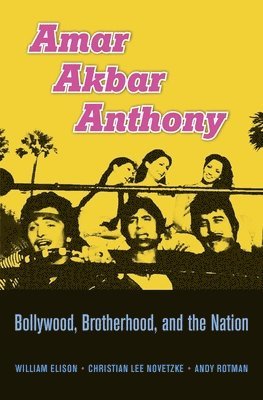
A Bollywood blockbuster when it was released in 1977, Amar Akbar Anthony has become a classic of Hindi cinema and a touchstone of Indian popular culture. Delighting audiences with its songs and madcap adventures, the film follows the heroics of three Bombay brothers separated in childhood from their parents and one another. Beyond the freewheeling comedy and camp, however, is a potent vision of social harmony, as the three protagonists, each raised in a different religion, discover they are true brothers in the end. William Elison, Christian Lee Novetzke, and Andy Rotman offer a sympathetic and layered interpretation of the film’s deeper symbolism, seeing it as a lens for understanding modern India’s experience with secular democracy.Amar Akbar Anthony’s celebration of an India built on pluralism and religious tolerance continues to resonate with audiences today. But it also invites a critique of modernity’s mixed blessings. As the authors show, the film’s sunny exterior only partially conceals darker elements: the shadow of Partition, the crisis of Emergency Rule, and the vexed implications of the metaphor of the family for the nation. The lessons viewers draw from the film depend largely on which brother they recognize as its hero. Is it Amar, the straight-edge Hindu policeman? Is it Akbar, the romantic Muslim singer? Or is it Anthony, the Christian outlaw with a heart of gold? In this book’s innovative and multi-perspectival approach, each brother makes his case for himself (although the last word belongs to their mother).
751 kr
Skickas inom 7-10 vardagar
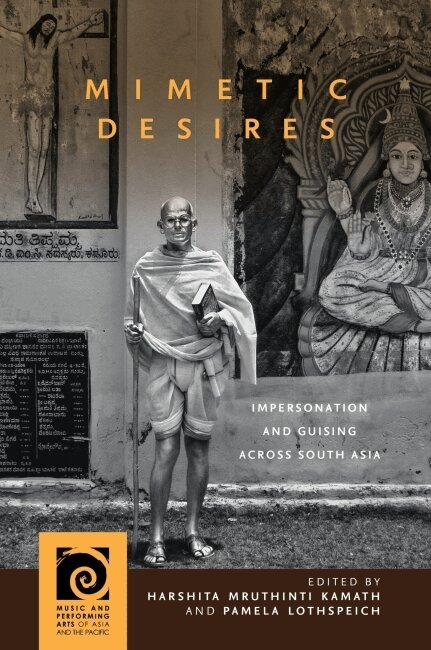
Through an exploration of subjects such as Gandhi impersonators, "God-men," performance artists, and participants in ritual enactments of sacred stories through dance and theatre, Mimetic Desires makes an intervention toward understanding the phenomenon of impersonation and guising in South Asia and the world. This volume defines impersonation as the temporary assumption of an identity or guise in performance that is perceived to be not one’s own, regardless of whether this assumption is deliberate, intentional, and conscious or not. Interrogating the legitimacy of the purported dialectic between the "real/original" and "fake/dupe," Mimetic Desires refutes any ordering of identity along the lines of a binary or dichotomy that presupposes the myth of an original identity. Guising captures sartorial and kinetic play more generally. By peeling back the layers of performative masks to reveal the process of the masquerade itself, we can see that those with the most social capital are often those with the most power and opportunities to impersonate "up"—and "down"—social hierarchies. The twelve chapters in Mimetic Desires disclose sites and processes of socio-political power facilitated by normative markers of social status relating to race, ethnicity, gender, caste, class, and religion—and how those markers can be manipulated to express and enhance individual and group power. The first comprehensive study to focus on impersonation in South Asia, Mimetic Desires expands on previous scholarship on impersonation and guising in vernacular theatre, dance, public processions, and religious ritual. It is particularly in conversation with the robust scholarship on gender performance and trans-kothi-hijra engagement in theatrical and dance forms in South Asia. Mimetic Desires explores some of the contexts and forms of impersonation in South Asia, with its remarkable array of performing arts, to gain insight into the very human and quotidian practices of impersonation and guising.