Paolo Peverini – författare
Visar alla böcker från författaren Paolo Peverini. Handla med fri frakt och snabb leverans.
2 produkter
2 produkter
537 kr
Skickas inom 5-8 vardagar
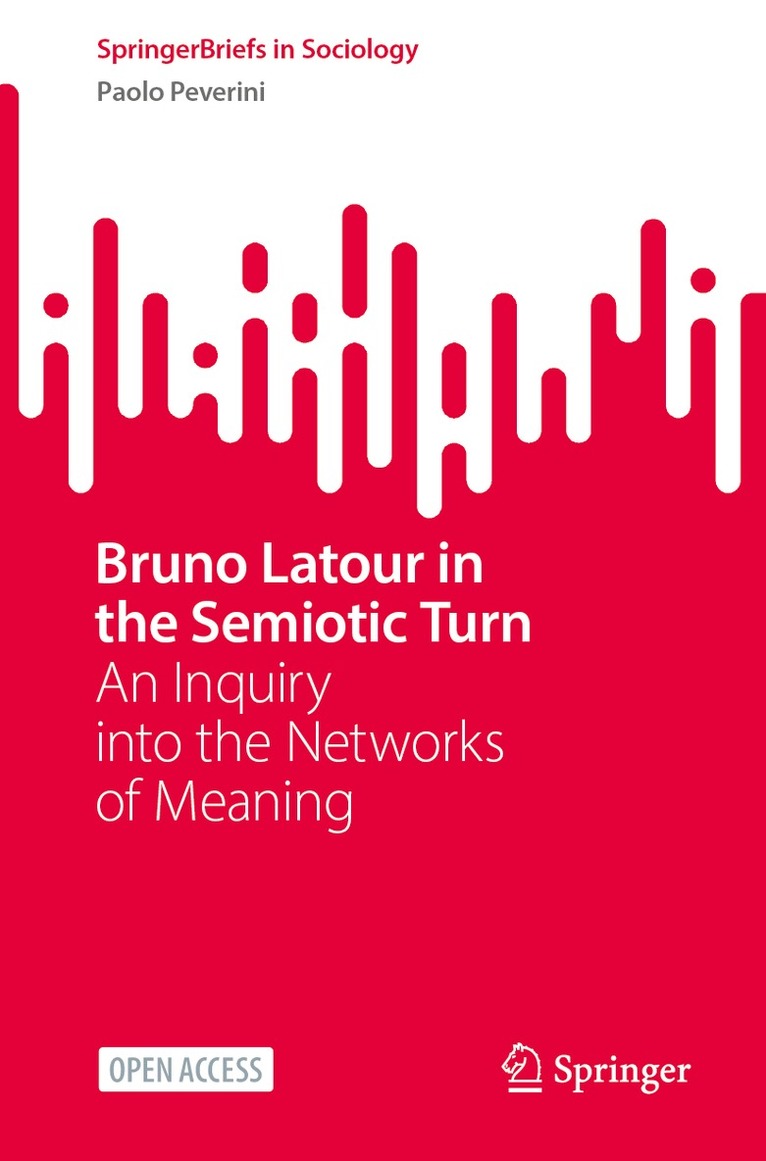
This open access book highlights the link between Bruno Latour's works and the semiotic perspective on social phenomena analysis. It identifies and relaunches a dialogue that was as heated as it was fruitful, but still little recognized within the social sciences. It asks why the theory of signification has so far been only sporadically acknowledged in literature derived from Latour's work. Starting from these premises, the book explores two interrelated dimensions, the initial one of a "semiotics for Latour", which looks at concepts from semiotics in Latour's study of social phenomena, and extensively for the first time, a symmetrical one of a "Latour for semiotics," accounting for the impact of Latourian inquiry on contemporary semiotic research. The book offers a novel perspective on Bruno Latour's work by addressing a wide readership, including those interested in Latour’s approach, actor-network theory, semiotics, and the social sciences.The English translation of this book from the Italian original manuscript was done with the help of artificial intelligence, then revised technically and linguistically by the author in collaboration with a professional translator.
Semiotics in the Age of Artificial Intelligence
Symbols, Discourses, Consumption, Branding
Inbunden, Engelska, 2026
2 072 kr
Kommande
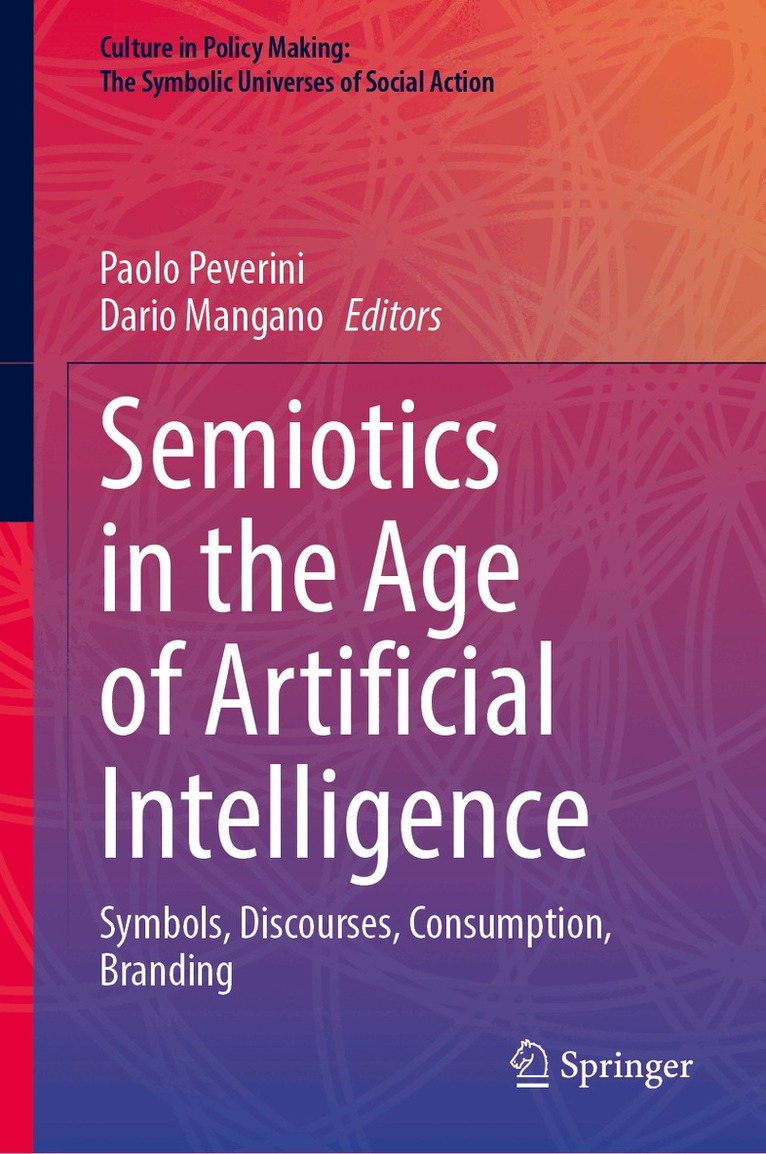
This volume advances the understanding of meaning-making in the age of artificial intelligence (AI) by adopting a semiotic perspective. It repositions semiotics as a discipline capable of engaging in a mutually fruitful dialogue with the social sciences. It explores processes of signification in emerging forms of human/non-human coexistence, focusing on the interdependence between consumption, technology, society, and culture, with particular attention to the role played by brands.The chapters raise a number of key questions: What methodologies can be employed to effectively study interactions among humans, non-human entities, and intangible elements (such as algorithms) in the construction of meaning? How can core notions such as enunciation, veridiction, and anthropomorphism be rethought in light of the expressive forms produced by AI? How can the complex operations of AI be interpreted through the lenses of translation and multimodality, and what challenges does this scenario pose to these concepts? What role do leading brands play in mitigating consumer resistance to the adoption of such technologies? What kinds of forms of life emerge and stabilize when humans accept delegating knowledge, passions, and actions to devices endowed with unprecedented levels of agency? How does AI represent itself?This volume is of appeal to a wide readership across the social sciences, cultural and media studies.