Dario Mangano – författare
Visar alla böcker från författaren Dario Mangano. Handla med fri frakt och snabb leverans.
3 produkter
3 produkter
1 061 kr
Skickas inom 10-15 vardagar
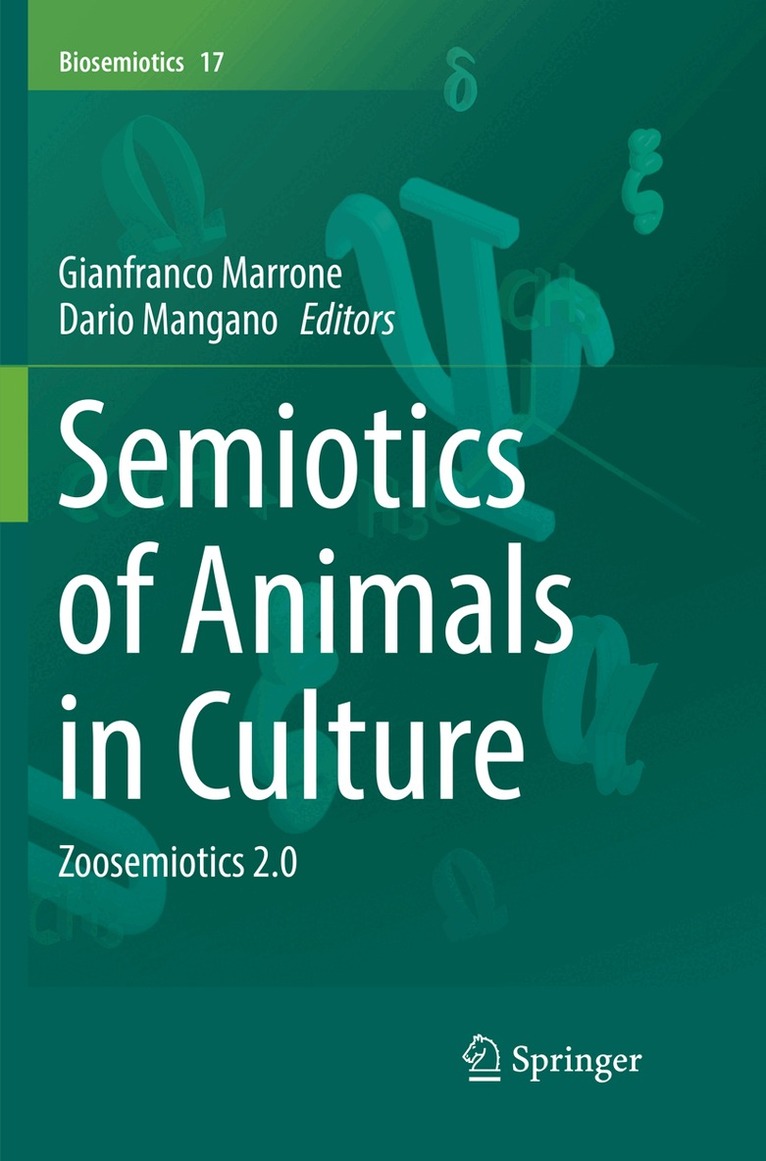
To place animals within the realm of nature, means inserting them among the articulations of culture and the social. Semiotics has never avoided this chiasmus, choosing to deal from the outset with the problem of the languages of animals following the old admonition of Montaigne: it is not that animals do not talk, it is us who do not understand them.Recent research in the field of the anthropology of nature and sociology of sciences and techniques allow to think about the Zoosemiotic issue in a different way. Instead of transplanting the language structures – gestures, LIS, etc. – for a semiotic study of the forms of the human and social meaning, it seems more apt to look at their discourse, and as such, the actual interactions, communicative and scientific as well as practical and functional, between humans and non-humans. This book aims to investigate precisely this hypothesis, known here as Zoosemiotics 2.0, working on several fronts and levels:· Anthropology· Languages of the image and visual representations, from art history to cinema· Old and new media. From literature to comics, from cartoons to TV documentaries but also advertising, music, Web and social networks. All those cultural products that talk about the role of human and non-human in society implicitly proposing (and in some way imposing) a form of articulation of such a relationship.· Food and feeding rites· Animalist, vegetarian and vegan movements · Philosophy: metaphysics, ethics, aesthetics
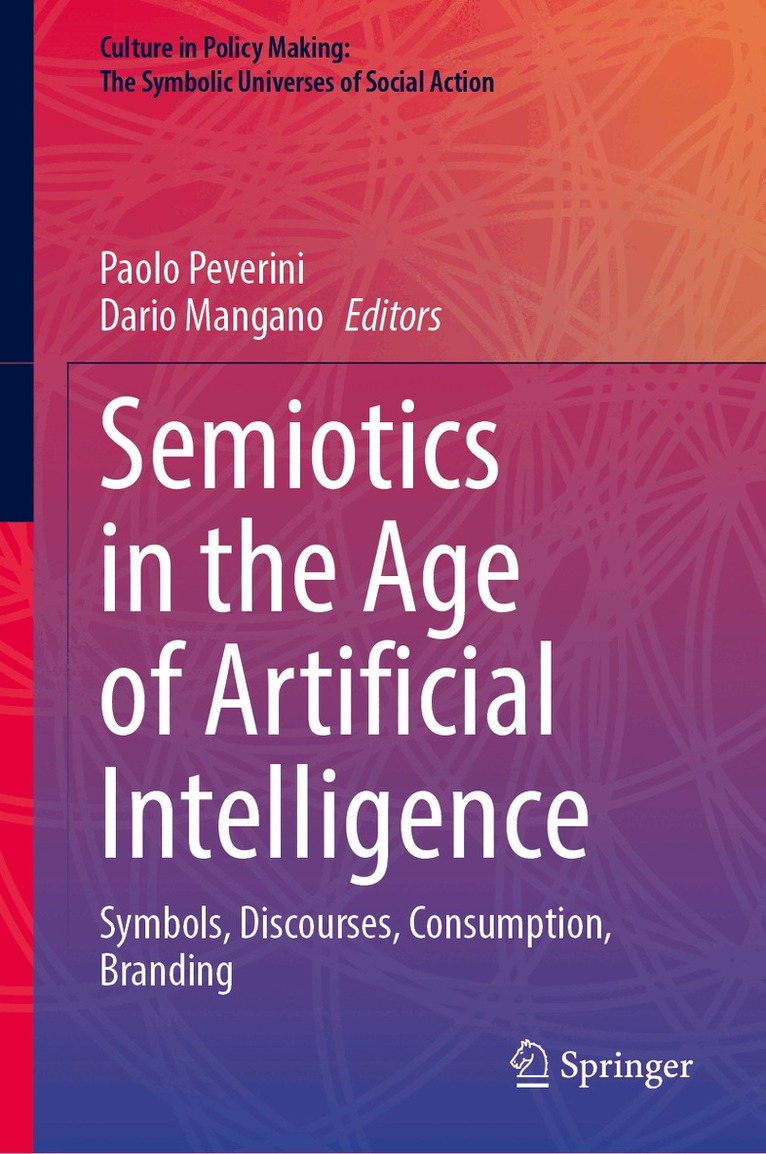
Semiotics in the Age of Artificial Intelligence
Symbols, Discourses, Consumption, Branding
Inbunden, Engelska, 2026
2 072 kr
Kommande
This volume advances the understanding of meaning-making in the age of artificial intelligence (AI) by adopting a semiotic perspective. It repositions semiotics as a discipline capable of engaging in a mutually fruitful dialogue with the social sciences. It explores processes of signification in emerging forms of human/non-human coexistence, focusing on the interdependence between consumption, technology, society, and culture, with particular attention to the role played by brands.The chapters raise a number of key questions: What methodologies can be employed to effectively study interactions among humans, non-human entities, and intangible elements (such as algorithms) in the construction of meaning? How can core notions such as enunciation, veridiction, and anthropomorphism be rethought in light of the expressive forms produced by AI? How can the complex operations of AI be interpreted through the lenses of translation and multimodality, and what challenges does this scenario pose to these concepts? What role do leading brands play in mitigating consumer resistance to the adoption of such technologies? What kinds of forms of life emerge and stabilize when humans accept delegating knowledge, passions, and actions to devices endowed with unprecedented levels of agency? How does AI represent itself?This volume is of appeal to a wide readership across the social sciences, cultural and media studies.
1 061 kr
Skickas inom 10-15 vardagar
To place animals within the realm of nature, means inserting them among the articulations of culture and the social. Semiotics has never avoided this chiasmus, choosing to deal from the outset with the problem of the languages of animals following the old admonition of Montaigne: it is not that animals do not talk, it is us who do not understand them.Recent research in the field of the anthropology of nature and sociology of sciences and techniques allow to think about the Zoosemiotic issue in a different way. Instead of transplanting the language structures – gestures, LIS, etc. – for a semiotic study of the forms of the human and social meaning, it seems more apt to look at their discourse, and as such, the actual interactions, communicative and scientific as well as practical and functional, between humans and non-humans. This book aims to investigate precisely this hypothesis, known here as Zoosemiotics 2.0, working on several fronts and levels:· Anthropology· Languages of the image and visual representations, from art history to cinema· Old and new media. From literature to comics, from cartoons to TV documentaries but also advertising, music, Web and social networks. All those cultural products that talk about the role of human and non-human in society implicitly proposing (and in some way imposing) a form of articulation of such a relationship.· Food and feeding rites· Animalist, vegetarian and vegan movements · Philosophy: metaphysics, ethics, aesthetics