Paromita Sanyal – författare
Visar alla böcker från författaren Paromita Sanyal. Handla med fri frakt och snabb leverans.
9 produkter
9 produkter
Häftad, Engelska, 2026
239 kr
Kommande
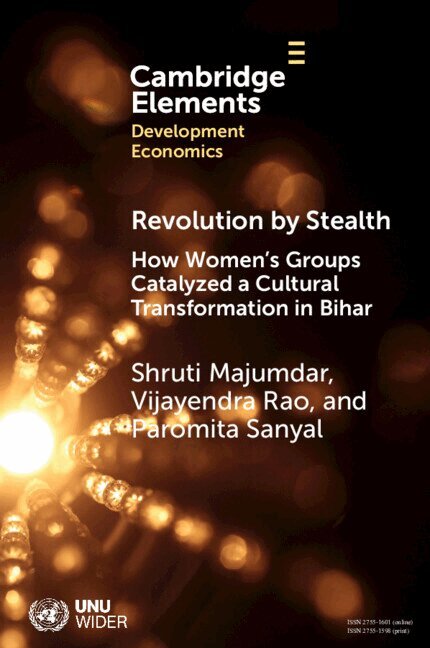
Revolution by Stealth: How Women's Groups Catalyzed a Cultural Transformation in Bihar tells the story of how Jeevika, a large-scale livelihoods project, sparked far-reaching change in one of India's poorest and most patriarchal states. Based on four years of qualitative fieldwork embedded within a randomized trial, the Element traces how federated self-help groups enabled marginalized women to access credit, build collective capacity, and reshape gender norms. Through shared rituals, new roles, and solidarity networks, women moved from domestic isolation to public voice, challenging caste and patriarchal hierarchies. Conceptualizing Jeevika as an "induced social movement," the authors show how state-supported programs rooted in local traditions can generate durable empowerment. Empirically rich and theoretically grounded, the Element offers an interdisciplinary synthesis across development economics, sociology, and feminist theory, advancing debates on agency, norm change, and participatory development. This title is also available as Open Access on Cambridge Core.
Inbunden, Engelska, 2026
769 kr
Kommande
Revolution by Stealth: How Women's Groups Catalyzed a Cultural Transformation in Bihar tells the story of how Jeevika, a large-scale livelihoods project, sparked far-reaching change in one of India's poorest and most patriarchal states. Based on four years of qualitative fieldwork embedded within a randomized trial, the Element traces how federated self-help groups enabled marginalized women to access credit, build collective capacity, and reshape gender norms. Through shared rituals, new roles, and solidarity networks, women moved from domestic isolation to public voice, challenging caste and patriarchal hierarchies. Conceptualizing Jeevika as an "induced social movement," the authors show how state-supported programs rooted in local traditions can generate durable empowerment. Empirically rich and theoretically grounded, the Element offers an interdisciplinary synthesis across development economics, sociology, and feminist theory, advancing debates on agency, norm change, and participatory development. This title is also available as Open Access on Cambridge Core.
Inbunden, Engelska, 2018
1 303 kr
Skickas inom 7-10 vardagar
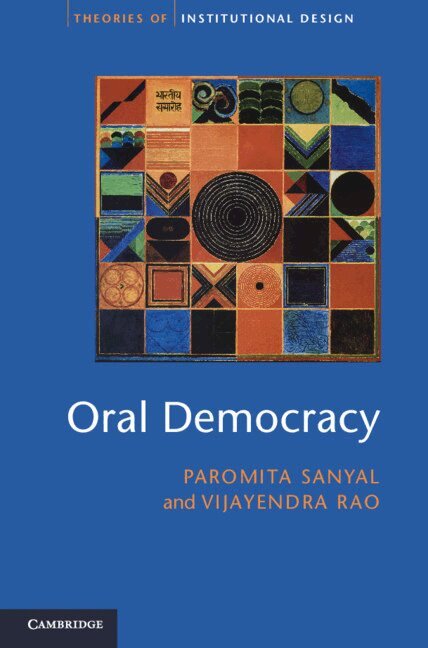
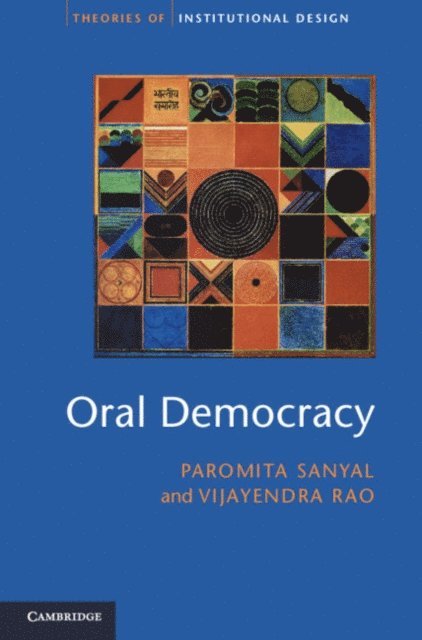
Oral Democracy studies citizens' voices in civic and political deliberations in India's gram sabhas (village assemblies), the largest deliberative institution in human history. It analyses nearly three hundred transcripts of gram sabhas, sampled within the framework of a natural experiment, allowing the authors to study how state policy affects the quality of discourse, citizens' discursive performances and state enactments embodied by elected leaders and public officials. By drawing out the varieties of speech apparent in citizen and state interactions, their analysis shows that citizens' oral participation in development and governance can be improved by strengthening deliberative spaces through policy. Even in conditions of high inequality and illiteracy, gram sabhas can create discursive equality by developing the 'oral competence' of citizens and establishing a space in which they can articulate their interests. The authors develop the concept of 'oral democracy' to aid the understanding of deliberative systems in non-Western and developing countries. This title is also available as Open Access.
Inbunden, Engelska, 2014
1 175 kr
Skickas inom 7-10 vardagar
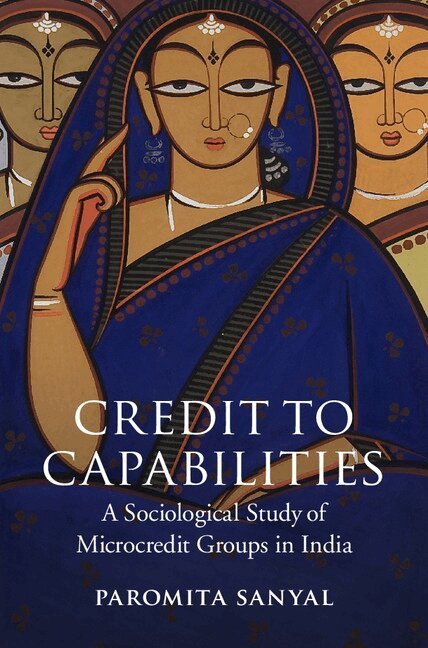
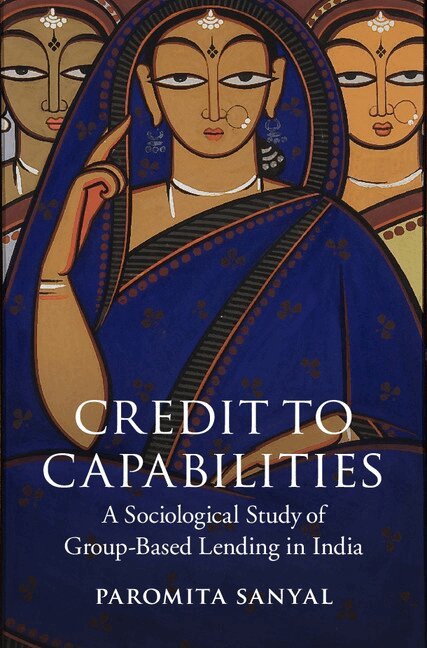
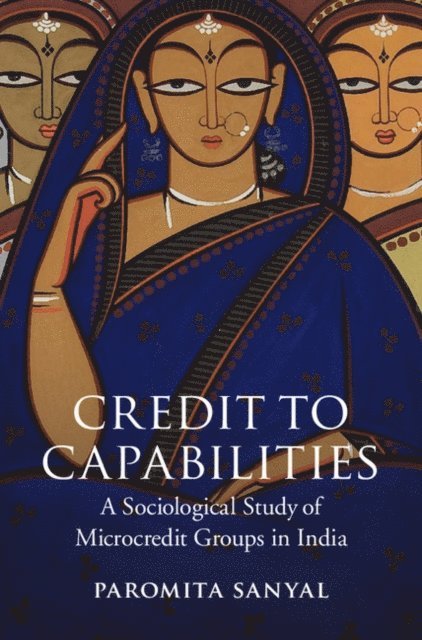
Credit to Capabilities focuses on the controversial topic of microcredit's impact on women's empowerment and, especially, on the neglected question of how microcredit transforms women's agency. Based on interviews with hundreds of economically and socially vulnerable women from peasant households, this book highlights the role of the associational mechanism - forming women into groups that are embedded in a vast network and providing the opportunity for face-to-face participation in group meetings - in improving women's capabilities. This book reveals the role of microcredit groups in fostering women's social capital, particularly their capacity of organizing collective action for public goods and for protecting women's welfare. It argues that, in the Indian context, microcredit groups are becoming increasingly important in rural civil societies. Throughout, the book maintains an analytical distinction between married women in male-headed households and women in female-headed households in discussing the potentials and the limitations of microcredit's social and economic impacts.
Häftad, Engelska, 2016
409 kr
Skickas inom 7-10 vardagar
Credit to Capabilities focuses on the controversial topic of microcredit's impact on women's empowerment and, especially, on the neglected question of how microcredit transforms women's agency. Based on interviews with hundreds of economically and socially vulnerable women from peasant households, this book highlights the role of the associational mechanism - forming women into groups that are embedded in a vast network and providing the opportunity for face-to-face participation in group meetings - in improving women's capabilities. This book reveals the role of microcredit groups in fostering women's social capital, particularly their capacity of organizing collective action for public goods and for protecting women's welfare. It argues that, in the Indian context, microcredit groups are becoming increasingly important in rural civil societies. Throughout, the book maintains an analytical distinction between married women in male-headed households and women in female-headed households in discussing the potentials and the limitations of microcredit's social and economic impacts.
E-bok
Engelska, 20181 567 kr
Läs direkt efter köp
Oral Democracy studies citizens'' voices in civic and political deliberations in India''s gram sabhas (village assemblies), the largest deliberative institution in human history. It analyses nearly three hundred transcripts of gram sabhas, sampled within the framework of a natural experiment, allowing the authors to study how state policy affects the quality of discourse, citizens'' discursive performances and state enactments embodied by elected leaders and public officials. By drawing out the varieties of speech apparent in citizen and state interactions, their analysis shows that citizens'' oral participation in development and governance can be improved by strengthening deliberative spaces through policy. Even in conditions of high inequality and illiteracy, gram sabhas can create discursive equality by developing the ''oral competence'' of citizens and establishing a space in which they can articulate their interests. The authors develop the concept of ''oral democracy'' to aid the understanding of deliberative systems in non-Western and developing countries. This title is also available as Open Access.
E-bok
PDF, Engelska, 20181 567 kr
Läs direkt efter köp
Oral Democracy studies citizens'' voices in civic and political deliberations in India''s gram sabhas (village assemblies), the largest deliberative institution in human history. It analyses nearly three hundred transcripts of gram sabhas, sampled within the framework of a natural experiment, allowing the authors to study how state policy affects the quality of discourse, citizens'' discursive performances and state enactments embodied by elected leaders and public officials. By drawing out the varieties of speech apparent in citizen and state interactions, their analysis shows that citizens'' oral participation in development and governance can be improved by strengthening deliberative spaces through policy. Even in conditions of high inequality and illiteracy, gram sabhas can create discursive equality by developing the ''oral competence'' of citizens and establishing a space in which they can articulate their interests. The authors develop the concept of ''oral democracy'' to aid the understanding of deliberative systems in non-Western and developing countries. This title is also available as Open Access.
E-bok
Engelska, 2014456 kr
Läs direkt efter köp
Credit to Capabilities focuses on the controversial topic of microcredit''s impact on women''s empowerment and, especially, on the neglected question of how microcredit transforms women''s agency. Based on interviews with hundreds of economically and socially vulnerable women from peasant households, this book highlights the role of the associational mechanism - forming women into groups that are embedded in a vast network and providing the opportunity for face-to-face participation in group meetings - in improving women''s capabilities. This book reveals the role of microcredit groups in fostering women''s social capital, particularly their capacity of organizing collective action for public goods and for protecting women''s welfare. It argues that, in the Indian context, microcredit groups are becoming increasingly important in rural civil societies. Throughout, the book maintains an analytical distinction between married women in male-headed households and women in female-headed households in discussing the potentials and the limitations of microcredit''s social and economic impacts.
E-bok
PDF, Engelska, 2014473 kr
Läs direkt efter köp
Credit to Capabilities focuses on the controversial topic of microcredit''s impact on women''s empowerment and, especially, on the neglected question of how microcredit transforms women''s agency. Based on interviews with hundreds of economically and socially vulnerable women from peasant households, this book highlights the role of the associational mechanism - forming women into groups that are embedded in a vast network and providing the opportunity for face-to-face participation in group meetings - in improving women''s capabilities. This book reveals the role of microcredit groups in fostering women''s social capital, particularly their capacity of organizing collective action for public goods and for protecting women''s welfare. It argues that, in the Indian context, microcredit groups are becoming increasingly important in rural civil societies. Throughout, the book maintains an analytical distinction between married women in male-headed households and women in female-headed households in discussing the potentials and the limitations of microcredit''s social and economic impacts.