Vijayendra Rao - Böcker
Visar alla böcker från författaren Vijayendra Rao. Handla med fri frakt och snabb leverans.
8 produkter
8 produkter
1 202 kr
Skickas inom 5-8 vardagar
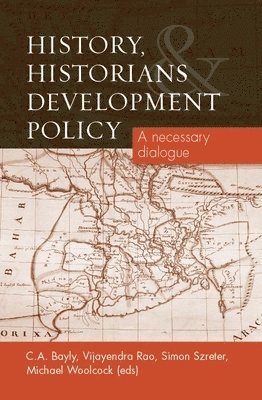
If history matters for understanding key development outcomes then surely historians should be active contributors to the debates informing these understandings. This volume integrates, for the first time, contributions from ten leading historians and seven policy advisors around the central development issues of social protection, public health, public education and natural resource management. How did certain ideas, and not others, gain traction in shaping particular policy responses? How did the content and effectiveness of these responses vary across different countries, and indeed within them? Achieving this is not merely a matter of seeking to 'know more' about specific times, places and issues, but recognising the distinctive ways in which historians rigorously assemble, analyse and interpret diverse forms of evidence. This book will appeal to students and scholars in development studies, history, international relations, politics and geography as well as policy makers and those working for or studying NGOs.An electronic edition of this book is freely available under a Creative Commons (CC BY-NC-ND) licence.
331 kr
Skickas inom 7-10 vardagar
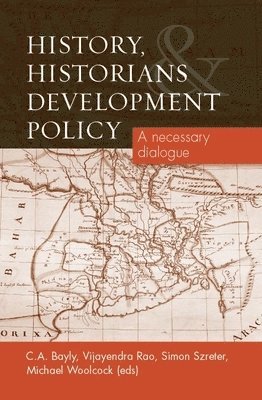
If history matters for understanding key development outcomes then surely historians should be active contributors to the debates informing these understandings. This volume integrates, for the first time, contributions from ten leading historians and seven policy advisors around the central development issues of social protection, public health, public education and natural resource management. How did certain ideas, and not others, gain traction in shaping particular policy responses? How did the content and effectiveness of these responses vary across different countries, and indeed within them? Achieving this is not merely a matter of seeking to 'know more' about specific times, places and issues, but recognising the distinctive ways in which historians rigorously assemble, analyse and interpret diverse forms of evidence. This book will appeal to students and scholars in development studies, history, international relations, politics and geography as well as policy makers and those working for or studying NGOs.An electronic edition of this book is freely available under a Creative Commons (CC BY-NC-ND) licence.
1 466 kr
Skickas inom 10-15 vardagar
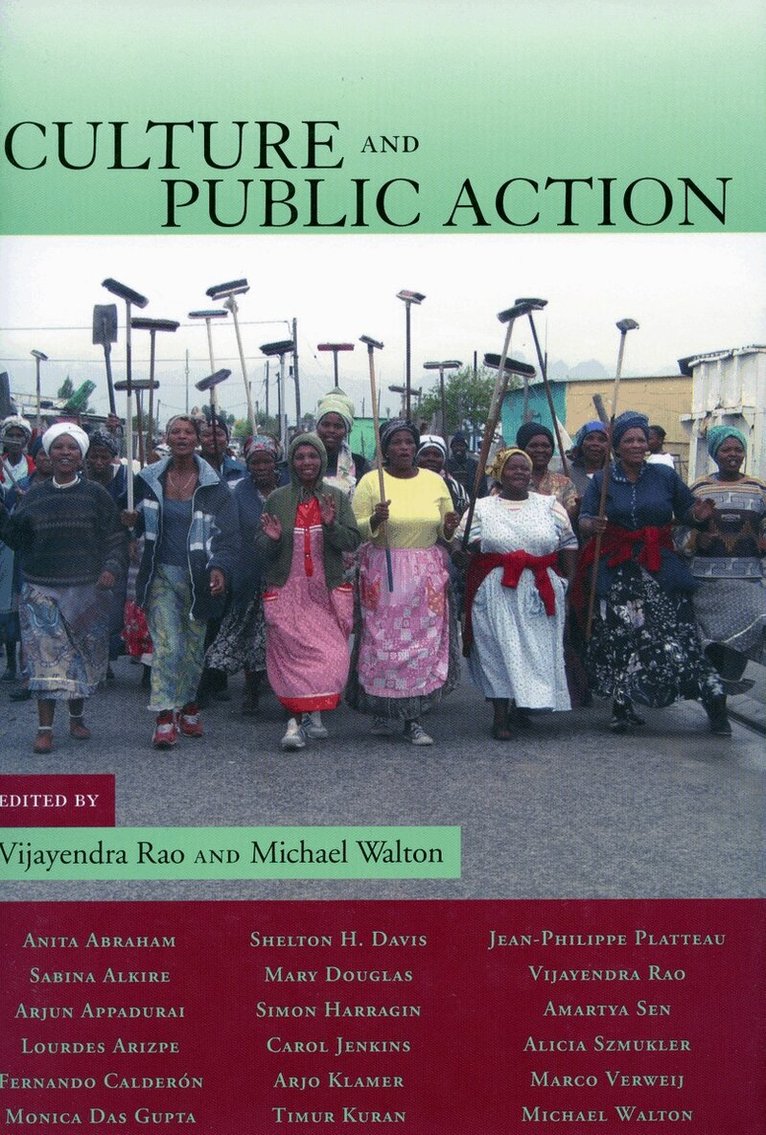
How does culture matter for development? Do certain societies have cultures which condemn them to poverty? Led by Arjun Appadurai, Mary Douglas, and Amartya Sen, the anthropologists and economists in this volume contend that culture is central to development, and that cultural processes are neither inherently good nor bad and never static. Rather, they are contested and evolving, and can be a source of profound social and economic transformation through their influence on aspirations and collective action; yet they can also be exploitative, exclusionary, and can lead to inequality.Culture and Public Action includes case studies from Africa, Asia, and Latin America, which examine the role of culture in community-based development, ethnic conflict, famine relief, gender discrimination, and HIV-AIDS policy. The editors conclude by proposing how a "cultural lens" can better inform future research and public policy on development. Accessible, balanced, and engaging, this book will be of interest to anyone concerned with the relationship between culture and economics, and the design and implementation of development policy. For further information on the book and related essays, please visit:http://www.cultureandpublicaction.orgFor orders from India, Bangladesh, Nepal, and Sri Lanka, please e-mailPermanent Black at perblack@ndb.vsnl.net.in.
347 kr
Tillfälligt slut
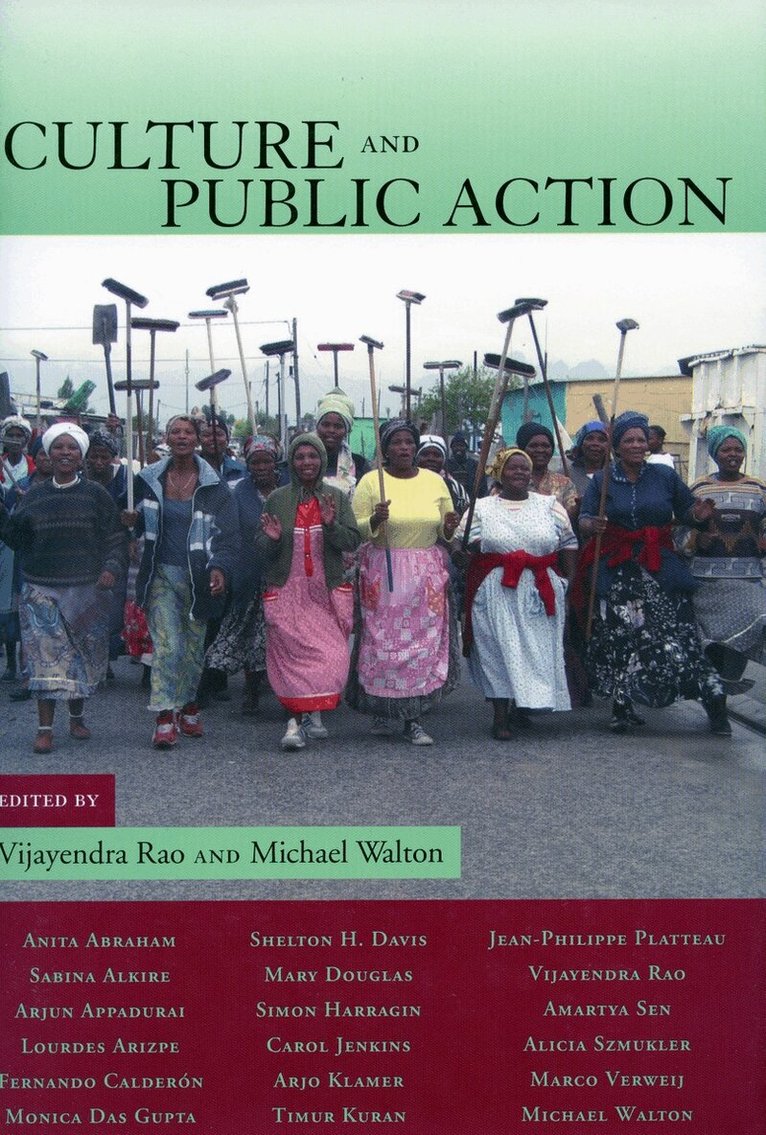
How does culture matter for development? Do certain societies have cultures which condemn them to poverty? Led by Arjun Appadurai, Mary Douglas, and Amartya Sen, the anthropologists and economists in this volume contend that culture is central to development, and that cultural processes are neither inherently good nor bad and never static. Rather, they are contested and evolving, and can be a source of profound social and economic transformation through their influence on aspirations and collective action; yet they can also be exploitative, exclusionary, and can lead to inequality.Culture and Public Action includes case studies from Africa, Asia, and Latin America, which examine the role of culture in community-based development, ethnic conflict, famine relief, gender discrimination, and HIV-AIDS policy. The editors conclude by proposing how a "cultural lens" can better inform future research and public policy on development. Accessible, balanced, and engaging, this book will be of interest to anyone concerned with the relationship between culture and economics, and the design and implementation of development policy. For further information on the book and related essays, please visit:http://www.cultureandpublicaction.orgFor orders from India, Bangladesh, Nepal, and Sri Lanka, please e-mailPermanent Black at perblack@ndb.vsnl.net.in.
392 kr
Skickas inom 10-15 vardagar
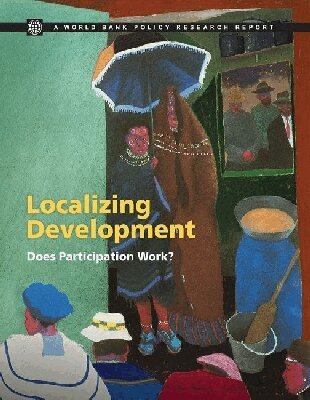
The Policy Research Report Localizing Development: Does Participation Work? brings analytical rigor to a field that has been the subject of intense debate and advocacy, and billions of dollars in development aid. It briefly reviews the history of participatory development and argues that its two modalities, community-based development and local decentralization, should be treated under the broader unifying umbrella of local development. It suggests that a distinction between organic participation (endogenous efforts by civic activists to bring about change) and induced participation (large-scale efforts to engineer participation at the local level via projects) is key, and focuses on the challenges of inducing participation.The report provides a conceptual framework for thinking about participatory development and then uses this framework to conduct a comprehensive review of the literature. The framework develops the concept of “civil society failure” and explains its interaction with government and market failures. It argues that participatory development, which is often viewed as a mechanism for bypassing market and government failures by ”harnessing” civic capacity, ought to be seen instead as a mechanism that, if done right, could help to repair important civil society failures. It distills literature from anthropology, economics, sociology, and political science to outline the challenges for effective policy in this area, looking at issues such as the uncertainty of trajectories of change, the importance of context, the role of elite capture and control, the challenge of collective action, and the role of the state. The review of the evidence looks at a variety of issues: the impact of participatory projects on inclusion, civic capacity, and social cohesion; on key development outcomes, such as income, poverty, and inequality; on public service delivery; and on the quality of local public goods. It draws on the evidence to suggest several recommendations for policy, emphasizing the key role of learning-by-doing. It then reviews participatory projects funded by the World Bank and finds the majority lacking in several arenas – particularly in paying attention to context and in creating effective monitoring and evaluation systems that allow for learning.
1 202 kr
Skickas inom 7-10 vardagar
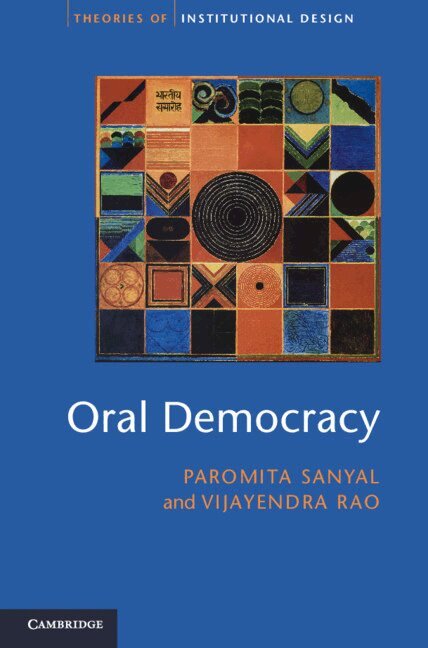
Oral Democracy studies citizens' voices in civic and political deliberations in India's gram sabhas (village assemblies), the largest deliberative institution in human history. It analyses nearly three hundred transcripts of gram sabhas, sampled within the framework of a natural experiment, allowing the authors to study how state policy affects the quality of discourse, citizens' discursive performances and state enactments embodied by elected leaders and public officials. By drawing out the varieties of speech apparent in citizen and state interactions, their analysis shows that citizens' oral participation in development and governance can be improved by strengthening deliberative spaces through policy. Even in conditions of high inequality and illiteracy, gram sabhas can create discursive equality by developing the 'oral competence' of citizens and establishing a space in which they can articulate their interests. The authors develop the concept of 'oral democracy' to aid the understanding of deliberative systems in non-Western and developing countries. This title is also available as Open Access.
Deliberation and Development
Rethinking the Role of Voice and Collective Action in Unequal Societies
Häftad, Engelska, 2015
324 kr
Skickas inom 10-15 vardagar
Deliberation is the process by which a group of people, each with equal voice, can - via a process of discussion and debate - reach an agreement.Deliberation and Development attempts to do two things. First, it rethinks the role of deliberation in development and shows that it has potential well beyond a narrow focus on participatory projects. Deliberation, if properly instituted, has the potential to have a transformative effect on many if not all aspects of development, and especially in addressing problems of collective action, coordination and entrenched inequality. This has broad implications both at the global and local level.Second, the book demonstrates that taking deliberation seriously calls for a different approach to both research and policy design and requires a much greater emphasis on the process by which decisions are made, rather than an exclusive focus on the outcomes. Deliberation and Development contributes to a broader literature to understand the role of communicative process in development.
Ultimate Microsoft Power Automate Desktop: Leverage Microsoft's Robotic Process Automation Capabilities to Automate Routine Tasks for Enhanced Efficie
Häftad, Engelska, 2024
503 kr
Skickas inom 5-8 vardagar