Parth Sarathi Roy – författare
Visar alla böcker från författaren Parth Sarathi Roy. Handla med fri frakt och snabb leverans.
5 produkter
5 produkter
Häftad, Engelska, 2025
1 390 kr
Skickas inom 10-15 vardagar
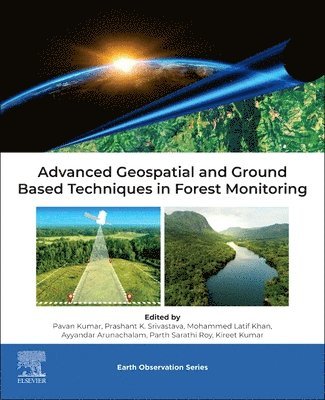
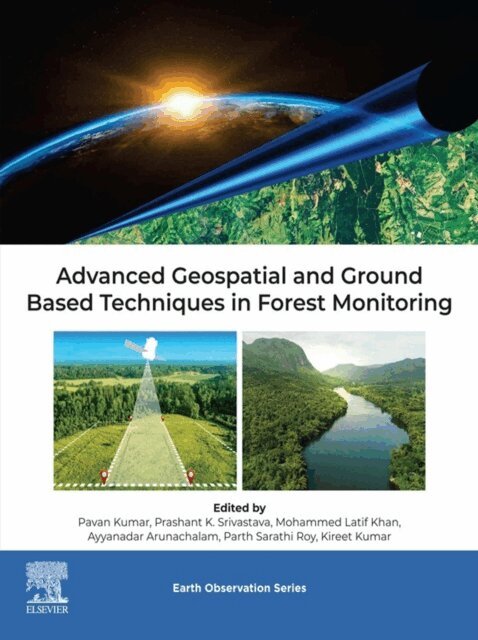
Advanced Geospatial and Ground Based Techniques in Forest Monitoring provides insights into advanced geospatial technology in the field of forestry. The book provides both traditional and special techniques for monitoring the forest, including biophysical and biochemical parameters, retrieval, species identification, mapping, and classification. In addition, it covers the latest technologies using SAR data, hyperspectral data, and the integration of datasets for the enhanced accuracy of the results and its outcome. This book will benefit the academic and research communities with the latest research ideas and problem-solving skills in forestry and land management.Includes the application of EO data for forest monitoring in both natural resources mapping and forest sustainable managementPresents advancements in geospatial technology using multispectral, hyperspectral, radar microwave, and LIDAR data in forest monitoring and its parameter retrievalCovers upcoming satellite missions for forest monitoring
E-bok
Engelska, 20251 756 kr
Läs direkt efter köp
Advanced Geospatial and Ground Based Techniques in Forest Monitoring provides insight into advanced geospatial technology in the field of forestry. It provides both traditional and special techniques for monitoring the forest, including biophysical and biochemical parameters, retrieval, species identification, mapping, and classification. The book covers the latest technology to using SAR data, hyperspectral data, and the integration of data sets for the enhanced accuracy of the results and its outcome. Advanced Geospatial and Ground Based Techniques in Forest Monitoring will benefit the academic and the research community with latest research ideas and problem-solving skills in forestry and land management. - Includes the application of EO data for forest monitoring in both natural resources mapping and forest sustainable management- Presents advancements in geospatial technology using multispectral, hyperspectral, radar microwave, and LIDAR data in forest monitoring and its parameter retrieval- Covers upcoming satellite missions for forest monitoring
E-bok
PDF, Engelska, 20263 603 kr
Läs direkt efter köp
Climate change is an intensifying reality of the present, reshaping land systems, ecosystems, and human livelihoods across the globe. Its impacts are most clearly manifested through changes in land cover and land use, degradation of ecosystems, loss of biodiversity, and growing risks to food systems, water security, and rural and urban livelihoods. Changing Climate-Land-Life Interplay: Spatial Approaches for Biodiversity, Agriculture, and Land Resilience in Emerging Economies examines these interdependencies by placing human well-being and livelihood security at the core of climate-land-life interactions.Focusing on emerging economies such as India, Indonesia, Brazil, and Vietnam, the book addresses regions where climate vulnerability, rich biodiversity, and rapid economic transformation directly affect millions of people dependent on land and natural resources for their survival. Moving beyond siloed treatments of climate, land, or conservation, the volume adopts a systems perspective that links land-use change with ecosystem services, agrobiodiversity, and livelihood outcomes. A defining feature of the book is its use of spatial approaches - remote sensing, geographic information system, and landscape-scale analysis - to reveal how climate-driven land transformations shape livelihoods, equity, and resilience in the Global South.Key features include: Climate impacts on land, ecosystems, and livelihood systems Land use change and its implications for ecosystem services and human well-being Biodiversity and ecosystem functions supporting livelihoods Agrobiodiversity as a basis for resilient, nutrition-secure farming systems Regional case studies connecting land governance and livelihood outcomes Policy analysis integrating development, conservation, and adaptation Action pathways using geospatial tools and participatory governance This book is intended for researchers, policymakers, planners, conservation and development practitioners seeking integrated strategies to sustain land, life, and livelihoods under climate change.
E-bok
Engelska, 20263 603 kr
Läs direkt efter köp
Climate change is an intensifying reality of the present, reshaping land systems, ecosystems, and human livelihoods across the globe. Its impacts are most clearly manifested through changes in land cover and land use, degradation of ecosystems, loss of biodiversity, and growing risks to food systems, water security, and rural and urban livelihoods. Changing Climate-Land-Life Interplay: Spatial Approaches for Biodiversity, Agriculture, and Land Resilience in Emerging Economies examines these interdependencies by placing human well-being and livelihood security at the core of climate-land-life interactions.Focusing on emerging economies such as India, Indonesia, Brazil, and Vietnam, the book addresses regions where climate vulnerability, rich biodiversity, and rapid economic transformation directly affect millions of people dependent on land and natural resources for their survival. Moving beyond siloed treatments of climate, land, or conservation, the volume adopts a systems perspective that links land-use change with ecosystem services, agrobiodiversity, and livelihood outcomes. A defining feature of the book is its use of spatial approaches - remote sensing, geographic information system, and landscape-scale analysis - to reveal how climate-driven land transformations shape livelihoods, equity, and resilience in the Global South.Key features include: Climate impacts on land, ecosystems, and livelihood systems Land use change and its implications for ecosystem services and human well-being Biodiversity and ecosystem functions supporting livelihoods Agrobiodiversity as a basis for resilient, nutrition-secure farming systems Regional case studies connecting land governance and livelihood outcomes Policy analysis integrating development, conservation, and adaptation Action pathways using geospatial tools and participatory governance This book is intended for researchers, policymakers, planners, conservation and development practitioners seeking integrated strategies to sustain land, life, and livelihoods under climate change.
Inbunden, Engelska, 2026
3 139 kr
Kommande
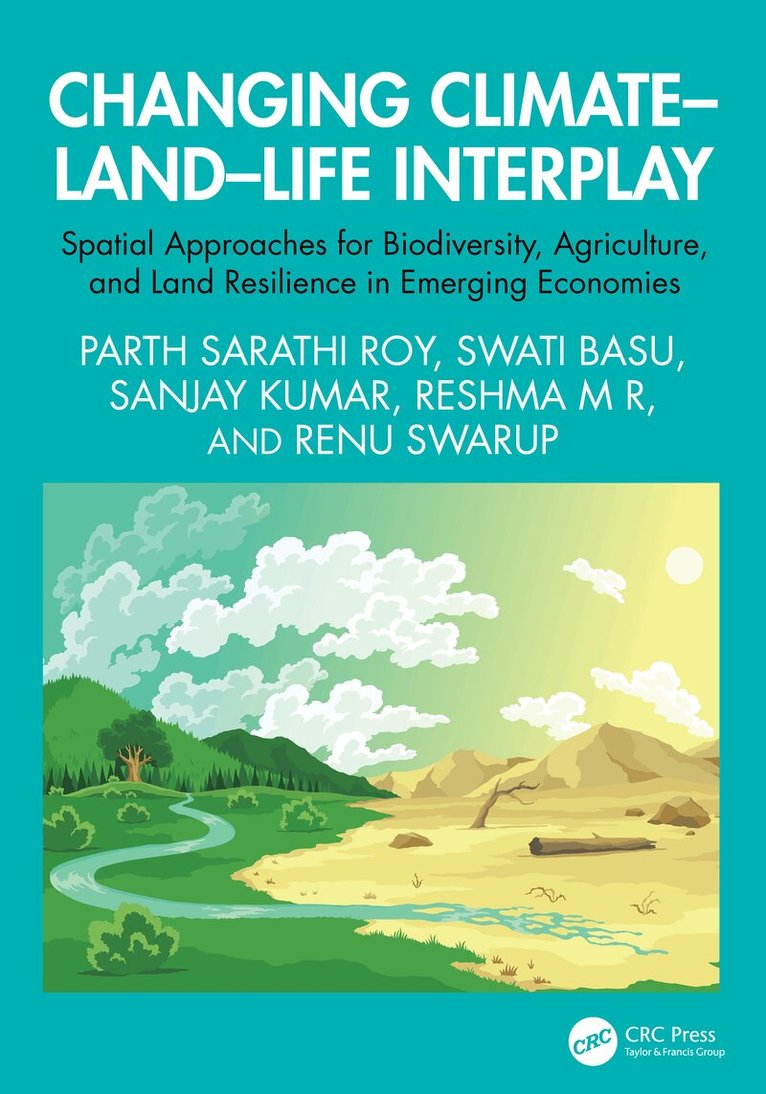
Climate change is an intensifying reality of the present, reshaping land systems, ecosystems, and human livelihoods across the globe. Its impacts are most clearly manifested through changes in land cover and land use, degradation of ecosystems, loss of biodiversity, and growing risks to food systems, water security, and rural and urban livelihoods. Changing Climate–Land–Life Interplay: Spatial Approaches for Biodiversity, Agriculture, and Land Resilience in Emerging Economies examines these interdependencies by placing human well-being and livelihood security at the core of climate–land–life interactions.Focusing on emerging economies such as India, Indonesia, Brazil, and Vietnam, the book addresses regions where climate vulnerability, rich biodiversity, and rapid economic transformation directly affect millions of people dependent on land and natural resources for their survival. Moving beyond siloed treatments of climate, land, or conservation, the volume adopts a systems perspective that links land-use change with ecosystem services, agrobiodiversity, and livelihood outcomes. A defining feature of the book is its use of spatial approaches – remote sensing, geographic information system, and landscape-scale analysis – to reveal how climate-driven land transformations shape livelihoods, equity, and resilience in the Global South.Key features include:Climate impacts on land, ecosystems, and livelihood systemsLand use change and its implications for ecosystem services and human well-beingBiodiversity and ecosystem functions supporting livelihoodsAgrobiodiversity as a basis for resilient, nutrition-secure farming systemsRegional case studies connecting land governance and livelihood outcomesPolicy analysis integrating development, conservation, and adaptationAction pathways using geospatial tools and participatory governanceThis book is intended for researchers, policymakers, planners, conservation and development practitioners seeking integrated strategies to sustain land, life, and livelihoods under climate change.