Paul A. Rahe – författare
Visar alla böcker från författaren Paul A. Rahe. Handla med fri frakt och snabb leverans.
24 produkter
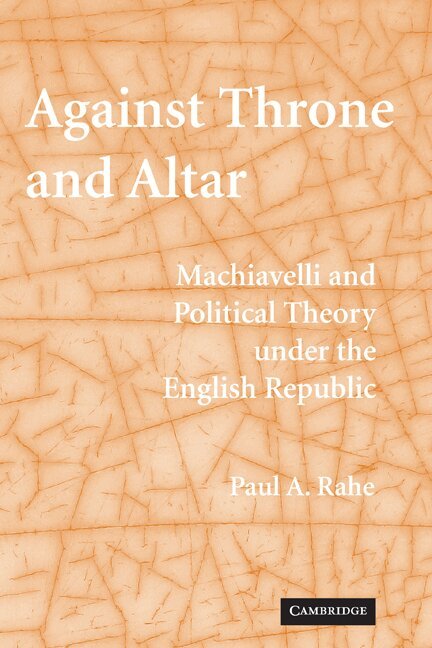
Against Throne and Altar
Machiavelli and Political Theory Under the English Republic
Av Paul A. Rahe
Häftad, 2009
557 kr
Lägg i varukorg
Modern republicanism - distinguished from its classical counterpart by its commercial character and jealous distrust of those in power, by its use of representative institutions, and by its employment of a separation of powers and a system of checks and balances - owes an immense debt to the …
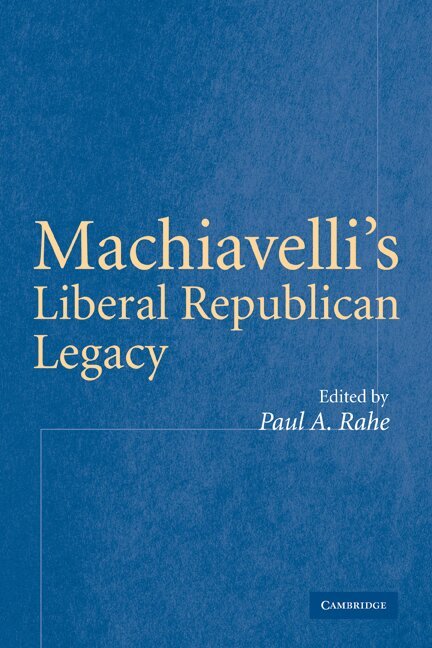
Machiavelli's Liberal Republican Legacy
Av Paul A. Rahe
Häftad, 2010
667 kr
Lägg i varukorg
The significance of Machiavelli's political thinking for the development of modern republicanism is a matter of great controversy. In this volume, a distinguished team of political theorists and historians reassess the evidence, examining the character of Machiavelli's own republicanism and …
Machiavelli's Liberal Republican Legacy
Av Paul A. Rahe
Inbunden, 2005
1188 kr
Lägg i varukorg
The significance of Machiavelli's political thinking for the development of modern republicanism is a matter of great controversy. In this volume, a distinguished team of political theorists and historians reassess the evidence, examining the character of Machiavelli's own republicanism and …
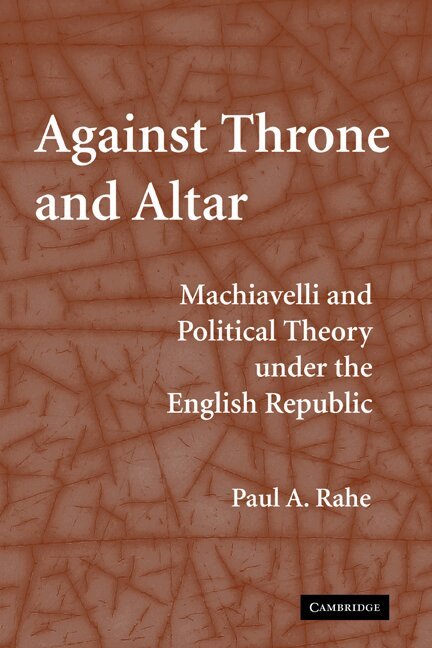
Against Throne and Altar
Machiavelli and Political Theory Under the English Republic
Av Paul A. Rahe
Inbunden, 2008
1434 kr
Lägg i varukorg
Modern republicanism - distinguished from its classical counterpart by its commercial character and jealous distrust of those in power, by its use of representative institutions, and by its employment of a separation of powers and a system of checks and balances - owes an immense debt to the …
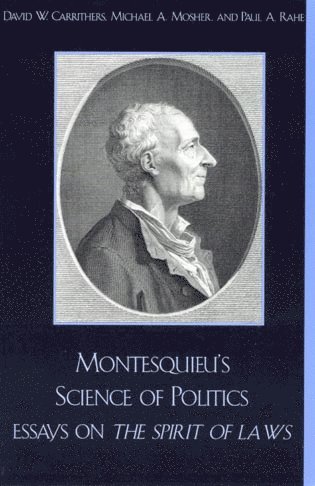
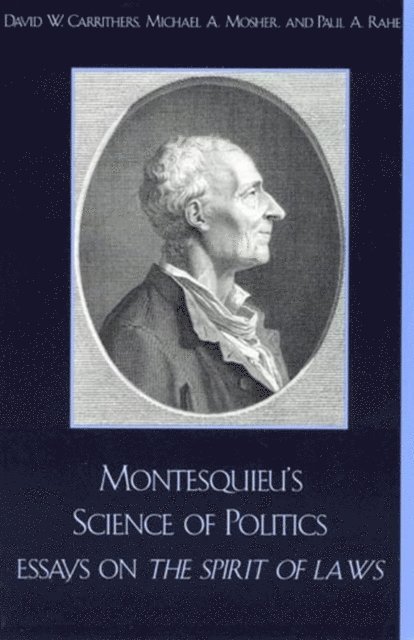
Montesquieu's Science of Politics
Essays on The Spirit of Laws
Av David W. Carrithers, Michael A. Mosher m. fl.
Inbunden, 2000
1986 kr
Lägg i varukorg
Montesquieu's The Spirit of Laws is one of a handful of classic works of political philosophy deserving a fresh reading every generation. The product of immense erudition, Montesquieu's treatise has captured since its first printing (1748) the imagination of an impressive array of intellectuals …
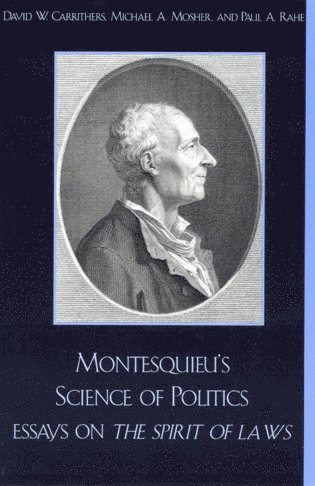
Montesquieu's Science of Politics
Essays on The Spirit of Laws
Av David W. Carrithers, Michael A. Mosher m. fl.
Häftad, 2000
714 kr
Lägg i varukorg
Montesquieu's The Spirit of Laws is one of a handful of classic works of political philosophy deserving a fresh reading every generation. The product of immense erudition, Montesquieu's treatise has captured since its first printing (1748) the imagination of an impressive array of intellectuals …
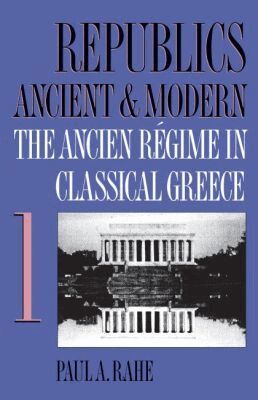
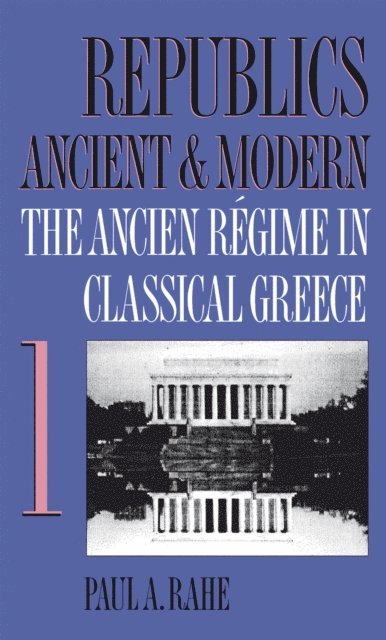
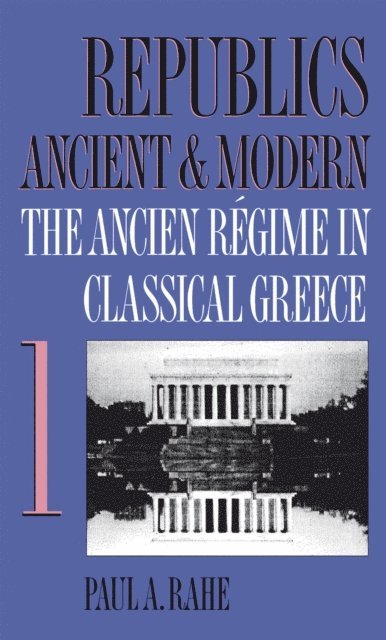
Republics Ancient and Modern, Volume I
The Ancien Régime in Classical Greece
Av Paul A. Rahe
Häftad, 1994
678 kr
Lägg i varukorg
An assessment of the ancient Greek city and its subsequent influence. A masterwork of political theory and comparative politics for the classroom. ""In a series of sketches touching on everything from the lust for honor to the suspicion of commerce and philosophy, from the role of homoerotic bonds …
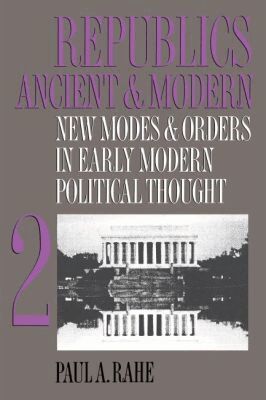
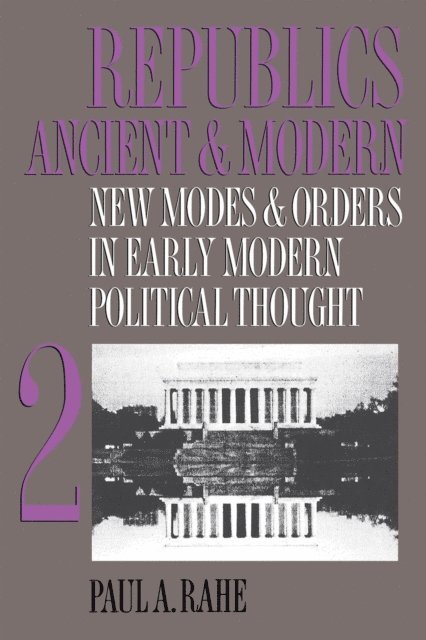
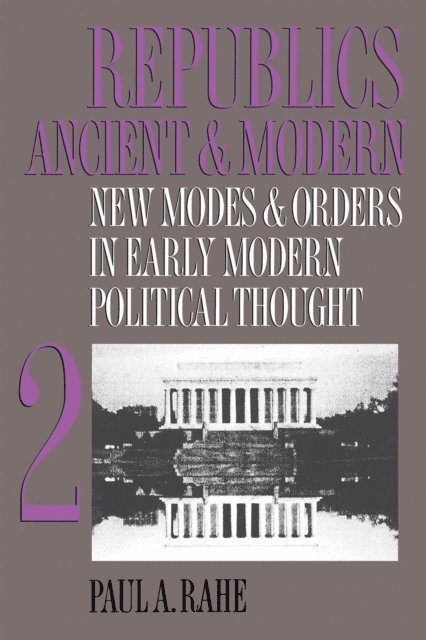
Republics Ancient and Modern, Volume II
New Modes and Orders in Early Modern Political Thought
Av Paul A. Rahe
Häftad, 1994
678 kr
Lägg i varukorg
This is a work vast in scale, soaring in its scholarly ambition, and magnificent . . . in its achievement. The author's command of the primary sources is staggering in breadth and depth, deftly orchestrated and rich with insight. . . . Deploying an avalanche of evidence. . . Rahe shows how alien …
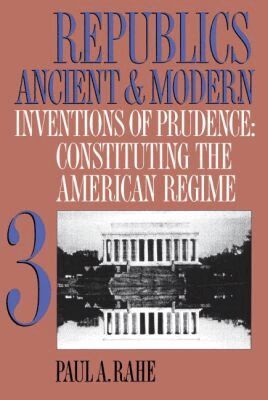
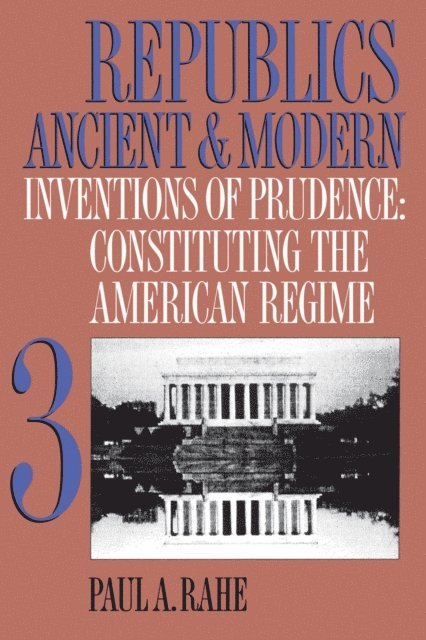
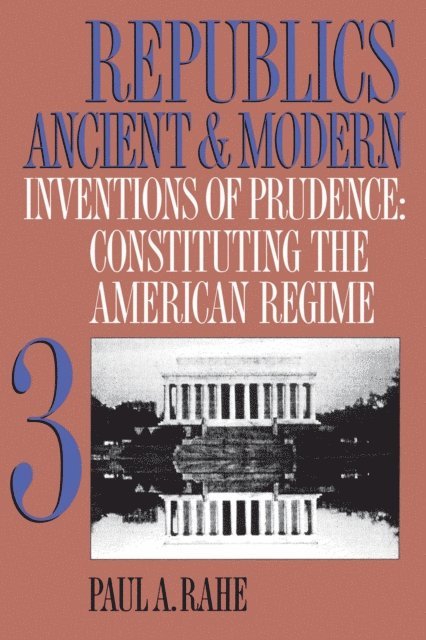
Republics Ancient and Modern, Volume III
Inventions of Prudence: Constituting the American Regime
Av Paul A. Rahe
Häftad, 1994
678 kr
Lägg i varukorg
First published in 1992 and now available in paperback in three volumes, Paul Rahe's ambitious and provocative book bridges the gap between political theory, comparative history and government, and constitutional prudence. Rahe challenges prevailing interpretations of ancient Greek republicanism, …
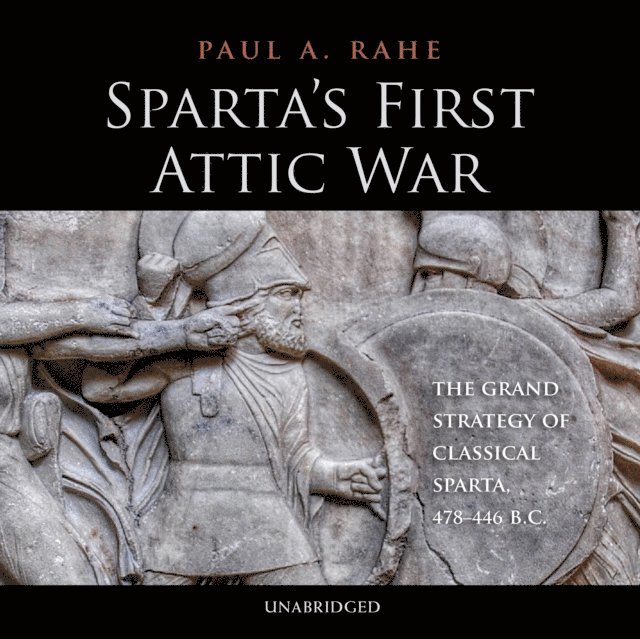
Sparta's First Attic War
The Grand Strategy of Classical Sparta, 478–446 BC
Av Paul A. Rahe
Ljudbok, 2020
293 kr
Lägg i varukorg
Winner of the 2019 Stratfor Book Award for Geopolitical Analysis A companion volume to The Spartan Regime and The Grand Strategy of Classical Sparta that explores the collapse of the Spartan‑Athenian alliance During the Persian Wars, Sparta and Athens worked in tandem to defeat what was, in terms …
Sparta's Second Attic War
The Grand Strategy of Classical Sparta, 446–418 BC
Av Paul A. Rahe
Ljudbok, 2020
335 kr
Lägg i varukorg
The latest volume in Paul Rahe’s expansive history of Sparta’s response to the challenges posed to its grand strategy In a continuation of his multivolume series on ancient Sparta, Paul Rahe narrates the second stage in the six decades long, epic struggle between Sparta and Athens that first …
Montesquieu's Science of Politics
Essays on the Spirit of Laws
Av David W. Carrithers, Michael A. Mosher m. fl.
E-bok, 2000
757 kr
Lägg i varukorg
Montesquieu''s The Spirit of Laws is one of a handful of classic works of political philosophy deserving a fresh reading every generation. The product of immense erudition, Montesquieu''s treatise has captured since its first printing (1748) the imagination of an impressive array of intellectuals …
Republics Ancient and Modern, Volume III
Inventions of Prudence: Constituting the American Regime
Av Paul A. Rahe
E-bok, 2017
503 kr
Lägg i varukorg
First published in 1992 and now available in paperback in three volumes, Paul Rahe''s ambitious and provocative book bridges the gap between political theory, comparative history and government, and constitutional prudence. Rahe challenges prevailing interpretations of ancient Greek republicanism, …
Republics Ancient and Modern, Volume I
The Ancien Régime in Classical Greece
Av Paul A. Rahe
E-bok, 2017
535 kr
Lägg i varukorg
An assessment of the ancient Greek city and its subsequent influence. A masterwork of political theory and comparative politics for the classroom. "In a series of sketches touching on everything from the lust for honor to the suspicion of commerce and philosophy, from the role of homoerotic bonds …
Republics Ancient and Modern, Volume II
New Modes and Orders in Early Modern Political Thought
Av Paul A. Rahe
E-bok, 2017
520 kr
Lägg i varukorg
This is a work vast in scale, soaring in its scholarly ambition, and magnificent . . . in its achievement. The author''s command of the primary sources is staggering in breadth and depth, deftly orchestrated and rich with insight. . . . Deploying an avalanche of evidence. . . Rahe shows how alien …
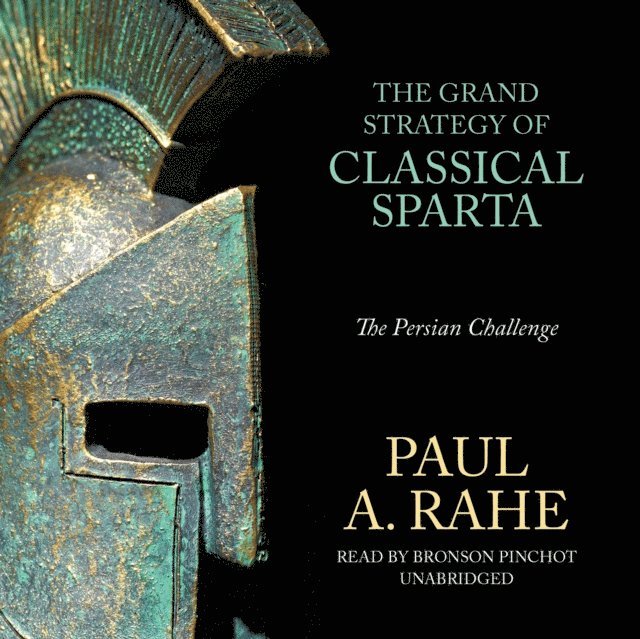
Grand Strategy of Classical Sparta
The Persian Challenge
Av Paul A. Rahe
Ljudbok, 2015
337 kr
Lägg i varukorg
More than 2,500 years ago, a confederation of small Greek city-states defeated the invading armies of Persia, the most powerful empire in the world. In this meticulously researched study, historian Paul Rahe argues that Sparta was responsible for the initial establishment of the Hellenic defensive …
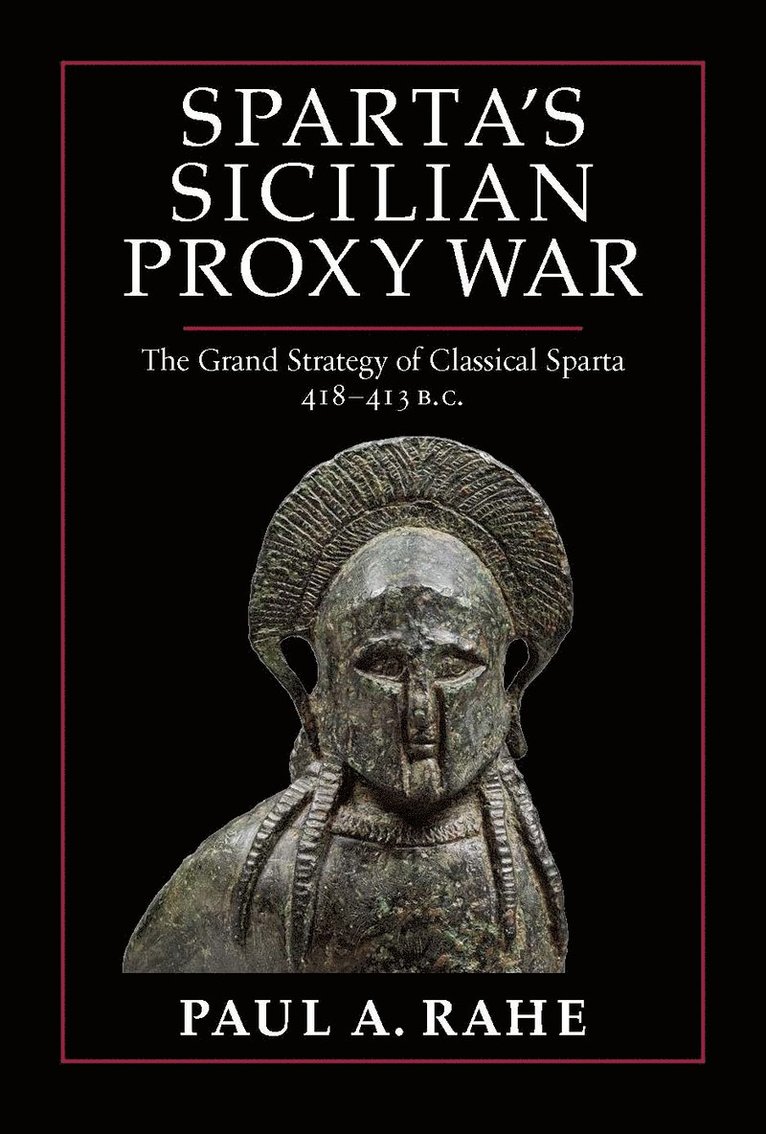
Sparta's Sicilian Proxy War
The Grand Strategy of Classical Sparta, 418-413 B.C.
Av Paul A. Rahe
Inbunden, 2023
318 kr
Lägg i varukorg
The great expedition to Sicily described in the sixth and seventh books of Thucydides’ history can be depicted in a variety of ways. By some, it has been thoughtfully treated as an example of overreaching on the part of the Athenians. By others, it has been singled out as a sterling example of …
Sparta's Sicilian Proxy War
The Grand Strategy of Classical Sparta, 418-413 BC
Av Paul A. Rahe
E-bok, 2023
474 kr
Lägg i varukorg
The great expedition to Sicily described in the sixth and seventh books of Thucydides’ history can be depicted in a variety of ways. By some, it has been thoughtfully treated as an example of overreaching on the part of the Athenians. By others, it has been singled out as a sterling example of …
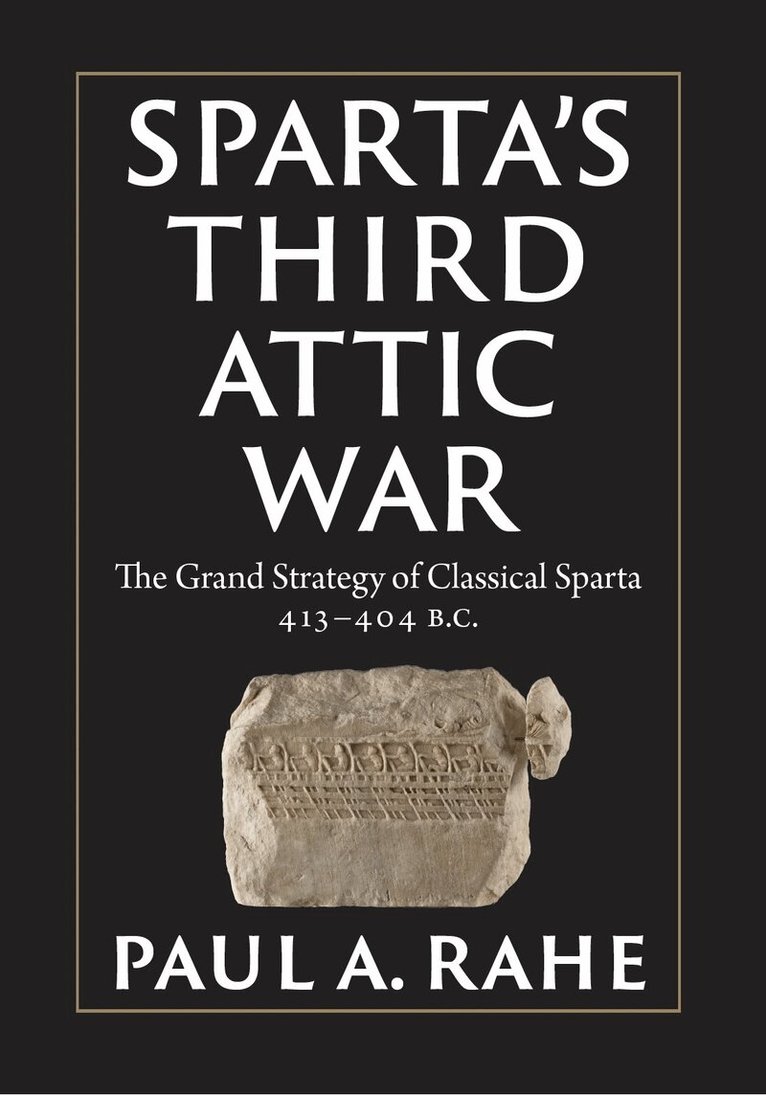
Sparta's Third Attic War
The Grand Strategy of Classical Sparta, 413-404 BC
Av Paul A. Rahe
Inbunden, 2025
361 kr
Lägg i varukorg
When the great war pitting the Athenians against the Peloponnesians first erupted, Pericles told his compatriots that, if they kept up their navy, focused on the conflict at hand, and refrained from wasting their resources on ulterior objects, they would "win through" – and Thucydides believed him. …
Sparta's Third Attic War
The Grand Strategy of Classical Sparta, 413-404 BC
Av Paul A. Rahe
E-bok, 2024
582 kr
Lägg i varukorg
When the great war pitting the Athenians against the Peloponnesians first erupted, Pericles told his compatriots that, if they kept up their navy, focused on the conflict at hand, and refrained from wasting their resources on ulterior objects, they would "win through" – and Thucydides believed him. …
Republics Ancient and Modern, Volume I
The Ancien Régime in Classical Greece
Av Paul A. Rahe
E-bok, 2017
535 kr
Lägg i varukorg
An assessment of the ancient Greek city and its subsequent influence. A masterwork of political theory and comparative politics for the classroom. "In a series of sketches touching on everything from the lust for honor to the suspicion of commerce and philosophy, from the role of homoerotic bonds …
Republics Ancient and Modern, Volume II
New Modes and Orders in Early Modern Political Thought
Av Paul A. Rahe
E-bok, 2017
520 kr
Lägg i varukorg
This is a work vast in scale, soaring in its scholarly ambition, and magnificent . . . in its achievement. The author''s command of the primary sources is staggering in breadth and depth, deftly orchestrated and rich with insight. . . . Deploying an avalanche of evidence. . . Rahe shows how alien …
Republics Ancient and Modern, Volume III
Inventions of Prudence: Constituting the American Regime
Av Paul A. Rahe
E-bok, 2017
520 kr
Lägg i varukorg
First published in 1992 and now available in paperback in three volumes, Paul Rahe''s ambitious and provocative book bridges the gap between political theory, comparative history and government, and constitutional prudence. Rahe challenges prevailing interpretations of ancient Greek republicanism, …