Paul B. Stephan – författare
Visar alla böcker från författaren Paul B. Stephan. Handla med fri frakt och snabb leverans.
15 produkter
15 produkter
Inbunden, Engelska, 2018
1 388 kr
Skickas inom 5-8 vardagar
By definition, international law, once agreed upon and consented to, applies to all parties equally. It is perhaps the one area of law where cross-country comparison seems inappropriate, because all parties are governed by the same rules. However, as this book explains, states sometimes adhere to similar, and at other times, adopt different interpretations of the same international norms and standards. International legal rules are not a monolithic whole, but are the basis for ongoing contestation in which states set forth competing interpretations. International norms are interpreted and redefined by national executives, legislatures, and judiciaries. These varying and evolving interpretations can, in turn, change and impact the international rules themselves. These similarities and differences make for an important, but thus far, largely unexamined object of comparison. This is the premise for this book, and for what the editors call "comparative international law." This book achieves three objectives. The first is to show that international law is not a monolith. The second is to map the cross-country similarities and differences in international legal norms in different fields of international law, as well as their application and interpretation with regards to geographic differences. The third is to make a first and preliminary attempt to explain these differences. It is organized into three broad thematic sections, exploring: conceptual matters, domestic institutions and comparative international law, and comparing approaches across issue-areas. The chapters are authored by contributors who include leading international law and comparative law scholars with diverse backgrounds, experience, and perspectives.
E-bok
PDF, Engelska, 20171 359 kr
Läs direkt efter köp
By definition, international law, once agreed upon and consented to, applies to all parties equally. It is perhaps the one area of law where cross-country comparison seems inappropriate, because all parties are governed by the same rules. However, as this book explains, states sometimes adhere to similar, and at other times, adopt different interpretations of the same international norms and standards. International legal rules are not a monolithic whole, but are the basis for ongoing contestation in which states set forth competing interpretations. International norms are interpreted and redefined by national executives, legislatures, and judiciaries. These varying and evolving interpretations can, in turn, change and impact the international rules themselves. These similarities and differences make for an important, but thus far, largely unexamined object of comparison. This is the premise for this book, and for what the editors call "comparative international law."This book achieves three objectives. The first is to show that international law is not a monolith. The second is to map the cross-country similarities and differences in international legal norms in different fields of international law, as well as their application and interpretation with regards to geographic differences. The third is to make a first and preliminary attempt to explain these differences. It is organized into three broad thematic sections, exploring: conceptual matters, domestic institutions and comparative international law, and comparing approaches across issue-areas. The chapters are authored by contributors who include leading international law and comparative law scholars with diverse backgrounds, experience, and perspectives.
E-bok
Engelska, 20171 359 kr
Läs direkt efter köp
By definition, international law, once agreed upon and consented to, applies to all parties equally. It is perhaps the one area of law where cross-country comparison seems inappropriate, because all parties are governed by the same rules. However, as this book explains, states sometimes adhere to similar, and at other times, adopt different interpretations of the same international norms and standards. International legal rules are not a monolithic whole, but are the basis for ongoing contestation in which states set forth competing interpretations. International norms are interpreted and redefined by national executives, legislatures, and judiciaries. These varying and evolving interpretations can, in turn, change and impact the international rules themselves. These similarities and differences make for an important, but thus far, largely unexamined object of comparison. This is the premise for this book, and for what the editors call "comparative international law."This book achieves three objectives. The first is to show that international law is not a monolith. The second is to map the cross-country similarities and differences in international legal norms in different fields of international law, as well as their application and interpretation with regards to geographic differences. The third is to make a first and preliminary attempt to explain these differences. It is organized into three broad thematic sections, exploring: conceptual matters, domestic institutions and comparative international law, and comparing approaches across issue-areas. The chapters are authored by contributors who include leading international law and comparative law scholars with diverse backgrounds, experience, and perspectives.
Inbunden, Engelska, 2020
1 831 kr
Skickas inom 5-8 vardagar
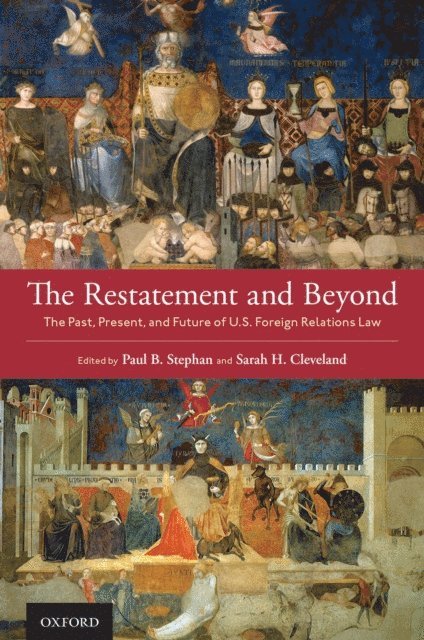
Reflecting on the Fourth Restatement of the Foreign Relations Law, these essays provide a comprehensive survey of the most significant issues in contemporary U.S. foreign relations law. They review the context and assumptions on which that work relied, critique its analysis and conclusions, and explore topics left out of the published work that need research and development. Collectively the essays provide an authoritative study of the issues generating controversy today as well as those most likely to emerge in the coming decade.The book is organized in three parts. The first provides a historical context for the law of foreign relations from the beginning of the twentieth century to the present. The second and largest part looks at contested issues in foreign relations law today, from the status of international law as federal domestic law to presidential authority to make, unmake, and apply international agreements; and to the immunity of international organizations and foreign government officials from domestic lawsuits. The last part considers how foreign relations law might develop in the future as well as the difficulties raised by using the Restatement process as a way of contributing to the law's development.These essays for the most part concentrate on U.S. law, but the problems they face are common to all democratic republics that seek to reconcile international relations with the rule of law.
E-bok
PDF, Engelska, 20201 833 kr
Läs direkt efter köp
Reflecting on the Fourth Restatement of the Foreign Relations Law, these essays provide a comprehensive survey of the most significant issues in contemporary U.S. foreign relations law. They review the context and assumptions on which that work relied, critique its analysis and conclusions, and explore topics left out of the published work that need research and development. Collectively the essays provide an authoritative study of the issues generating controversy today as well as those most likely to emerge in the coming decade.The book is organized in three parts. The first provides a historical context for the law of foreign relations from the beginning of the twentieth century to the present. The second and largest part looks at contested issues in foreign relations law today, from the status of international law as federal domestic law to presidential authority to make, unmake, and apply international agreements; and to the immunity of international organizations and foreign government officials from domestic lawsuits. The last part considers how foreign relations law might develop in the future as well as the difficulties raised by using the Restatement process as a way of contributing to the law''s development.These essays for the most part concentrate on U.S. law, but the problems they face are common to all democratic republics that seek to reconcile international relations with the rule of law.
E-bok
Engelska, 20201 833 kr
Läs direkt efter köp
Reflecting on the Fourth Restatement of the Foreign Relations Law, these essays provide a comprehensive survey of the most significant issues in contemporary U.S. foreign relations law. They review the context and assumptions on which that work relied, critique its analysis and conclusions, and explore topics left out of the published work that need research and development. Collectively the essays provide an authoritative study of the issues generating controversy today as well as those most likely to emerge in the coming decade.The book is organized in three parts. The first provides a historical context for the law of foreign relations from the beginning of the twentieth century to the present. The second and largest part looks at contested issues in foreign relations law today, from the status of international law as federal domestic law to presidential authority to make, unmake, and apply international agreements; and to the immunity of international organizations and foreign government officials from domestic lawsuits. The last part considers how foreign relations law might develop in the future as well as the difficulties raised by using the Restatement process as a way of contributing to the law''s development.These essays for the most part concentrate on U.S. law, but the problems they face are common to all democratic republics that seek to reconcile international relations with the rule of law.
Häftad, Engelska, 2011
413 kr
Skickas inom 7-10 vardagar
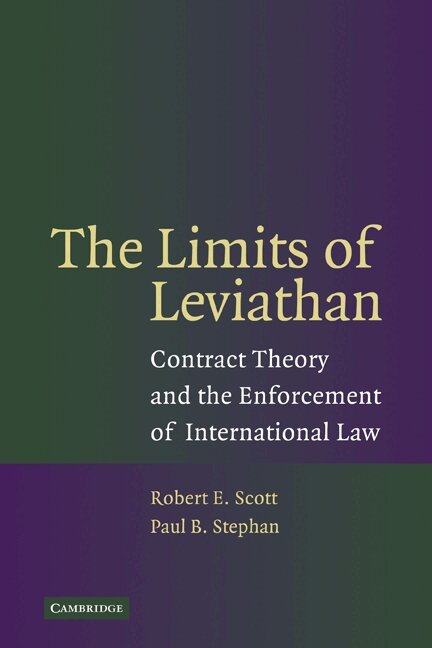
Much of international law, like much of contract, is enforced not by independent sanctions but rather through cooperative interaction among the parties, with repeat dealings, reputation, and a preference for reciprocity doing most of the enforcement work. Originally published in 2006, The Limits of Leviathan identifies areas in international law where formal enforcement provides the most promising means of promoting cooperation and where it does not. In particular, it looks at the International Criminal Court, the rules for world trade, efforts to enlist domestic courts to enforce orders of the International Court of Justice, domestic judicial enforcement of the Geneva Convention, the domain of international commercial agreements, and the question of odious debt incurred by sovereigns. This book explains how international law, like contract, depends largely on the willingness of responsible parties to make commitments.
Inbunden, Engelska, 2006
1 260 kr
Skickas inom 7-10 vardagar
Much of international law, like much of contract, is enforced not by independent sanctions but rather through cooperative interaction among the parties, with repeat dealings, reputation, and a preference for reciprocity doing most of the enforcement work. Originally published in 2006, The Limits of Leviathan identifies areas in international law where formal enforcement provides the most promising means of promoting cooperation and where it does not. In particular, it looks at the International Criminal Court, the rules for world trade, efforts to enlist domestic courts to enforce orders of the International Court of Justice, domestic judicial enforcement of the Geneva Convention, the domain of international commercial agreements, and the question of odious debt incurred by sovereigns. This book explains how international law, like contract, depends largely on the willingness of responsible parties to make commitments.
Häftad, Engelska, 1985
182 kr
Skickas inom 5-8 vardagar
Inbunden, Engelska, 2023
934 kr
Skickas inom 7-10 vardagar
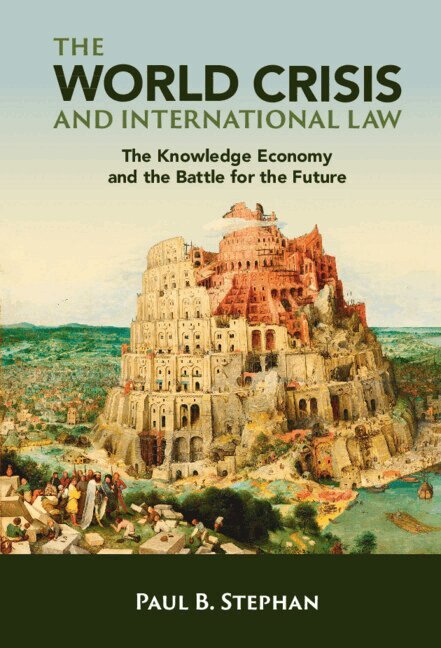
The knowledge economy, a seeming wonder for the world, has caused unintended harms that threaten peace and prosperity and undo international cooperation and the international rule of law. The world faces threats of war, pandemics, growing domestic political discord, climate change, disruption of international trade and investment, immigration, and the pollution of cyberspace, just as international law increasingly falls short as a tool for managing these challenges. Prosperity dependent on meritocracy, open borders, international economic freedom, and a wide-open Internet has met its limits, with international law one of the first casualties. Any effective response to these threats must reflect the pathway by which these perils arrive. Part of the answer to these challenges, Paul B. Stephan argues, must include a re-conception of international law as arising out of pragmatic and limited experiments by states, rather than as grand projects to remake and redeem the world.
E-bok
Engelska, 2023352 kr
Läs direkt efter köp
The knowledge economy, a seeming wonder for the world, has caused unintended harms that threaten peace and prosperity and undo international cooperation and the international rule of law. The world faces threats of war, pandemics, growing domestic political discord, climate change, disruption of international trade and investment, immigration, and the pollution of cyberspace, just as international law increasingly falls short as a tool for managing these challenges. Prosperity dependent on meritocracy, open borders, international economic freedom, and a wide-open Internet has met its limits, with international law one of the first casualties. Any effective response to these threats must reflect the pathway by which these perils arrive. Part of the answer to these challenges, Paul B. Stephan argues, must include a re-conception of international law as arising out of pragmatic and limited experiments by states, rather than as grand projects to remake and redeem the world.
Häftad, Engelska, 2023
292 kr
Skickas inom 7-10 vardagar
The knowledge economy, a seeming wonder for the world, has caused unintended harms that threaten peace and prosperity and undo international cooperation and the international rule of law. The world faces threats of war, pandemics, growing domestic political discord, climate change, disruption of international trade and investment, immigration, and the pollution of cyberspace, just as international law increasingly falls short as a tool for managing these challenges. Prosperity dependent on meritocracy, open borders, international economic freedom, and a wide-open Internet has met its limits, with international law one of the first casualties. Any effective response to these threats must reflect the pathway by which these perils arrive. Part of the answer to these challenges, Paul B. Stephan argues, must include a re-conception of international law as arising out of pragmatic and limited experiments by states, rather than as grand projects to remake and redeem the world.
E-bok
PDF, Engelska, 2023352 kr
Läs direkt efter köp
The knowledge economy, a seeming wonder for the world, has caused unintended harms that threaten peace and prosperity and undo international cooperation and the international rule of law. The world faces threats of war, pandemics, growing domestic political discord, climate change, disruption of international trade and investment, immigration, and the pollution of cyberspace, just as international law increasingly falls short as a tool for managing these challenges. Prosperity dependent on meritocracy, open borders, international economic freedom, and a wide-open Internet has met its limits, with international law one of the first casualties. Any effective response to these threats must reflect the pathway by which these perils arrive. Part of the answer to these challenges, Paul B. Stephan argues, must include a re-conception of international law as arising out of pragmatic and limited experiments by states, rather than as grand projects to remake and redeem the world.
Del 8 - Economic Approaches to Law series
Economics of European Union Law
Inbunden, Engelska, 2007
5 732 kr
Skickas inom 5-8 vardagar
Economic analysis is becoming an increasingly powerful means of illuminating the European Union legal system, both as a method of deciphering and of influencing EU policy. This important volume focuses upon this relationship between economics and EU law, elucidating both the complex and complementary nature of these two subjects. This authoritative selection of articles includes topics such as the politics of European federalism, the law and economics of immigration policy, judicial review and corporate governance in the European Union. Professor Stephan's perceptive introduction highlights the interrelated aspect of these subjects and the potential conclusions to be drawn from the volume as a whole.
E-bok
PDF, Engelska, 2024259 kr
Läs direkt efter köp
The view that international law functions independently of municipal law (hermetically), does not reflect contemporary international practice. Instead, international law in the modern era engages intensively and extensively in projects that occupy areas traditionally governed by municipal law, such as business regulation as well as the rights and duties of persons. The resulting overlap in legal dominions requires a new conceptualization of the relationship between international and municipal law. This book explores the mechanisms employed to allocate authority to international and municipal law in international disputes. Taking a broader view, this course explores the work of international bodies, domestic courts, and informal dispute resolution, including diplomacy and the use of coercive measures. It identifies the mechanisms used to manage the overlapping dominions of international and municipal law as pooling, referral, and nesting. In the final chapter, the book explores how different opportunities and ambitions for international law can affect the use of these mechanisms in particular international disputes.