Paul Faulkner - Böcker
Visar alla böcker från författaren Paul Faulkner. Handla med fri frakt och snabb leverans.
5 produkter
5 produkter
608 kr
Skickas
We know a lot about the world and our place in it. We have come to this knowledge in a variety of ways. And one central way that we, both as individuals and as a society, have come to know what we do is through communication with others. Much of what we know, we know on the basis of testimony. In Knowledge on Trust, Paul Faulkner presents an epistemological theory of testimony, or a theory that explains how it is that we acquire knowledge and warranted belief from testimony. The key questions addressed in this book are: what makes it reasonable to accept a piece of testimony? And what warrants belief formed on this testimonial basis? Faulkner argues that existing theories of testimony largely fail because they do not recognise how issues of practical rationality motivate the first question, and this is what makes testimony distinctive as a source of knowledge. At the heart of the theory this book presents is the idea that trust is central to answering these two questions. An attitude of trust can make it reasonable to depend on another's testimony, but what warrants testimonial belief is not trust but the body of evidence the testimony originates from. Testimonial knowledge and testimonially warranted belief are formed on trust. Faulkner goes on to argue that our having a way of life wherein testimony can provide such a source of knowledge and warrant is dependent upon a society in which a certain kind of trust is possible.
1 513 kr
Skickas inom 5-8 vardagar
Trust is central to our social lives. We know by trusting what others tell us. We act on that basis, and on the basis of trust in their promises and implicit commitments. So trust underpins both epistemic and practical cooperation and is key to philosophical debates on the conditions of its possibility. It is difficult to overstate the significance of these issues. On the practical side, discussions of cooperation address what makes society possible-of how it is that life is not a Hobbesian war of all against all. On the epistemic side, discussions of cooperation address what makes the pooling of knowledge possible-and so the edifice that is science. But trust is not merely central to our lives instrumentally; trusting relations are themselves of great value, and in trusting others, we realise distinctive forms of value. What are these forms of value, and how is trust central to our lives? These questions are explored and developed in this volume, which collects fifteen new essays on the philosophy of trust. They develop and extend existing philosophical discussion of trust and will provide a reference point for future work on trust.
1 051 kr
Skickas inom 5-8 vardagar
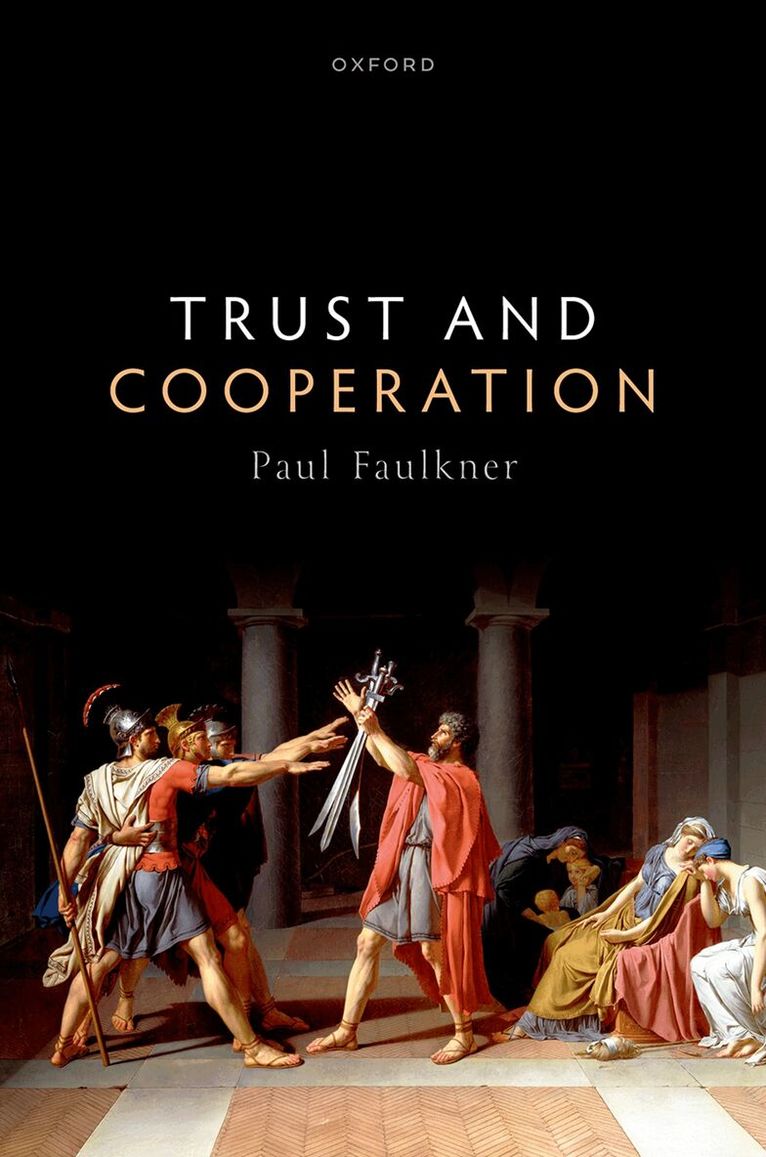
Trust is a cooperating enabling attitude. We cooperate both practically and epistemically: we coordinate our actions and share what we know, and in both cases, trust enables this cooperation. By virtue of trusting, it is rational to rely on others. When this is taken to be the function of trust, two distinct attitudes emerge as trusting. One is situated within an objective view of the world and constitutes a prediction of behaviour, which in the interpersonal case amounts to some calculation of interest from sanctions and rewards. The other can only be interpersonal and requires these interactions be approached from the participant stance. In Trust and Cooperation, Paul Faulkner considers how these two distinct attitudes of trust--predictive and affective--support cooperation and how the two perspectives on our interpersonal life within which each is embedded engage with each other. Affective trust is a response to another's commitment, which sees the commitment itself as constituting a reason to believe and places on the trusted an expectation of this commitment being fulfilled. It is a commitment indexed expectation. In being optimistically held, trust in this sense constitutes a form of recognition and respect. So we can wrong others in relying only on calculation of the probability of outcome. But our actual engagements can be messy; as well as being an interpersonal act, cooperation can equally be calculated coordination.
886 kr
Skickas inom 5-8 vardagar
We know a lot about the world and our place in it. We have come to this knowledge in a variety of ways. And one central way that we, both as individuals and as a society, have come to know what we do is through communication with others. Much of what we know, we know on the basis of testimony. In Knowledge on Trust, Paul Faulkner presents an epistemological theory of testimony, or a theory that explains how it is that we acquire knowledge and warranted belief from testimony.The key questions addressed in this book are: what makes it reasonable to accept a piece of testimony? And what warrants belief formed on this testimonial basis? Faulkner argues that existing theories of testimony largely fail because they do not recognise how issues of practical rationality motivate the first question, and this is what makes testimony distinctive as a source of knowledge. At the heart of the theory this book presents is the idea that trust is central to answering these two questions. An attitude of trust can make it reasonable to depend on another's testimony, but what warrants testimonial belief is not trust but the body of evidence the testimony originates from. Testimonial knowledge and testimonially warranted belief are formed on trust. Faulkner goes on to argue that our having a way of life wherein testimony is such a source of knowledge then depends on a certain kind of trust being possible.
191 kr
Skickas inom 5-8 vardagar