Paul Flewers - Böcker
Visar alla böcker från författaren Paul Flewers. Handla med fri frakt och snabb leverans.
2 produkter
2 produkter
364 kr
Skickas inom 5-8 vardagar
A seismic shock convulsed British Communism in the wake of Nikita Khruschev's revelations about Stalin at the 20th Congress of the Russian Party in February 1956: a shock that can be understood only in relation to the history and development of the British party. British Communism was rooted in the revolutionary aspirations of a minority of British workers, but its forms politics, culture, organisation, and resilience were all bound up with the policy of the Russian Communist Party and its state. '1956' became a year of crisis for the CPGB, leading to the advent of The Reasoner and catapulting John Saville and Edward Thompson to prominence. This book documents their work reasoning why Stalin became Stalin:...an analysis has to be made unless we are to succumb once again to the error which has dogged us for so long - that of failing to make a Marxist analysis of the developments in Communist movements in general and in the Socialist countries in particular...The shock and turmoil engendered by the revelations were the result of our general failure to apply a Marxist analysis to Socialist countries and to the Soviet Union in particular.The absence of such an analysis is an admission of naivety or worse. The Failure bred Utopianism and encouraged attitudes of religious faith.
231 kr
Skickas inom 11-20 vardagar
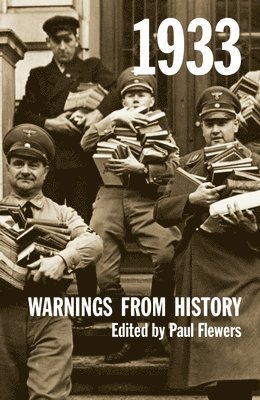
The coming to power in Germany of Hitler’s National Socialists in 1933 was possibly the biggest political disaster of the 20th century.But the victory of Hitler was by no means inevitable: the German labour movement was the strongest in the world, with mass Socialist and Communist Parties, each with an armed militia, and a powerful trade-union movement. Yet the Nazi rabble came to power almost unopposed, with barely a shot being fired against them.Peter and Irma Petroff, authors of the title piece in this book, offer an eye-witness report on the terrible events of 1933. They tell of the defeat of the German labour movement and explain why the organisations of the German working class failed miserably to confront the enemy that threatened — and was to carry out — its destruction. As the danger of new authoritarians increases, these texts are once again required reading for people who wish to learn the grim lessons of that catastrophic defeat and who are determined not to allow history to repeat itself.