Paul L. Gavrilyuk - Böcker
Visar alla böcker från författaren Paul L. Gavrilyuk. Handla med fri frakt och snabb leverans.
9 produkter
9 produkter
1 464 kr
Skickas inom 7-10 vardagar
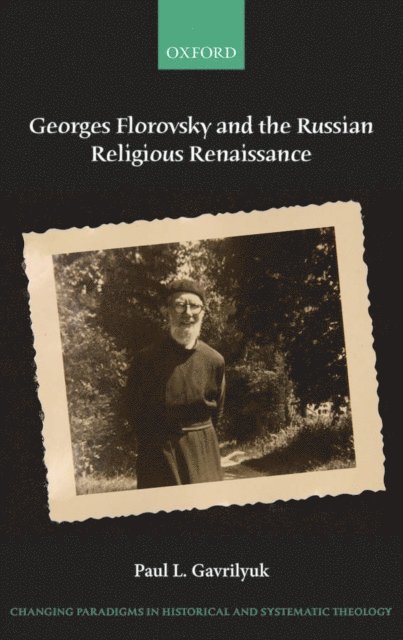
Georges Florovsky is the mastermind of a 'return to the Church Fathers' in twentieth-century Orthodox theology. His theological vision-the neopatristic synthesis-became the main paradigm of Orthodox theology and the golden standard of Eastern Orthodox identity in the West. Focusing on Florovsky's European period (1920-1948), this study analyses how Florovsky's evolving interpretation of Russian religious thought, particularly Vladimir Solovyov and Sergius Bulgakov, informed his approach to patristic sources. Paul Gavrilyuk offers a new reading of Florovsky's neopatristic theology, by closely considering its ontological, epistemological and ecclesiological foundations. It is common to contrast Florovsky's neopatristic theology with the 'modernist' religious philosophies of Pavel Florensky, Sergius Bulgakov, and other representatives of the Russian Religious Renaissance. Gavrilyuk argues that the standard narrative of twentieth-century Orthodox theology, based on this polarization, must be reconsidered. The author demonstrates Florovsky's critical appropriation of the main themes of the Russian Religious Renaissance, including theological antinomies, the meaning of history, and the nature of personhood. The distinctive features of Florovsky's neopatristic theology--Christological focus, 'ecclesial experience', personalism, and 'Christian Hellenism'--are best understood against the background of the main problematic of the Renaissance. Specifically, it is shown that Bulgakov's sophiology provided a polemical subtext for Florovsky's theology of creation. It is argued that the use of the patristic norm in application to modern Russian theology represents Florovsky's theological signature.Drawing on unpublished archival material and correspondence, this study sheds new light on such aspects of Florovsky's career as his family background, his participation in the Eurasian movement, his dissertation on Alexander Herzen, his lectures on Vladimir Solovyov, and his involvement in Bulgakov's Brotherhood of St Sophia.
582 kr
Skickas inom 5-8 vardagar
Georges Florovsky is the mastermind of a 'return to the Church Fathers' in twentieth-century Orthodox theology. His theological vision-the neopatristic synthesis-became the main paradigm of Orthodox theology and the golden standard of Eastern Orthodox identity in the West. Focusing on Florovsky's European period (1920-1948), this study analyses how Florovsky's evolving interpretation of Russian religious thought, particularly Vladimir Solovyov and Sergius Bulgakov, informed his approach to patristic sources. Paul Gavrilyuk offers a new reading of Florovsky's neopatristic theology, by closely considering its ontological, epistemological and ecclesiological foundations. It is common to contrast Florovsky's neopatristic theology with the 'modernist' religious philosophies of Pavel Florensky, Sergius Bulgakov, and other representatives of the Russian Religious Renaissance. Gavrilyuk argues that the standard narrative of twentieth-century Orthodox theology, based on this polarization, must be reconsidered. The author demonstrates Florovsky's critical appropriation of the main themes of the Russian Religious Renaissance, including theological antinomies, the meaning of history, and the nature of personhood. The distinctive features of Florovsky's neopatristic theology Christological focus, 'ecclesial experience', personalism, and 'Christian Hellenism' are best understood against the background of the main problematic of the Renaissance. Specifically, it is shown that Bulgakov's sophiology provided a polemical subtext for Florovsky's theology of creation. It is argued that the use of the patristic norm in application to modern Russian theology represents Florovsky's theological signature.Drawing on unpublished archival material and correspondence, this study sheds new light on such aspects of Florovsky's career as his family background, his participation in the Eurasian movement, his dissertation on Alexander Herzen, his lectures on Vladimir Solovyov, and his involvement in Bulgakov's Brotherhood of St Sophia.
Perceiving Things Divine
Towards a Constructive Account of Spiritual Perception
Inbunden, Engelska, 2022
1 396 kr
Skickas inom 7-10 vardagar
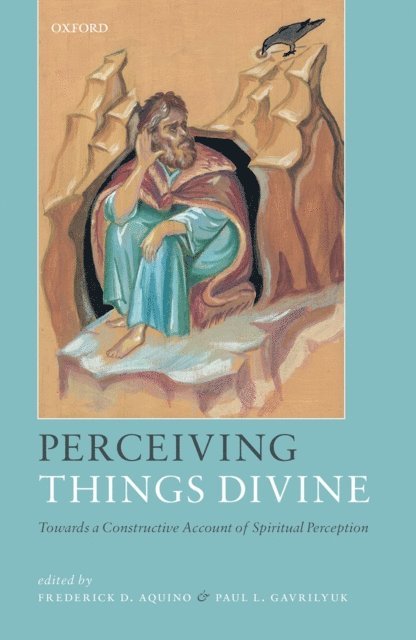
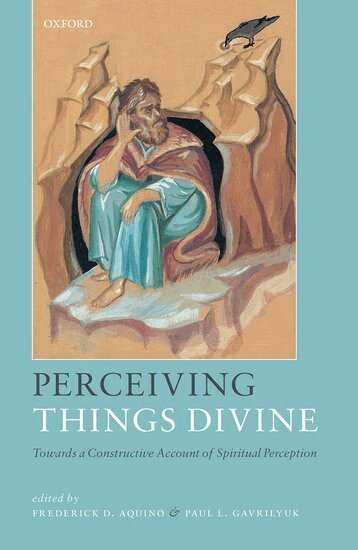
Sensory language is commonly used to describe human encounters with the divine. Scripture, for example, employs perceptual language like 'taste and see that the Lord is good', 'hear the word of the Lord', and promises that 'the pure in heart will see God'. Such statements seem to point to certain features of human cognition that make perception-like contact with divine things possible. But how precisely should these statements be construed? Can the elusive notion of 'spiritual perception' survive rigorous theological and philosophical scrutiny and receive a constructive articulation? Perceiving Things Divine seeks to make philosophical and theological sense of spiritual perception. Reflecting the results of the second phase of the Spiritual Perception Project, this volume argues for the possibility of spiritual perception. It also seeks to make progress towards a constructive account of the different aspects of spiritual perception while exploring its intersection with various theological and philosophical themes, such as biblical interpretation, aesthetics, liturgy, race, ecology, eschatology, and the hiddenness of God. The interdisciplinary scope of the volume draws on the resources of value theory, philosophy of perception, epistemology, philosophy of art, psychology, systematic theology, and theological aesthetics.The volume also draws attention to how spiritual perception may be affected by such distortions as pornographic sensibility and racial prejudice. Since perceiving spiritually involves the whole person, the volume proposes that spiritual perception could be purified by ascetic discipline, healed by contemplative practices, trained in the process of spiritual direction and the pursuit of virtue, transformed by the immersion in the sacramental life, and healed by opening the self to the operation of divine grace.
2 268 kr
Skickas inom 5-8 vardagar
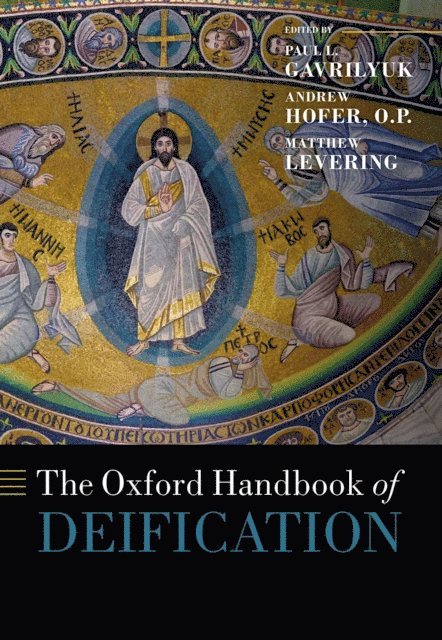
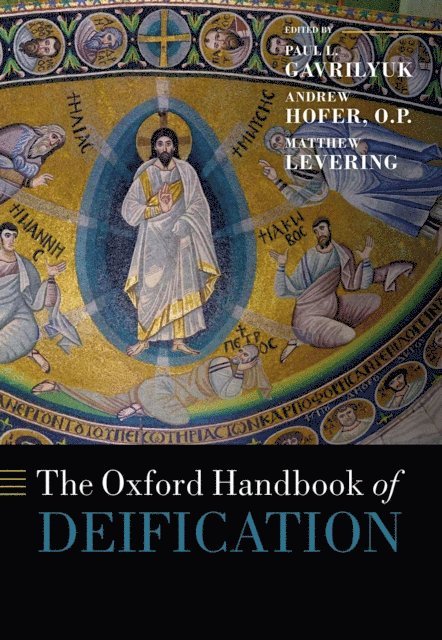
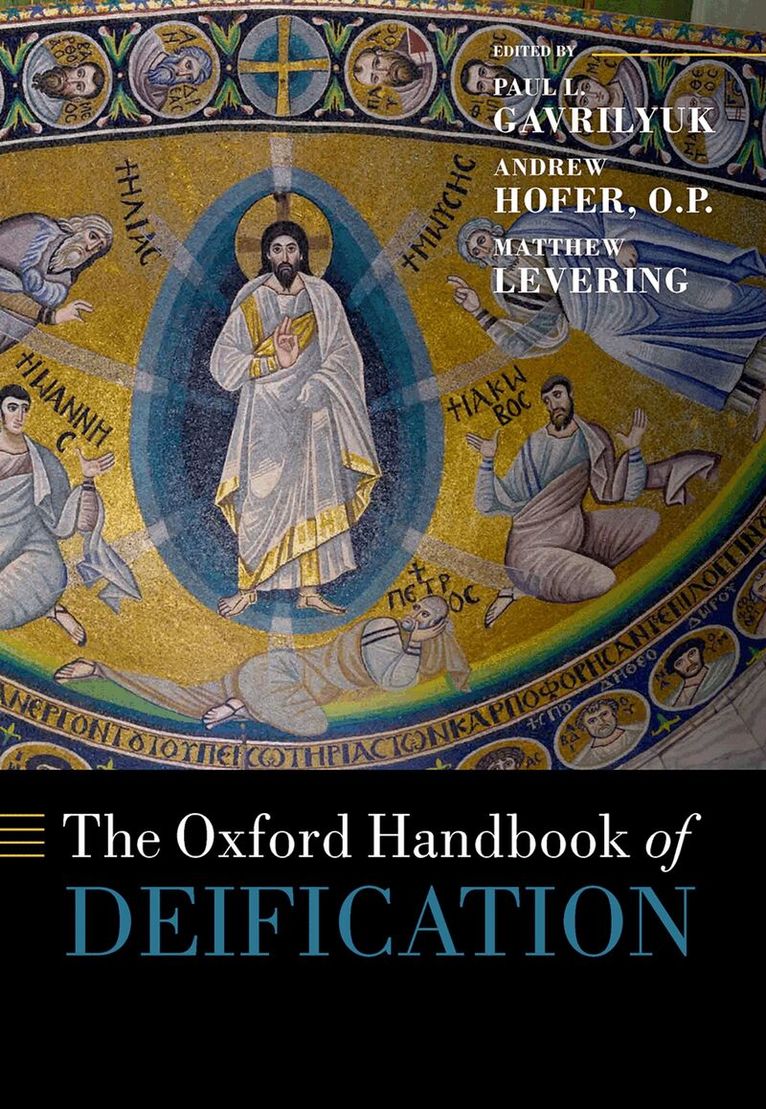
Modern theological engagements on deification have undergone two major paradigm shifts. First, the study of deification shifted from the periphery of theological discourse to its center. For Adolf von Harnack, deification was a pagan import that fatally corrupted and distorted the Gospel message of salvation. In response, the positive retrieval of the concept of deification belongs to the early years of the twentieth century. By the 1910s in Russian religious thought and by the 1930s in much Roman Catholic theology, deification had become a magnet concept attracting attention from many different viewpoints. The second important shift relates to how deification is characterized. Recent studies question the exclusively 'Eastern' character of deification and draw attention to the engagements of this theme in Latin patristic and later Western Christian sources. Reassessing the evidence for these two major shifts, The Oxford Handbook of Deification comprehensively explores the points of convergence and difference on the constitutive elements of deification in different traditions, and offers a foundation for ecumenical and interreligious dialogues. The Handbook's first part analyzes the cultural and scriptural roots of deification; the second part explores the most significant historical contributions to the understanding of deification in the early, medieval, and modern periods; the third part develops systematic connections. Readers will discover a surprizing breadth, depth, and diversity of theologies of deification in Christian traditions. Throughout the Handbook, leading scholars in the field of Deification Studies propose vital new insights from a variety of perspectives for this central mystery at the heart of the Christian faith.
2 324 kr
Skickas inom 5-8 vardagar
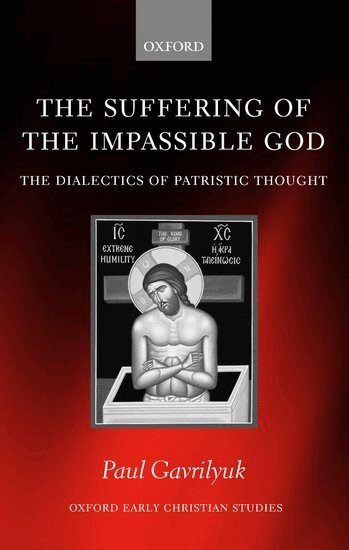
The Suffering of the Impassible God provides a major reconsideration of the notion of divine impassibility in patristic thought. The question whether, in what sense, and under what circumstances suffering may be ascribed to God runs as a golden thread through such major controversies as Docetism, Patripassianism, Arianism, and Nestorianism. It is commonly claimed that in these debates patristic theology fell prey to the assumption of Hellenistic philosophy about the impassibility of God and departed from the allegedly biblical view, according to which God is passible. As a result, patristic theology is presented as claiming that only the human nature of Christ suffered, while the divine nature remained unaffected. Paul L. Gavrilyuk argues that this standard view misrepresents the tradition. In contrast, he construes the development of patristic thought as a series of dialectical turning points taken to safeguard the paradox of God's voluntary suffering in the flesh. For the Fathers the attribute of divine impassibility functioned in a restricted sense as an apophatic qualifier of all divine emotions and as an indicator of God's full and undiminished divinity. The Fathers at the same time admitted qualified divine passibility of the Son of God within the framework of the Incarnation. Gavrilyuk shows that the Docetic, Arian, and Nestorian alternatives represent different attempts at dissolving the paradox of the Incarnation. These three alternatives are alike in that they start with the presupposition of God's unrestricted impassibility: the Docetic view proposes to give up the reality of Christ's human experiences; the Arian position sacrifices Christ's undiminished divinity; while the Nestorian alternative isolates the experiences and sufferings of Christ's humanity from his Godhead. In contrast to these alternatives, the mind of the Church succeeded in keeping God's transcendence and undiminished divinity in tension with God's intimate involvement in human suffering. It is precisely because God's divinity and transcendence are never lost in suffering that the Incarnation becomes a genuine act of divine compassion, capable of transforming and healing the human condition.
538 kr
Skickas inom 5-8 vardagar
The Suffering of the Impassible God provides a major reconsideration of the issue of divine suffering and divine emotions in the early Church Fathers. Patristic writers are commonly criticized for falling prey to Hellenistic philosophy and uncritically accepting the claim that God cannot suffer or feel emotions. Gavrilyuk shows that this view represents a misreading of evidence. In contrast, he construes the development of patristic thought as a series of dialectical turning points taken to safeguard the paradox of God's voluntary and salvific suffering in the Incarnation.
1 245 kr
Skickas inom 7-10 vardagar
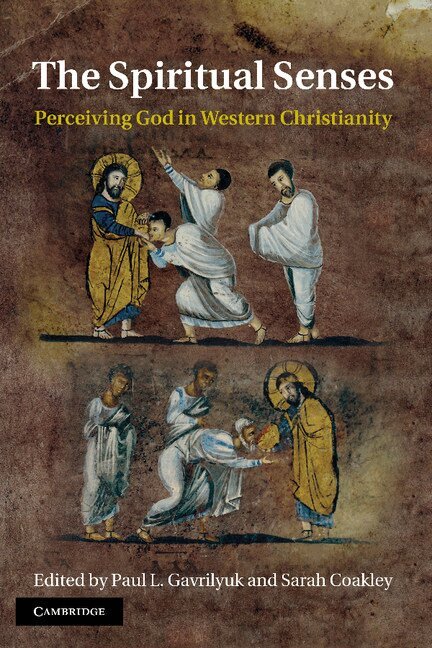
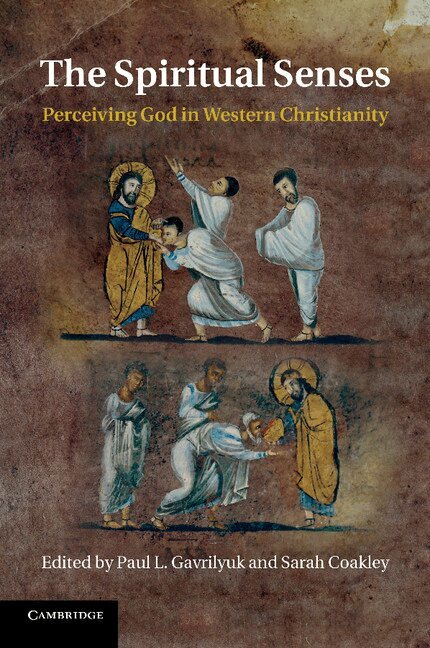
Is it possible to see, hear, touch, smell and taste God? How do we understand the biblical promise that the 'pure in heart' will 'see God'? Christian thinkers as diverse as Origen of Alexandria, Bonaventure, Jonathan Edwards and Hans Urs von Balthasar have all approached these questions in distinctive ways by appealing to the concept of the 'spiritual senses'. In focusing on the Christian tradition of the 'spiritual senses', this book discusses how these senses relate to the physical senses and the body, and analyzes their relationship to mind, heart, emotions, will, desire and judgement. The contributors illuminate the different ways in which classic Christian authors have treated this topic, and indicate the epistemological and spiritual import of these understandings. The concept of the 'spiritual senses' is thereby importantly recovered for contemporary theological anthropology and philosophy of religion.
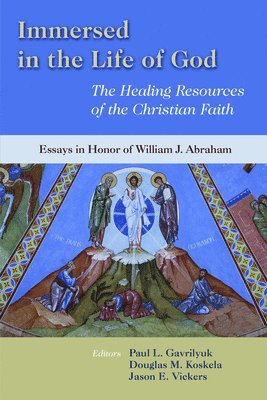
Immersed in the Life of God
The Healing Resources of the Christian Faith : Essays in Honor of William J. Abraham
Häftad, Engelska, 2008
369 kr
Skickas inom 3-6 vardagar
613 kr
Skickas inom 7-10 vardagar
Is it possible to see, hear, touch, smell and taste God? How do we understand the biblical promise that the 'pure in heart' will 'see God'? Christian thinkers as diverse as Origen of Alexandria, Bonaventure, Jonathan Edwards and Hans Urs von Balthasar have all approached these questions in distinctive ways by appealing to the concept of the 'spiritual senses'. In focusing on the Christian tradition of the 'spiritual senses', this book discusses how these senses relate to the physical senses and the body, and analyzes their relationship to mind, heart, emotions, will, desire and judgement. The contributors illuminate the different ways in which classic Christian authors have treated this topic, and indicate the epistemological and spiritual import of these understandings. The concept of the 'spiritual senses' is thereby importantly recovered for contemporary theological anthropology and philosophy of religion.