Paul Liss - Böcker
Visar alla böcker från författaren Paul Liss. Handla med fri frakt och snabb leverans.
6 produkter
6 produkter
208 kr
Tillfälligt slut
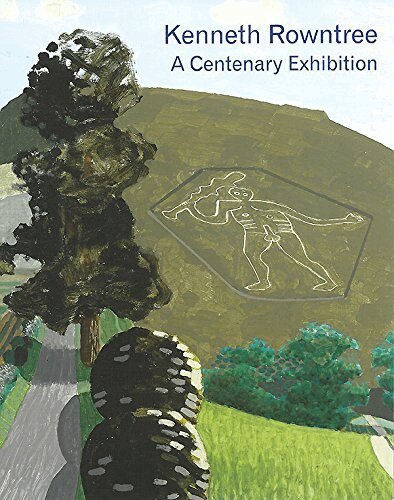
Longlisted for the Berger Art History prize 2016 Kenneth Rowntree has always been highly regarded by those familiar with his work. The essays in this catalogue, which embrace new research and scholarship, reveal him to be an artist of great scope and variety. His earlywork reflects the inspiration and creative dialogue that came out of his friendship with Eric Ravilious (1903–1942) on account of whom Rowntree moved to Great Bardfield during the 1940s. During this period he was particularly preoccupied with Kenneth Clark’s Recording Britain project. At the end of the war he joined the teaching staff at the Royal College of Art. In 1951 he was commissioned to undertake murals for the Lion and Unicorn Pavilion for the Festival of Britain. As Professor of Fine Art in Newcastle (1959–1980) he was at the epicentre of an important northern school of modernism that revolved around his friends Victor Pasmore (1908–1988) and Richard Hamilton (1922–2011). Even in retirement, his work, in its return to figuration from abstraction, displays his consistent qualities of humour and inventiveness. Rowntree’s oeuvre is both influenced by and anticipates a wide variety of artistic styles, from Ravilious to David Hockney, from the Euston Road School to the Dadaism of Kurt Schwitters. His work, however, remains unmistakably his own. This catalogue is published on the occasion of the centenary of Rowntree’s birth, and accompanies exhibitions at The Fry Art Gallery, Saffron Walden and Pallant House, Chichester. This is the first substantial reassessment of Rowntree’s work since John Milner’s monograph (2002). It is hoped that this current initiative will contribute futher to ensuring Rowntree the significant place he deserves within the history of 20th century British art.
119 kr
Skickas
This catalogue brings together one hundred years of British Painting, from 1880 – 1980\. Women are at the forefront: the essential process of rewriting their work into the narrative continues.
318 kr
Tillfälligt slut
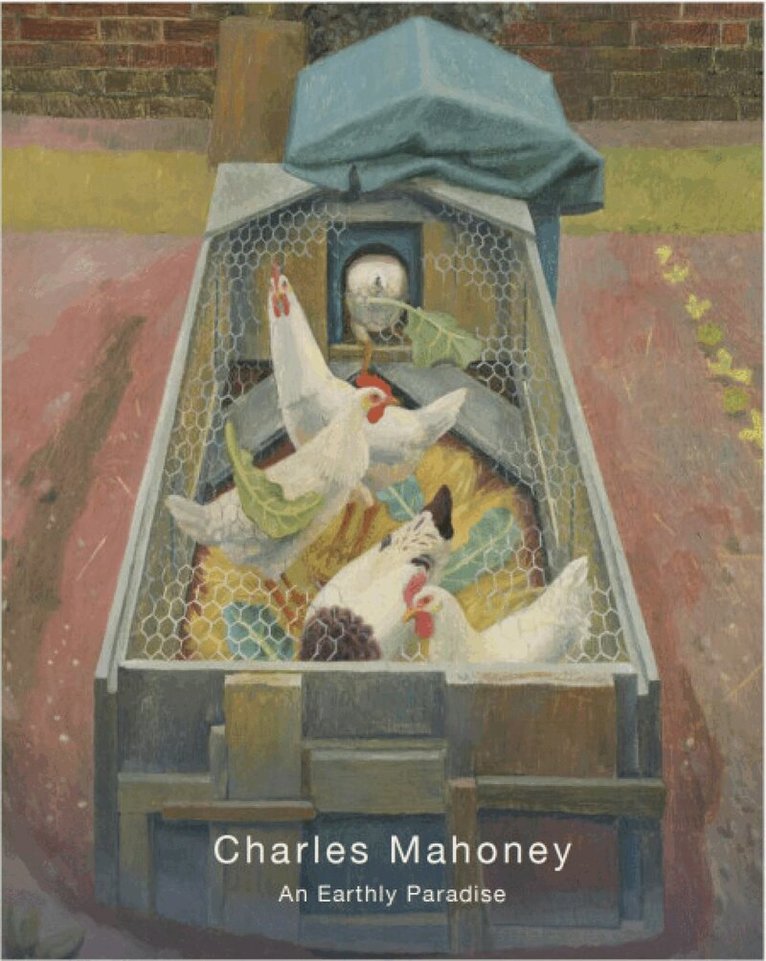
This remarkable publication examines a collection of works by the British painter Charles Mahoney (1903-1968).
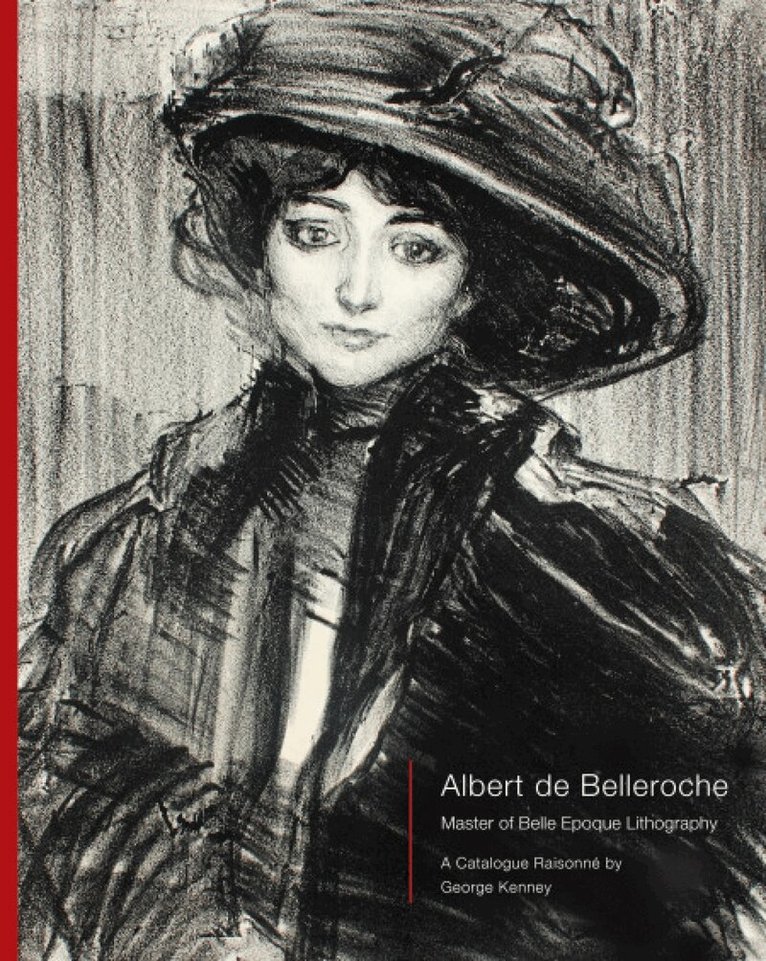
Albert de Belleroche - Master of Belle Epoque Lithography, A Catalogue Raisonné
Inbunden, Engelska, 2024
1 503 kr
Skickas
For more than fifty years, George Kenney has dedicated himself to the study of European art, demonstrating a profound passion for works on paper, including etchings, drypoints, and lithographs. George authored a Catalogue Raisonné titled 'The Illustrated Bartsch, Vol. 51' for Abaris Books in 2017\. This comprehensive work explores the etchings of Ferdinand Bol, a prominent 17th-century artist and student of Rembrandt. In 1990, George embarked on a 35-year journey, passionately studying and cataloging Belleroche's captivating lithographs, many of which were unpublished. In 2001, he collaborated with Steven Kern, curator of European art, to facilitate a significant exhibition of Belleroche’s lithographs at the San Diego Museum of Art, where he concurrently held a position as a Trustee. Additionally, George has a keen interest in 17th century English clocks and has contributed articles to Antiquarian Horology on Daniel Quare, a renowned clockmaker of that era. George attributes his early love for art to his mother, Marguerite Shirley Kenney, who took him to many museums during his childhood. Now residing in San Diego, California, George's entrepreneurial spirit has driven him through diverse careers, including roles as an engineer, inventor, venture capitalist, and business coach. Alongside his wife, Olga, he actively participates in the Small Group and Marriage Ministries at Saddleback Church.
142 kr
Skickas
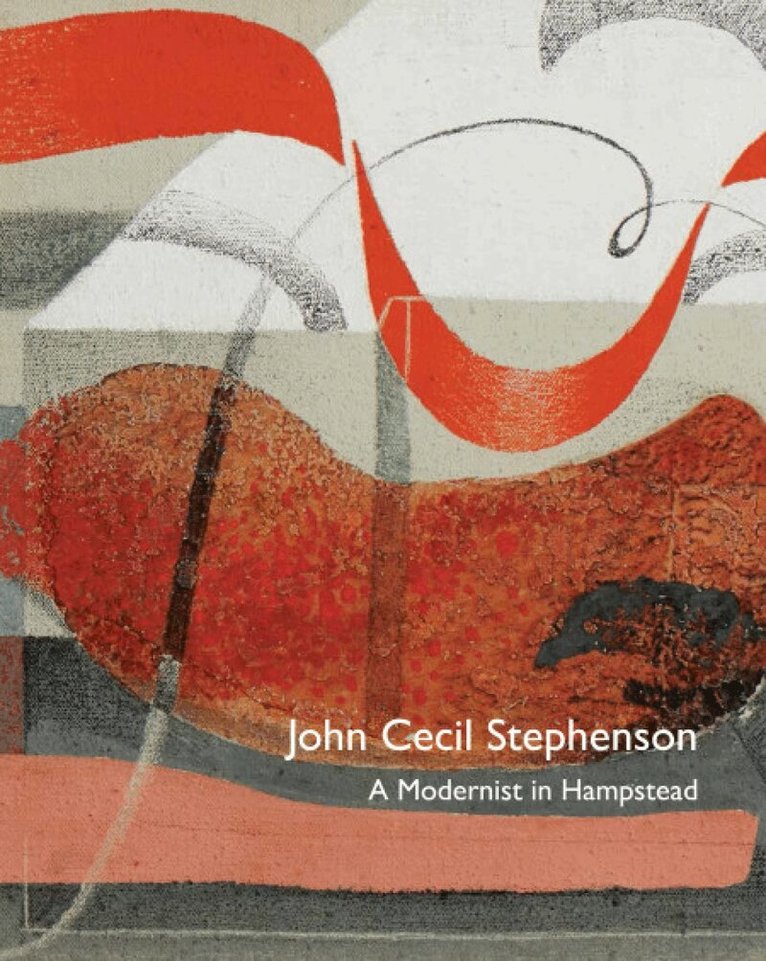
By the end of John Cecil Stephenson’s art school training – first a scholarship to Leeds Art School then to The Royal College of Art – he was in a position to produce still lives, landscapes and portraits in a professional capacity. Like many painters of his generation, who had received similarly conventional instruction, he became a competent teacher, appointed in 1922, as Head of Art at The Northern Polytechnic. In this mould Stephenson might have remained a largely undistinguished painter – but in the early 1930s he found himself at the centre of a group of artists with avant-garde credentials, and his own art underwent a remarkable transformation. By 1934 he was exhibiting groundbreaking works such as Mask (CAT. 7), at the 7 & 5 Society, and in 1937 was a key contributor to the watershed publication and exhibition Circle, where his work was showcased alongside that of luminaries such as Kazimir Malevich, Le Corbusier, Fernand Léger, Alberto Giacometti and Pablo Picasso. What led Stephenson to become, in the words of the celebrated art critic Herbert Read, ‘one of the earliest artists in the country to develop a completely abstract style’? Between March 1919 and November 1965, John Cecil Stephenson lived in London at No. 6 Mall Studios, off Tasker Road, Hampstead. As the father figure of what Read christened ‘a nest of gentle artists’, his next door neighbours included, during the course of the decade leading up to World War II, Barbara Hepworth, John Skeaping, Ben Nicholson and Henry Moore. Such fertile ground was further enriched by visits from artists fleeing persecution – including Piet, László Moholy-Nagy and Alexander Calder – just a few of the many internationally acclaimed artists who, whilst passing through London, formed part of the art set who congregated around Read’s house at No. 3 Mall Studios.
Albert de Belleroche - Works from the Artist’s Studio & Catalogue Raisonné of the Lithographic Work
Inbunden, Engelska, 2024
318 kr
Skickas
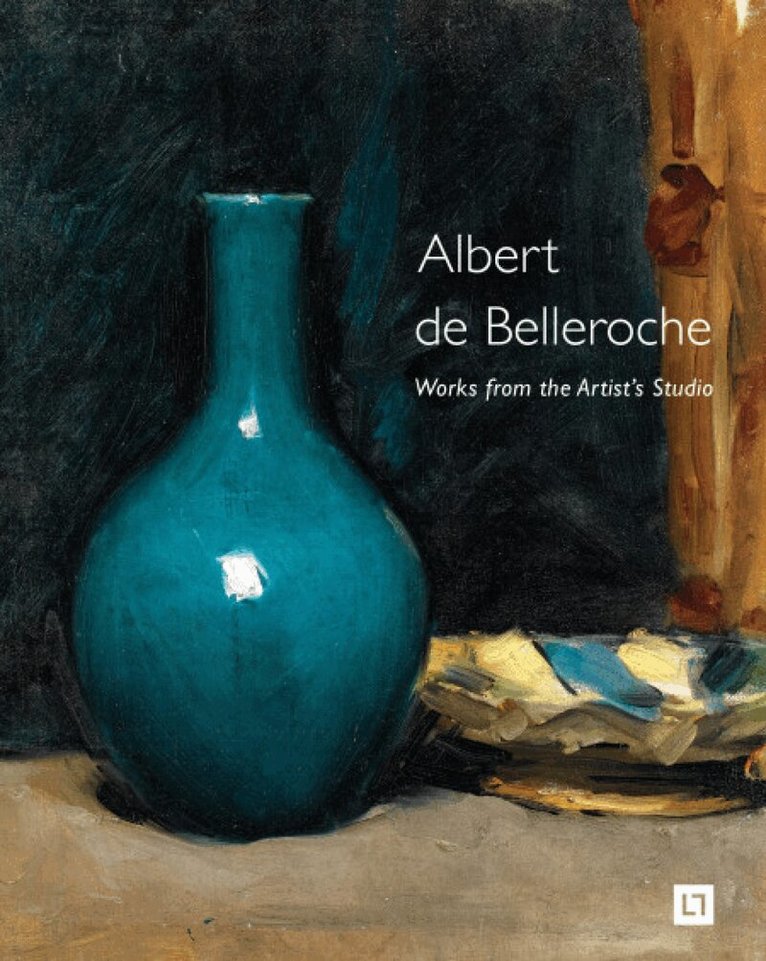
Belleroche was an integral part of the Parisian art scene during the Belle Époque - he was a close friend of the artist John Singer Sargent with whom he shared studios in Paris and London; he was admired and collected by luminaires such as Degas and Renoir - anbdchampioned by the art critic Roger Marx. With Toulouse-Lautrec he shared the celebrated model Lily Grenier. And it is even said that Oscar Wilde's Picture of Dorian Gray was inspired by Belleroche.Belleroche was considered by his contemporaries to be an innovator. In the art of lithography he developed techniques that built on the experiments of Degas and other Impressionist, (with whom he shared a fascination for monotypes). Despite all these fascinating facets of his life and art, his story remains largely unknown.