Sacha Llewellyn - Böcker
Visar alla böcker från författaren Sacha Llewellyn. Handla med fri frakt och snabb leverans.
5 produkter
5 produkter
456 kr
Kommande
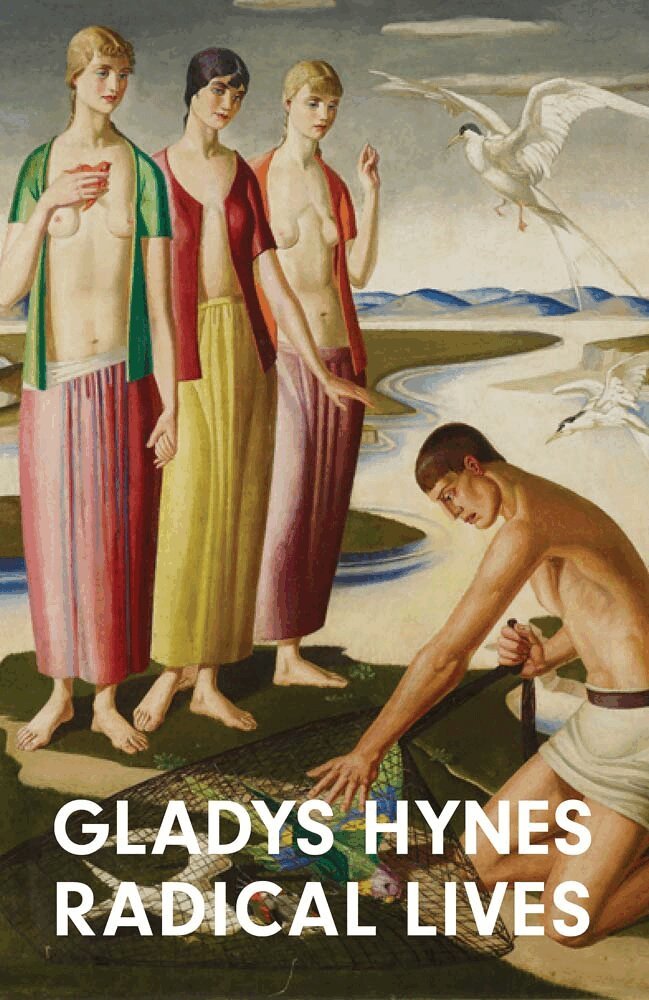
Though largely forgotten today, Gladys Hynes (1888–1958) was a pioneering artist whose life and work reflect the radical, turbulent and often contradictory currents of the first half of the twentieth centuryBorn in India to Irish and English ancestry, Gladys Hynes was not only a gifted painter, sculptor, illustrator and designer but also a radical—pacifist, feminist, suffragist and Irish Republican. Over five decades, she produced an exceptional body of work that engaged with the key movements of her time, ranging from the Newlyn School and Omega Workshops to Vorticism and Surrealism.Hynes moved in an extraordinary circle of creative, intellectual and political figures. Among her closest friends were fellow artists and writers Mary Butts, Nina Hammett, Laura Knight, Gluck and Dod Procter; in Irish politics, Desmond and Mabel FitzGerald and Capt. Jack White. Her greatest and most influential friendship was with the controversial and avant-garde poet Ezra Pound, whose Cantos she illustrated. These intellectual and artistic exchanges significantly shaped Hynes’s life and development as an artist.Hynes’s legacy has been almost entirely overlooked. By shedding light on her artistic achievements, activism and feminist vision, this biography seeks to restore Hynes to her rightful place within the modernist canon as a remarkable woman whose influence, long neglected, is now ripe for rediscovery.
208 kr
Tillfälligt slut
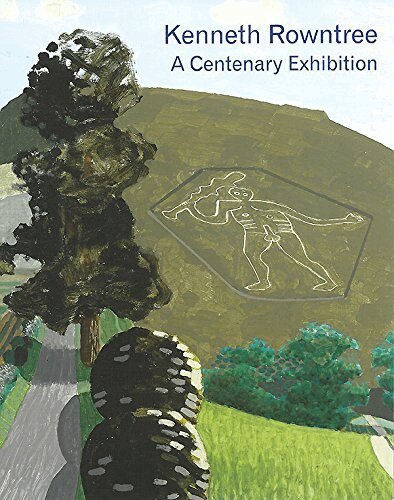
Longlisted for the Berger Art History prize 2016 Kenneth Rowntree has always been highly regarded by those familiar with his work. The essays in this catalogue, which embrace new research and scholarship, reveal him to be an artist of great scope and variety. His earlywork reflects the inspiration and creative dialogue that came out of his friendship with Eric Ravilious (1903–1942) on account of whom Rowntree moved to Great Bardfield during the 1940s. During this period he was particularly preoccupied with Kenneth Clark’s Recording Britain project. At the end of the war he joined the teaching staff at the Royal College of Art. In 1951 he was commissioned to undertake murals for the Lion and Unicorn Pavilion for the Festival of Britain. As Professor of Fine Art in Newcastle (1959–1980) he was at the epicentre of an important northern school of modernism that revolved around his friends Victor Pasmore (1908–1988) and Richard Hamilton (1922–2011). Even in retirement, his work, in its return to figuration from abstraction, displays his consistent qualities of humour and inventiveness. Rowntree’s oeuvre is both influenced by and anticipates a wide variety of artistic styles, from Ravilious to David Hockney, from the Euston Road School to the Dadaism of Kurt Schwitters. His work, however, remains unmistakably his own. This catalogue is published on the occasion of the centenary of Rowntree’s birth, and accompanies exhibitions at The Fry Art Gallery, Saffron Walden and Pallant House, Chichester. This is the first substantial reassessment of Rowntree’s work since John Milner’s monograph (2002). It is hoped that this current initiative will contribute futher to ensuring Rowntree the significant place he deserves within the history of 20th century British art.
673 kr
Skickas inom 5-8 vardagar
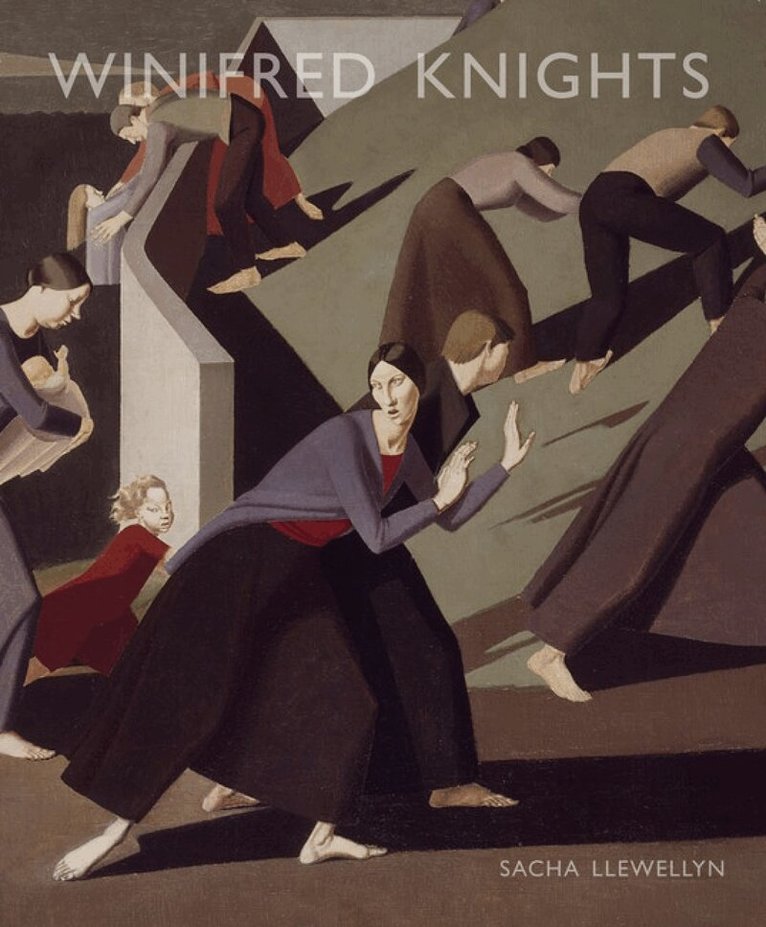
Winifred Knights (1899-1947) is one of the outstanding, but until recently neglected, British women painters of the first half of the 20th century. Copiously illustrated in colour throughout, this book provides the first full account of her life and work, examining Knights’ art in the context of interwar Modernism and assessing her contribution to the revival in this period of both Decorative Painting and religious imagery.Author Sacha Llewellyn traces the artist’s career from her years at the Slade School of Art and her First World War evacuation to rural Worcestershire through to the time she spent at the British School at Rome in the early 1920s and the many commissions she completed between 1926 and 1939. Presenting the artist as the central protagonist, and with models selected from her inner circle, Knights’ paintings were deeply autobiographical. She consistently re-wrote fairy-tale and legend, Biblical narrative and Pagan mythology to explore women’s relationship to war, the natural world, working communities, marriage, motherhood and death. Drawing on previously unpublished documentary material, including letters, diaries, sketchbooks and photographs, Sacha Llewellyn makes a strong case for recognising Knights as one of the most talented artists of her generation. The book reproduces all of Knights’ major works, including her masterpiece, The Deluge, which is among the most remarked upon works at Tate Britain, having been on almost permanent display there since 1995.
366 kr
Skickas
266 kr
Kommande
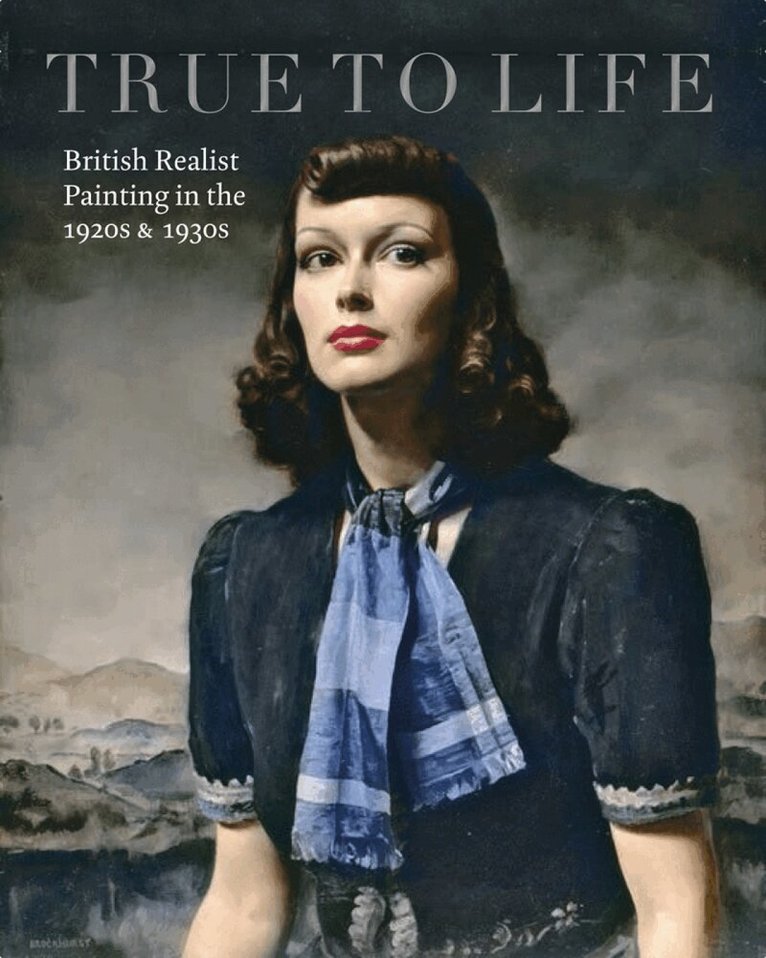
Phyllis Dodd was born in Chester and studied firstly at Liverpool School of Art 1917-21 After winning a Royal Exhibition scholarship spent a further four years at the RCA in the company of her life-long friends Henry Moore, Raymond Coxon and Edna Ginesi. After gaining her diploma and winning the Drawing Prize in her final year she went on to teach part-time at Walthamstow Technical College 1925-30. Dodd exhibited at the RA, NEAC, RP, RSA and at the Walker Art Gallery. Her ninetieth birthday was celebrated with a major retrospective exhibition held at the Hatton Gallery, Newcastle University in November 1989. Married to the artist Douglas Percy Bliss, she held a joint exhibition with him at Derby Art Gallery, 1947. In the year of her death, a retrospective exhibition of her work was held at Newport Art Gallery who also have a fine portrait example in their collection as do Hull University. Douglas Percy Bliss was a Scottish painter and art conservationist. Born in Karachi, India (now in Pakistan), Bliss was raised in Edinburgh and educated at George Watson’s College from 1906 to 1917. Bliss left school in 1917 to join the Highland Light Infantry until the end of WW1. In 1922 he was awarded an M.A. in English Literature by the University of Edinburgh. He had studied Art History in his first year. Bliss then studied painting at the Royal College of Art in London. In his post-graduate year he studied engraving. In 1925 the Oxford University Press published his engravings illustrating Border ballads. Bliss then received a number of commissions, including a commission to write A History of Wood Engraving. This work received such critical acclaim that Bliss’ reputation as an artist was overshadowed by his reputation as a critic and teacher. In the 1930s he taught at the Blackheath School of Art and was the London art critic for The Scotsman. In 1941 Bliss joined the RAF and was stationed in Scotland. After the war he was appointed Director of the Glasgow School of Art. An exhibition of his work was held in the Glasgow School of Art in the summer of 1998.