Paul N. Butcher - Böcker
Visar alla böcker från författaren Paul N. Butcher. Handla med fri frakt och snabb leverans.
5 produkter
5 produkter
2 101 kr
Skickas inom 10-15 vardagar
This book is concerned primarily with the fundamental theory underlying the physical and chemical properties of crystalIine semiconductors. After basic introductory material on chemical bonding, electronic band structure, phonons, and electronic transport, some emphasis is placed on surface and interfacial properties, as weil as effects of doping with a variety of impurities. Against this background, the use of such materials in device physics is examined and aspects of materials preparation are discussed briefty. The level of presentation is suitable for postgraduate students and research workers in solid-state physics and chemistry, materials science, and electrical and electronic engineering. Finally, it may be of interest to note that this book originated in a College organized at the International Centre for Theoretical Physics, Trieste, in Spring 1984. P. N. Butcher N. H. March M. P. Tosi vii Contents 1. Bonds and Bands in Semiconductors 1 E. Mooser 1. 1. Introduction . . . . . . . . . . . . . . . . . . . . . . . . . . . . . . . . . . . . . . . . . . . . . . . . . . . . . . . . . . . . . . . . . . . . . . . . . . . . . . 1. 2. The Semiconducting Bond . . . . . . . . . . . . . . . . . . . . . . . . . . . . . . . . . . . . . . . . . . . . . . . . . . . . . . . 2 1. 3. Bond Approach Versus Band Model. . . . . . . . . . . . . . . . . . . . . . . . . . . . . . . . . . . . . . . 6 1. 4. Construction of the Localized X by Linear Combination of n Atomic Orbitals . . . . . . . . . . . . . . . . . . . . . . . . . . . . . . . . . . . . . . . . . . . . . . . . . . . . . . . . . . . . . . . . . . . . . . . . 13 1. 5. The General Octet Rule . . . . . . . . . . . . . . . . . . . . . . . . . . . . . . . . . . . . . . . . . . . . . . . . . . . . . . . . . . . 23 1. 6. The Aufbau-Principle of the Crystal Structure of Semiconductors . . . . . . . . . . . . . . . . . . . . . . . . . . . . . . . . . . . . . . . . . . . . . . . . . . . . . . . . . . . . . . . . . . . . . . . . . 26 1. 7. A Building Principle for Polyanionic Structures . . . . . . . . . . . . . . . . . . . . . . 29 I. H. Structural Sorting . . . . . . . . . . . . . . . . . . . . . . . . . . . . . . . . . . . . . . . . . . . . . . . . . . . . . . . . . . . . . . . . . . . . . 39 1. 9. Chemical Bonds and Semiconductivity in Transition-Element Compounds . . . . . . . . . . . . . . . . . . . . . . . . . . . . . . . . . . . . . . . . . . . . . . . . . . . . . . . . . . . . . . . . . . . . . . . . . . . . . . 46 1. 10. Conclusion . . . . . . . . . . . . . . . . . . . . . . . . . . . . . . . . . . . . . . . . . . . . . . . . . . . . . . . . . . . . . . . . . . . . . . . . . . . . . . . . 53 References . . . . . . . . . . . . . . . . . . . . . . . . . . . . . . . . . . . . . . . . . . . . . . . . . . . . . . . . . . . . . . . . . . . . . . . . . . . . . . . . . . . . . . . . . 54 2. Electronic Band Structure . . . . . . . . . . . . . . . . . . . . . . . . . . . . . . . . . . . . . . . . . . . . . . . . . . . . . . . 55 G. Grosso 2. 1. Two Different Strategies for Band-Structure Calculations . . . . . . . 55 2. 2. The Tight-Binding Method . . . . . . . . . . . . . . . . . . . . . . . . . . . . . . . . . . . . . . . . . . . . . . . . . . . . . . . .
2 101 kr
Skickas inom 10-15 vardagar
Presenting the latest advances in artificial structures, this volume discusses in-depth the structure and electron transport mechanisms of quantum wells, superlattices, quantum wires, and quantum dots. It will serve as an invaluable reference and review for researchers and graduate students in solid-state physics, materials science, and electrical and electronic engineering.
734 kr
Skickas inom 7-10 vardagar
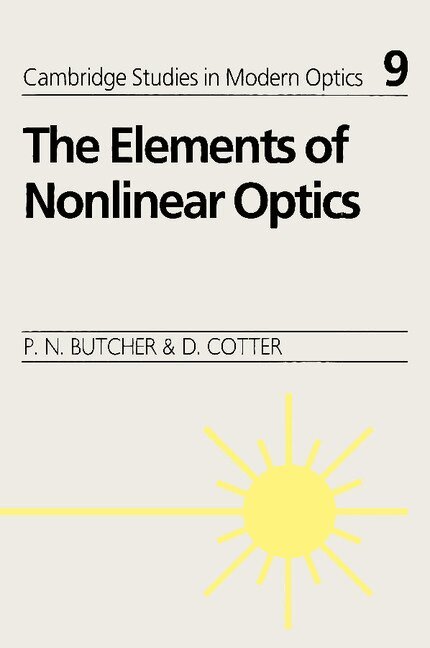
There has recently been a rapid growth of activity in nonlinear optics. Effects such as frequency doubling, stimulated Raman scattering, phase conjugation and solitons are of great interest both for their fundamental properties and their many important applications in science and engineering. It is mainly these applications - especially in telecommunications and information processing - that have stimulated the recent surge of activity. This book is a self contained account of the most important principles of nonlinear optics. Assuming only a familiarity with basic mathematics, the fundamentals of nonlinear optics are fully developed from basic concepts. The essential quantum mechanical apparatus is introduced and explained. In later chapters the underlying ideas are illustrated by discussing particular experimental configurations and materials. This book will be an invaluable introduction to the field for beginning graduates in physics or engineering, and will provide an excellent overview and reference work for active researchers in the field.
2 101 kr
Skickas inom 10-15 vardagar
This book is concerned primarily with the fundamental theory underlying the physical and chemical properties of crystalIine semiconductors. After basic introductory material on chemical bonding, electronic band structure, phonons, and electronic transport, some emphasis is placed on surface and interfacial properties, as weil as effects of doping with a variety of impurities. Against this background, the use of such materials in device physics is examined and aspects of materials preparation are discussed briefty. The level of presentation is suitable for postgraduate students and research workers in solid-state physics and chemistry, materials science, and electrical and electronic engineering. Finally, it may be of interest to note that this book originated in a College organized at the International Centre for Theoretical Physics, Trieste, in Spring 1984. P. N. Butcher N. H. March M. P. Tosi vii Contents 1. Bonds and Bands in Semiconductors 1 E. Mooser 1. 1. Introduction . . . . . . . . . . . . . . . . . . . . . . . . . . . . . . . . . . . . . . . . . . . . . . . . . . . . . . . . . . . . . . . . . . . . . . . . . . . . . . 1. 2. The Semiconducting Bond . . . . . . . . . . . . . . . . . . . . . . . . . . . . . . . . . . . . . . . . . . . . . . . . . . . . . . . 2 1. 3. Bond Approach Versus Band Model. . . . . . . . . . . . . . . . . . . . . . . . . . . . . . . . . . . . . . . 6 1. 4. Construction of the Localized X by Linear Combination of n Atomic Orbitals . . . . . . . . . . . . . . . . . . . . . . . . . . . . . . . . . . . . . . . . . . . . . . . . . . . . . . . . . . . . . . . . . . . . . . . . 13 1. 5. The General Octet Rule . . . . . . . . . . . . . . . . . . . . . . . . . . . . . . . . . . . . . . . . . . . . . . . . . . . . . . . . . . . 23 1. 6. The Aufbau-Principle of the Crystal Structure of Semiconductors . . . . . . . . . . . . . . . . . . . . . . . . . . . . . . . . . . . . . . . . . . . . . . . . . . . . . . . . . . . . . . . . . . . . . . . . . 26 1. 7. A Building Principle for Polyanionic Structures . . . . . . . . . . . . . . . . . . . . . . 29 I. H. Structural Sorting . . . . . . . . . . . . . . . . . . . . . . . . . . . . . . . . . . . . . . . . . . . . . . . . . . . . . . . . . . . . . . . . . . . . . 39 1. 9. Chemical Bonds and Semiconductivity in Transition-Element Compounds . . . . . . . . . . . . . . . . . . . . . . . . . . . . . . . . . . . . . . . . . . . . . . . . . . . . . . . . . . . . . . . . . . . . . . . . . . . . . . 46 1. 10. Conclusion . . . . . . . . . . . . . . . . . . . . . . . . . . . . . . . . . . . . . . . . . . . . . . . . . . . . . . . . . . . . . . . . . . . . . . . . . . . . . . . . 53 References . . . . . . . . . . . . . . . . . . . . . . . . . . . . . . . . . . . . . . . . . . . . . . . . . . . . . . . . . . . . . . . . . . . . . . . . . . . . . . . . . . . . . . . . . 54 2. Electronic Band Structure . . . . . . . . . . . . . . . . . . . . . . . . . . . . . . . . . . . . . . . . . . . . . . . . . . . . . . . 55 G. Grosso 2. 1. Two Different Strategies for Band-Structure Calculations . . . . . . . 55 2. 2. The Tight-Binding Method . . . . . . . . . . . . . . . . . . . . . . . . . . . . . . . . . . . . . . . . . . . . . . . . . . . . . . . .
2 101 kr
Skickas inom 10-15 vardagar
Presenting the latest advances in artificial structures, this volume discusses in-depth the structure and electron transport mechanisms of quantum wells, superlattices, quantum wires, and quantum dots. It will serve as an invaluable reference and review for researchers and graduate students in solid-state physics, materials science, and electrical and electronic engineering.