Paul Rohmeyer – författare
Visar alla böcker från författaren Paul Rohmeyer. Handla med fri frakt och snabb leverans.
3 produkter
3 produkter
1 174 kr
Skickas inom 5-8 vardagar
Drawing upon a wealth of experience from academia, industry, and government service, Cyber Security Policy Guidebook details and dissects, in simple language, current organizational cyber security policy issues on a global scale—taking great care to educate readers on the history and current approaches to the security of cyberspace. It includes thorough descriptions—as well as the pros and cons—of a plethora of issues, and documents policy alternatives for the sake of clarity with respect to policy alone. The Guidebook also delves into organizational implementation issues, and equips readers with descriptions of the positive and negative impact of specific policy choices.Inside are detailed chapters that: Explain what is meant by cyber security and cyber security policyDiscuss the process by which cyber security policy goals are setEducate the reader on decision-making processes related to cyber securityDescribe a new framework and taxonomy for explaining cyber security policy issuesShow how the U.S. government is dealing with cyber security policy issuesWith a glossary that puts cyber security language in layman's terms—and diagrams that help explain complex topics—Cyber Security Policy Guidebook gives students, scholars, and technical decision-makers the necessary knowledge to make informed decisions on cyber security policy.
1 180 kr
Kommande
Sound guidance on design, implementation, and governance of cybersecurity policy Now in its Second Edition, the Cybersecurity Policy Guidebook delivers an issue-focused treatment of public, private, and individual cybersecurity policy alternatives for treatment of systemic cyber risks. Seven practitioners from government, industry, and academia analyze overlapping perspectives of decision-makers, technology professionals, and critical infrastructure engineers within the recently transformed digital landscape. The first edition dealt with threats to impersonation, infrastructure access, intellectual property, internet access, nation-state conflict, operational continuity, privacy, and supply chain. New to this edition is coverage of AI's impact on cybersecurity, cyber-physical systems, and custodial issues for technology platforms and other cyber-enabled services. The book addresses threat intelligence across industry sectors, governance frameworks, and risk appetite thresholds. A policy catalog reflects pros and cons of pressing policy positions. Key topics also include: Communication strategies for conveying cybersecurity risk to decision makers across public and private levels of authorityPolicy objectives mapped to technology evolution, connecting operational choices with their broader strategic and regulatory implicationsGuidance on banking and financial services cybersecurity supervision, drawing on interagency regulatory frameworks and examination standardsOperational technology and control system cybersecurity policy, addressing risks unique to industrial control systems and other cyber-physical systemsCross-disciplinary course alignment for programs in public policy, law, business, computer science, engineering, and social sciencesCybersecurity Policy Guidebook serves leaders of public and private organizations, as well as technology professionals, industry analysts, scholars, and individuals seeking a structured reference on cybersecurity policy issues. Whatever the starting point of perspective, readers will gain the policy knowledge required to act with precision.
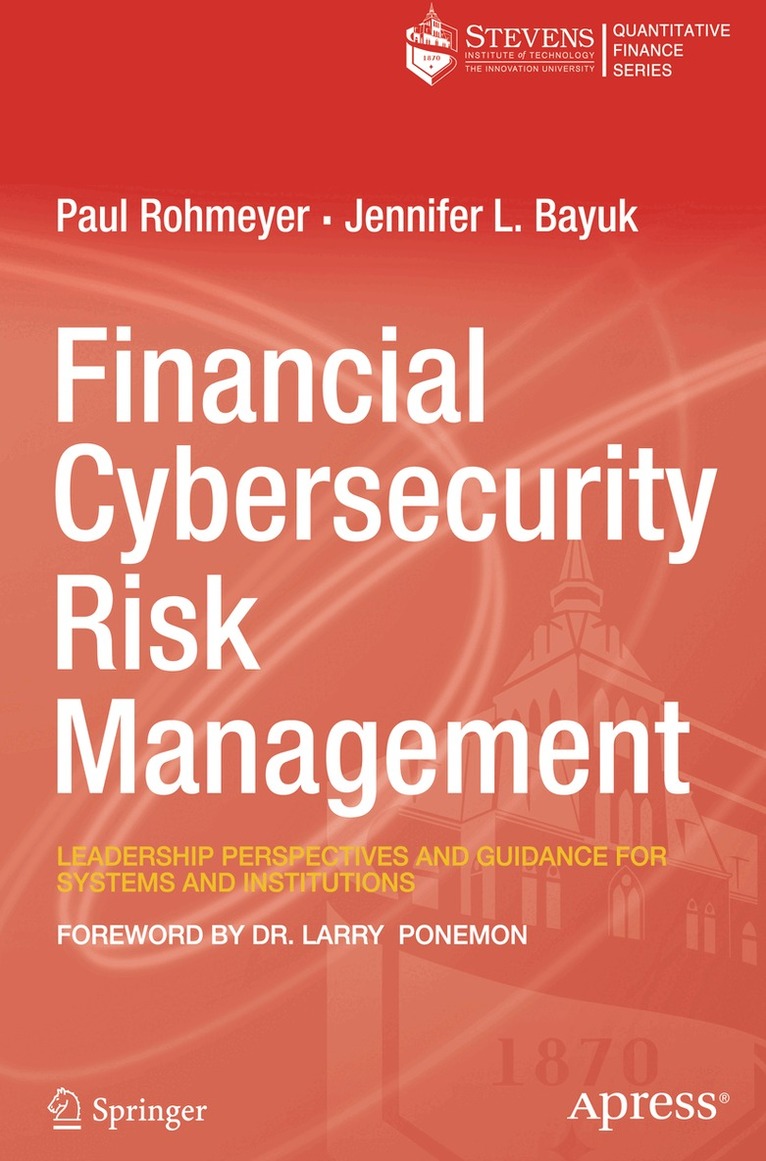
Financial Cybersecurity Risk Management
Leadership Perspectives and Guidance for Systems and Institutions
Häftad, Engelska, 2018
550 kr
Skickas inom 3-6 vardagar
Understand critical cybersecurity and risk perspectives, insights, and tools for the leaders of complex financial systems and markets. This book offers guidance for decision makers and helps establish a framework for communication between cyber leaders and front-line professionals. Information is provided to help in the analysis of cyber challenges and choosing between risk treatment options.Financial cybersecurity is a complex, systemic risk challenge that includes technological and operational elements. The interconnectedness of financial systems and markets creates dynamic, high-risk environments where organizational security is greatly impacted by the level of security effectiveness of partners, counterparties, and other external organizations. The result is a high-risk environment with a growing need for cooperation between enterprises that are otherwise direct competitors. There is a new normal of continuous attack pressures that produce unprecedented enterprise threats that must be met with an array of countermeasures. Financial Cybersecurity Risk Management explores a range of cybersecurity topics impacting financial enterprises. This includes the threat and vulnerability landscape confronting the financial sector, risk assessment practices and methodologies, and cybersecurity data analytics. Governance perspectives, including executive and board considerations, are analyzed as are the appropriate control measures and executive risk reporting.What You’ll LearnAnalyze the threat and vulnerability landscape confronting the financial sectorImplement effective technology risk assessment practices and methodologiesCraft strategies to treat observed risks in financial systemsImprove the effectiveness of enterprise cybersecurity capabilitiesEvaluate critical aspects of cybersecurity governance, including executive and board oversightIdentify significant cybersecurity operational challengesConsider the impact of the cybersecurity mission across the enterpriseLeverage cybersecurity regulatory and industry standards to help manage financial services risksUse cybersecurity scenarios to measure systemic risks in financial systems environmentsApply key experiences from actual cybersecurity events to develop more robust cybersecurity architecturesWho This Book Is ForDecision makers, cyber leaders, and front-line professionals, including: chief risk officers, operational risk officers, chief information security officers, chief security officers, chief information officers, enterprise risk managers, cybersecurity operations directors, technology and cybersecurity risk analysts, cybersecurity architects and engineers, and compliance officers