Paul Rosenbaum - Böcker
Visar alla böcker från författaren Paul Rosenbaum. Handla med fri frakt och snabb leverans.
3 produkter
3 produkter
1 901 kr
Skickas inom 10-15 vardagar
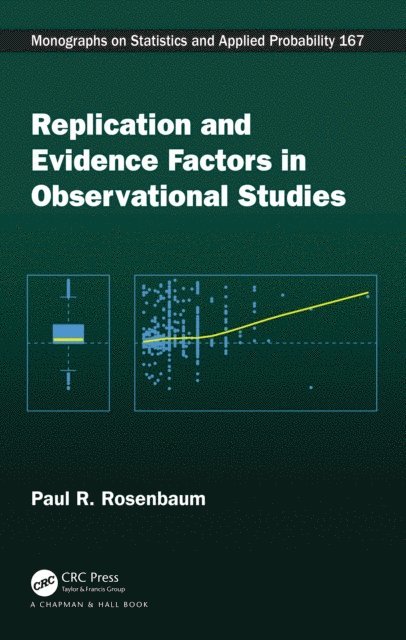
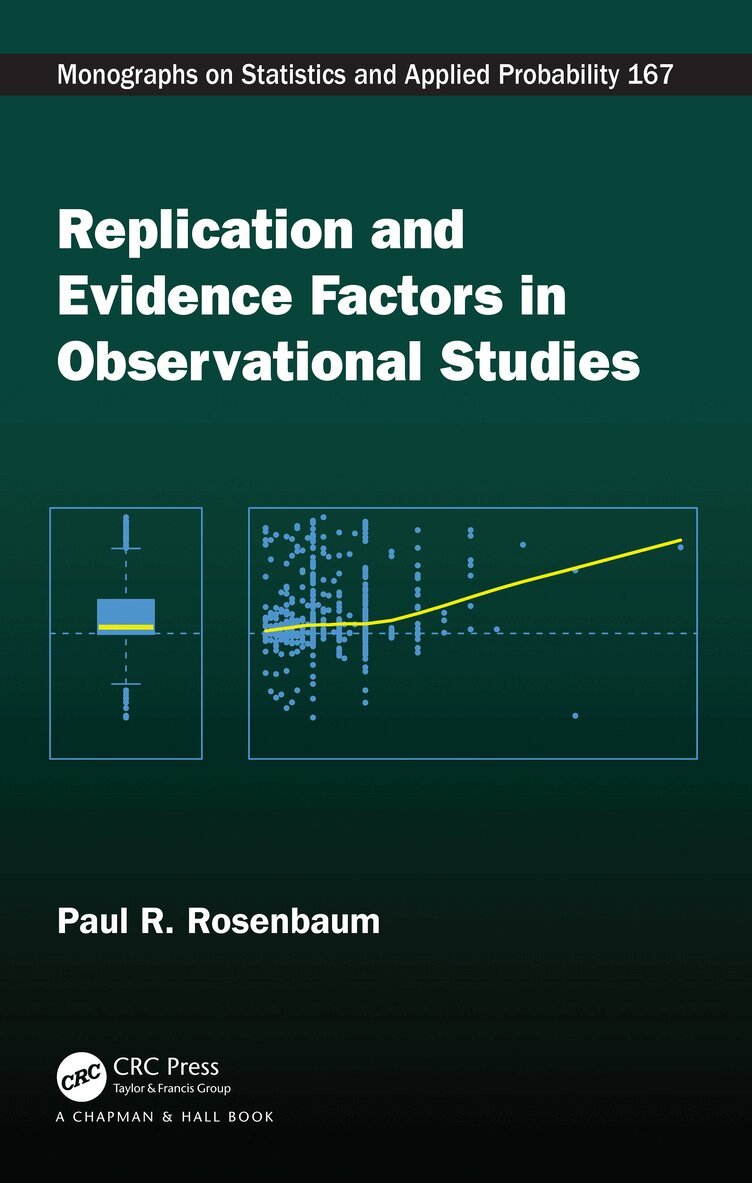
Outside of randomized experiments, association does not imply causation, and yet there is nothing defective about our knowledge that smoking causes lung cancer, a conclusion reached in the absence of randomized experimentation with humans. How is that possible? If observed associations do not identify causal effects in observational studies, how can a sequence of such associations become decisive? Two or more associations may each be susceptible to unmeasured biases, yet not susceptible to the same biases. An observational study has two evidence factors if it provides two comparisons susceptible to different biases that may be combined as if from independent studies of different data by different investigators, despite using the same data twice. If the two factors concur, then they may exhibit greater insensitivity to unmeasured biases than either factor exhibits on its own. Replication and Evidence Factors in Observational Studies includes four parts: A concise introduction to causal inference, making the book self-contained Practical examples of evidence factors from the health and social sciences with analyses in R The theory of evidence factors Study design with evidence factorsA companion R package evident is available from CRAN.
711 kr
Skickas inom 10-15 vardagar
Outside of randomized experiments, association does not imply causation, and yet there is nothing defective about our knowledge that smoking causes lung cancer, a conclusion reached in the absence of randomized experimentation with humans. How is that possible? If observed associations do not identify causal effects in observational studies, how can a sequence of such associations become decisive? Two or more associations may each be susceptible to unmeasured biases, yet not susceptible to the same biases. An observational study has two evidence factors if it provides two comparisons susceptible to different biases that may be combined as if from independent studies of different data by different investigators, despite using the same data twice. If the two factors concur, then they may exhibit greater insensitivity to unmeasured biases than either factor exhibits on its own. Replication and Evidence Factors in Observational Studies includes four parts: A concise introduction to causal inference, making the book self-contained Practical examples of evidence factors from the health and social sciences with analyses in R The theory of evidence factors Study design with evidence factorsA companion R package evident is available from CRAN.
235 kr
Skickas inom 7-10 vardagar
A daily glass of wine prolongs life—yet alcohol can cause life-threatening cancer. Some say raising the minimum wage will decrease inequality while others say it increases unemployment. Scientists once confidently claimed that hormone replacement therapy reduced the risk of heart disease but now they equally confidently claim it raises that risk. What should we make of this endless barrage of conflicting claims?Observation and Experiment is an introduction to causal inference by one of the field’s leading scholars. An award-winning professor at Wharton, Paul Rosenbaum explains key concepts and methods through lively examples that make abstract principles accessible. He draws his examples from clinical medicine, economics, public health, epidemiology, clinical psychology, and psychiatry to explain how randomized control trials are conceived and designed, how they differ from observational studies, and what techniques are available to mitigate their bias.“Carefully and precisely written…reflecting superb statistical understanding, all communicated with the skill of a master teacher.”—Stephen M. Stigler, author of The Seven Pillars of Statistical Wisdom“An excellent introduction…Well-written and thoughtful…from one of causal inference’s noted experts.”—Journal of the American Statistical Association“Rosenbaum is a gifted expositor…an outstanding introduction to the topic for anyone who is interested in understanding the basic ideas and approaches to causal inference.”—Psychometrika“A very valuable contribution…Highly recommended.”—International Statistical Review