Paul Sparks - Böcker
Visar alla böcker från författaren Paul Sparks. Handla med fri frakt och snabb leverans.
8 produkter
8 produkter
831 kr
Skickas inom 7-10 vardagar
A "hidden" instrument in the classical music world, the mandolin's repertoire of original music remains largely unknown. This book examines the lives and works of the mandolin's great composers and, together with Sparks's earlier The Early Mandolin (OUP 1989), provides the first comprehensive survey of the instrument's history. The book also explores aspects of technique and looks at present-day orchestras and soloists.
2 639 kr
Skickas inom 7-10 vardagar
Although the mandolin is now regarded as a marginal instrument in the classical world, a century ago it was one of the most widely played musical instruments in Europe and North America. Regularly used in operas and symphonies, and forming the basis of plucked instrument orchestras, the mandolin could also be heard in recitals at major concert halls. The Classical Mandolin traces the rise of the modern Neapolitan mandolin, examines the lives and worlds of leading specialist composers (such as Raffaele Calace and Carlo Munier), and looks at its use by mainstream composers from Verdi and Mahler to Schoenberg and Boulez. The mandolin's enduring popularity in folk music is also discussed. The book looks finally at present-day orchestras and soloists, examines aspects of technique, and offers guidance on contacting specialist organisations worldwide.
Del 9 - Early Music Series
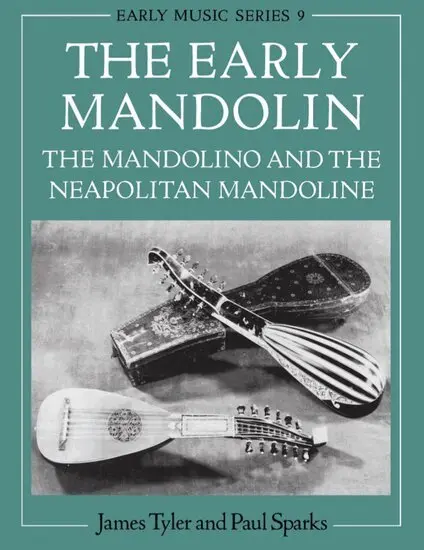
The Early Mandolin
The Mandolino and the Neapolitan Mandoline
Häftad, Engelska, 1992
885 kr
Skickas inom 5-8 vardagar
This is the first book to be devoted exclusively to the two main types of early mandolin - the mandolino and the Neapolitan mandoline. It illustrates the rich and varied musical history of these instruments and the full extent of their repertoires, which include music by Handel, Vivaldi, Alessandro Scarlatti, Beethoven, and by Sammartini, whose recently discovered sonata for mandolin is published here for the first time.The book aims to provide the basis for an understanding of the nature and historical performance practice of the instruments and thereby to enable players of today to achieve satisfying performances of the music.
4 952 kr
Skickas inom 7-10 vardagar
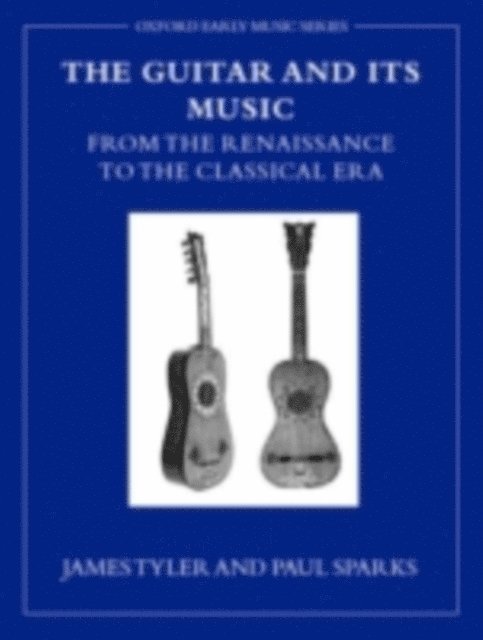
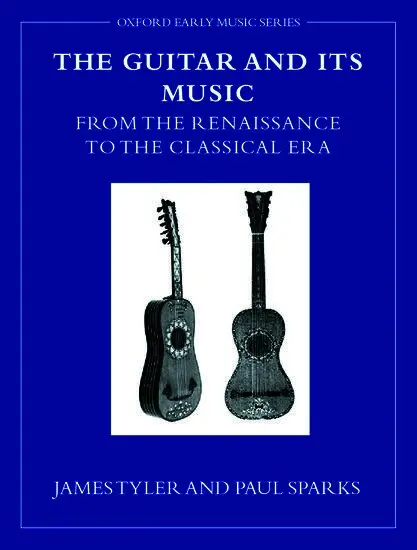
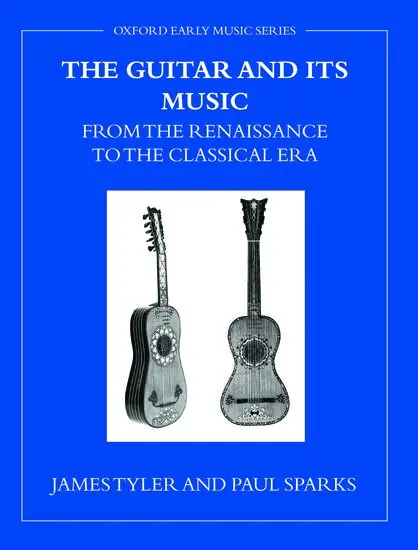
More than twenty years ago James Tyler wrote a modest introduction to the history, repertory, and playing techniques of the four- and five-course guitar. Entitled The Early Guitar: A History and Handbook (OUP 1980), this work proved valuable and enlightening not only to performers and scholars of Renaissance and Baroque guitar and lute music but also to classical guitarists. This new book, written in collaboration with Paul Sparks (their previous book for OUP, The Early Mandolin, appeared in 1989), presents new ideas and research on the history and development of the guitar and its music from the Renaissance to the dawn of the Classical era.Tyler's systematic study of the two main guitar types found between about 1550 and 1750 focuses principally on what the sources of the music (published and manuscript) and the writings of contemporary theorists reveal about the nature of the instruments and their roles in the music making of the period. The annotated lists of primary sources, previously published in The Early Guitar but now revised and expanded, constitute the most comprehensive bibliography of Baroque guitar music to date. His appendices of performance practice information should also prove indispensable to performers and scholars alike.Paul Sparks also breaks new ground, offering an extensive study of a period in the guitar's history--notably c.1759-c.1800--which the standard histories usually dismiss in a few short paragraphs. Far from being a dormant instrument at this time, the guitar is shown to have been central to music-making in France, Italy, the Iberian Peninsula, and South America. Sparks provides a wealth of information about players, composers, instruments, and surviving compositions from this neglected but important period, and he examines how the five-course guitar gradually gave way to the six-string instrument, a process that occurred in very different ways (and at different times) in France, Italy, Spain, Germany, and Britain.
1 152 kr
Skickas inom 7-10 vardagar
Following on from James Tyler's The Early Guitar: A History and Handbook(OUP 1980) tthis collaboration with Paul Sparks (their previous book for OUP, The Early Mandolin, appeared in 1989), presents new ideas and research on the history and development of the guitar and its music from the Renaissance to the dawn of the Classical era. Tyler's systematic study of the two main guitar types found between about 1550 and 1750 focuses principally on what the sources of the music (published and manuscript) and the writings of contemporary theorists reveal about the nature of the instruments and their roles in the music making of the period. The annotated lists of primary sources, previously published in The Early Guitar but now revised and expanded, constitute the most comprehensive bibliography of Baroque guitar music to date. His appendices of performance practice information should also prove indispensable to performers and scholars alike. Paul Sparks also breaks new ground, offering an extensive study of a period in the guitar's history--notably c.1759-c.1800--which the standard histories usually dismiss in a few short paragraphs. Far from being a dormant instrument at this time, the guitar is shown to have been central to music-making in France, Italy, the Iberian Peninsula, and South America. Sparks provides a wealth of information about players, composers, instruments, and surviving compositions from this neglected but important period, and he examines how the five-course guitar gradually gave way to the six-string instrument, a process that occurred in very different ways (and at different times) in France, Italy, Spain, Germany, and Britain.
New Parish – How Neighborhood Churches Are Transforming Mission, Discipleship and Community
Häftad, Engelska, 2014
284 kr
Skickas inom 3-6 vardagar
New Parish
How Neighborhood Churches Are Transforming Mission, Discipleship and Community (16pt Large Print Edition)
Häftad, Engelska, 2014
259 kr
Skickas inom 5-8 vardagar
1 212 kr
Skickas inom 10-15 vardagar
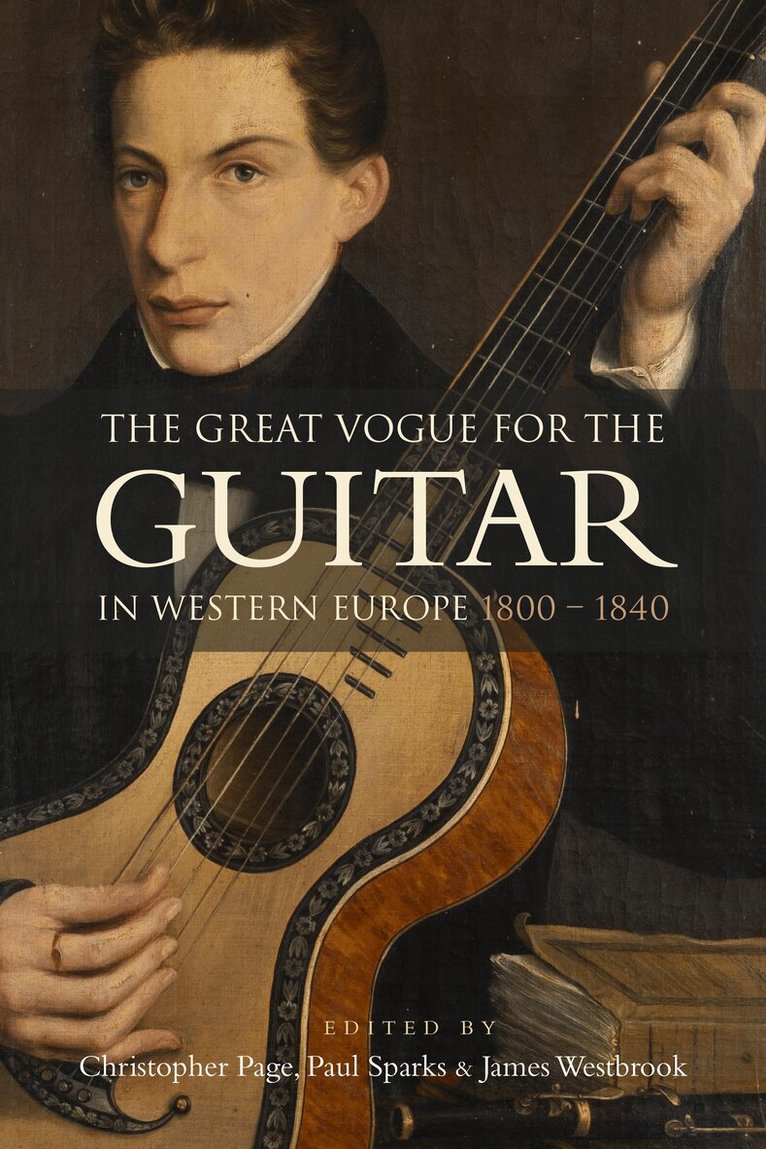
The first book devoted to the composers, instrument makers and amateur players who advanced the great guitar vogue throughout Western Europe during the early decades of the nineteenth century.Contemporary critics viewed the fashion for the guitar with sheer hostility, seeing in it a rejection of true musical value. After all, such trends advanced against the grain of mainstream musical developments of ground-breaking (often Austro-German) repertoire for standard instruments. Yet amateur musicians throughout Europe persisted; many instruments were built to meet the demand, a substantial volume of music was published for amateurs to play, and soloist-composers moved freely between European cities. This book follows these lines of travel venturing as far as Moscow, and visiting all the great musical cities of the period, from London to Vienna, Madrid to Naples. The first section of the book looks at eighteenth-century precedents, the instrument - its makers and owners, amateur and professional musicians, printing and publishing, pedagogy, as well as aspects of repertoire. The second section explores the extensive repertoire for accompanied song and chamber music. A final substantive section assembles chapters on a wide array of the most significant soloist-composers of the time. The chapters evoke the guitar milieu in the various cities where each composer-player worked and offer a discussion of some representative works. This book, bringing together an international tally of contributors and never before examined sources, will be of interest to devotees of the guitar, as well as music historians of the Romantic period.