Paul Steele – författare
681 kr
Läs direkt efter köp
''A valuable contribution to our collective knowledge about governance, poverty and the environment'' Frances Seymour, World Resources Institute
''Detailed and realistic documentation of contemporary development and governance relationships and trends'' Melissa Leach, Institute of Development Studies
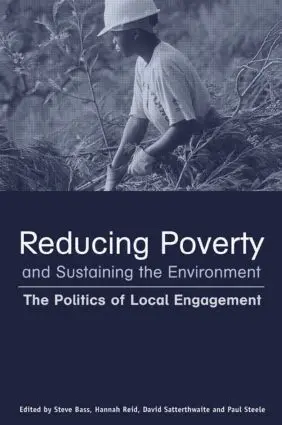
There are growing signs that development work by governments, aid agencies and non-government organisations ignores the fact that environmental quality matters to the poor. There are also indications that some environmental work is pushing ''people-out'' protection methodologies. Yet recently, an extensive range of project, programme and policy level activities has focused attention on the important links between poverty and the environment, and the benefit of entrenching these links in policy-making processes at all levels. The role that politics plays in all of this is of overriding importance. This volume is the first to address the role of politics in environmental issues that matter to the poor through a series of case studies. It describes experiences at regional, national and local levels in low and middle income countries including China, Tanzania, Nigeria, South Africa, Pakistan, Colombia, Peru, India, Saint Lucia and countries in East Africa.
Ultimately the book demonstrates how understanding the national and local political context is crucial for addressing poverty-environment issues such as environmental health, access to natural resources for livelihoods and security, and coping with environmental disasters. The editors advocate ways in which political processes can be used to make positive changes - from the perspectives of both poverty reduction and the environment.
681 kr
Läs direkt efter köp
''A valuable contribution to our collective knowledge about governance, poverty and the environment'' Frances Seymour, World Resources Institute
''Detailed and realistic documentation of contemporary development and governance relationships and trends'' Melissa Leach, Institute of Development Studies
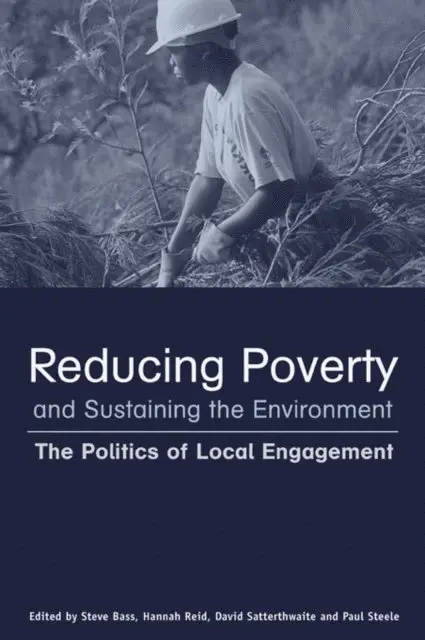
There are growing signs that development work by governments, aid agencies and non-government organisations ignores the fact that environmental quality matters to the poor. There are also indications that some environmental work is pushing ''people-out'' protection methodologies. Yet recently, an extensive range of project, programme and policy level activities has focused attention on the important links between poverty and the environment, and the benefit of entrenching these links in policy-making processes at all levels. The role that politics plays in all of this is of overriding importance. This volume is the first to address the role of politics in environmental issues that matter to the poor through a series of case studies. It describes experiences at regional, national and local levels in low and middle income countries including China, Tanzania, Nigeria, South Africa, Pakistan, Colombia, Peru, India, Saint Lucia and countries in East Africa.
Ultimately the book demonstrates how understanding the national and local political context is crucial for addressing poverty-environment issues such as environmental health, access to natural resources for livelihoods and security, and coping with environmental disasters. The editors advocate ways in which political processes can be used to make positive changes - from the perspectives of both poverty reduction and the environment.
824 kr
Läs direkt efter köp
�This book provides an excellent framework to analyse the experience of a wide variety of successful initiatives across the world and draws attention to critical issues that practitioners need to think about when designing poverty reduction interventions and scaling up.� Bill Tod, Regional MDG Adviser, SNV Asia
�With its wide regional coverage, and frank discussions of issues and problems encountered in designing projects that directly tackle poverty, this will be a very useful reference book for NGOs, INGOs, and also for multilateral institutions.� Johanna Boestel, Country Economist, Asian Development Bank, Sri Lanka Resident Mission
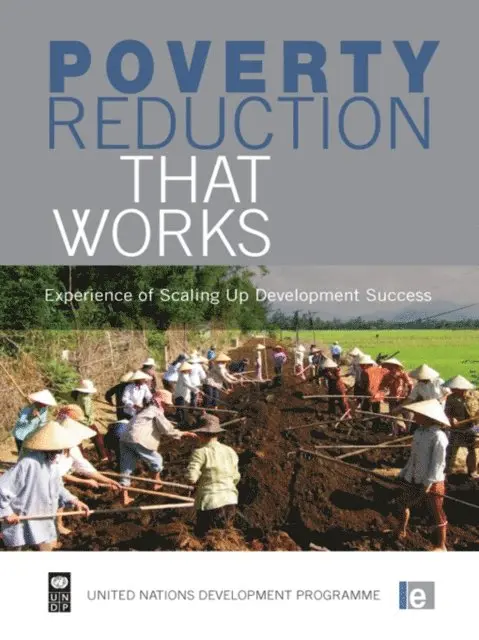
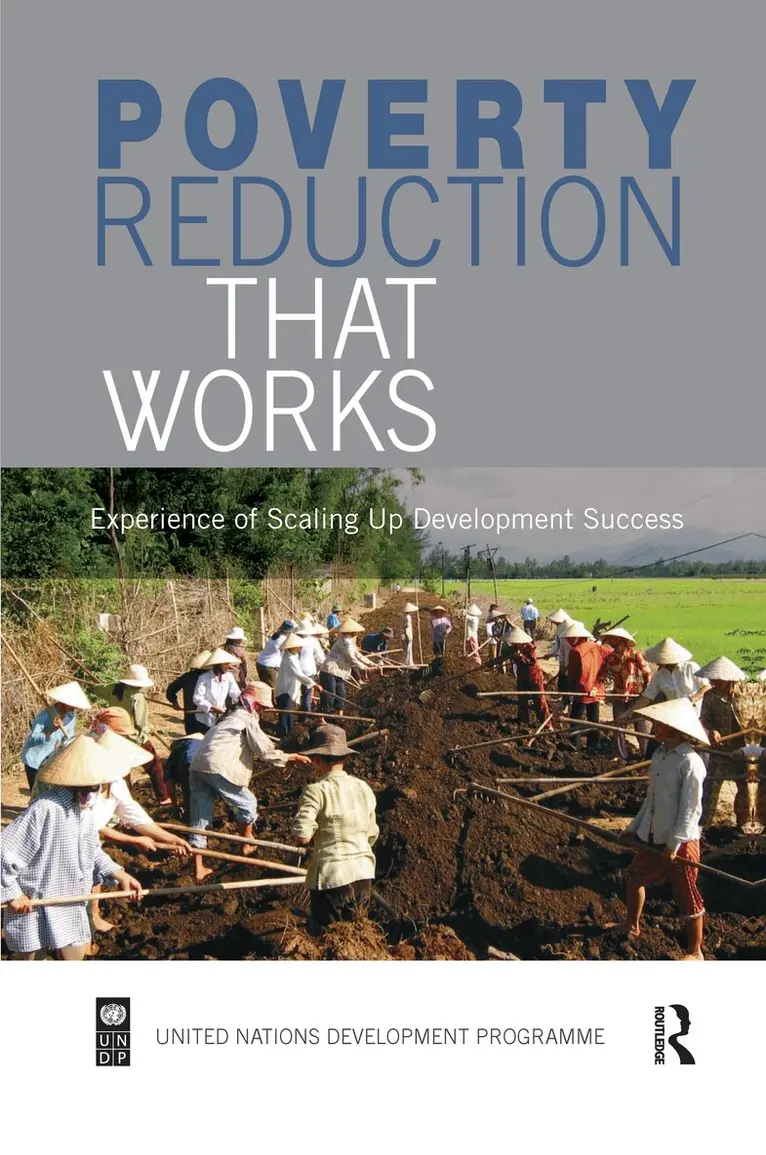
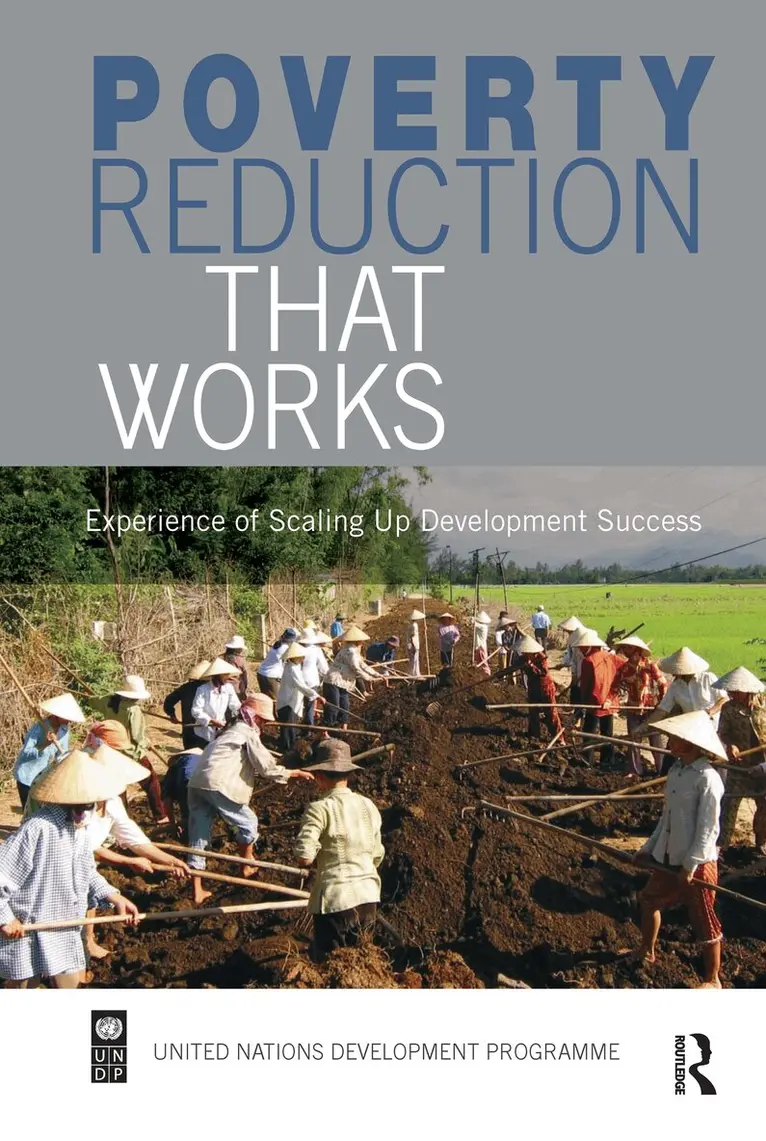
We are now at the midpoint for achieving the Millennium Development Goals and the objective of halving poverty by 2015. Despite commendable efforts and much progress, up to 750 million people are still living in absolute poverty. To lift these people out of poverty, macro-economic policies must be complemented by targeted and local level poverty reduction.
This book looks at twenty of the most innovative case studies of poverty reduction and Millennium Development Goal localization from fifteen countries - Afghanistan, Bangladesh, Cambodia, China, Egypt, India, Indonesia, Malaysia, Mexico, Nepal, Paraguay, Philippines, Sri Lanka, Thailand and Vietnam - covering diverse issues ranging from housing and tourism to socio-economic empowerment of women, health insurance and markets for livestock produce.
Many of the cases started as small scale interventions by NGOs, donors or government pilots but now they are being scaled up to form part of national policy or replicated across their respective countries. Yet why do some work while others do not? What are the stumbling blocks and how can they be overcome? And what lessons and principles are there for replicating and scaling up poverty reduction initiatives worldwide? This book tackles these questions and more, and presents a wealth of knowledge, evidence and ideas for all practitioners and researchers working to reduce poverty at the local level while aiming to achieve a global impact.
Published with UNDP
824 kr
Läs direkt efter köp
�This book provides an excellent framework to analyse the experience of a wide variety of successful initiatives across the world and draws attention to critical issues that practitioners need to think about when designing poverty reduction interventions and scaling up.� Bill Tod, Regional MDG Adviser, SNV Asia
�With its wide regional coverage, and frank discussions of issues and problems encountered in designing projects that directly tackle poverty, this will be a very useful reference book for NGOs, INGOs, and also for multilateral institutions.� Johanna Boestel, Country Economist, Asian Development Bank, Sri Lanka Resident Mission
We are now at the midpoint for achieving the Millennium Development Goals and the objective of halving poverty by 2015. Despite commendable efforts and much progress, up to 750 million people are still living in absolute poverty. To lift these people out of poverty, macro-economic policies must be complemented by targeted and local level poverty reduction.
This book looks at twenty of the most innovative case studies of poverty reduction and Millennium Development Goal localization from fifteen countries - Afghanistan, Bangladesh, Cambodia, China, Egypt, India, Indonesia, Malaysia, Mexico, Nepal, Paraguay, Philippines, Sri Lanka, Thailand and Vietnam - covering diverse issues ranging from housing and tourism to socio-economic empowerment of women, health insurance and markets for livestock produce.
Many of the cases started as small scale interventions by NGOs, donors or government pilots but now they are being scaled up to form part of national policy or replicated across their respective countries. Yet why do some work while others do not? What are the stumbling blocks and how can they be overcome? And what lessons and principles are there for replicating and scaling up poverty reduction initiatives worldwide? This book tackles these questions and more, and presents a wealth of knowledge, evidence and ideas for all practitioners and researchers working to reduce poverty at the local level while aiming to achieve a global impact.
Published with UNDP
237 kr
Skickas
670 kr
Skickas inom 10-15 vardagar
2 195 kr
Skickas inom 10-15 vardagar
699 kr
Skickas inom 10-15 vardagar
195 kr
Tillfälligt slut