Paul Stephen Dempsey – författare
683 kr
Skickas inom 10-15 vardagar
709 kr
Skickas inom 10-15 vardagar
3 388 kr
Skickas inom 10-15 vardagar
3 388 kr
Skickas inom 10-15 vardagar
835 kr
Läs direkt efter köp
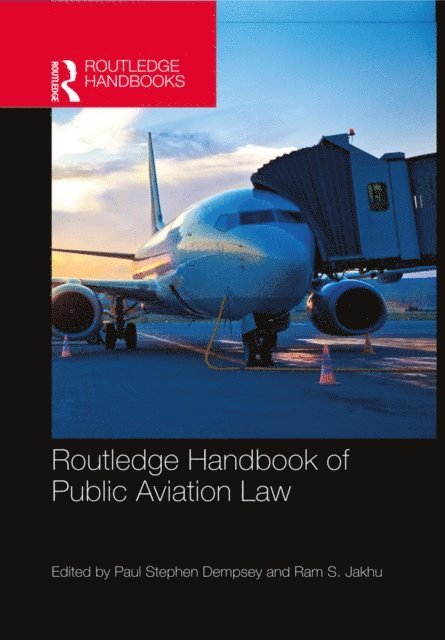
The Routledge Handbook of Public Aviation Law is the first book to incorporate a comprehensive analysis of Public Aviation Law – principally international, but also domestic law in a comparative context – in a single volume.
International Law is pervasive in Aviation Law, and is incorporated into a number of major multilateral treaties (e.g., the Chicago Convention of 1944, for Public International Air Law). This is supplemented by various Annexes (promulgated by the International Civil Aviation Organization) and Conventions and Protocols (promulgated by States in diplomatic conferences). States then implement these international obligations in domestic laws that create aviation regulatory administrations that, in turn, promulgate regulations.
Bringing together leading scholars in the field, this prestigious reference work provides a comprehensive and comparative overview of Public Aviation Law. It surveys the state of the discipline including contemporary and emerging areas of law, regulation, and public policy in air transportation. Each chapter begins with an overview of the international law applicable to the subject matter, followed, where appropriate, by a comparative examination of domestic statutes, regulations, and jurisprudence. The objective of the book is to identify and summarize existing areas within the context of international research, and to identify and highlight emerging areas.
Both practical and theoretical in scope, the Routledge Handbook of Public Aviation Law will be of great relevance to scholars, researchers, lawyers, and policy makers with an interest in aviation law.
835 kr
Läs direkt efter köp
The Routledge Handbook of Public Aviation Law is the first book to incorporate a comprehensive analysis of Public Aviation Law – principally international, but also domestic law in a comparative context – in a single volume.
International Law is pervasive in Aviation Law, and is incorporated into a number of major multilateral treaties (e.g., the Chicago Convention of 1944, for Public International Air Law). This is supplemented by various Annexes (promulgated by the International Civil Aviation Organization) and Conventions and Protocols (promulgated by States in diplomatic conferences). States then implement these international obligations in domestic laws that create aviation regulatory administrations that, in turn, promulgate regulations.
Bringing together leading scholars in the field, this prestigious reference work provides a comprehensive and comparative overview of Public Aviation Law. It surveys the state of the discipline including contemporary and emerging areas of law, regulation, and public policy in air transportation. Each chapter begins with an overview of the international law applicable to the subject matter, followed, where appropriate, by a comparative examination of domestic statutes, regulations, and jurisprudence. The objective of the book is to identify and summarize existing areas within the context of international research, and to identify and highlight emerging areas.
Both practical and theoretical in scope, the Routledge Handbook of Public Aviation Law will be of great relevance to scholars, researchers, lawyers, and policy makers with an interest in aviation law.
774 kr
Läs direkt efter köp
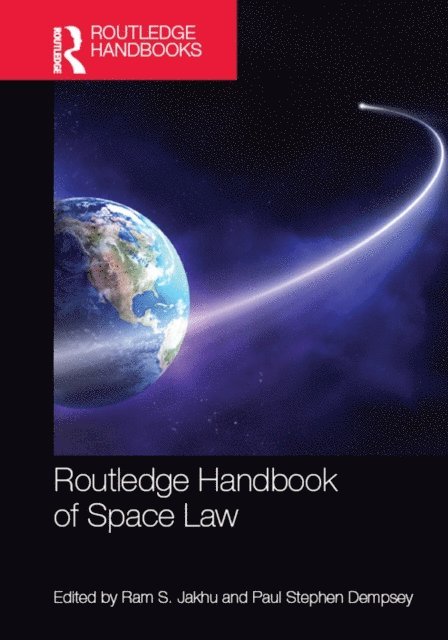
This handbook is a reference work providing a comprehensive, objective and comparative overview of Space Law.
The global space economy reached $330 billion in 2015, with a growth rate of 9 per cent vis-à-vis the previous year. Consequently, Space Law is changing and expanding expeditiously, especially at the national level. More laws and regulations are being adopted by space-faring nations, while more countries are adapting their Space Laws and regulations related to activities in outer space. More regulatory bodies are being created, while more regulatory diversity (from public law to private law) is being instituted as increasing and innovative activities are undertaken by private entities which employ new technologies and business initiatives. At the international level, Space Law (both hard law and soft law) is expanding in certain areas, especially in satellite broadcasting and telecommunications.
The Routledge Handbook of Space Law summarises the existing state of knowledge on a comprehensive range of topics and aspires to set the future international research agenda by indicating gaps and inconsistencies in the existing law and highlighting emerging legal issues. Unlike other books on the subject, it addresses major international and national legal aspects of particular space activities and issues, rather than providing commentary on or explanations about a particular Space Law treaty or national regulation.
Drawing together contributions from leading academic scholars and practicing lawyers from around the world, the volume is divided into five key parts:
• Part I: General Principles of International Space Law
• Part II: International Law of Space Applications
• Part III: National Regulation of Space Activities
• Part IV: National Regulation of Navigational Satellite Systems
• Part V: Commercial Aspects of Space Law
This handbook is both practical and theoretical in scope, and may serve as a reference tool to academics, professionals and policy-makers with an interest in Space Law.
774 kr
Läs direkt efter köp
This handbook is a reference work providing a comprehensive, objective and comparative overview of Space Law.
The global space economy reached $330 billion in 2015, with a growth rate of 9 per cent vis-à-vis the previous year. Consequently, Space Law is changing and expanding expeditiously, especially at the national level. More laws and regulations are being adopted by space-faring nations, while more countries are adapting their Space Laws and regulations related to activities in outer space. More regulatory bodies are being created, while more regulatory diversity (from public law to private law) is being instituted as increasing and innovative activities are undertaken by private entities which employ new technologies and business initiatives. At the international level, Space Law (both hard law and soft law) is expanding in certain areas, especially in satellite broadcasting and telecommunications.
The Routledge Handbook of Space Law summarises the existing state of knowledge on a comprehensive range of topics and aspires to set the future international research agenda by indicating gaps and inconsistencies in the existing law and highlighting emerging legal issues. Unlike other books on the subject, it addresses major international and national legal aspects of particular space activities and issues, rather than providing commentary on or explanations about a particular Space Law treaty or national regulation.
Drawing together contributions from leading academic scholars and practicing lawyers from around the world, the volume is divided into five key parts:
• Part I: General Principles of International Space Law
• Part II: International Law of Space Applications
• Part III: National Regulation of Space Activities
• Part IV: National Regulation of Navigational Satellite Systems
• Part V: Commercial Aspects of Space Law
This handbook is both practical and theoretical in scope, and may serve as a reference tool to academics, professionals and policy-makers with an interest in Space Law.
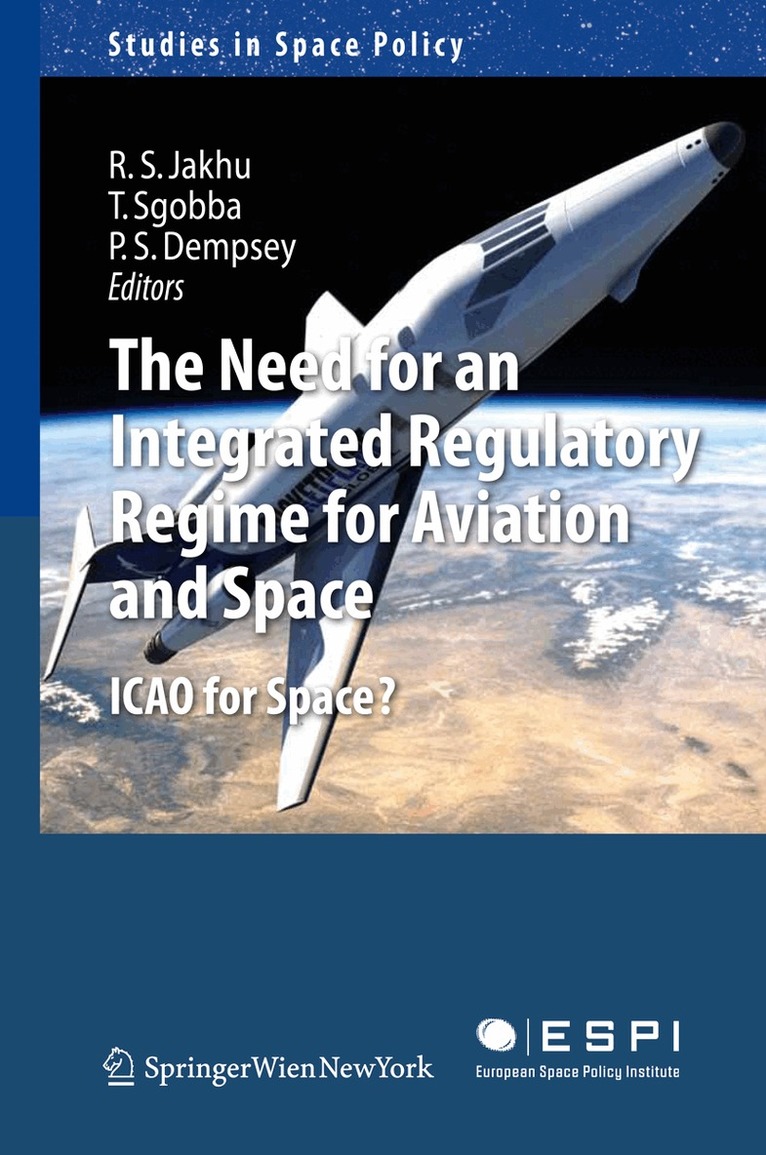
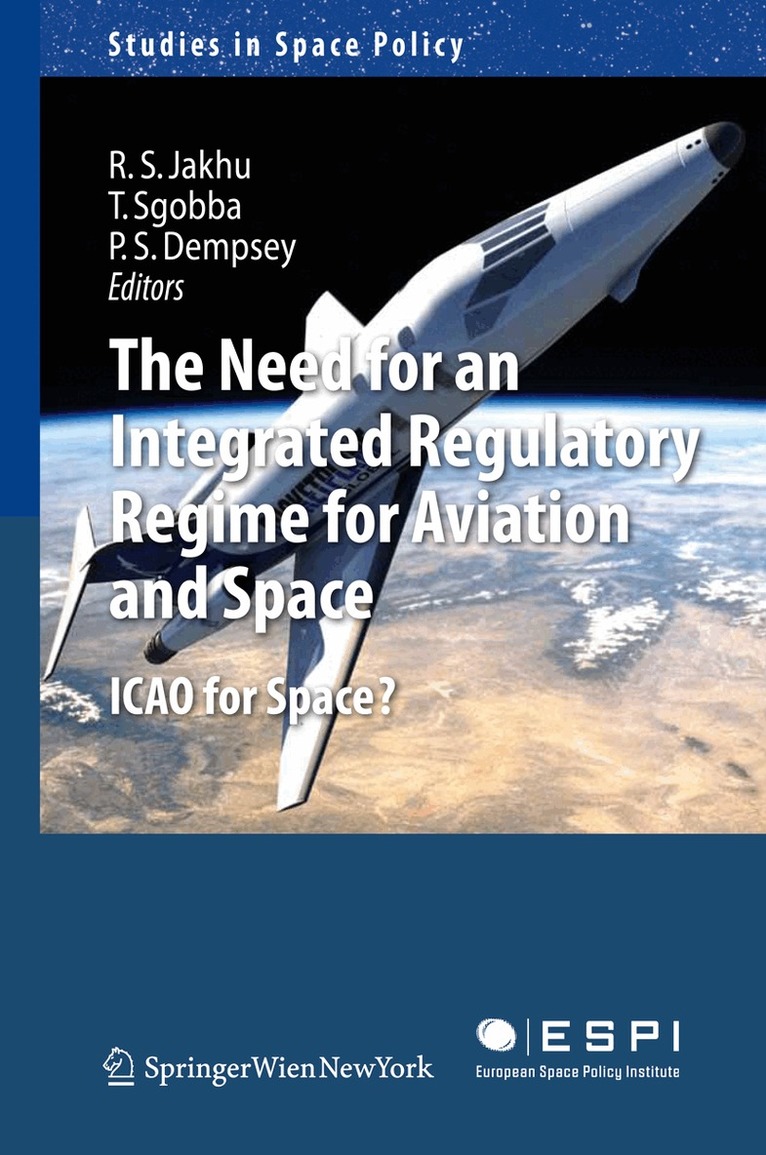
Need for an Integrated Regulatory Regime for Aviation and Space
ICAO for Space?
997 kr
Skickas inom 10-15 vardagar
1 303 kr
Läs direkt efter köp
In the new space age after the end of the Cold War, orbit and frequency allocations, traffic control, safety, and a number of support services such as space weather forecast and orbital debris monitoring need to be coordinated transparently and effectively by clear rules at an international level. The establishment of an international civil space regulatory framework is the central theme of this book, in particular, the possible extension to space of the international regulatory framework model adopted for aviation more than 60 years ago with the establishment of the International Civil Aviation Organization (ICAO).
The book also highlights the increased reliance of aviation safety on space-based navigation and communication systems, the increasing space systems traffic through the international airspace under the jurisdiction of the ICAO, and the emerging hybrid systems such as aero-spacecraft and space planes, to advocate the practical benefits of directly expanding the ICAO Convention domain beyond the airspace to include outer space up to the geosynchronous orbit.
Need for an Integrated Regulatory Regime for Aviation and Space
ICAO for Space?
997 kr
Skickas inom 10-15 vardagar
2 382 kr
Läs direkt efter köp
Once a byword for the economic power of national government - with competition strictly regulated - European commercial aviation has now virtually become a market without state-imposed anticompetitive restrictions. Although intended to enhance competition, this situation has in fact driven airlines to form massive global alliance cartels that offer ever-shrinking benefits to the consumer.
In this extraordinary thorough, blow-by-blow analysis of how this happened - or was allowed to happen - one of the world''s most eminent aviation law authorities explores the subject with a lucid insight fully informed by historical breadth and keen appreciation of current pressures. Commercial aviation emerges as the crucible par excellence of the convergence of prevailing global ideology, economics, and international law.
Among the numerous interrelated topics investigated in depth by Professor Dempsey, the following may be mentioned:
- the principal actors, including scores of airlines, the European Union, and a number of air transport associations;- the labyrinth of bilateral air transport agreements;- the relevance of the Treaty of Rome''s competition rules and the EU merger regulations to air transport;- the important Court of Justice cases that circumscribed the zone of application in which the competition rules can regulate air transport: French Seamen''s Case, Transport Policy Decision, Olympic Airways, Nouvelles Frontières, Ahmed Saeed, and the 2002 ''Open Skies'' Decision;- the 1991 U.S.-EC agreement regarding the application of competition laws;- the sequence of EU aviation regulatory ''packages'';- regulation of non-economic issues (air traffic congestion, noise limitations, air carrier liability, civil aviation accident/incident investigations, denied boarding compensation);- the effect of the U.S. government''s increasing invocation of antitrust immunity;- computer reservation systems (especially code-sharing procedures);- jointly-owned web sites for ticket sales and other e-commerce joint ventures;- frequent flyer program alliances; and- the emergence of global megacarriers.The author''s presentation emphasizes the regulatory constructs that currently affect the European air transport market: pricing and tariffs, pooling of revenue, market access (licensing, capacity limits, traffic rights, and slot allocation), ground handling, cargo services, state aid, and the power of the EU to act on the commercial aviation world stage for Member States. Each of these areas of analysis begins with an overview of the general regulatory environment for that area followed by a detailed chronological delineation of relevant packages, proposals, resolutions, and regulations.
Because of the enormous role played by international air transport with respect to gross national product, employment, and energy consumption, European Aviation Law is of great importance not only to European lawyers but to officials, policymakers, practitioners, and academics in a number of relevant fields worldwide.
2 675 kr
Tillfälligt slut