Tommaso Sgobba - Böcker
Visar alla böcker från författaren Tommaso Sgobba. Handla med fri frakt och snabb leverans.
6 produkter
6 produkter
1 459 kr
Skickas inom 7-10 vardagar
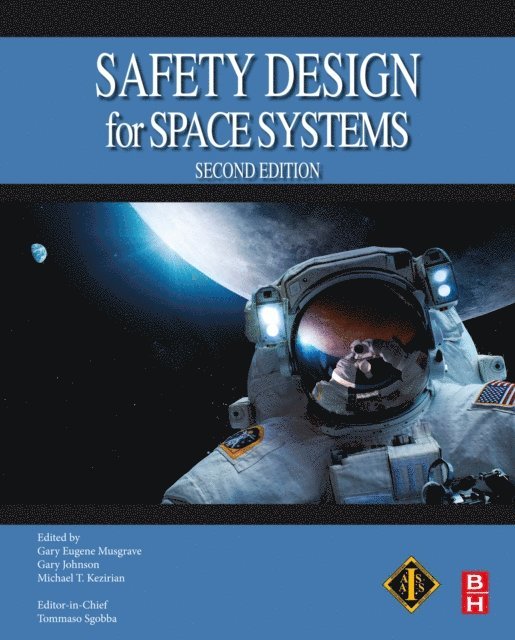
The lack of widespread education in space safety engineering and management has profound effects on project team effectiveness in integrating safety during design. On one side, it slows down the professional development of junior safety engineers, while on the other side it creates a sectarian attitude that isolates safety engineers from the rest of the project team. To speed up professional development, bridge the gap within the team, and prevent hampered communication and missed feedback, the entire project team needs to acquire and develop a shared culture of space safety principles and techniques.The second edition of Safety Design for Space Systems continues to address these issues with substantial updates to chapters such as battery safety, life support systems, robotic systems safety, and fire safety. This book also features new chapters on crew survivability design and nuclear space systems safety. Finally, the discussion of human rating concepts, safety-by-design principles, and safety management practices have also been revised and improved. With contributions from leading experts worldwide, this second edition represents an essential educational resource and reference tool for engineers and managers working on space projects.Provides basic multidisciplinary knowledge on space systems safety designAddresses how space safety engineering and management can be implemented in practiceIncludes new chapters on crew survivability design and nuclear space systems safetyFully revised and updated to reflect the latest developments in the field
2 081 kr
Skickas inom 7-10 vardagar
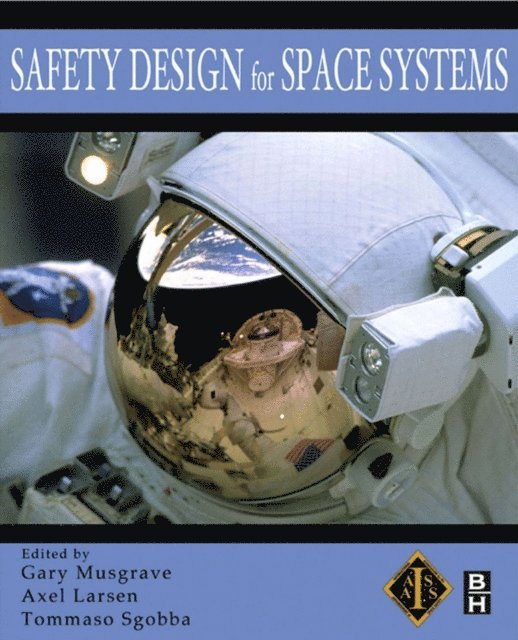
Progress in space safety lies in the acceptance of safety design and engineering as an integral part of the design and implementation process for new space systems. Safety must be seen as the principle design driver of utmost importance from the outset of the design process, which is only achieved through a culture change that moves all stakeholders toward front-end loaded safety concepts. This approach entails a common understanding and mastering of basic principles of safety design for space systems at all levels of the program organisation. Fully supported by the International Association for the Advancement of Space Safety (IAASS), written by the leading figures in the industry, with frontline experience from projects ranging from the Apollo missions, Skylab, the Space Shuttle and the International Space Station, this book provides a comprehensive reference for aerospace engineers in industry. It addresses each of the key elements that impact on space systems safety, including: the space environment (natural and induced); human physiology in space; human rating factors; emergency capabilities; launch propellants and oxidizer systems; life support systems; battery and fuel cell safety; nuclear power generators (NPG) safety; habitat activities; fire protection; safety-critical software development; collision avoidance systems design; operations and on-orbit maintenance. The only comprehensive space systems safety reference, its must-have status within space agencies and suppliers, technical and aerospace libraries is practically guaranteed Written by the leading figures in the industry from NASA, ESA, JAXA, (et cetera), with frontline experience from projects ranging from the Apollo missions, Skylab, the Space Shuttle, small and large satellite systems, and the International Space Station Superb quality information for engineers, programme managers, suppliers and aerospace technologists; fully supported by the IAASS (International Association for the Advancement of Space Safety)
2 100 kr
Skickas inom 10-15 vardagar
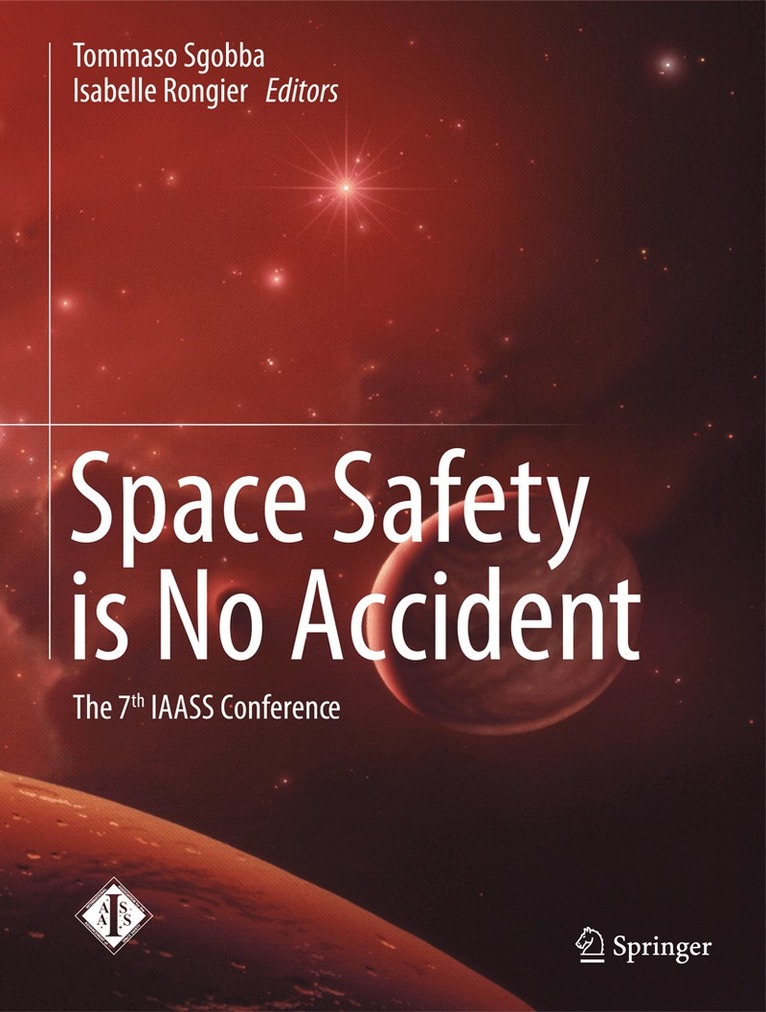
Includes the proceedings from the 7th IAASS Conference, "Space Safety is No Accident," held in Friedrichshafen, Germany, in October 2014.The 7th IAASS Conference, “Space Safety is No Accident” is an invitation to reflect and exchange information on a number of topics in space safety and sustainability of national and international interest. The conference is also a forum to promote mutual understanding, trust and the widest possible international cooperation in such matters. The once exclusive “club” of nations with autonomous sub-orbital and orbital space access capabilities is becoming crowded with fresh and ambitious new entrants. New commercial spaceports are starting operations and others are being built.In the manned spaceflight arena a commercial market is becoming a tangible reality with suborbital spaceflights and government use of commercial services for cargo and crew transportation to orbit. Besides the national ambitions in space, the international cooperation both civil and commercial is also gaining momentum. In the meantime robotic space exploration will accelerate and with it the need to internationally better regulate the usage of nuclear power sources. Space-bound systems and aviation traffic will share more and more a crowded airspace, while aviation will increasingly rely on space-based safety-critical services. Finally, most nations own nowadays space assets, mainly satellites of various kinds and purposes, which are under the constant threat of collision with other spacecraft and with the ever increasing number of space debris. Awareness is increasing internationally (as solemnly declared since decades in space treaties) that space is a mankind asset and that we all have the duty of caring for it. Without proactive and courageous international initiatives to organize space, we risk to negate access and use of space to future generations.
2 100 kr
Skickas inom 10-15 vardagar
Includes the proceedings from the 7th IAASS Conference, "Space Safety is No Accident," held in Friedrichshafen, Germany, in October 2014.The 7th IAASS Conference, “Space Safety is No Accident” is an invitation to reflect and exchange information on a number of topics in space safety and sustainability of national and international interest. The conference is also a forum to promote mutual understanding, trust and the widest possible international cooperation in such matters. The once exclusive “club” of nations with autonomous sub-orbital and orbital space access capabilities is becoming crowded with fresh and ambitious new entrants. New commercial spaceports are starting operations and others are being built.In the manned spaceflight arena a commercial market is becoming a tangible reality with suborbital spaceflights and government use of commercial services for cargo and crew transportation to orbit. Besides the national ambitions in space, the international cooperation both civil and commercial is also gaining momentum. In the meantime robotic space exploration will accelerate and with it the need to internationally better regulate the usage of nuclear power sources. Space-bound systems and aviation traffic will share more and more a crowded airspace, while aviation will increasingly rely on space-based safety-critical services. Finally, most nations own nowadays space assets, mainly satellites of various kinds and purposes, which are under the constant threat of collision with other spacecraft and with the ever increasing number of space debris. Awareness is increasing internationally (as solemnly declared since decades in space treaties) that space is a mankind asset and that we all have the duty of caring for it. Without proactive and courageous international initiatives to organize space, we risk to negate access and use of space to future generations.
Del 7 - Studies in Space Policy
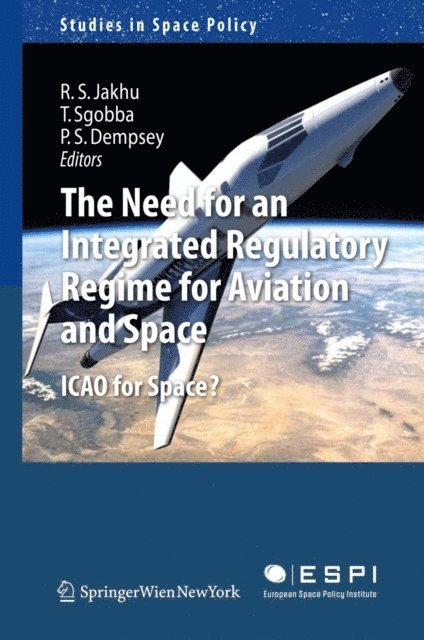
Need for an Integrated Regulatory Regime for Aviation and Space
ICAO for Space?
Inbunden, Engelska, 2011
979 kr
Skickas inom 10-15 vardagar
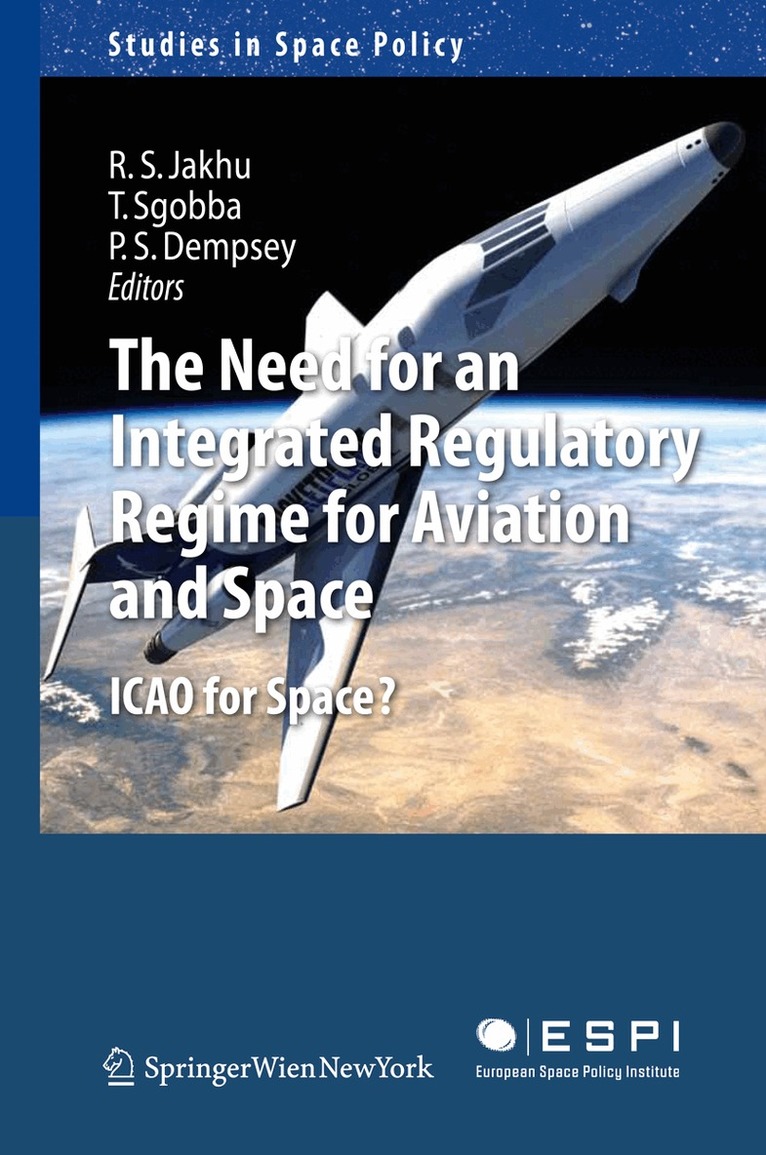
In the new space age after the end of the Cold War, orbit and frequency allocations, traffic control, safety, and a number of support services such as space weather forecast and orbital debris monitoring need to be coordinated transparently and effectively by clear rules at an international level. The establishment of an international civil space regulatory framework is the central theme of this book, in particular, the possible extension to space of the international regulatory framework model adopted for aviation more than 60 years ago with the establishment of the International Civil Aviation Organization (ICAO). The book also highlights the increased reliance of aviation safety on space-based navigation and communication systems, the increasing space systems traffic through the international airspace under the jurisdiction of the ICAO, and the emerging hybrid systems such as aero-spacecraft and space planes, to advocate the practical benefits of directly expanding the ICAO Convention domain beyond the airspace to include outer space up to the geosynchronous orbit.
Del 7 - Studies in Space Policy
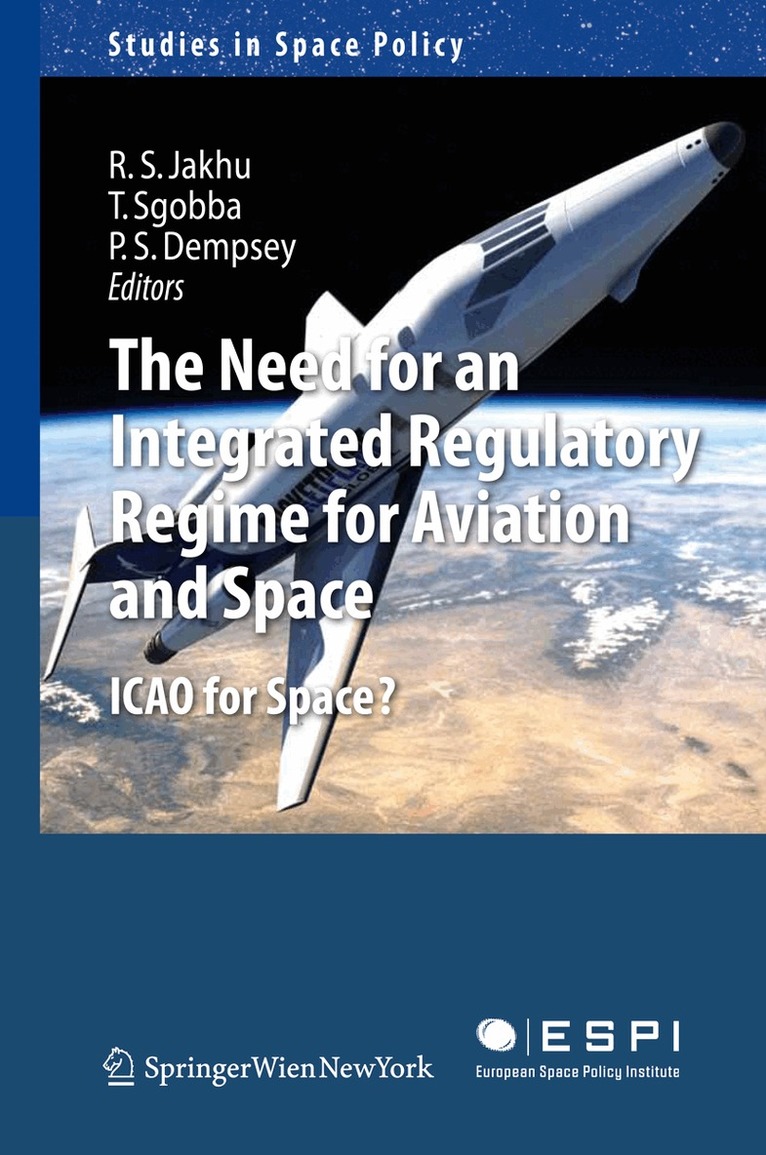
Need for an Integrated Regulatory Regime for Aviation and Space
ICAO for Space?
Häftad, Engelska, 2013
979 kr
Skickas inom 10-15 vardagar
In the new space age after the end of the Cold War, orbit and frequency allocations, traffic control, safety, and a number of support services such as space weather forecast and orbital debris monitoring need to be coordinated transparently and effectively by clear rules at an international level. The establishment of an international civil space regulatory framework is the central theme of this book, in particular, the possible extension to space of the international regulatory framework model adopted for aviation more than 60 years ago with the establishment of the International Civil Aviation Organization (ICAO). The book also highlights the increased reliance of aviation safety on space-based navigation and communication systems, the increasing space systems traffic through the international airspace under the jurisdiction of the ICAO, and the emerging hybrid systems such as aero-spacecraft and space planes, to advocate the practical benefits of directly expanding the ICAO Convention domain beyond the airspace to include outer space up to the geosynchronous orbit.