Paul Wexler – Författare
Visar alla böcker från författaren Paul Wexler. Handla med fri frakt och snabb leverans.
5 produkter
5 produkter
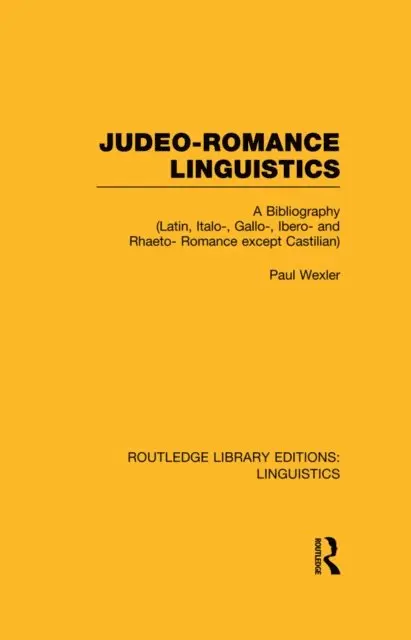
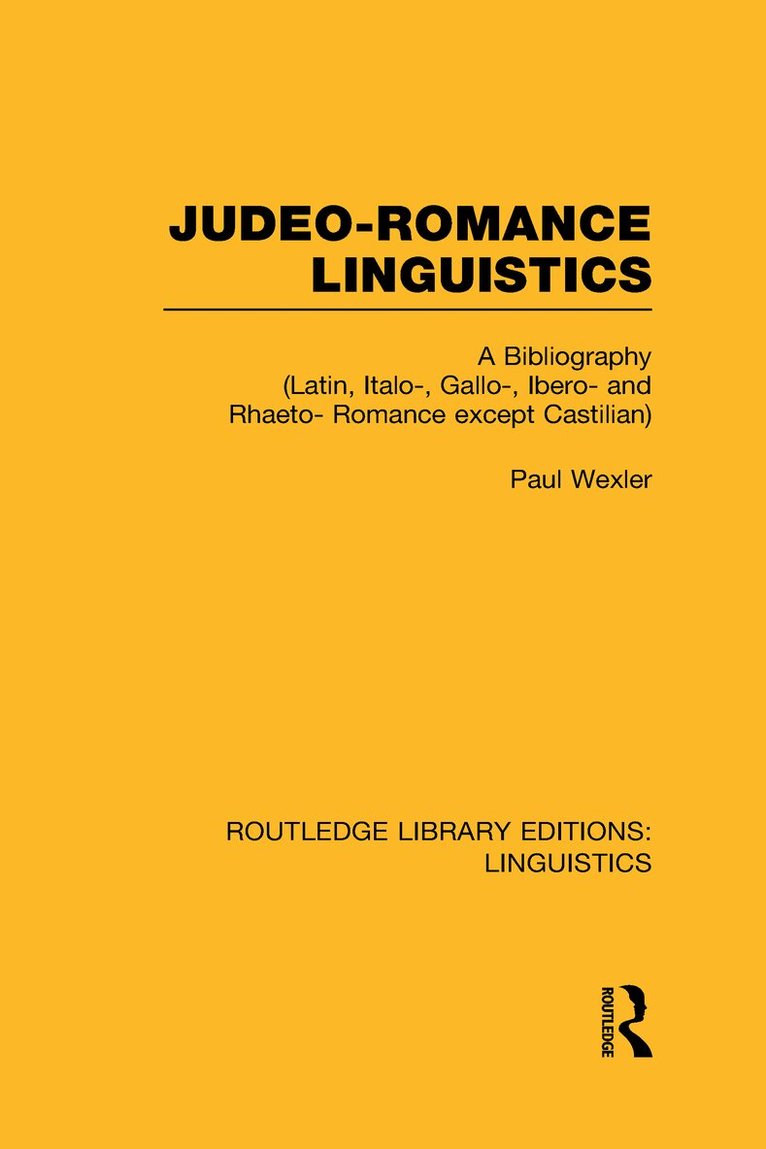
Judeo-Romance Linguistics (RLE Linguistics E: Indo-European Linguistics)
A Bibliography (Latin, Italo-, Gallo-, Ibero-, and Rhaeto-Romance except Castilian)
Inbunden, Engelska, 2013
721 kr
Skickas inom 10-15 vardagar
A separate bibliographic treatment of the Judeo-Romance languages should facilitate a deeper appreciation of the contributions that they may make to Romance linguistics in general. Up until now, Judeo-Romance topics have scarcely been canvassed in Romance linguistic bibliographies. It is hoped that this new book serves to popularize the field of Judeo-Romance languages both among students of general Romance and comparative Jewish linguistics.
1 399 kr
Tillfälligt slut
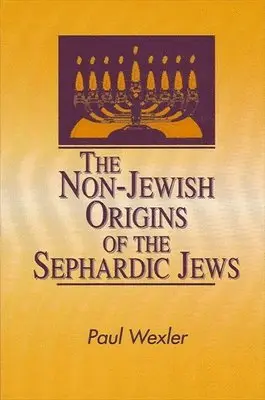
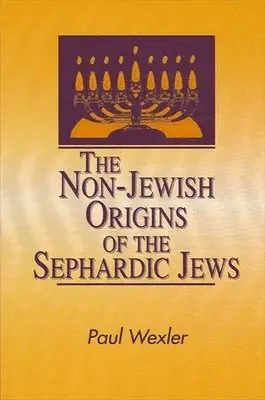
The author uses linguistic, ethnographic, and historical evidence to support his theory that the origins of Sephardic Jews are predominantly Berber and Arab.In The Non-Jewish Origins of the Sephardic Jews, Paul Wexler presents a groundbreaking theory that challenges the conventional narrative of Sephardic Jewish origins. Through an in-depth exploration of linguistic, historical, and ethnographic evidence, Wexler argues that the Sephardic Jews—long believed to be the descendants of ancient Judaeans—are, in fact, the descendants of Berber and Arab proselytes who converted to Judaism during the medieval period.Drawing from an extensive array of sources, including linguistic studies of Judeo-Arabic, Ladino, and Yiddish, Wexler builds a compelling case for the North African roots of Sephardic Jewry. He identifies traces of Berber and Arab cultures embedded within the language, religion, and folk traditions of Sephardic Jews, revealing an intricate tapestry of cultural exchange and religious transformation.The book also revises the historical understanding of the term Sephardic and the role of conversion in the formation of Jewish communities across North Africa, Spain, and the broader Mediterranean world. Wexler's meticulous analysis highlights the significant influence of Arabic and Berber linguistic features on Judeo-Spanish and Judeo-Arabic, challenging long-held assumptions about the "Hispanicity" of Sephardic Jews.Incorporating elements of religious syncretism and the cultural assimilation of Berber and Arab practices, Wexler’s study offers a new lens through which to view the complex processes of Judaization in the Iberian Peninsula. This comprehensive and original work will appeal to scholars and readers interested in Jewish history, linguistic anthropology, and the rich cultural legacy of the Sephardic Jews.
611 kr
Skickas inom 3-6 vardagar
The author uses linguistic, ethnographic, and historical evidence to support his theory that the origins of Sephardic Jews are predominantly Berber and Arab.In The Non-Jewish Origins of the Sephardic Jews, Paul Wexler presents a groundbreaking theory that challenges the conventional narrative of Sephardic Jewish origins. Through an in-depth exploration of linguistic, historical, and ethnographic evidence, Wexler argues that the Sephardic Jews—long believed to be the descendants of ancient Judaeans—are, in fact, the descendants of Berber and Arab proselytes who converted to Judaism during the medieval period.Drawing from an extensive array of sources, including linguistic studies of Judeo-Arabic, Ladino, and Yiddish, Wexler builds a compelling case for the North African roots of Sephardic Jewry. He identifies traces of Berber and Arab cultures embedded within the language, religion, and folk traditions of Sephardic Jews, revealing an intricate tapestry of cultural exchange and religious transformation.The book also revises the historical understanding of the term Sephardic and the role of conversion in the formation of Jewish communities across North Africa, Spain, and the broader Mediterranean world. Wexler's meticulous analysis highlights the significant influence of Arabic and Berber linguistic features on Judeo-Spanish and Judeo-Arabic, challenging long-held assumptions about the "Hispanicity" of Sephardic Jews.Incorporating elements of religious syncretism and the cultural assimilation of Berber and Arab practices, Wexler’s study offers a new lens through which to view the complex processes of Judaization in the Iberian Peninsula. This comprehensive and original work will appeal to scholars and readers interested in Jewish history, linguistic anthropology, and the rich cultural legacy of the Sephardic Jews.
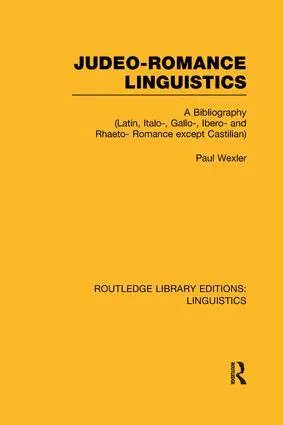
Judeo-Romance Linguistics (RLE Linguistics E: Indo-European Linguistics)
A Bibliography (Latin, Italo-, Gallo-, Ibero-, and Rhaeto-Romance except Castilian)
Häftad, Engelska, 2016
343 kr
Skickas inom 10-15 vardagar
A separate bibliographic treatment of the Judeo-Romance languages should facilitate a deeper appreciation of the contributions that they may make to Romance linguistics in general. Up until now, Judeo-Romance topics have scarcely been canvassed in Romance linguistic bibliographies. It is hoped that this new book serves to popularize the field of Judeo-Romance languages both among students of general Romance and comparative Jewish linguistics.
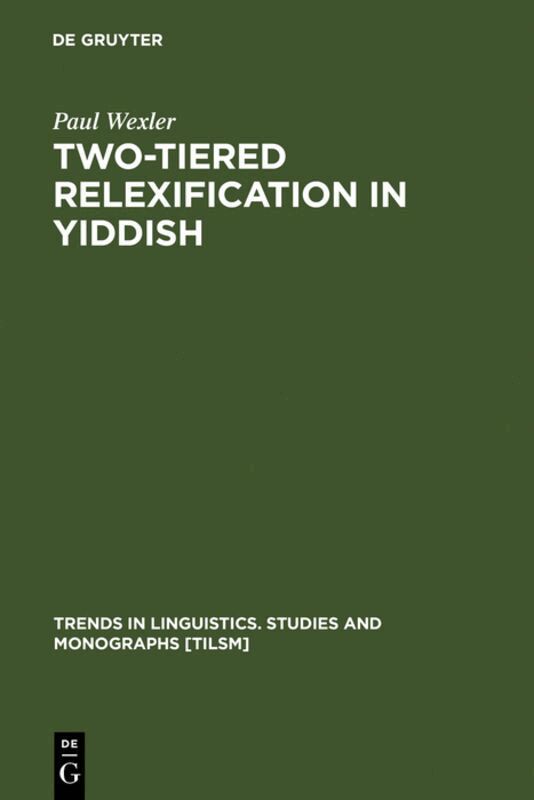
Two-tiered Relexification in Yiddish
Jews, Sorbs, Khazars, and the Kiev-Polessian Dialect
Inbunden, Engelska, 2002
2 928 kr
Skickas inom 7-10 vardagar
The book claims that Yiddish was created when Judaized Sorbs first relexified their language to High German between the 9th-12th centuries; by the 15th century, the descendants of the Judaized Khazars also relexified their Kiev-Polessian (northern Ukrainian and southern Belarusian) speech to Yiddish and German, Yiddish thus uses a mixed West-East Slavic grammar and suggests that converted Khazars were a major component in the Ashkenazic ethnogenesis.