• Fri frakt över 249 kr
  • •
  • Snabba leveranser
  • •
  • Billiga böcker
Kundservice

Du är på sajten för privatpersoner.

Företag, bibliotek eller offentlig verksamhet?

Du handlar på classic.bokus.com, där alla dina funktioner finns intakta.
Till classic.bokus.com
Bokus logotyp. Gå till startsidan.
  • Erbjudanden
  • Nyheter
  • Student
  • Topplistor
  • Barn & ungdom
  • Bokus Play
  • E-böcker
  • Pocketböcker
  • Spel & pussel

10% studentrabatt med kod TERM26

Sidfot

Mina sidor

    Hjälp

    • Kundservice
    • Vanliga frågor och svar
    • Frakt och leverans
    • Retur vid ångerrätt
    • Reklamera vara
    • Betalning
    • Köpvillkor
    • Allmänna villkor
    • Information om webbplatsens tillgänglighet

    Om Bokus

    • Om oss
    • Pressrum
    • För studenter
    • För företag
    • För bibliotek och offentlig verksamhet
    • För leverantörer
    • Hållbarhet

    Populärt

    • Aktuella erbjudanden
    • Presentkort
    • Studentlitteratur
    • Nya böcker
    • Topplistor
    • Signerade böcker
    • Engelska böcker

    Inspiration

    • Boktips
    • BookTok
    • Populära bokserier
    • Barnbokskaraktärer
    • Populära författare
    Logotyp för Bokus
    Följ oss på Facebook (extern länk)Följ oss på Instagram (extern länk)Följ oss på YouTube (extern länk)Följ oss på TikTok (extern länk)
    bokus @ CookiesAnpassa cookiesIntegritetspolicyKöpvillkor
    Till Citymail hemsida (extern länk)Till Budbee hemsida (extern länk)Till Postnord hemsida (extern länk)Till Schenker hemsida (extern länk)Till Early Bird hemsida (extern länk)Till Walleys hemsida (extern länk)
    1. Historia och arkeologi
    2. Historia
    3. Allmän historia och världshistoria

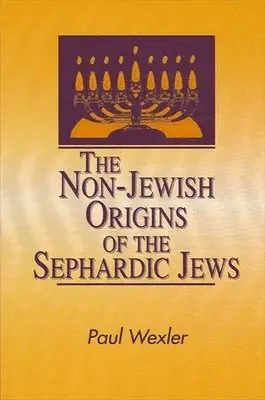
    Non-Jewish Origins of the Sephardic Jews

    AvPaul Wexler

    Inbunden, Engelska, 1996

    Del i serien SUNY series in Anthropology and Judaic Studies

    1 108 kr

    Tillfälligt slut

    Fler format och utgåvor

    Häftad

    487 kr

    Beskrivning

    The author uses linguistic, ethnographic, and historical evidence to support his theory that the origins of Sephardic Jews are predominantly Berber and Arab.In The Non-Jewish Origins of the Sephardic Jews, Paul Wexler presents a groundbreaking theory that challenges the conventional narrative of Sephardic Jewish origins. Through an in-depth exploration of linguistic, historical, and ethnographic evidence, Wexler argues that the Sephardic Jews—long believed to be the descendants of ancient Judaeans—are, in fact, the descendants of Berber and Arab proselytes who converted to Judaism during the medieval period.Drawing from an extensive array of sources, including linguistic studies of Judeo-Arabic, Ladino, and Yiddish, Wexler builds a compelling case for the North African roots of Sephardic Jewry. He identifies traces of Berber and Arab cultures embedded within the language, religion, and folk traditions of Sephardic Jews, revealing an intricate tapestry of cultural exchange and religious transformation.The book also revises the historical understanding of the term Sephardic and the role of conversion in the formation of Jewish communities across North Africa, Spain, and the broader Mediterranean world. Wexler's meticulous analysis highlights the significant influence of Arabic and Berber linguistic features on Judeo-Spanish and Judeo-Arabic, challenging long-held assumptions about the "Hispanicity" of Sephardic Jews.Incorporating elements of religious syncretism and the cultural assimilation of Berber and Arab practices, Wexler’s study offers a new lens through which to view the complex processes of Judaization in the Iberian Peninsula. This comprehensive and original work will appeal to scholars and readers interested in Jewish history, linguistic anthropology, and the rich cultural legacy of the Sephardic Jews.


    Produktinformation

    • Utgivningsdatum:1996-02-15
    • Mått:153 x 229 x 17 mm
    • Vikt:635 g
    • Format:Inbunden
    • Språk:Engelska
    • Serie:SUNY series in Anthropology and Judaic Studies
    • Antal sidor:321
    • Förlag:State University of New York Press
    • ISBN:9780791427958

    Utforska kategorier

    • Allmän historia och världshistoria inom Historia och arkeologi

    Mer om författaren

    Paul Wexler is Professor of Linguistics at Tel-Aviv University.

    Recensioner i media

    "This is a fascinating book based upon a wealth of diverse sources not usually brought together by scholars of Sephardic history. It is based upon the premise that Jewish languages such as Judeo-Arabic, Ladino, and Yiddish offer invaluable clues to ethnic origins."Wexler challenges the prevailing view that Sephardic Jewry did not have its genesis in Spain, but in North Africa, and that the Sephardic Jews were not descended from the ancient Judaeans, but were primarily the posterity of Berber proselytes. The author detects remnants of this North African Berber and Arab substrate in the language and culture of the Sephardic Jews. He marshals a dazzling array of historic, literary, ethnographic, and—most important—linguistic data in support of his highly original hypotheses." — Norman A. Stillman, Binghamton University
    Innehållsförteckning

    • Abbreviations and Citations A Note on Citations and Linguistic Terminology Preface 1. Approaches to the Study of Jewish Ethnicity and Ethnic Myths 2. Conversion to Judaism in the Asian, African, and Iberian Lands up to c.1200 A.D. The Role of Conversion in the Formation of the Sephardic JewsThe Migration of Western Asian Jews to the Western MediterraneanThe Role of Western Asian Converts in the Formation of the Sephardic JewsConversion to Judaism in North Africa and SpainThe Contribution of Women Converts to the Formation of the Sephardic JewsSyncretistic Religious Expression in Spain (with special attention to the Marranos) 3. The North African Homeland of the Sephardic Jews and the Origin of the Term "Sephardic" The Alleged "Hispanicity" of the Sephardic JewsTowards a New Periodization of Sephardic History 4. The Berbero-Arab Roots of the Sephardic Jews Evidence from Language The Status of Palestinian Hebrew and Judeo-Aramaic and the Determination of Sephardic Ethnic OriginsJewish Onomastics as a Reflection of the Ethnic Origins of the Sephardic JewsJewish Migration from North Africa to Spain as Reflected in North African Latin and Greek Elements in Judeo-Arabic and Judeo-SpanishThe Arabic Imprint on Judeo-Spanish and Judeo-Spanish "Hebrew" Iberian Judeo-Spanish Arabisms which are Unique in Inventory, Form, or MeaningThe Arabized Pronunciation of Judeo-Spanish and Judeo-Spanish "Hebrew"Arabic Grammatical process in Judeo-Spanish and Judeo-Arabic/Judeo-Spanish "Hebrew" The Broken Plural in Judeo-Spanish "Hebrew" and Judeo-ArabicPeriphrastic Verbs with Hebrew Components in Judeo-SpanishThe Agentive Formation in Judeo-Spanish and Judeo-Spanish "Hebrew"World Order in Compund Numerals in Judeo-Spanish "Hebrew"Determination in Modified Noun Phrases in Judeo-Spanish "Hebrew"Derived Verb Forms in Judeo-Spanish "Hebrew" The Copying of Arabic Patterns of Discourse in Judeo-Spanish and Judeo-Spanish "Hebrew"The Common (")Hebrew(") and (")Judeo-Aramaic(") Corpus of Judeo-Arabic and Judeo-Spanish The Impact of Berber on Iberian (Judeo-)Arabic and (Judeo-)Spanish Evidence from Religion and Folk Culture 5. The Processes of Judaization The Elimination of Berber and Arab PracticesThe Retention of Obsolete Berber and Arab Practices and their NomenclatureThe Espousal of Ashkenazic, Provencal, Romaniote, and New Berber and Arab PracticesThe Recalibration of Christian Terms and PracticesThe Recalibration of Muslim Arabic Terms and Names in Iberian Judeo-Arabic and (Judeo) Spanish 6. Findings and Challenges Bibliography Index of Names and Topics Index of Segments, Words, and Phrases