Paulo N. Figueiredo - Böcker
Visar alla böcker från författaren Paulo N. Figueiredo. Handla med fri frakt och snabb leverans.
3 produkter
3 produkter
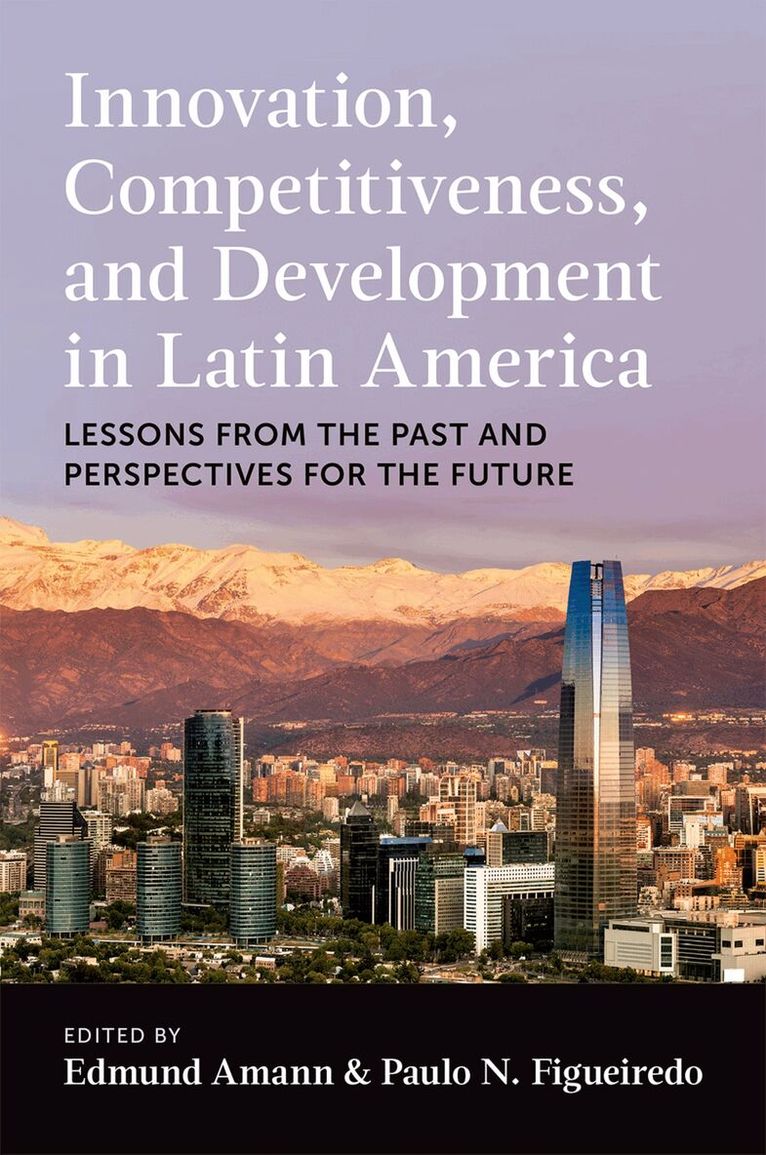
Innovation, Competitiveness, and Development in Latin America
Lessons from the Past and Perspectives for the Future
Inbunden, Engelska, 2024
1 118 kr
Skickas inom 5-8 vardagar
Post-war Latin American economies have failed to close the development gap with advanced industrial countries despite more than six decades of attempted reform and undoubted economic and social progress. Two decades into the twenty-first century, there is little sign of this situation changing for the better. Compared with other emerging regions, notably East Asia, Latin America has underperformed in income, productivity, and innovation terms. All of this suggests that the time is right for a thorough assessment of why Latin America's recent pursuit of economic development has proven so elusive.Innovation, Competitiveness, and Development in Latin America provides a balanced and topical analysis of the successes and failures of development policy in post-war Latin America. Across nineteen chapters, experts in the economics and policy of Latin American development and policy identify the challenges at hand. They explore why the region is caught in a middle-income trap, where structural impediments frustrate the achievement of accelerated and sustainable growth. At the same time, potential actions are suggested for creating lasting progress. The chapters address vital issues in the region including established or emerging sources of competitive advantage and technological capability; future areas for comparative advantage; policy effectiveness to address under-investment in human capital; poor infrastructure; and uncompetitive market structures. The chapters in the volume draw on evidence from across the region, including countries such as Argentina, Chile, Brazil, and Costa Rica. The structural characteristics of economies within the region are identified and the potential implications considered of the re-primarization process witnessed in recent years. The volume concludes with a consideration of policy lessons from these countries and illuminates potential pathways for effective policy action in the region as a whole. With fresh insights grounded in the reality of modern-day Latin America, Innovation, Competitiveness, and Development in Latin America offers scholars and professionals a crucial window into Latin America's long-term developmental trajectory.
2 086 kr
Skickas inom 7-10 vardagar
Drawing on case studies from across Africa, Asia and Latin America, this book addresses building technological capability as a catalyst for digital and economic development. Expert authors illustrate how individuals, organizations and countries in the Global South can advance their technological proficiencies to engage in effective digital transformation processes and establish a sustainable digital economy.Chapters examine policy frameworks and strategies for building digital capabilities highlighting the importance of crafting a national strategy, investing in digital education and skill development and fostering collaboration between academia, industry, and government. They explore the benefits of digitization in manufacturing, financial services, and businesses demonstrating its impact on key decision-making processes. Ultimately, the book reveals innovative ways to overcome significant obstacles to digital transformation in the Global South, underscoring the need for action-oriented approaches.This book is an invaluable resource for students and academics in knowledge management, organizational innovation, economics of innovation, industrial economics and innovation policy. Its findings will also benefit policy makers looking to bolster digital development and fight poverty in emerging economies.
2 090 kr
Skickas inom 7-10 vardagar
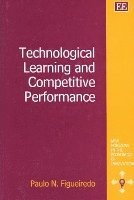
Paulo Figueiredo comprehensively examines how and why latecomer companies differ in the manner and rate at which they accumulate technological capability over time. He focuses on how key features of the underlying learning processes influence the paths of technological capability accumulation and, in turn, the rate of improvement in operational performance. The author details the various processes and mechanisms by which a company acquires knowledge from external and internal sources, through individuals, and then converts, or fails to convert, it into organisational assets. These different ways of managing technological learning are studied in detail during the lifetime of two of the largest steel companies in Brazil. He goes on to demonstrate that the rates of technological capability-accumulation and operational performance improvement can be accelerated if deliberate and effective efforts are made to improve knowledge acquisition and knowledge conversion processes. Indeed, these efforts are likely to generate significant financial benefits for the company that manages these processes effectively. The author is rigorous in his empirical analysis and adopts an original perspective by concentrating on latecomer firms within a non-industrialised country.The focus of analysis and the practical approach developed within the book will interest students and scholars of business, technology, innovation, and strategic management, as well as providing a source of reference and information for policymakers and managers in private and state-owned organisations.