Edmund Amann - Böcker
Visar alla böcker från författaren Edmund Amann. Handla med fri frakt och snabb leverans.
12 produkter
12 produkter
1 989 kr
Skickas inom 5-8 vardagar
Brazil is a globally vital but troubled economy. This volume offers comprehensive insight into Brazil's economic development, focusing on its most salient characteristics and analyzing its structural features across various dimensions. This innovative Oxford Handbook provides an understanding of the economy's evolution over time and highlights the implications of the past trajectory and decisions for current challenges and opportunities. The opening section covers the country's economic history, beginning with the colonial economy, through import-substitution, to the era of neoliberalism. Second, it analyses Brazil's broader place in the global economy, and considers the ways in which this role has changed, and is likely to change, over coming years. Particular attention is given to the productive sectors of Brazil's economy, for example manufacturing, agriculture, services, energy, and infrastructure. In addition to discussions of regional differences within Brazil, socio-economic dimensions are examined. These include income distribution, human capital, environmental issues, and health. Also included is a discussion of Brazil in the world economy, such as the increase in "South-South" cooperation and trade as well as foreign direct investment. Last but not least is a discussion of the role of the Brazilian state in the economy, whether through state enterprises, competition policy, or corruption.
Innovation, Competitiveness, and Development in Latin America
Lessons from the Past and Perspectives for the Future
Inbunden, Engelska, 2024
1 118 kr
Skickas inom 5-8 vardagar
Post-war Latin American economies have failed to close the development gap with advanced industrial countries despite more than six decades of attempted reform and undoubted economic and social progress. Two decades into the twenty-first century, there is little sign of this situation changing for the better. Compared with other emerging regions, notably East Asia, Latin America has underperformed in income, productivity, and innovation terms. All of this suggests that the time is right for a thorough assessment of why Latin America's recent pursuit of economic development has proven so elusive.Innovation, Competitiveness, and Development in Latin America provides a balanced and topical analysis of the successes and failures of development policy in post-war Latin America. Across nineteen chapters, experts in the economics and policy of Latin American development and policy identify the challenges at hand. They explore why the region is caught in a middle-income trap, where structural impediments frustrate the achievement of accelerated and sustainable growth. At the same time, potential actions are suggested for creating lasting progress. The chapters address vital issues in the region including established or emerging sources of competitive advantage and technological capability; future areas for comparative advantage; policy effectiveness to address under-investment in human capital; poor infrastructure; and uncompetitive market structures. The chapters in the volume draw on evidence from across the region, including countries such as Argentina, Chile, Brazil, and Costa Rica. The structural characteristics of economies within the region are identified and the potential implications considered of the re-primarization process witnessed in recent years. The volume concludes with a consideration of policy lessons from these countries and illuminates potential pathways for effective policy action in the region as a whole. With fresh insights grounded in the reality of modern-day Latin America, Innovation, Competitiveness, and Development in Latin America offers scholars and professionals a crucial window into Latin America's long-term developmental trajectory.
1 342 kr
Skickas inom 3-6 vardagar
In the past ten years the Brazilian economy has experience an unprecedented wave of market liberalization as import substitution has been progressively abandoned in favour of integration into the global economy. Trade barriers have fallen, privatizations have been implemented, and government procurement has been cut back. Although these policy shifts will be familiar to many, their implications in terms of performance may not.Using a comprehensive array of primary and secondary sources and in-depth company case studies, this book examines how one vitally important Brazilian industrial sector-the non-serial capital goods sector-coped with the onset of liberalization. While liberalization undoubtedly helped to promote greater efficiency in some areas of corporate performance, the impact elsewhere was far less favourable. This differentiated response raises some interesting and troubling theoretical and policy issues.
1 635 kr
Skickas inom 5-8 vardagar
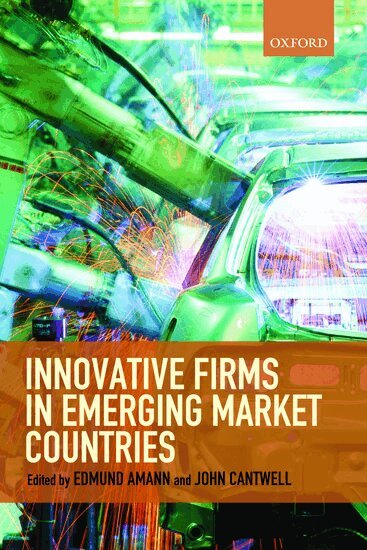
The rise of innovative firms in emerging market economies is an increasingly topical issue. However, the literature has lagged behind in helping us understand this phenomenon. Addressing this gap, the book draws on a variety of firm-level experiences across a range of key countries, sectors, and institutional contexts. Despite the obvious differences, the book finds a commonality in these experiences: they have all been influenced by shifts in the institutional, technological, and policy environment, in particular by the opening up of emerging market economies over the past three decades, and the consequent increase in international business interactions. Across the different countries surveyed in Asia and Latin America, the book argues that firm level innovation has been strongly influenced by capabilities that had previously been built up in a relatively closed environment. However, in the current more open environment, it is suggested that innovation among firms also reflects differences in these national historical contexts, as well as in the different forms of interaction with international business that have subsequently emerged. This book is a valuable resource for academics, researchers, and graduate students in international business and technology management.
564 kr
Skickas inom 5-8 vardagar
The rise of innovative firms in emerging market economies is an increasingly topical issue. However, the literature has lagged behind in helping us understand this phenomenon. Addressing this gap, the book draws on a variety of firm-level experiences across a range of key countries, sectors, and institutional contexts. Despite the obvious differences, the book finds a commonality in these experiences: they have all been influenced by shifts in the institutional, technological, and policy environment, in particular by the opening up of emerging market economies over the past three decades, and the consequent increase in international business interactions. Across the different countries surveyed in Asia and Latin America, the book argues that firm level innovation has been strongly influenced by capabilities that had previously been built up in a relatively closed environment. However, in the current more open environment, it is suggested that innovation among firms also reflects differences in these national historical contexts, as well as in the different forms of interaction with international business that have subsequently emerged. This book is a valuable resource for academics, researchers, and graduate students in international business and technology management.
579 kr
Skickas inom 10-15 vardagar
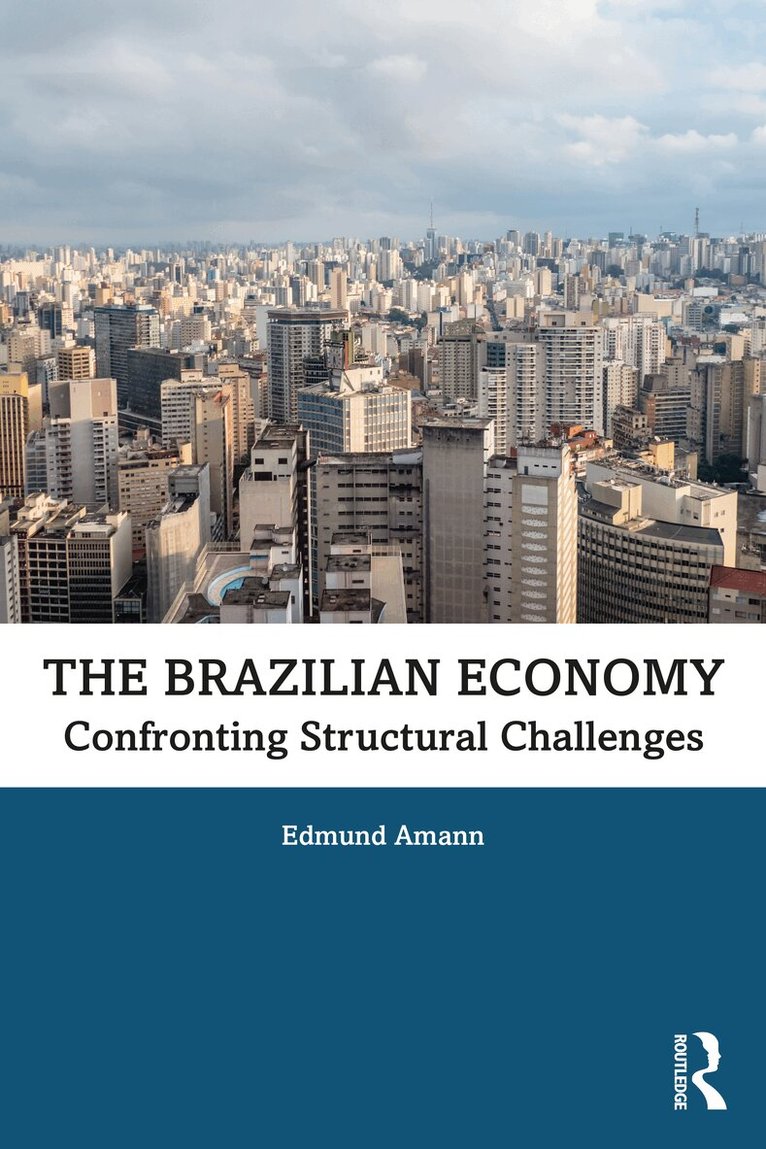
The Brazilian economy has long been defined by its enormous potential. Over the past 30 years, some of this has at last been realised. Latin America’s largest economy has rapidly risen in global importance while poverty at home has declined. Yet, despite periods of progress, Brazil remains prone to economic crisis. It is also beset with stubborn inefficiencies and income disparities. This book considers the structural challenges which will need to be overcome if Brazil is to break with the past and finally embark on a path of sustained, inclusive growth.This book aims to give the reader a clear knowledge of the nature of these structural challenges, why they exist and the effectiveness of attempts to overcome them. Through this, readers will gain a deep understanding of the contemporary Brazilian economy. The challenges discussed fall into three areas: those centring on competitiveness and the supply side, those arising from critical macroeconomic issues and those connected with environmental sustainability and social inclusion. This volume systematically examines each of these domains, highlighting such vital topics as export competitiveness, human capital formation, environmental policy and the role of financial market reform. Where appropriate, this book sets Brazil’s experience in an international comparative context. It points out that many of the challenges faced by Brazil are shared by other emerging economies. In this sense, the policy lessons which stem from this volume have broader international relevance.This book will be vital reading for all those seeking in-depth understanding of one of the world’s most important, yet troubled, economies. This readership is likely to include undergraduate and postgraduate students on development economics and Latin American area studies programmes, policymakers wanting an up-to-date and coherent analysis of Latin America’s largest economy, and financial professionals.
2 098 kr
Skickas inom 10-15 vardagar
The Brazilian economy has long been defined by its enormous potential. Over the past 30 years, some of this has at last been realised. Latin America’s largest economy has rapidly risen in global importance while poverty at home has declined. Yet, despite periods of progress, Brazil remains prone to economic crisis. It is also beset with stubborn inefficiencies and income disparities. This book considers the structural challenges which will need to be overcome if Brazil is to break with the past and finally embark on a path of sustained, inclusive growth.This book aims to give the reader a clear knowledge of the nature of these structural challenges, why they exist and the effectiveness of attempts to overcome them. Through this, readers will gain a deep understanding of the contemporary Brazilian economy. The challenges discussed fall into three areas: those centring on competitiveness and the supply side, those arising from critical macroeconomic issues and those connected with environmental sustainability and social inclusion. This volume systematically examines each of these domains, highlighting such vital topics as export competitiveness, human capital formation, environmental policy and the role of financial market reform. Where appropriate, this book sets Brazil’s experience in an international comparative context. It points out that many of the challenges faced by Brazil are shared by other emerging economies. In this sense, the policy lessons which stem from this volume have broader international relevance.This book will be vital reading for all those seeking in-depth understanding of one of the world’s most important, yet troubled, economies. This readership is likely to include undergraduate and postgraduate students on development economics and Latin American area studies programmes, policymakers wanting an up-to-date and coherent analysis of Latin America’s largest economy, and financial professionals.
2 230 kr
Skickas inom 10-15 vardagar
This collection examines the important and topical issue of the economic, social and environmental implications of concerted attempts to diversify energy sources away from fossil fuels. The book expertly examines this issue by focussing on the contrasting experiences of two major economies; one developed, and the other a rapidly expanding, emerging market. Energy, Bio Fuels and Development evaluates the experience of Brazil, with elements of that of the US highlighted for the purpose of comparison. A key area of concern surrounds the causes and consequences of the contrasting routes to biofuel production represented by sugar cane (in Brazil) and corn (in the US). The book also places the recent biofuels drive in perspective by discussing the broader energy policy context. The book shows the complexity and interdependence of the issues involved in moving a society reliant on non-renewable energy sources to one based on alternative sources of energy. The key conclusion to emerge is that Brazil, in pursuing a flexible mix of fossil fuels and bio-fuels, has greatly diminished its exposure to exogenous energy shocks. The US experience – in particular its development of corn-based ethanol – has been more problematic, though by no means without successes. It is argued that bio fuels should not be seen as a panacea. There are clear limits to the efficiency and cost effectiveness of current biofuel production technologies while there remain concerns surrounding potentially adverse effects on food production and rural livelihoods.This book should be an excellent resource for students focussing on economic development, particularly in the areas of energy, biofuels, rural development and food supply.
775 kr
Skickas inom 10-15 vardagar
This collection examines the important and topical issue of the economic, social and environmental implications of concerted attempts to diversify energy sources away from fossil fuels. The book expertly examines this issue by focussing on the contrasting experiences of two major economies; one developed, and the other a rapidly expanding, emerging market. Energy, Bio Fuels and Development evaluates the experience of Brazil, with elements of that of the US highlighted for the purpose of comparison. A key area of concern surrounds the causes and consequences of the contrasting routes to biofuel production represented by sugar cane (in Brazil) and corn (in the US). The book also places the recent biofuels drive in perspective by discussing the broader energy policy context. The book shows the complexity and interdependence of the issues involved in moving a society reliant on non-renewable energy sources to one based on alternative sources of energy. The key conclusion to emerge is that Brazil, in pursuing a flexible mix of fossil fuels and bio-fuels, has greatly diminished its exposure to exogenous energy shocks. The US experience – in particular its development of corn-based ethanol – has been more problematic, though by no means without successes. It is argued that bio fuels should not be seen as a panacea. There are clear limits to the efficiency and cost effectiveness of current biofuel production technologies while there remain concerns surrounding potentially adverse effects on food production and rural livelihoods.This book should be an excellent resource for students focussing on economic development, particularly in the areas of energy, biofuels, rural development and food supply.
2 163 kr
Skickas inom 7-10 vardagar
Regulating Development examines the impact that regulation - good or bad - can have on the development of poorer societies. It opens with a succinct review of critical issues, including the implications of the spread of intellectual property rights legislation and the role of the World Trade Organisation (WTO).The volume examines the regulatory experiences of three important developing economies: Brazil, Ghana and South Africa. Key regulatory themes are analysed, most notably capital markets and corporate governance regulation, the regulation of the telecommunications sector and the use of regulatory reforms to promote the development of small- and medium-sized enterprises. Within each chapter policy lessons are drawn, the relevance of which extend well beyond national or even regional boundaries. The principal aim of the book is to show the extent to which regulation is moving increasingly to centre stage as a driver of development in Africa and Latin America. The book also demonstrates how thoughtful, well-planned regulation can make a real contribution to the emergence of supply-side competitiveness.This book will be invaluable reading for academics, researchers and students with an interest in economics and development studies, as well as for regulators and policymakers in developing countries.
783 kr
Skickas inom 7-10 vardagar
Regulating Development examines the impact that regulation - good or bad - can have on the development of poorer societies. It opens with a succinct review of critical issues, including the implications of the spread of intellectual property rights legislation and the role of the World Trade Organisation (WTO).The volume examines the regulatory experiences of three important developing economies: Brazil, Ghana and South Africa. Key regulatory themes are analysed, most notably capital markets and corporate governance regulation, the regulation of the telecommunications sector and the use of regulatory reforms to promote the development of small- and medium-sized enterprises. Within each chapter policy lessons are drawn, the relevance of which extend well beyond national or even regional boundaries. The principal aim of the book is to show the extent to which regulation is moving increasingly to centre stage as a driver of development in Africa and Latin America. The book also demonstrates how thoughtful, well-planned regulation can make a real contribution to the emergence of supply-side competitiveness.This book will be invaluable reading for academics, researchers and students with an interest in economics and development studies, as well as for regulators and policymakers in developing countries.
433 kr
Skickas inom 5-8 vardagar