Don Coes – författare
2 474 kr
Skickas inom 10-15 vardagar
839 kr
Skickas inom 10-15 vardagar
973 kr
Läs direkt efter köp
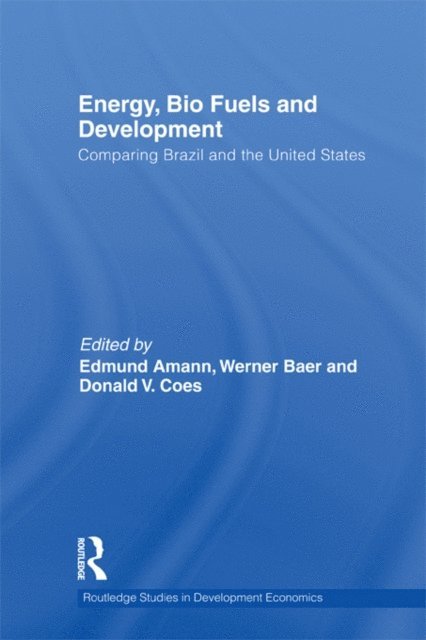
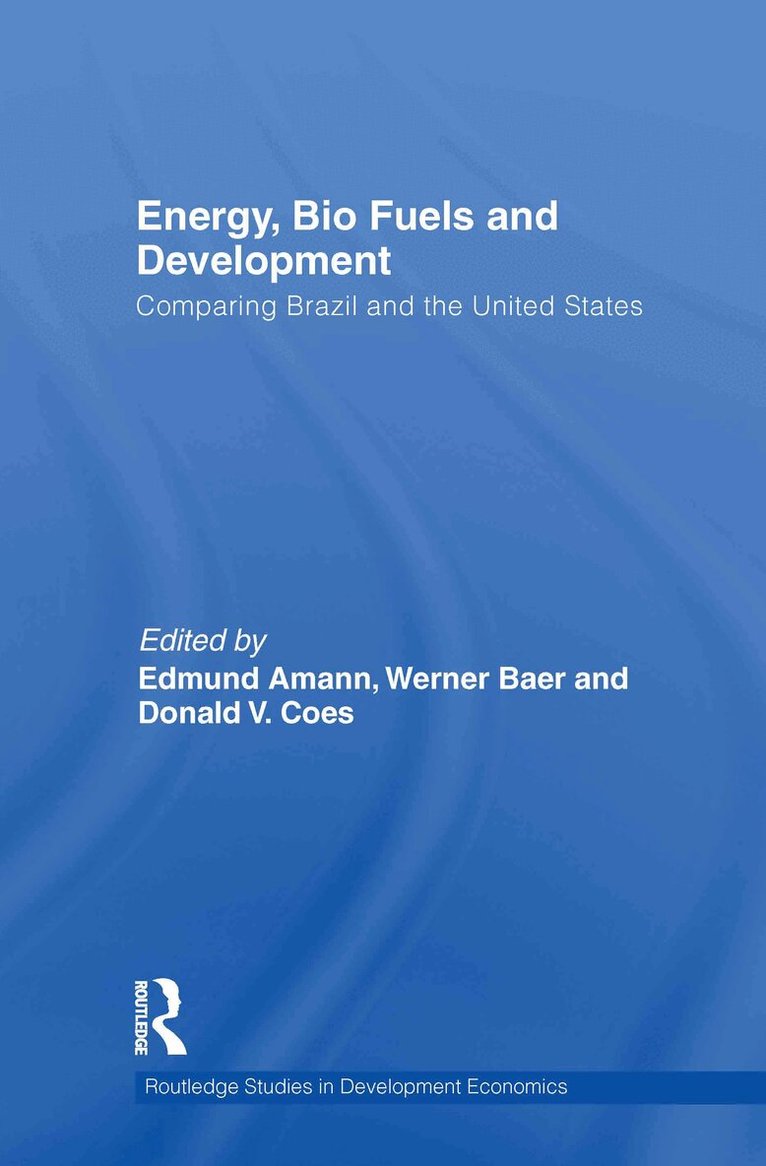
This collection examines the important and topical issue of the economic, social and environmental implications of concerted attempts to diversify energy sources away from fossil fuels. The book expertly examines this issue by focussing on the contrasting experiences of two major economies; one developed, and the other a rapidly expanding, emerging market.
Energy, Bio Fuels and Development evaluates the experience of Brazil, with elements of that of the US highlighted for the purpose of comparison. A key area of concern surrounds the causes and consequences of the contrasting routes to biofuel production represented by sugar cane (in Brazil) and corn (in the US). The book also places the recent biofuels drive in perspective by discussing the broader energy policy context. The book shows the complexity and interdependence of the issues involved in moving a society reliant on non-renewable energy sources to one based on alternative sources of energy.
The key conclusion to emerge is that Brazil, in pursuing a flexible mix of fossil fuels and bio-fuels, has greatly diminished its exposure to exogenous energy shocks. The US experience – in particular its development of corn-based ethanol – has been more problematic, though by no means without successes. It is argued that bio fuels should not be seen as a panacea. There are clear limits to the efficiency and cost effectiveness of current biofuel production technologies while there remain concerns surrounding potentially adverse effects on food production and rural livelihoods.
This book should be an excellent resource for students focussing on economic development, particularly in the areas of energy, biofuels, rural development and food supply.
973 kr
Läs direkt efter köp
This collection examines the important and topical issue of the economic, social and environmental implications of concerted attempts to diversify energy sources away from fossil fuels. The book expertly examines this issue by focussing on the contrasting experiences of two major economies; one developed, and the other a rapidly expanding, emerging market.
Energy, Bio Fuels and Development evaluates the experience of Brazil, with elements of that of the US highlighted for the purpose of comparison. A key area of concern surrounds the causes and consequences of the contrasting routes to biofuel production represented by sugar cane (in Brazil) and corn (in the US). The book also places the recent biofuels drive in perspective by discussing the broader energy policy context. The book shows the complexity and interdependence of the issues involved in moving a society reliant on non-renewable energy sources to one based on alternative sources of energy.
The key conclusion to emerge is that Brazil, in pursuing a flexible mix of fossil fuels and bio-fuels, has greatly diminished its exposure to exogenous energy shocks. The US experience – in particular its development of corn-based ethanol – has been more problematic, though by no means without successes. It is argued that bio fuels should not be seen as a panacea. There are clear limits to the efficiency and cost effectiveness of current biofuel production technologies while there remain concerns surrounding potentially adverse effects on food production and rural livelihoods.
This book should be an excellent resource for students focussing on economic development, particularly in the areas of energy, biofuels, rural development and food supply.
2 101 kr
Skickas inom 10-15 vardagar
552 kr
Skickas inom 10-15 vardagar
656 kr
Läs direkt efter köp
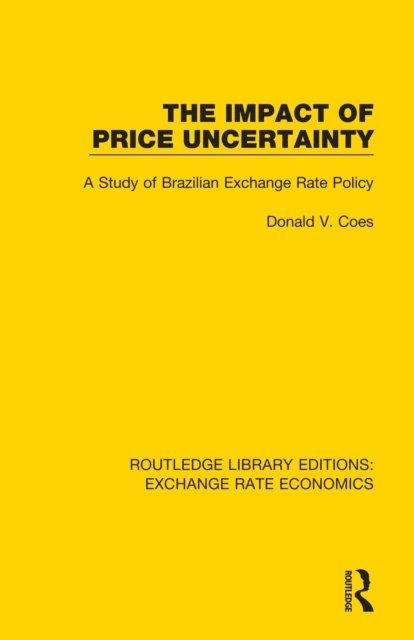
Originally published in 1979. This book addresses three questions regarding uncertainty in economic life: how do we define uncertainty and use the concept meaningfully to provide conclusions; how can the level of uncertainty associated with a particular variable of economic interest be measured; and does experience provide any support for the view that uncertainty really matters. It develops a theory of the effect of price uncertainty on production and trade, takes a graphical approach to look at effects of a mean preserving spread to create rules for ordering distributions, and finishes with an econometric analysis of the effects of Brazil’s adoption of a crawling peg in reducing real exchange rate uncertainty. This is an important early study into the significance of uncertainty.