Pavlos Kontos – författare
Visar alla böcker från författaren Pavlos Kontos. Handla med fri frakt och snabb leverans.
19 produkter
Aristotle on the Scope of Practical Reason
Spectators, Legislators, Hopes, and Evils
Inbunden, 2021
2512 kr
Lägg i varukorg
This book offers a new account of Aristotle’s practical philosophy. Pavlos Kontos argues that Aristotle does not restrict practical reason to its action-guiding and motivational role; rather, practical reason remains practical in the full sense of the term even when its exercise does not …
Aristotle on the Scope of Practical Reason
Spectators, Legislators, Hopes, and Evils
Häftad, 2024
648 kr
Lägg i varukorg
This book offers a new account of Aristotle’s practical philosophy. Pavlos Kontos argues that Aristotle does not restrict practical reason to its action-guiding and motivational role; rather, practical reason remains practical in the full sense of the term even when its exercise does not …
Aristotle's Moral Realism Reconsidered
Phenomenological Ethics
Häftad, 2013
910 kr
Lägg i varukorg
This book elaborates a moral realism of phenomenological inspiration by introducing the idea that moral experience, primordially, constitutes a perceptual grasp of actions and of their solid traces in the world. The main thesis is that, before any reference to values or to criteria about good and …
Aristotle's Moral Realism Reconsidered
Phenomenological Ethics
Inbunden, 2011
2512 kr
Lägg i varukorg
This book elaborates a moral realism of phenomenological inspiration by introducing the idea that moral experience, primordially, constitutes a perceptual grasp of actions and of their solid traces in the world. The main thesis is that, before any reference to values or to criteria about good and …
Aristotle on the Scope of Practical Reason
Spectators, Legislators, Hopes, and Evils
E-bok, 2021
746 kr
Lägg i varukorg
This book offers a new account of Aristotle’s practical philosophy. Pavlos Kontos argues that Aristotle does not restrict practical reason to its action-guiding and motivational role; rather, practical reason remains practical in the full sense of the term even when its exercise does not …
Aristotle on the Scope of Practical Reason
Spectators, Legislators, Hopes, and Evils
E-bok, 2021
746 kr
Lägg i varukorg
This book offers a new account of Aristotle’s practical philosophy. Pavlos Kontos argues that Aristotle does not restrict practical reason to its action-guiding and motivational role; rather, practical reason remains practical in the full sense of the term even when its exercise does not …
Patterns of Evil in Ancient Chinese and Greek Philosophy
Inbunden, 2025
2512 kr
Lägg i varukorg
The roots of evil are often held to be Biblical, but philosophers in ancient China and Greece were thoroughly conversant with both the phenomena and the languages of evil. This volume provides a comparative examination of patterns of evil in ancient Chinese and Greek philosophy.With no genealogical …
Patterns of Evil in Ancient Chinese and Greek Philosophy
E-bok, 2025
805 kr
Lägg i varukorg
The roots of evil are often held to be Biblical, but philosophers in ancient China and Greece were thoroughly conversant with both the phenomena and the languages of evil. This volume provides a comparative examination of patterns of evil in ancient Chinese and Greek philosophy.With no genealogical …
Patterns of Evil in Ancient Chinese and Greek Philosophy
E-bok, 2025
813 kr
Lägg i varukorg
The roots of evil are often held to be Biblical, but philosophers in ancient China and Greece were thoroughly conversant with both the phenomena and the languages of evil. This volume provides a comparative examination of patterns of evil in ancient Chinese and Greek philosophy.With no genealogical …
Evil in Aristotle
Inbunden, 2018
1563 kr
Lägg i varukorg
Aristotle's notion of evil is highly elaborate and attractive, yet has been largely overlooked by philosophers. While most recent studies of evil focus on modern understandings of the concept, this volume shows that Aristotle's theory is an invaluable resource for our contemporary understanding of …
Aristotle's Moral Realism Reconsidered
Phenomenological Ethics
E-bok, 2013
953 kr
Lägg i varukorg
This book elaborates a moral realism of phenomenological inspiration by introducing the idea that moral experience, primordially, constitutes a perceptual grasp of actions and of their solid traces in the world. The main thesis is that, before any reference to values or to criteria about good and …
Aristotle's Moral Realism Reconsidered
Phenomenological Ethics
E-bok, 2013
953 kr
Lägg i varukorg
This book elaborates a moral realism of phenomenological inspiration by introducing the idea that moral experience, primordially, constitutes a perceptual grasp of actions and of their solid traces in the world. The main thesis is that, before any reference to values or to criteria about good and …
Evil in Aristotle
Häftad, 2020
569 kr
Lägg i varukorg
Aristotle's notion of evil is highly elaborate and attractive, yet has been largely overlooked by philosophers. While most recent studies of evil focus on modern understandings of the concept, this volume shows that Aristotle's theory is an invaluable resource for our contemporary understanding of …
Introduction to Aristotle's Nicomachean Ethics
Häftad, 2023
607 kr
Lägg i varukorg
This book provides a balanced and accessible introduction to Aristotle's Nicomachean Ethics. It carefully and comprehensively follows the thread of Aristotle’s argument and sheds light on topics that all too often receive little attention or are entirely ignored in the existing textbooks (such as …
Introduction to Aristotle's Nicomachean Ethics
E-bok, 2023
734 kr
Lägg i varukorg
This book provides a balanced and accessible introduction to Aristotle''s Nicomachean Ethics . It carefully and comprehensively follows the thread of Aristotle’s argument and sheds light on topics that all too often receive little attention or are entirely ignored in the existing textbooks (such as …
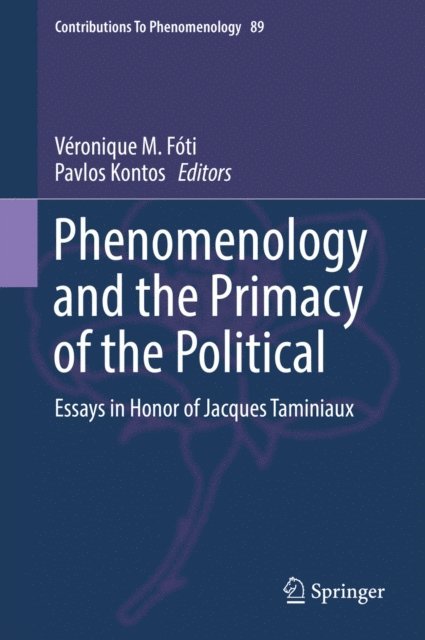
Phenomenology and the Primacy of the Political
Essays in Honor of Jacques Taminiaux
Av Véronique M. Fóti, Pavlos Kontos
Inbunden, 2017
1534 kr
Lägg i varukorg
This volume is a Festschrift in honor of Jacques Taminiaux and examines the primacy of the political within phenomenology. These objectives support each other, in that Taminiaux's own intellectual itinerary brought him increasingly to an affirmation of the importance of the political. Divided into …
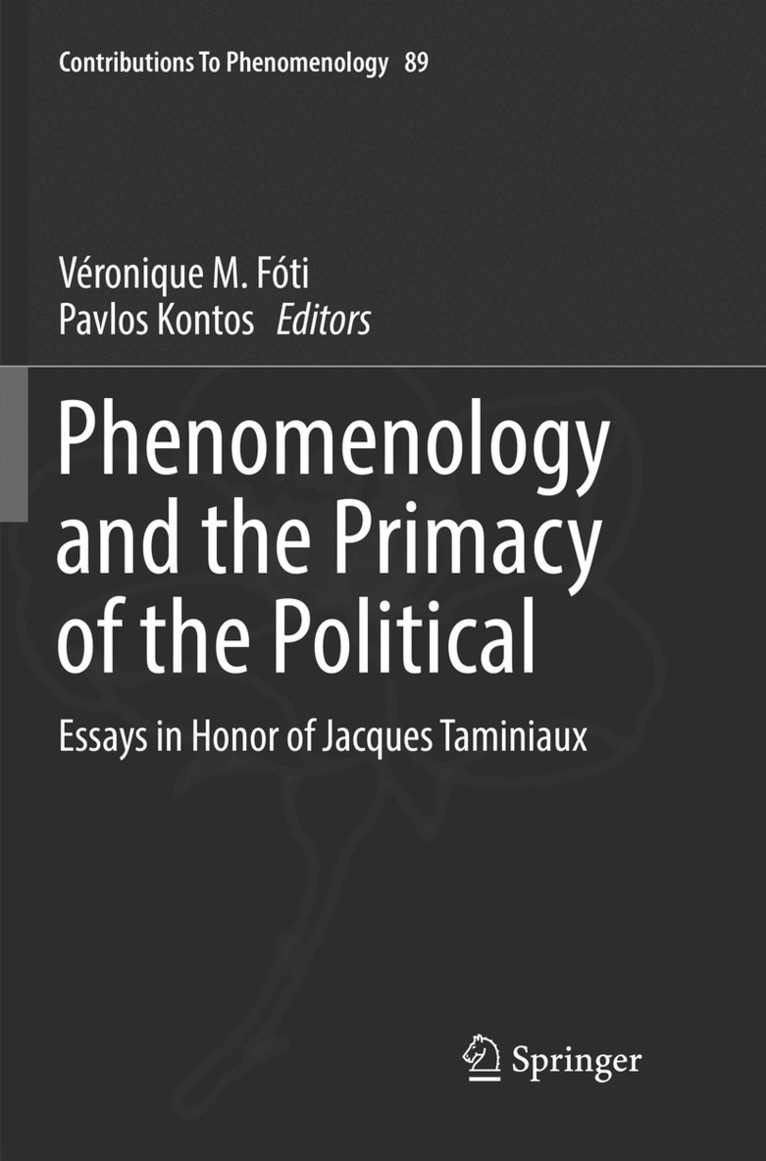
Phenomenology and the Primacy of the Political
Essays in Honor of Jacques Taminiaux
Av Pavlos Kontos, Veronique M. Foti
E-bok, 2017
1886 kr
Lägg i varukorg
This volume is a Festschrift in honor of Jacques Taminiaux and examines the primacy of the political within phenomenology. These objectives support each other, in that Taminiaux''s own intellectual itinerary brought him increasingly to an affirmation of the importance of the political. Divided into …
Phenomenology and the Primacy of the Political
Essays in Honor of Jacques Taminiaux
Av Véronique M. Fóti, Pavlos Kontos
Häftad, 2018
1541 kr
Lägg i varukorg
This volume is a Festschrift in honor of Jacques Taminiaux and examines the primacy of the political within phenomenology. These objectives support each other, in that Taminiaux's own intellectual itinerary brought him increasingly to an affirmation of the importance of the political. Divided into …
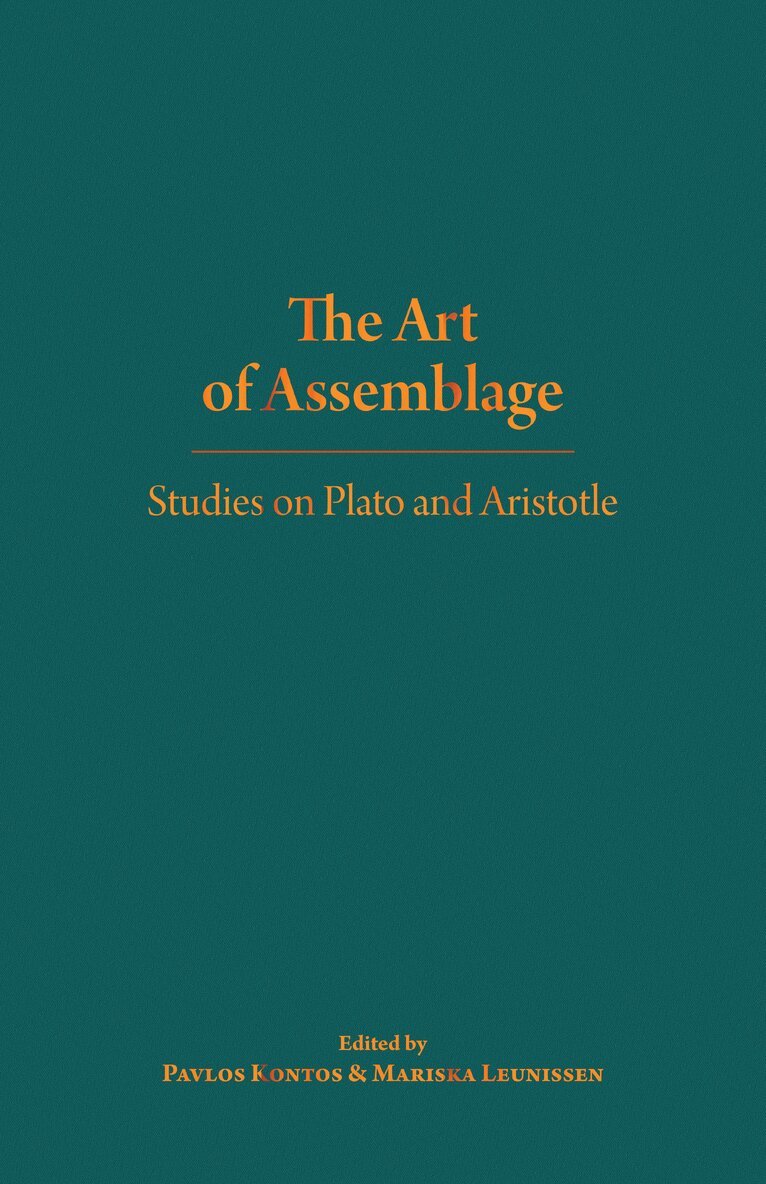
Art of Assemblage
Studies on Plato and Aristotle
Av Pavlos Kontos, Mariska Leunissen
Inbunden, 2026
722 kr
Tillfälligt slut
The Art of Assemblage: Studies on Plato and Aristotle is a collection of twelve essays—six on Plato and six on Aristotle—written by an international group of eminent scholars. In recognition of the work of author, translator, and distinguished professor of philosophy C. D. C. Reeve, the essays …