Peeter Selg - Böcker
Visar alla böcker från författaren Peeter Selg. Handla med fri frakt och snabb leverans.
5 produkter
5 produkter
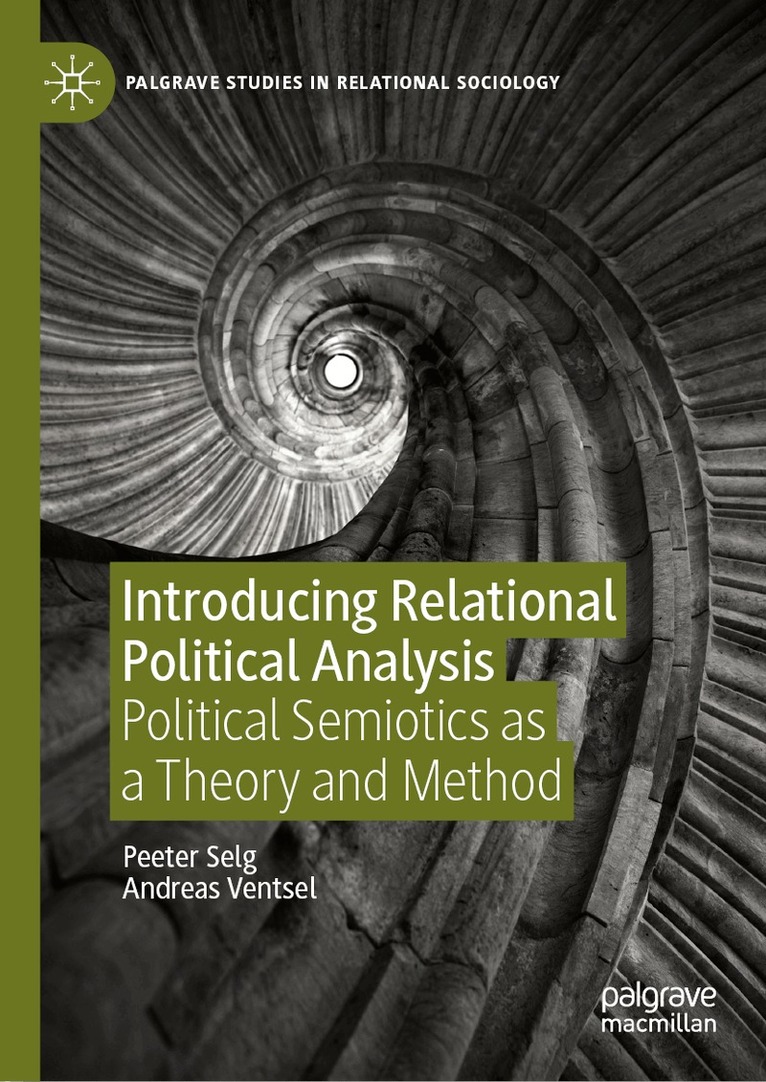
Introducing Relational Political Analysis
Political Semiotics as a Theory and Method
Inbunden, Engelska, 2020
1 276 kr
Skickas inom 10-15 vardagar
Instead of merely providing an overview of possible trajectories for articulating a relational political analysis, Peeter Selg and Andreas Ventsel put forth a concrete relational theory of the political, which has implications for research methodology, culminating in a concrete method they call political form analysis.
Introducing Relational Political Analysis
Political Semiotics as a Theory and Method
Häftad, Engelska, 2021
1 276 kr
Skickas inom 10-15 vardagar
Instead of merely providing an overview of possible trajectories for articulating a relational political analysis, Peeter Selg and Andreas Ventsel put forth a concrete relational theory of the political, which has implications for research methodology, culminating in a concrete method they call political form analysis.
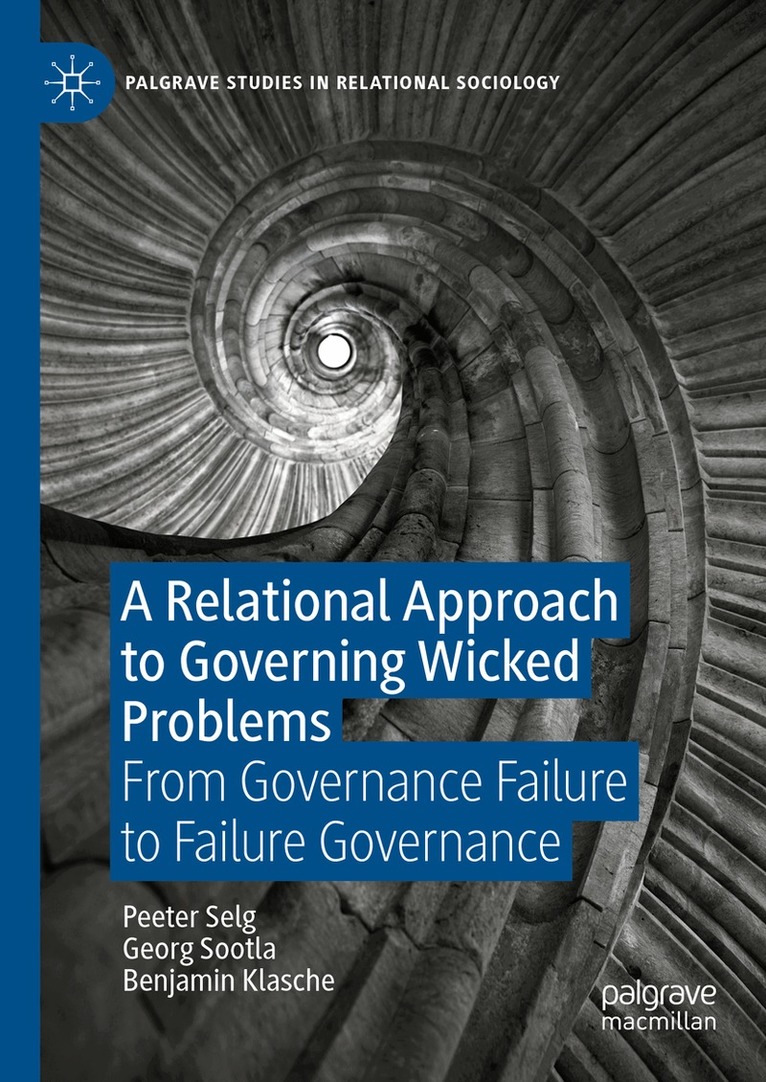
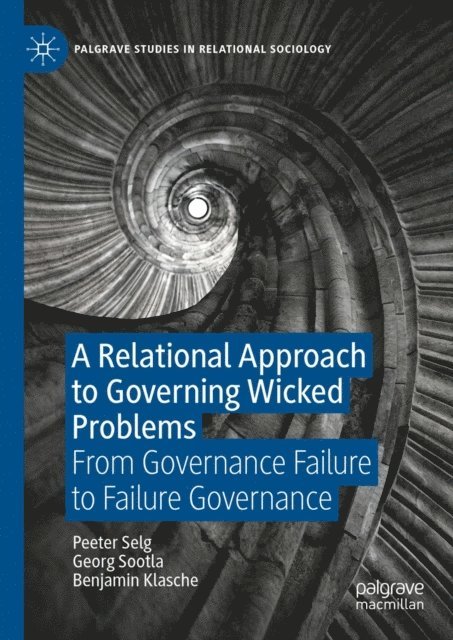
Relational Approach to Governing Wicked Problems
From Governance Failure to Failure Governance
Inbunden, Engelska, 2023
1 381 kr
Skickas inom 7-10 vardagar
The book initiates a relational turn in policy making and governance by developing further relational political analysis and by taking relational thinking to bear on not just analytic/descriptive issues, but also to normative/prescriptive issues.
Relational Approach to Governing Wicked Problems
From Governance Failure to Failure Governance
Häftad, Engelska, 2024
1 381 kr
Skickas inom 10-15 vardagar
The book initiates a relational turn in policy making and governance by developing further relational political analysis and by taking relational thinking to bear on not just analytic/descriptive issues, but also to normative/prescriptive issues.
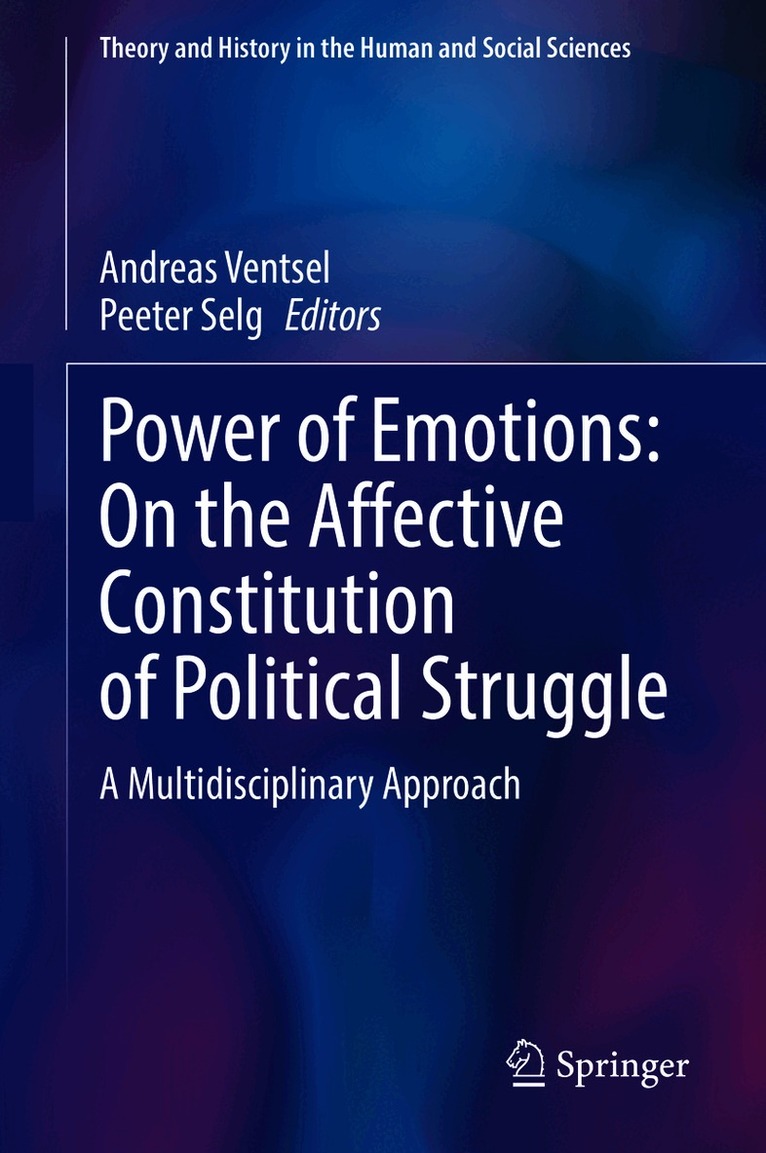
Power of Emotions: On the Affective Constitution of Political Struggle
A Multidisciplinary Approach
Inbunden, Engelska, 2025
1 856 kr
Skickas inom 10-15 vardagar
The emergence of political identities and communities in (social) media is largely driven by affective responses to current events—a tendency facilitated by the dominance of emotionally and visually oriented communication. However, this mode of community formation leads, first, to the inherent instability and transience of these groups and, second, to the oversimplification of complex socio-political issues into binary, yes/no alternatives. Within this framework, deliberation and argumentation-based problem-solving become increasingly difficult, as discourse is supplanted by emotional reactions that position individuals either “for” or “against” an issue. Particularly significant is the role of affect and emotion in communication during times of crisis—whether in the context of migration, the COVID-19 pandemic, or the war in Ukraine.This affective role is evident in the anchoring of public discourse to personal emotions and the generation and dissemination of hashtags and tags that consolidate diverse phenomena under a unified label. Such collective identity coalesces around connective action, which is primarily driven either by opposition to the established order or by the reinforcement of a preexisting system’s foundations. Consequently, the emergence of these affective publics must be analyzed within the broader context of power dynamics and evolving forms of identification in the contemporary media sphere—forms rooted in shared practices of expression, action, and interpretation.This edited volume will explore the manifestations of affective semiosis (meaning-making) at the socio-cultural and discursive levels. Cultural context, emotional reactions, and affective semiosis play a crucial role in shaping how issues related to identity and security are articulated in both domestic and foreign policy, as well as in the ways solutions to these challenges are sought. By adapting the concept of affective semiosis for the analysis of discursive structures, this volume offers an innovative and effective approach to identifying the triggers of emotional reactions in discourse and examining their impact on the construction of political identities, fear scenarios, misinformation campaigns, polarization, and other dynamics within networked societies.The volume includes both theoretically oriented papers as well as analyses of empirical materials.