Peng Xu – författare
1 750 kr
Kommande
726 kr
Skickas inom 10-15 vardagar
423 kr
Skickas inom 5-8 vardagar
1 318 kr
Skickas inom 5-8 vardagar
2 279 kr
Skickas inom 5-8 vardagar
851 kr
Läs direkt efter köp
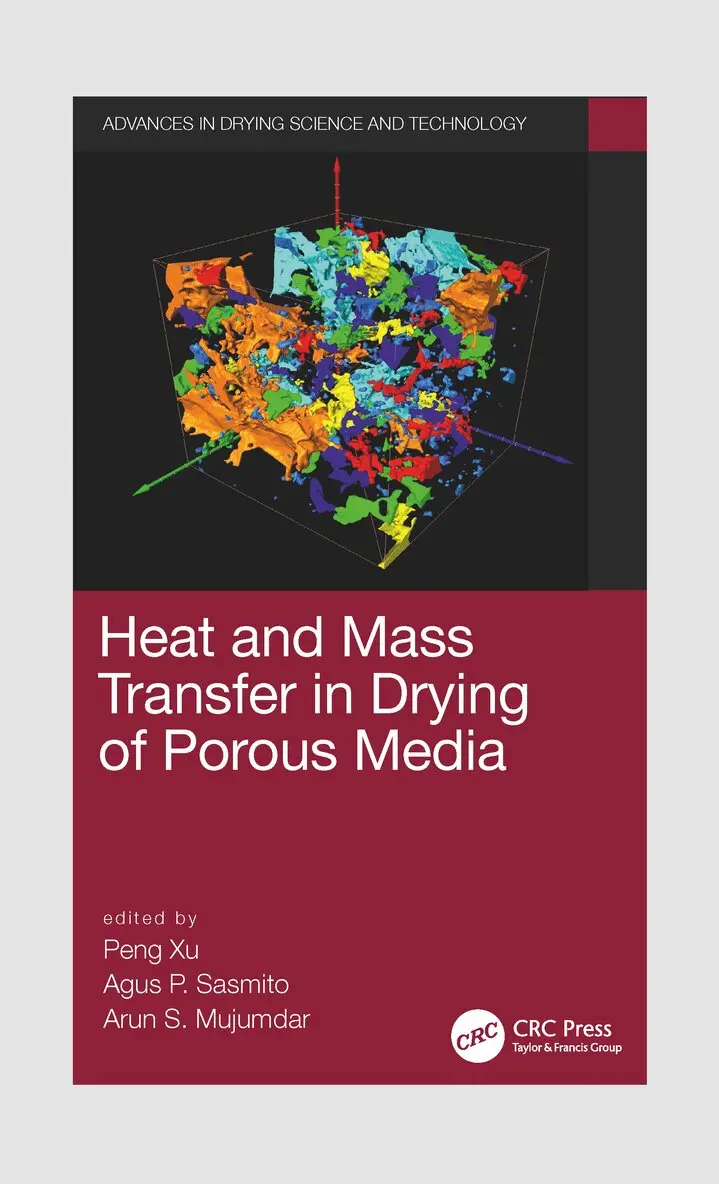
Heat and Mass Transfer in Drying of Porous Media offers a comprehensive review of heat and mass transfer phenomena and mechanisms in drying of porous materials. It covers pore-scale and macro-scale models, includes various drying technologies, and discusses the drying dynamics of fibrous porous material, colloidal porous media and size-distributed particle system.
Providing guidelines for mathematical modeling and design as well as optimization of drying of porous material, this reference offers useful information for researchers and students as well as engineers in drying technology, food processes, applied energy, mechanical, and chemical engineering.
844 kr
Läs direkt efter köp
Heat and Mass Transfer in Drying of Porous Media offers a comprehensive review of heat and mass transfer phenomena and mechanisms in drying of porous materials. It covers pore-scale and macro-scale models, includes various drying technologies, and discusses the drying dynamics of fibrous porous material, colloidal porous media and size-distributed particle system.
Providing guidelines for mathematical modeling and design as well as optimization of drying of porous material, this reference offers useful information for researchers and students as well as engineers in drying technology, food processes, applied energy, mechanical, and chemical engineering.
534 kr
Skickas inom 5-8 vardagar
666 kr
Skickas inom 10-15 vardagar
865 kr
Läs direkt efter köp
This book provides cases and analyses of causes and consequences of difficulty in downsizing and exiting in the electronics industry during the “two lost decades” in Japan. Because of excess capacity in the industry, many electronics companies have been required for downsizing and exit since the 1990s. Exploiting corporate financial and segment datasets, it shows empirical evidence of misallocation of internal funds to “zombie” segments—intra-firm businesses suffering losses consecutively. The topics addressed in the book include the failure of Japanese corporate internal control systems, the lack of capital market pressure, employment protection, and misallocation of internal funds to businesses with few prospects. The last two decades indicate that the Japanese corporate governance systems have failed to resolve problems of excess capacity, as did US systems in the 1980s. Zombie lending is no more than one phase of the difficulty of downsizing and exit in response to excess capacity in the banking sector. Supported by both data analyses and rich anecdotal evidence, this book is highly recommended to readers who seek a convincing and comprehensive explanation of Japan''s two lost decades from the points of view of difficulty in downsizing and exit. The authors’ analyses have implications not only for accelerating downsizing and exit in corporate Japan, but also for the world economy.