Arun S. Mujumdar - Böcker
Visar alla böcker från författaren Arun S. Mujumdar. Handla med fri frakt och snabb leverans.
19 produkter
19 produkter
900 kr
Skickas inom 10-15 vardagar
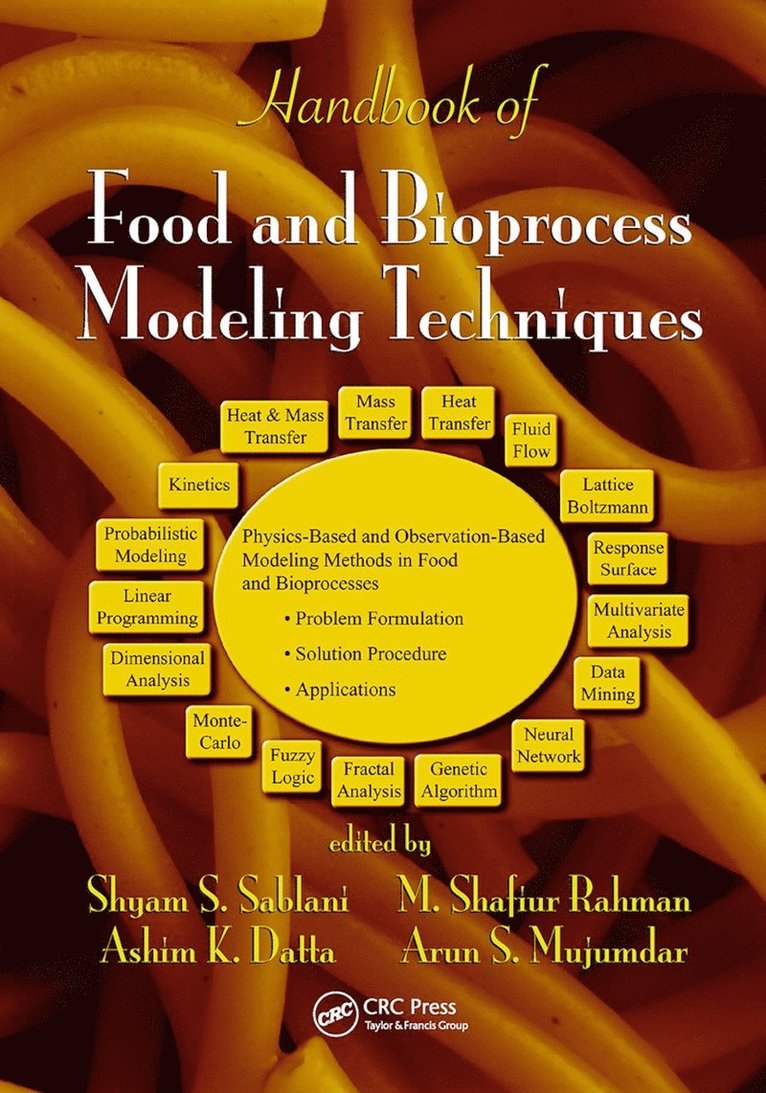
With the advancement of computers, the use of modeling to reduce time and expense, and improve process optimization, predictive capability, process automation, and control possibilities, is now an integral part of food science and engineering. New technology and ease of use expands the range of techniques that scientists and researchers have at their disposal making it increasingly important for the user to be aware of and have a good working knowledge of the alternatives.Unique in its scope, the Handbook of Food and Bioprocess Modeling Techniques provides a comprehensive overview of the modeling options available to today’s researcher. The book covers a wide range of topics including transport processes, reaction kinetics, probabilistic modeling, data mining, neural network and genetic algorithms. Both mesoscale and macroscale modeling are covered. Each chapter is complete with a clear, succinct description of a specific modeling technique, followed by detailed examples of the utilization, application, benefits, and limitations of the technique described. By having both physics-based and observation-based models explained in one place, the researcher can find not only the most appropriate tool or combination of tools for the application, but also those that best suit the technical expertise of the personnel involved. The book emphasizes problem formulation and explains the choice and structure of the modeling technique from an application point of view, making it exceedingly practical and easy-to-use. The international panel of authors and contributors ensures the quality of the individual chapters and the usefulness of the information across wide-ranging food products and processes. An indispensable resource for the full range of contemporary modeling techniques, the Handbook of Food and Bioprocess Modeling Techniques provides food and bioprocess researchers in industry and academia with an invaluable comprehensive working reference.
710 kr
Skickas inom 10-15 vardagar
Heat and Mass Transfer in Drying of Porous Media offers a comprehensive review of heat and mass transfer phenomena and mechanisms in drying of porous materials. It covers pore-scale and macro-scale models, includes various drying technologies, and discusses the drying dynamics of fibrous porous material, colloidal porous media and size-distributed particle system. Providing guidelines for mathematical modeling and design as well as optimization of drying of porous material, this reference offers useful information for researchers and students as well as engineers in drying technology, food processes, applied energy, mechanical, and chemical engineering.
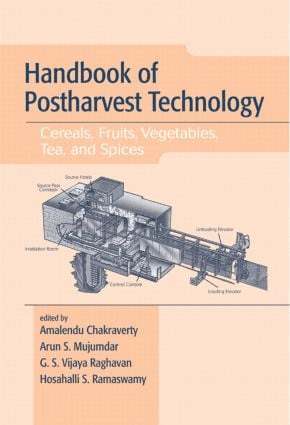
Handbook of Postharvest Technology
Cereals, Fruits, Vegetables, Tea, and Spices
Inbunden, Engelska, 2003
5 011 kr
Skickas inom 10-15 vardagar
The Handbook of Postharvest Technology presents methods in the manufacture and supply of grains, fruits, vegetables, and spices. It details the physiology, structure, composition, and characteristics of grains and crops. The text covers postharvest technology through processing, handling, drying and milling to storage, packaging, and distribution. Additionally, it examines cooling and preservation techniques used to maintain the quality and the decrease spoilage and withering of agricultural products.
3 185 kr
Skickas inom 10-15 vardagar
With the advancement of computers, the use of modeling to reduce time and expense, and improve process optimization, predictive capability, process automation, and control possibilities, is now an integral part of food science and engineering. New technology and ease of use expands the range of techniques that scientists and researchers have at their disposal making it increasingly important for the user to be aware of and have a good working knowledge of the alternatives.Unique in its scope, the Handbook of Food and Bioprocess Modeling Techniques provides a comprehensive overview of the modeling options available to today’s researcher. The book covers a wide range of topics including transport processes, reaction kinetics, probabilistic modeling, data mining, neural network and genetic algorithms. Both mesoscale and macroscale modeling are covered. Each chapter is complete with a clear, succinct description of a specific modeling technique, followed by detailed examples of the utilization, application, benefits, and limitations of the technique described. By having both physics-based and observation-based models explained in one place, the researcher can find not only the most appropriate tool or combination of tools for the application, but also those that best suit the technical expertise of the personnel involved. The book emphasizes problem formulation and explains the choice and structure of the modeling technique from an application point of view, making it exceedingly practical and easy-to-use. The international panel of authors and contributors ensures the quality of the individual chapters and the usefulness of the information across wide-ranging food products and processes. An indispensable resource for the full range of contemporary modeling techniques, the Handbook of Food and Bioprocess Modeling Techniques provides food and bioprocess researchers in industry and academia with an invaluable comprehensive working reference.
5 687 kr
Skickas inom 10-15 vardagar
Offers information necessary for the development of mathematical models and numerical techniques to solve specific drying problems. The book addresses difficult issues involved with the drying equations of numerical analysis, including mesh generation, discretization strategies, the nonlinear equation set and the linearized algebraic system, convergence criteria, time step control, experimental validation, optimum methods of visualization results, and more.
1 427 kr
Skickas inom 10-15 vardagar
Superheated steam drying (SSD) has long been recognized for several major advantages it offers over other convective dryers, including high energy efficiency by utilization of energy in the exhaust steam, higher product quality due to the absence of oxygen, and avoidance of fire and explosion hazards. Offering a global critical overview of the current state of art, Superheated Steam Drying: Technology for Improved Sustainability and Quality assesses future needs and opportunities for industry adoption and further innovation in SSD. It covers SSD technologies for various industrial sectors and mathematical modeling approaches to help with design and scale-up. The effects of SSD on drying kinetics as well as product quality are also discussed with examples.This book serves as a useful reference for technicians, graduate students, and researchers in the field of drying technology. It can also be used in courses on industrial drying, processing and drying of food, advanced drying technology, and superheated steam drying.
2 238 kr
Skickas inom 10-15 vardagar
Heat and Mass Transfer in Drying of Porous Media offers a comprehensive review of heat and mass transfer phenomena and mechanisms in drying of porous materials. It covers pore-scale and macro-scale models, includes various drying technologies, and discusses the drying dynamics of fibrous porous material, colloidal porous media and size-distributed particle system. Providing guidelines for mathematical modeling and design as well as optimization of drying of porous material, this reference offers useful information for researchers and students as well as engineers in drying technology, food processes, applied energy, mechanical, and chemical engineering.
2 509 kr
Skickas inom 10-15 vardagar
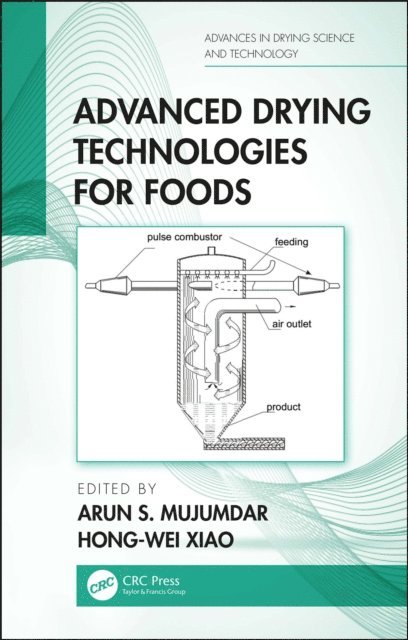
The goal of all drying research and development is to develop cost-effective innovative processes that yield high-quality dried products with less energy consumption and reduced environmental impact. With the literature on drying widely scattered, Advanced Drying Technologies for Foods compiles under one cover concise, authoritative, up-to-date assessments of modern drying technologies applied to foods. This book assembles a number of internationally recognized experts to provide critical reviews of advanced drying technologies, their merits and limitations, application areas and research opportunities for further development.Features: Provides critical reviews of advanced drying technologies Discusses the merits and limitations of a variety of food drying technologies Explains drying kinetics, energy consumption and quality of food products Reviews the principles and recent applications of superheated steam dryingThe first four chapters deal with recent developments in field-assisted drying technologies. These include drying techniques with the utilization of electromagnetic fields to deliver energy required for drying, for example, microwave drying, radio frequency drying, electrohydrodynamic drying, and infrared radiation drying. The remainder of this book covers a wide assortment of recently developed technologies, which include pulse drying, swell drying, impinging stream drying, and selected advances in spray drying. The final chapter includes some innovative technologies which are gaining ground and are covered in depth in a number of review articles and handbooks, and hence covered briefly in the interest completeness.This book is a valuable reference work for researchers in academia as well as industry and will encourage further research and development and innovations in food drying technologies.
2 509 kr
Skickas inom 10-15 vardagar
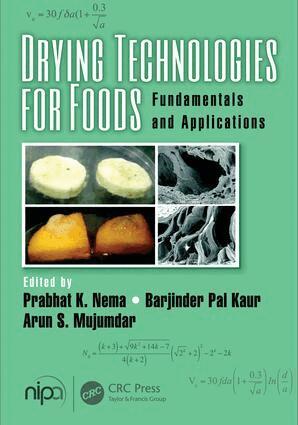
Drying is an important unit operation used in industry for processing and preservation of food products. Although a large volume of technical literature is available on drying of foods, it is still challenging for scientists and engineers to improve continuously upon the quality of dried products and existing drying systems. This book will aid processors in their search for cost-effective and energy-efficient drying techniques allowing them to succeed commercially in their ventures as well as to fulfill consumer-demand for high-quality products. Drying Technologies for Foods contains state-of-the art knowledge on several key aspects of drying ranging from fundamental principles, classification and selection, different types of conventional and modern techniques, drying of different food materials, advances in packaging of dried products, control and safety, energy calculation, modeling to advances in food drying.Comprehensive yet concise chapters cover different types of drying technologies; this book describes freeze, heat pump, spray, superheated steam, microwave drying and many other drying technologies. Discussion of specific food-related drying including drying of fruit, leather, medicinal herbs, cocoa and coffee beans, mushroom, and protein among others are covered in the book. Chapters are also presented on quality of dried food such as degradation mechanism and kinetics of vitamin C, antioxidants, delinquencies and caking phenomena. Control and safety, energy calculations, modeling are also included with emphasis on industrial applications. Artificial Neural Networks and computational modeling techniques as well as application of computer vision in food drying followed by a chapter on advances in food dryer are covered in some detail, again highlighting potential applications.
2 302 kr
Skickas inom 7-10 vardagar
Drying is by far the most useful large scale operation method of keeping solid foods safe for long periods of time, and is of fundamental importance in most sectors of food processing. Drying operations need to be precisely controlled and optimized in order to produce a good quality product that has the highest level of nutrient retention and flavor whilst maintaining microbial safety. This volume provides an up to date account of all the major drying technologies employed in the food industry and their underlying scientific principles and effects. Various equipment designs are classified and described. The impact of drying on food properties is covered, and the micro-structural changes caused by the process are examined, highlighting their usefulness in process analysis and food design. Key methods for assessing food properties of dried products are described, and pre-concentration and drying control strategies are reviewed. Thermal hazards and fire/explosion detection and prevention for dryers are discussed in a dedicated chapter. Where appropriate, sample calculations are included for engineers and technologists to follow. The book is directed at food scientists and technologists in industry and research, food engineers and drying equipment manufacturers.
3 320 kr
Skickas inom 10-15 vardagar
Presents Drying Breakthroughs for an Array of MaterialsDespite being one of the oldest, most energy-intensive unit operations, industrial drying is perhaps the least scrutinized technique at the microscopic level. Yet in the wake of today’s global energy crisis, drying research and development is on the rise. Following in the footsteps of the widely read first edition, Advanced Drying Technologies, Second Edition is the direct outcome of the recent phenomenal growth in drying literature and new drying hardware. This edition provides an evaluative overview of new and emerging drying technologies, while placing greater emphasis on making the drying process more energy efficient in the green age.Draws on the Authors’ 60+ Years of Combined ExperienceFueled by the current energy crisis and growing consumer demand for improved quality products, this thoroughly updated resource addresses cutting-edge drying technologies for numerous materials such as high-valued, heat-sensitive pharmaceuticals, nutraceuticals, and some foods. It also introduces innovative techniques, such as heat-pump drying of foods, which allow both industrial practice and research and development projects to save energy, reduce carbon footprints, and thus improve the bottom line. Four New Chapters: Spray-Freeze-Drying Fry Drying Refractance Window Drying Mechanical Thermal ExpressionRequiring no prior knowledge of chemical engineering, this single-source reference should assist researchers in turning the laboratory curiosities of today into the revolutionary novel drying technologies of tomorrow.
6 093 kr
Skickas inom 10-15 vardagar
By far the most commonly encountered and energy-intensive unit operation in almost all industrial sectors, industrial drying continues to attract the interest of scientists, researchers, and engineers. The Handbook of Industrial Drying, Fourth Edition not only delivers a comprehensive treatment of the current state of the art, but also serves as a consultative reference for streamlining industrial drying operations.New to the Fourth Edition: Computational fluid dynamic simulationSolar, impingement, and pulse combustion dryingDrying of fruits, vegetables, sugar, biomass, and coalPhysicochemical aspects of sludge dryingLife-cycle assessment of drying systemsCovering commonly encountered dryers as well as innovative dryers with future potential, the Handbook of Industrial Drying, Fourth Edition not only details the latest developments in the field, but also explains how improvements in dryer design and operation can increase energy efficiency and cost-effectiveness.
7 595 kr
Tillfälligt slut
2 606 kr
Tillfälligt slut
2 606 kr
Tillfälligt slut
2 325 kr
Tillfälligt slut
2 325 kr
Tillfälligt slut
2 114 kr
Tillfälligt slut
1 064 kr
Skickas inom 10-15 vardagar
It is a pleasure to present this volume consisting of a selection of papers presented at the 4th International Drying Symposium (IDS) held in Kyoto, July 9-12, 1984, under the sponsorship of the Society of Chemi cal Engineers, Japan. This book includes full texts of the ten keynote lectures and several papers which were presented in the technical sessions in the 4th IDS. As editors we had the arduous and unpleasant task of selecting papers for this volume. We were delighted with the high quality manuscripts sub mitted. We are grateful to the authors for their efforts in meeting the manuscript guidelines and also the deadlines. Aside from quality, we have attempted to maintain in this volume a balance of coverage in terms of topics as well as geography. Space restrictions prevented us from presenting all the high quality papers for publication in DRYING 85. Numerous papers of archival interest have been released for general publication in international journals. Several will no doubt appear in Drying Technology - An International Journal. Many others will find their way into other standard engineering journals as well. Over 120 papers from 30 countries were included in the Proceedings volumes distributed to all registrants in Kyoto. Numerous individuals, professional societies and organizations have contributed, directly or indirectly, to the success of the 4th IDS and hence to DRYING 85 as well. We wish to acknowledge in particular the monumental efforts of the Secretary of the 4th IDS, Professor M. Okazaki.