Peter Benson Miller - Böcker
Visar alla böcker från författaren Peter Benson Miller. Handla med fri frakt och snabb leverans.
3 produkter
3 produkter
257 kr
Skickas inom 7-10 vardagar
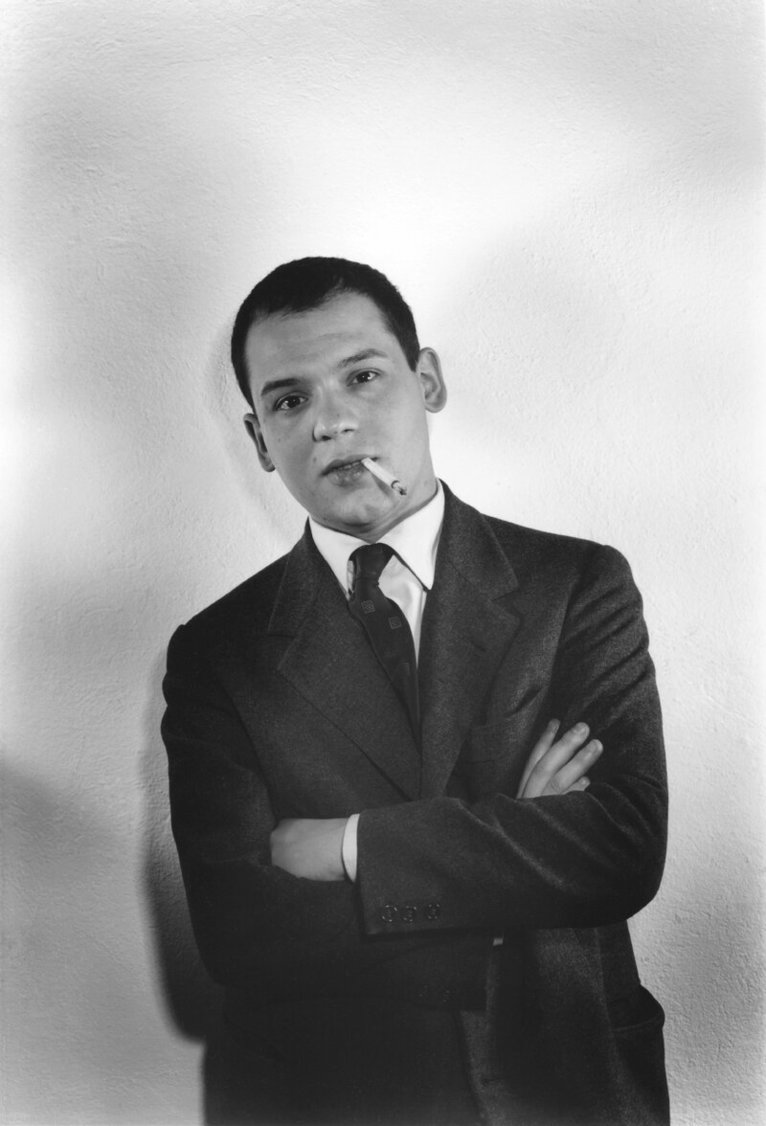
Immediately upon his death in 1963 at the age of thirty, Piero Manzoni s reputation as a provocateur and wild child preceded him, with his most subversive work, Artist s Shit, 1961, elevating him to cult status. But what actually came before, and lay behind those thirty grams of pure artistic output? Flaminio Gualdoni sets out to explore exactly that in this biography that traces the guiding themes of Manzoni s works, lending order to a jumble of hitherto fragmented materials and setting aside any apocryphal hypotheses.
1 294 kr
Skickas inom 7-10 vardagar
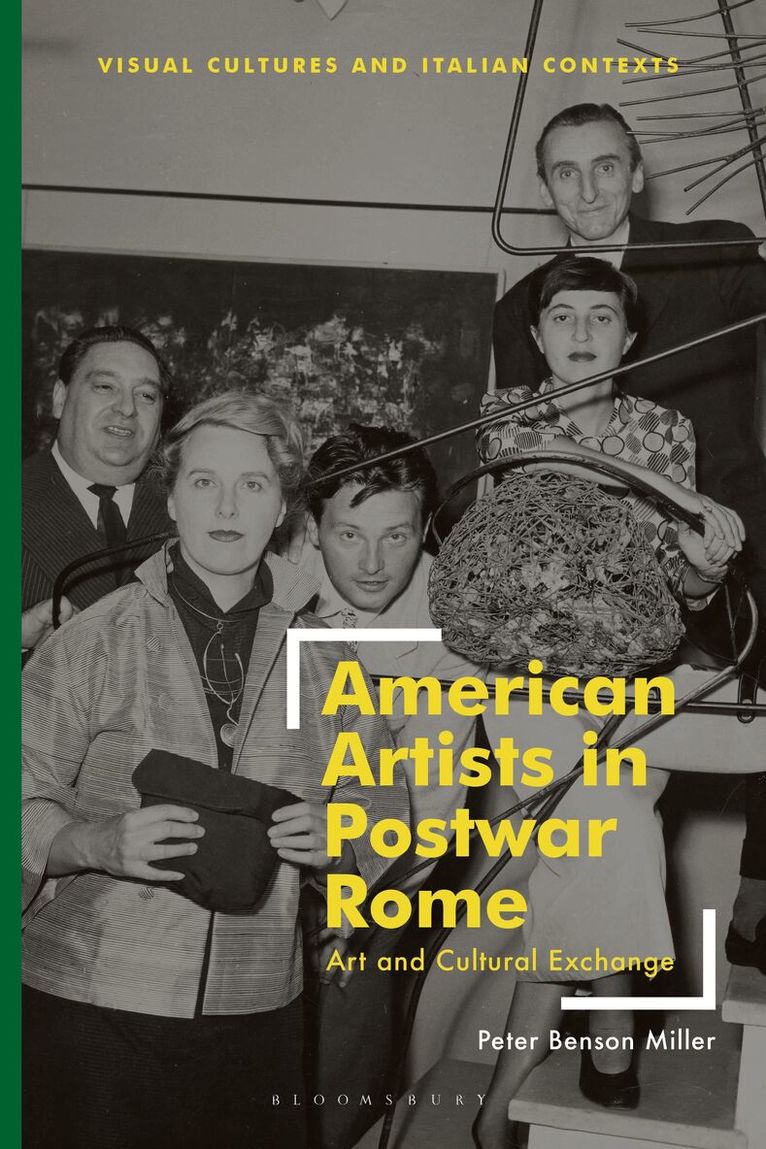
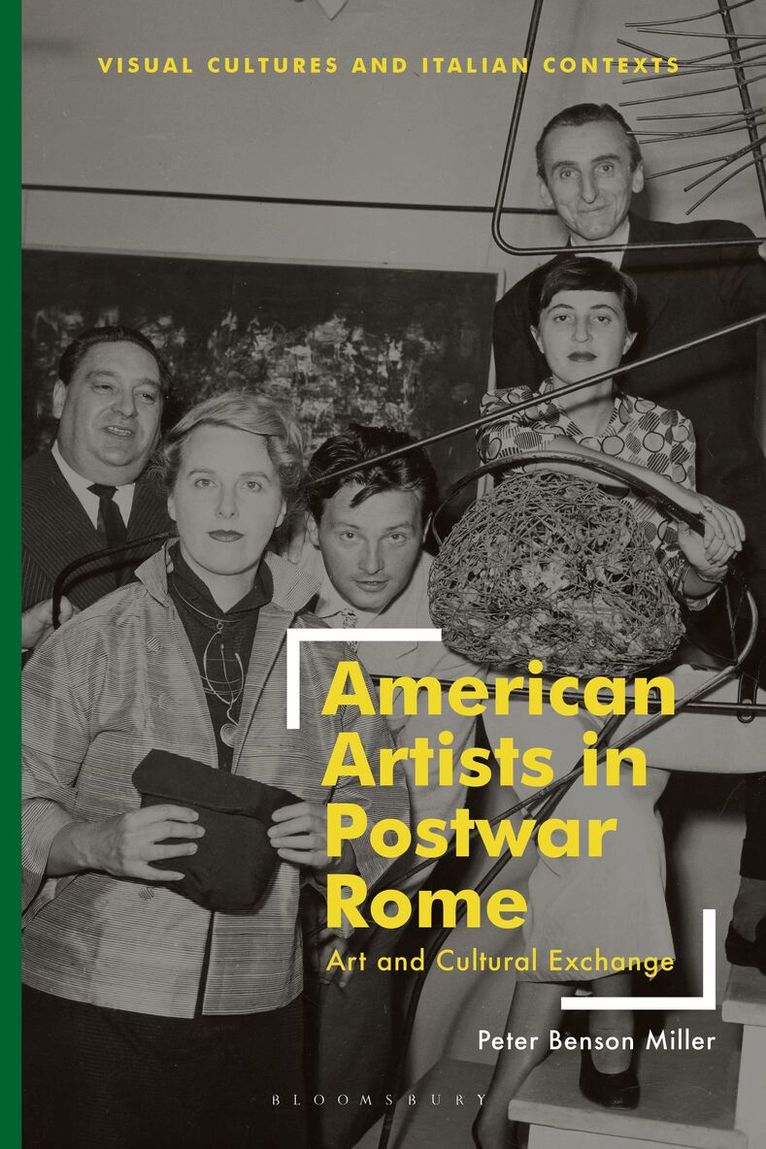
Drawing on unpublished archival sources, this book reconstitutes the experiences of a wide range of American artists, critics, and writers working in Rome in a charged environment of “Cold War cosmopolitanism.”After the Second World War, American artists flocked to Rome in record numbers, even as the United States shored up Italy as a bulwark against the spread of Communism. While the market for modern art in Rome was less vigorous as those in Paris and New York, numerous galleries, artist-run spaces, and other institutions acted as important catalysts, making Rome an international artistic hub. The city attracted now canonical figures Lee Bontecou, Philip Guston, Robert Rauschenberg, Paul Thek, and Cy Twombly, along with less well-known artists, such as Eugene Berman, Gene Charlton, Carlyle Brown, Peter Chinni, William Congdon, Claire Falkenstein, Marcia Hafif, John Heliker, James Leong, Beverly Pepper, and Laura Ziegler, among many others.Rather than focusing on institutions and diplomatic relationships, the book centres the experience of artists, and also addresses Rome’s gay subculture and the role of female artists during the period, eschewing traditional narratives of the male “cultural ambassador.” Through case-study based investigation, Peter Benson Miller explores the reciprocal relationships between American modernist artists and Italian artists in postwar Rome, and reveals how these artists perceived Rome as less constrained by the demands of a national school, and as an alternative to New York. This congenial creative atmosphere yielded “new pictorial forms” developed in tandem with or absorbed from like-minded Italian artists, engaging the city and its multiple layers of history, from antiquity to the profound trauma inflicted by the recent conflict.The book also establishes the entangled social networks, galleries, exhibitions, and institutions sustaining their work and providing entrée into local artistic circles. Focusing on a series of specific exchanges, this study contributes to our understanding American modernism in an international context.
499 kr
Kommande
Drawing on unpublished archival sources, this book reconstitutes the experiences of a wide range of American artists, critics, and writers working in Rome in a charged environment of “Cold War cosmopolitanism.”After the Second World War, American artists flocked to Rome in record numbers, even as the United States shored up Italy as a bulwark against the spread of Communism. While the market for modern art in Rome was less vigorous as those in Paris and New York, numerous galleries, artist-run spaces, and other institutions acted as important catalysts, making Rome an international artistic hub. The city attracted now canonical figures Lee Bontecou, Philip Guston, Robert Rauschenberg, Paul Thek, and Cy Twombly, along with less well-known artists, such as Eugene Berman, Gene Charlton, Carlyle Brown, Peter Chinni, William Congdon, Claire Falkenstein, Marcia Hafif, John Heliker, James Leong, Beverly Pepper, and Laura Ziegler, among many others.Rather than focusing on institutions and diplomatic relationships, the book centres the experience of artists, and also addresses Rome’s gay subculture and the role of female artists during the period, eschewing traditional narratives of the male “cultural ambassador.” Through case-study based investigation, Peter Benson Miller explores the reciprocal relationships between American modernist artists and Italian artists in postwar Rome, and reveals how these artists perceived Rome as less constrained by the demands of a national school, and as an alternative to New York. This congenial creative atmosphere yielded “new pictorial forms” developed in tandem with or absorbed from like-minded Italian artists, engaging the city and its multiple layers of history, from antiquity to the profound trauma inflicted by the recent conflict.The book also establishes the entangled social networks, galleries, exhibitions, and institutions sustaining their work and providing entrée into local artistic circles. Focusing on a series of specific exchanges, this study contributes to our understanding American modernism in an international context.