Peter Brears – författare
Visar alla böcker från författaren Peter Brears. Handla med fri frakt och snabb leverans.
12 produkter
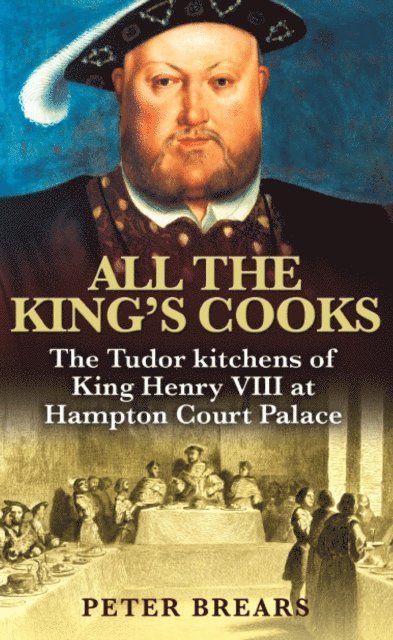
All the King's Cooks
The Tudor Kitchens of King Henry VIII at Hampton Court Palace
Av Peter Brears
E-bok, 2011
191 kr
Lägg i varukorg
The massive kitchens at Hampton Court were built to supply the entire household of Henry VIII. They were the first professional kitchens organised on such a scale. Brears provides a practical guide to their running, dispelling many of the misconceptions about the cooking and eating of meals in …
Bucklers' Yorkshire Buildings
The Architectural and Topographical Drawings of John Buckler and John Chessell Buckler of 1804-1820
Av Peter Brears, Michael J. Rochford
Inbunden, 2026
558 kr
Lägg i varukorg
Yorkshire's architecturalheritage is arguably the finest in Britain. From the Middle Ages it includedEurope's largest medieval cathedral at York, England's most completemonasteries at Kirkstall and Fountains abbeys, its collegiate churches ofBeverley, Howden and Ripon, and great Norman keeps at …
Boke of Keruynge (The Book of Carving)
Av Wynkyn de Worde, Peter Brears
Häftad, 2003
434 kr
Lägg i varukorg
Wynken de Worde's elegant black-letter handbook, long out of print, remains a major source of information on the serving and eating of meals and feasts in the great houses of late medieval and early Tudor England. Southover's reprint carries a facsimile of the original text from Cambridge …
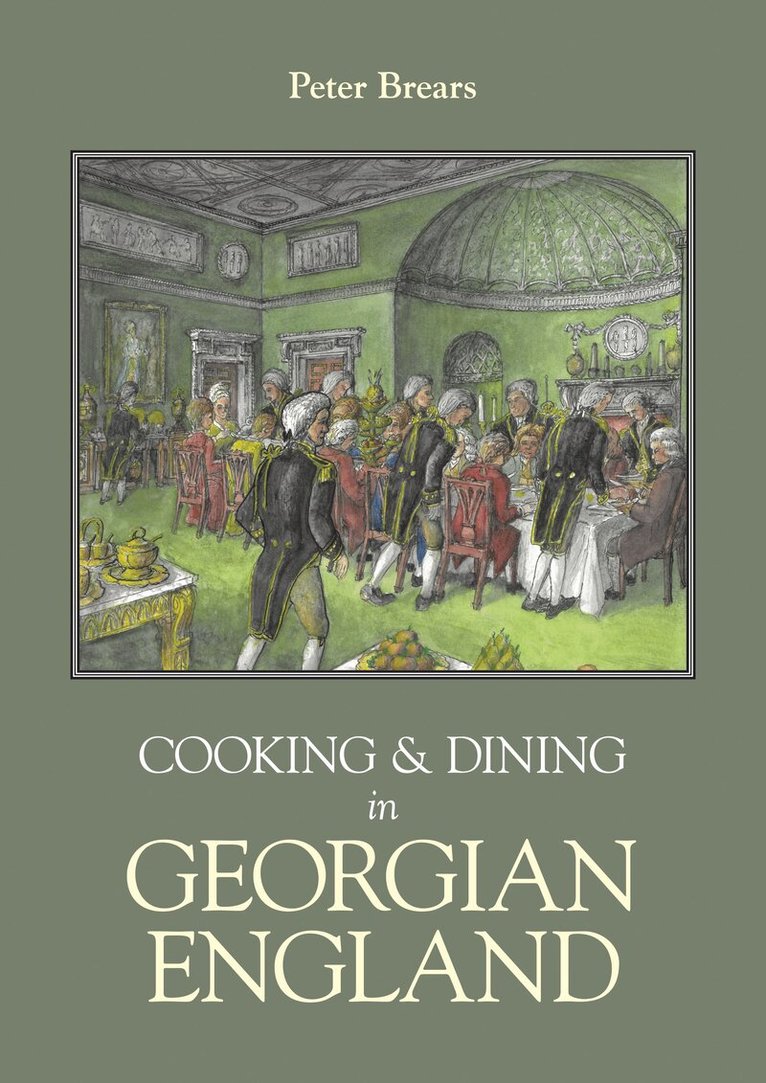
Cooking and Dining in Georgian England
Av Peter Brears
Inbunden, 2026
565 kr
Kommande
With unlimited wealth drawn from land and international trade, the upper classes of Georgian England were able to enjoy the most lavish foods and lifestyles. This was only made possible, however, by massively investing in suites of huge new kitchen offices, and having the most up-to-date fixtures …
Jellies and Their Moulds
Av Peter Brears
Häftad, 2010
189 kr
Lägg i varukorg
Peter Brears has a long acquaintance with jellies in every guise. He was fed them in childhood, he turned to curating their moulds and associated artefacts while director of York and Leeds museums, he has made them for innumerable historical food shows and events.And jelly is a much bigger thing …
Jellies and Their Moulds
Av Peter Brears
E-bok, 2010
195 kr
Lägg i varukorg
Peter Brears has a long acquaintance with jellies in every guise. He was fed them in childhood, he turned to curating their moulds and associated artefacts while director of York and Leeds museums, he has made them for innumerable historical food shows and events.And jelly is a much bigger thing …
Cooking and Dining in Tudor and Early Stuart England
Av Peter Brears
Inbunden, 2015
495 kr
Lägg i varukorg
What is unique about Brears’ book is that he combines an account of the cookery with a close look at the practical arrangements, the kitchens and dining halls, where that food was cooked and consumed. His prose is enlivened by his drawings – as accurate as can be – which lay bare to the modern …
Traditional Food in Yorkshire
Av Peter Brears
Inbunden, 2014
332 kr
Lägg i varukorg
There has been no serious consideration of local food in England. Most available material is lightweight, not very informative, and a waste of time for serious students. Prospect Books is about to change this, in the first instance with respect to the north country. Last year Peter Brears published …
Petworth Book of Country House Cooking
Av Peter Brears
Häftad, 2015
137 kr
Lägg i varukorg
Petworth House has been the home of the Leconfield family since it was granted to them by Queen Adeliza, the second wife of Henry I, in 1150. The kitchens dealt with a myriad of natural ingredients from eels and oysters to black pudding and quince jellies. The recipes include Oeufs Soubise made …
Cooking and Dining in the Victorian Country House
Av Peter Brears
Inbunden, 2023
511 kr
Lägg i varukorg
For centuries the food cooked in our country houses was the finest available, its variety greatly expanded by Victorian investment in new technology and professional cooks who were employed in the country houses. Adventurous, international trade in the Victorian period also meant that new …
Cooking and Dining in Medieval England
Av Peter Brears
Häftad, 2012
511 kr
Tillfälligt slut
This new work by Peter Brears, perhaps Britain’s foremost expert on the historical kitchen, looks at these important elements of cooking and dining. A series of chapters looks at the cooking departments in large households: the counting house, dairy, brewhouse, pastry, boiling house and kitchen. …