Peter Comba – författare
Visar alla böcker från författaren Peter Comba. Handla med fri frakt och snabb leverans.
15 produkter
15 produkter
Häftad, Engelska, 1997
2 156 kr
Skickas inom 10-15 vardagar
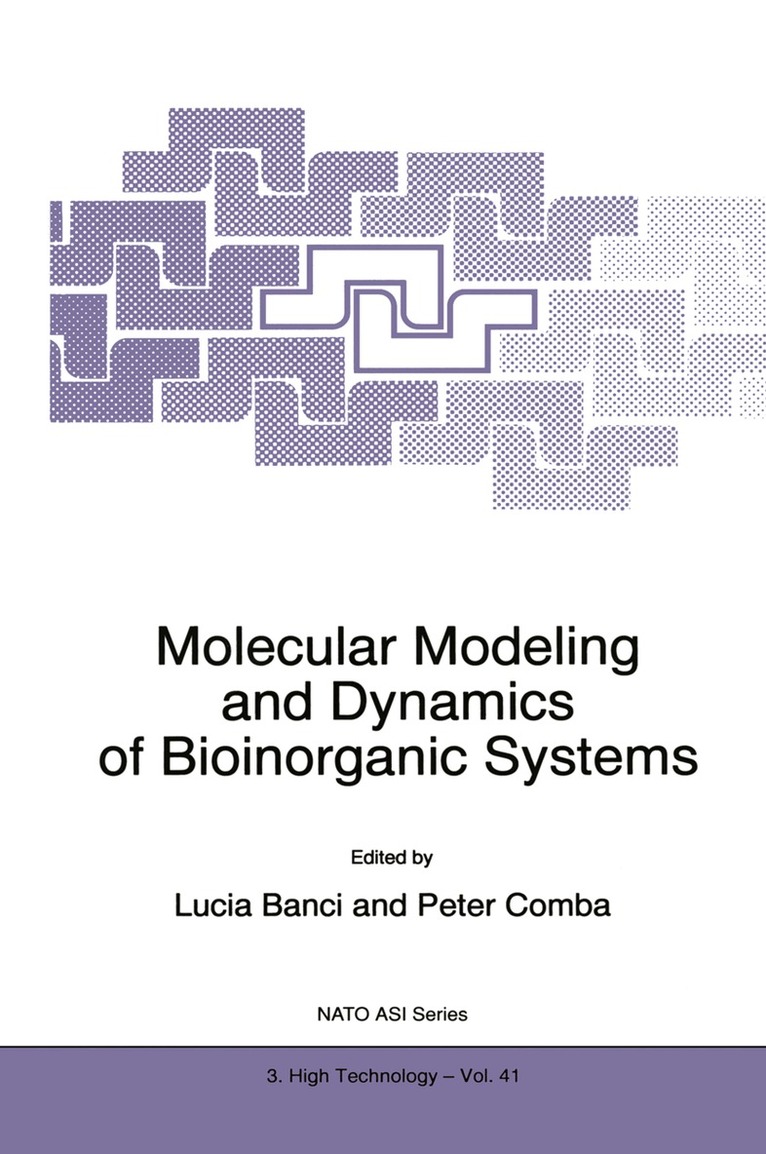
In the modelling of biological molecules containing metal ions, new approaches and techniques are allowing researchers to discuss structures, electronic properties and reaction mechanisms of metalloproteins on the basis of computational studies. Offering a selection of papers on recent progress in this field, this book discusses different approaches in the development of new force fields and their application to the computation of the structures, electronic properties and dynamics of bioinorganic compounds, as well as quantum mechanical and integrated QM/MM methods for understanding the function of metalloenzymes and the calculation of electrostatic interactions.
Häftad, Engelska, 2024
741 kr
Kommande
Concept- and application-oriented - this textbook will set the international standard in coordination chemistryFits into a gap and complements ideally the textbook, written by J. Ribas Gispert, with a classical textbook conceptPeter Comba is a experienced textbook author and a well-known and highly respected scientist in the field
E-bok
PDF, Engelska, 20081 909 kr
Läs direkt efter köp
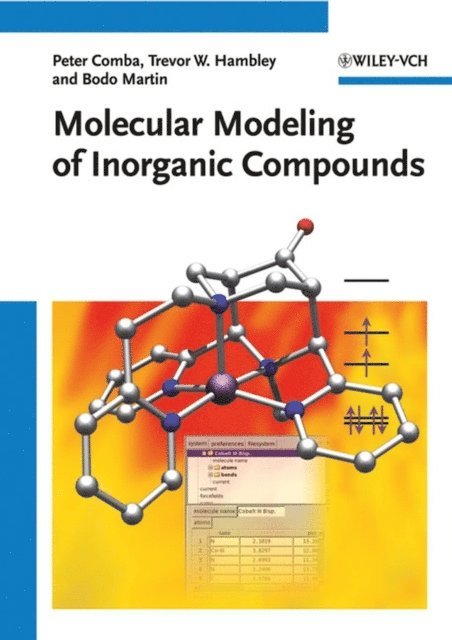
In many branches of chemistry, Molecular Modeling is a well-established and powerful tool for the investigation of complex structures. The second completely revised and enlarged edition of this highly recognized book shows how this method can be successfully applied to inorganic and coordination compounds. The first part of the book gives a general introduction to Molecular Modeling, which will be of use for chemists in all areas. The second part discusses numerous carefully selected examples, chosen to illustrate the wide range of applicability of molecular modeling to metal complexes and the approaches being taken to dealing with some of the difficulties involved. While the general outline is similar to that of the first edition, many of the examples chosen for discussion reflect the changes of the past five years. In the third part, the reader learns how to apply Molecular Modeling to a new system and how to interpret the results. The accompanying software features 20 tutorial lessons based on examples from the literature and the book itself. The authors take special care to highlight possible pitfalls and offer advice on how to avoid them. Therefore, this book will be invaluable to everyone working in or entering the field.
E-bok
PDF, Engelska, 20081 313 kr
Läs direkt efter köp
In many branches of chemistry, Molecular Modeling is a well-established and powerful tool when complex structures are investigated. This book shows how the method can be successfully applied to inorganic and coordination compounds. In the first part, a general introduction to Molecular Modeling is given, which will be of use for chemists in all areas. The second part contains a discussion of many carefully selected examples, chosen to illustrate the wide range of applicability and the approaches being taken to dealing with some of the difficulties encountered in modeling metal complexes. In the third part, the reader is instructed how to apply Molecular Modeling to a new system. The authors take special care to highlight the possible pitfalls and offer advice on how to avoid them. Therefore, this book will be invaluable for everyone working in or entering the field.
E-bok
PDF, Engelska, 20092 549 kr
Läs direkt efter köp
After the second edition introduced first density functional theory aspects, this third edition expands on this topic and offers unique practice in molecular mechanics calculations and DFT. In addition, the tutorial with its interactive exercises has been completely revised and uses the very latest software, a full version of which is enclosed on CD, allowing readers to carry out their own initial experiments with forcefield calculations in organometal and complex chemistry.
E-bok
Engelska, 20112 367 kr
Läs direkt efter köp
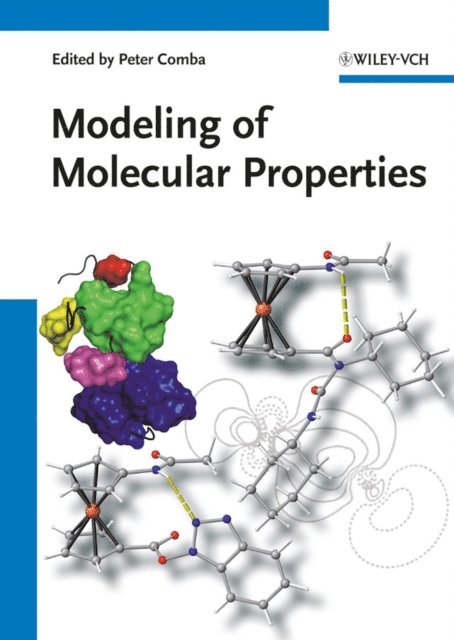
Molecular modeling encompasses applied theoretical approaches and computational techniques to model structures and properties of molecular compounds and materials in order to predict and / or interpret their properties. The modeling covered in this book ranges from methods for small chemical to large biological molecules and materials. With its comprehensive coverage of important research fields in molecular and materials science, this is a must-have for all organic, inorganic and biochemists as well as materials scientists interested in applied theoretical and computational chemistry. The 28 chapters, written by an international group of experienced theoretically oriented chemists, are grouped into four parts: Theory and Concepts; Applications in Homogeneous Catalysis; Applications in Pharmaceutical and Biological Chemistry; and Applications in Main Group, Organic and Organometallic Chemistry. The various chapters include concept papers, tutorials, and research reports.
E-bok
PDF, Engelska, 20112 367 kr
Läs direkt efter köp
Molecular modeling encompasses applied theoretical approaches and computational techniques to model structures and properties of molecular compounds and materials in order to predict and / or interpret their properties. The modeling covered in this book ranges from methods for small chemical to large biological molecules and materials. With its comprehensive coverage of important research fields in molecular and materials science, this is a must-have for all organic, inorganic and biochemists as well as materials scientists interested in applied theoretical and computational chemistry. The 28 chapters, written by an international group of experienced theoretically oriented chemists, are grouped into four parts: Theory and Concepts; Applications in Homogeneous Catalysis; Applications in Pharmaceutical and Biological Chemistry; and Applications in Main Group, Organic and Organometallic Chemistry. The various chapters include concept papers, tutorials, and research reports.
Inbunden, Engelska, 2013
2 156 kr
Skickas inom 10-15 vardagar
The series Structure and Bonding publishes critical reviews on topics of research concerned with chemical structure and bonding.
E-bok
PDF, Engelska, 20132 741 kr
Läs direkt efter köp
The series Structure and Bonding publishes critical reviews on topics of research concerned with chemical structure and bonding. The scope of the series spans the entire Periodic Table and addresses structure and bonding issues associated with all of the elements. It also focuses attention on new and developing areas of modern structural and theoretical chemistry such as nanostructures, molecular electronics, designed molecular solids, surfaces, metal clusters and supramolecular structures. Physical and spectroscopic techniques used to determine, examine and model structures fall within the purview of Structure and Bonding to the extent that the focus is on the scientific results obtained and not on specialist information concerning the techniques themselves. Issues associated with the development of bonding models and generalizations that illuminate the reactivity pathways and rates of chemical processes are also relevant. The individual volumes in the series are thematic. The goal of each volume is to give the reader, whether at a university or in industry, a comprehensive overview of an area where new insights are emerging that are of interest to a larger scientific audience. Thus each review within the volume critically surveys one aspect of that topic and places it within the context of the volume as a whole. The most significant developments of the last 5 to 10 years should be presented using selected examples to illustrate the principles discussed. A description of the physical basis of the experimental techniques that have been used to provide the primary data may also be appropriate, if it has not been covered in detail elsewhere. The coverage need not be exhaustive in data, but should rather be conceptual, concentrating on the new principles being developed that will allow the reader, who is not a specialist in the area covered, to understand the data presented. Discussion of possible future research directions in the area is welcomed.
Del 148 - Structure and Bonding
Electronic Structure and Number Theory
Bohr’s Boldest Dream
Häftad, Engelska, 2015
2 156 kr
Skickas inom 10-15 vardagar
The series Structure and Bonding publishes critical reviews on topics of research concerned with chemical structure and bonding. The scope of the series spans the entire Periodic Table and addresses structure and bonding issues associated with all of the elements. It also focuses attention on new and developing areas of modern structural and theoretical chemistry such as nanostructures, molecular electronics, designed molecular solids, surfaces, metal clusters and supramolecular structures. Physical and spectroscopic techniques used to determine, examine and model structures fall within the purview of Structure and Bonding to the extent that the focus is on the scientific results obtained and not on specialist information concerning the techniques themselves. Issues associated with the development of bonding models and generalizations that illuminate the reactivity pathways and rates of chemical processes are also relevant. The individual volumes in the series are thematic. The goal of each volume is to give the reader, whether at a university or in industry, a comprehensive overview of an area where new insights are emerging that are of interest to a larger scientific audience. Thus each review within the volume critically surveys one aspect of that topic and places it within the context of the volume as a whole. The most significant developments of the last 5 to 10 years should be presented using selected examples to illustrate the principles discussed. A description of the physical basis of the experimental techniques that have been used to provide the primary data may also be appropriate, if it has not been covered in detail elsewhere. The coverage need not be exhaustive in data, but should rather be conceptual, concentrating on the new principles being developed that will allow the reader, who is not a specialist in the area covered, to understand the data presented. Discussion of possible future research directions in the area is welcomed.
Inbunden, Engelska, 2009
1 082 kr
Skickas inom 10-15 vardagar
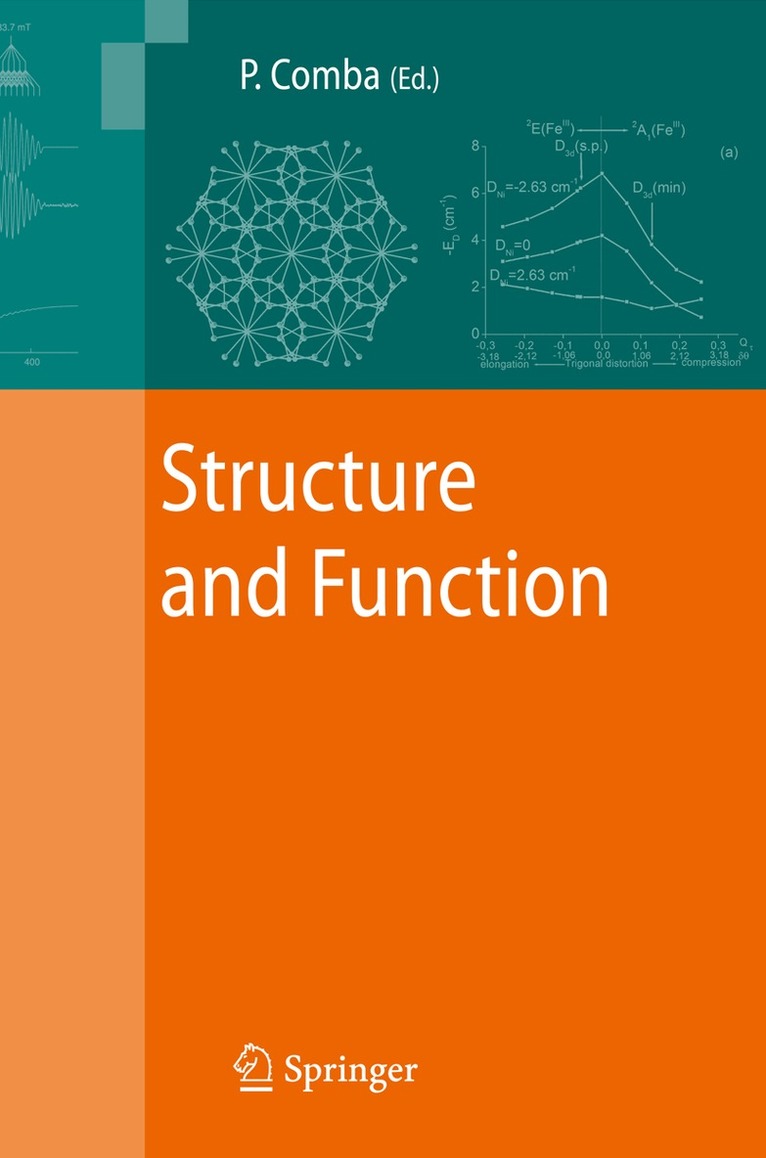
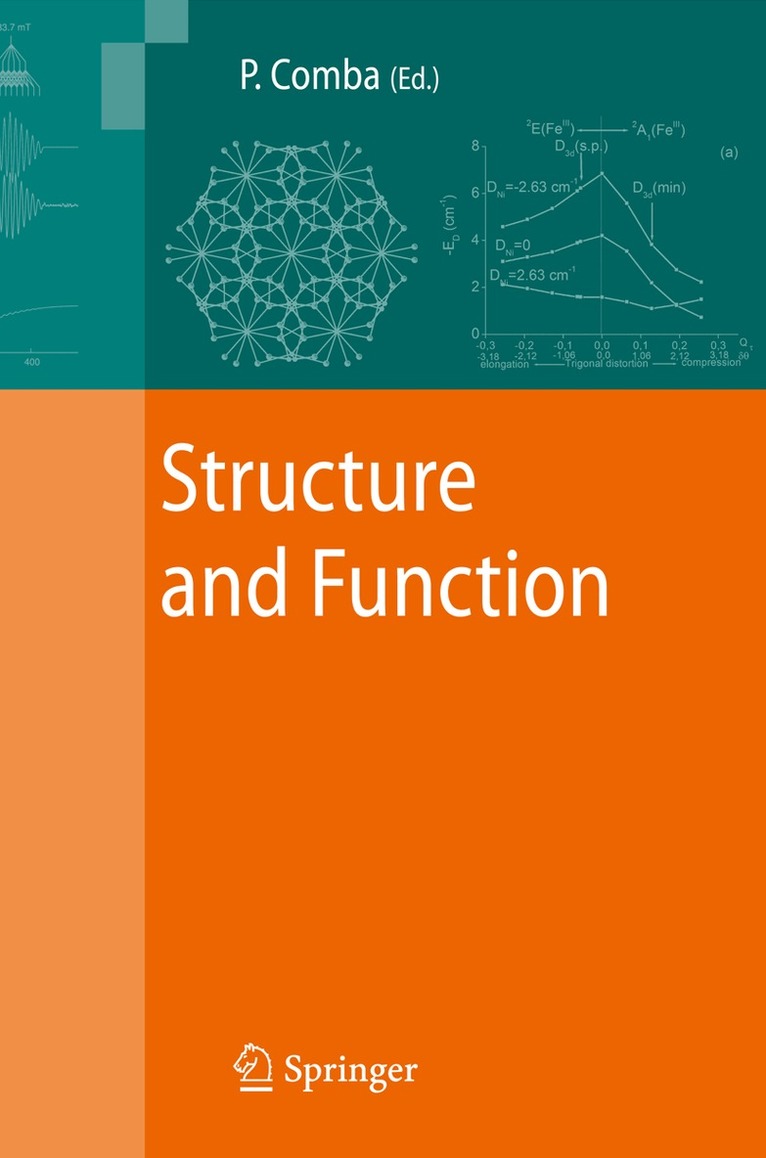
The art of chemistry is to thoroughly understand the properties of molecular compounds and materials and to be able to prepare novel compounds with p- dicted and desirable properties. The basis for progress is to fully appreciate and fundamentally understand the intimate relation between structure and function. The thermodynamic properties (stability, selectivity, redox potential), reactivities (bond breaking and formation, catalysis, electron transfer) and electronic properties (spectroscopy, magnetism) depend on the structure of a compound. Nevertheless, the discovery of novel molecular compounds and materials with exciting prop- ties is often and to a large extent based on serendipity. For compounds with novel and exciting properties, a thorough analysis of experimental data – state-of-the-art spectroscopy, magnetism, thermodynamic properties and/or detailed mechanistic information – combined with sophisticated electronic structure calculations is p- formed to interpret the results and fully understand the structure, properties and their interrelation. From these analyses, new models and theories may emerge, and this has led to the development of ef cient models for the design and interpre- tion of new materials and important new experiments. The chapters in this book therefore describe various fundamental aspects of structures, dynamics and physics of molecules and materials. The approaches, data and models discussed include new theoretical developments, computational studies and experimental work from molecular chemistry to biology and materials science.
E-bok
PDF, Engelska, 20091 367 kr
Läs direkt efter köp
The art of chemistry is to thoroughly understand the properties of molecular compounds and materials and to be able to prepare novel compounds with p- dicted and desirable properties. The basis for progress is to fully appreciate and fundamentally understand the intimate relation between structure and function. The thermodynamic properties (stability, selectivity, redox potential), reactivities (bond breaking and formation, catalysis, electron transfer) and electronic properties (spectroscopy, magnetism) depend on the structure of a compound. Nevertheless, the discovery of novel molecular compounds and materials with exciting prop- ties is often and to a large extent based on serendipity. For compounds with novel and exciting properties, a thorough analysis of experimental data – state-of-the-art spectroscopy, magnetism, thermodynamic properties and/or detailed mechanistic information – combined with sophisticated electronic structure calculations is p- formed to interpret the results and fully understand the structure, properties and their interrelation. From these analyses, new models and theories may emerge, and this has led to the development of ef cient models for the design and interpre- tion of new materials and important new experiments. The chapters in this book therefore describe various fundamental aspects of structures, dynamics and physics of molecules and materials. The approaches, data and models discussed include new theoretical developments, computational studies and experimental work from molecular chemistry to biology and materials science.
Häftad, Engelska, 2014
1 073 kr
Skickas inom 10-15 vardagar
The art of chemistry is to thoroughly understand the properties of molecular compounds and materials and to be able to prepare novel compounds with p- dicted and desirable properties. The basis for progress is to fully appreciate and fundamentally understand the intimate relation between structure and function. The thermodynamic properties (stability, selectivity, redox potential), reactivities (bond breaking and formation, catalysis, electron transfer) and electronic properties (spectroscopy, magnetism) depend on the structure of a compound. Nevertheless, the discovery of novel molecular compounds and materials with exciting prop- ties is often and to a large extent based on serendipity. For compounds with novel and exciting properties, a thorough analysis of experimental data – state-of-the-art spectroscopy, magnetism, thermodynamic properties and/or detailed mechanistic information – combined with sophisticated electronic structure calculations is p- formed to interpret the results and fully understand the structure, properties and their interrelation. From these analyses, new models and theories may emerge, and this has led to the development of ef cient models for the design and interpre- tion of new materials and important new experiments. The chapters in this book therefore describe various fundamental aspects of structures, dynamics and physics of molecules and materials. The approaches, data and models discussed include new theoretical developments, computational studies and experimental work from molecular chemistry to biology and materials science.
Häftad, Engelska, 2012
2 138 kr
Skickas inom 10-15 vardagar
A unique selection of papers on the most recent progress in the modelling of biological molecules containing metal ions. New approaches and techniques in this field are allowing researchers to discuss structures, electronic properties and reaction mechanisms of metalloproteins on the basis of computational studies. The book discusses different approaches in the development of new force fields and their application to the computation of the structures, electronic properties and dynamics of bioinorganic compounds as well as quantum mechanical and integrated QM/MM methods for understanding the function of metalloenzymes and the calculation of electrostatic interactions.
E-bok
PDF, Engelska, 20122 741 kr
Läs direkt efter köp
A unique selection of papers on the most recent progress in the modelling of biological molecules containing metal ions. New approaches and techniques in this field are allowing researchers to discuss structures, electronic properties and reaction mechanisms of metalloproteins on the basis of computational studies. The book discusses different approaches in the development of new force fields and their application to the computation of the structures, electronic properties and dynamics of bioinorganic compounds as well as quantum mechanical and integrated QM/MM methods for understanding the function of metalloenzymes and the calculation of electrostatic interactions.