Peter Filkins – författare
Visar alla böcker från författaren Peter Filkins. Handla med fri frakt och snabb leverans.
7 produkter
7 produkter
Inbunden, Engelska, 2019
508 kr
Skickas inom 3-6 vardagar
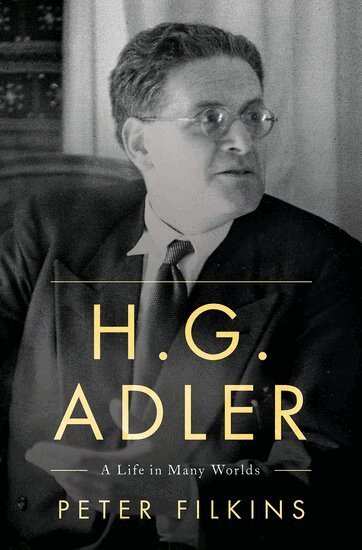
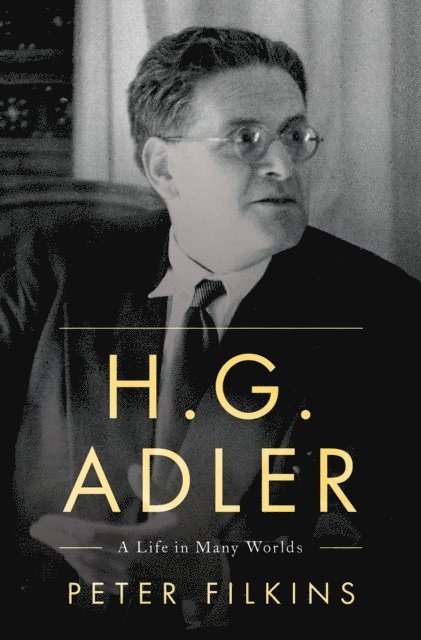
The biography of H.G. Adler (1910-88) is the story of a survivor of Theresienstadt, Auschwitz, and two other concentration camps who not only lived through the greatest cataclysm of the 20th century, but someone who also devoted his literary and scholarly career to telling the story of those who perished in over two dozen books of fiction, poetry, history, sociology, and religion. And yet for much of his life he remained almost entirely unknown. A writer's writer, a scholar of seminal, pioneering works on the Holocaust, a renowned radio essayist in postwar Germany, a last representative of the Prague Circle of literature headed by Kafka, a key contributor to the prosecution in the trial of Adolf Eichmann, Adler was a man of his time whose times lived through him. His is the story of many others, but also one that is singularly his own. And at its heart lies a profound story of love and perseverance amid the loss of his first wife, Gertrud Klepetar, who accompanied her mother to the gas chamber in Auschwitz, and the courtship and extended correspondence with Bettina Gross, a Prague artist who escaped to the Britain, only to later learn that her mother had also been in Theresienstadt with Adler before her eventual death in Auschwitz. His delivery of a lecture in Theresienstadt commemorating Kafka's sixtieth birthday, and with Kafka's favorite sister present; the nurturing of a younger generation of artists and intellectuals, including the Israeli artist Jehuda Bacon and the Serbian novelist Ivan Ivanji; the preservation of Viktor Ullmann's compositions and his opera The Emperor of Atlantis, only to see them premiered decades later to world acclaim; and the penury of postwar life while churning out the novels, poetry, and scholarship that would make his reputation - all of these are part of a life survived in the moment, but dedicated to the future, and that of a man committed to helping human dignity survive in his time and that to come.
E-bok
PDF, Engelska, 2019276 kr
Läs direkt efter köp
The biography of H.G. Adler (1910-88) is the story of a survivor of Theresienstadt, Auschwitz, and two other concentration camps who not only lived through the greatest cataclysm of the 20th century, but someone who also devoted his literary and scholarly career to telling the story of those who perished in over two dozen books of fiction, poetry, history, sociology, and religion. And yet for much of his life he remained almost entirely unknown. A writer''s writer, a scholar of seminal, pioneering works on the Holocaust, a renowned radio essayist in postwar Germany, a last representative of the Prague Circle of literature headed by Kafka, a key contributor to the prosecution in the trial of Adolf Eichmann, Adler was a man of his time whose times lived through him. His is the story of many others, but also one that is singularly his own. And at its heart lies a profound story of love and perseverance amid the loss of his first wife, Gertrud Klepetar, who accompanied her mother to the gas chamber in Auschwitz, and the courtship and extended correspondence with Bettina Gross, a Prague artist who escaped to the Britain, only to later learn that her mother had also been in Theresienstadt with Adler before her eventual death in Auschwitz. His delivery of a lecture in Theresienstadt commemorating Kafka''s sixtieth birthday, and with Kafka''s favorite sister present; the nurturing of a younger generation of artists and intellectuals, including the Israeli artist Jehuda Bacon and the Serbian novelist Ivan Ivanji; the preservation of Viktor Ullmann''s compositions and his opera The Emperor of Atlantis, only to see them premiered decades later to world acclaim; and the penury of postwar life while churning out the novels, poetry, and scholarship that would make his reputation - all of these are part of a life survived in the moment, but dedicated to the future, and that of a man committed to helping human dignity survive in his time and that to come.
E-bok
Engelska, 2019276 kr
Läs direkt efter köp
The biography of H.G. Adler (1910-88) is the story of a survivor of Theresienstadt, Auschwitz, and two other concentration camps who not only lived through the greatest cataclysm of the 20th century, but someone who also devoted his literary and scholarly career to telling the story of those who perished in over two dozen books of fiction, poetry, history, sociology, and religion. And yet for much of his life he remained almost entirely unknown. A writer''s writer, a scholar of seminal, pioneering works on the Holocaust, a renowned radio essayist in postwar Germany, a last representative of the Prague Circle of literature headed by Kafka, a key contributor to the prosecution in the trial of Adolf Eichmann, Adler was a man of his time whose times lived through him. His is the story of many others, but also one that is singularly his own. And at its heart lies a profound story of love and perseverance amid the loss of his first wife, Gertrud Klepetar, who accompanied her mother to the gas chamber in Auschwitz, and the courtship and extended correspondence with Bettina Gross, a Prague artist who escaped to the Britain, only to later learn that her mother had also been in Theresienstadt with Adler before her eventual death in Auschwitz. His delivery of a lecture in Theresienstadt commemorating Kafka''s sixtieth birthday, and with Kafka''s favorite sister present; the nurturing of a younger generation of artists and intellectuals, including the Israeli artist Jehuda Bacon and the Serbian novelist Ivan Ivanji; the preservation of Viktor Ullmann''s compositions and his opera The Emperor of Atlantis, only to see them premiered decades later to world acclaim; and the penury of postwar life while churning out the novels, poetry, and scholarship that would make his reputation - all of these are part of a life survived in the moment, but dedicated to the future, and that of a man committed to helping human dignity survive in his time and that to come.
Häftad, Engelska, 2010
206 kr
Skickas inom 3-6 vardagar
Häftad, Engelska, 2012
328 kr
Skickas inom 5-8 vardagar
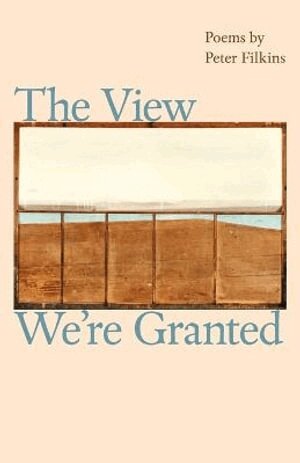
In the pivotal poem "Marking Time," which appears almost exactly halfway through Peter Filkins's fourth collection of poetry, the speaker reflects on the death of a sibling and how time is marked by our memories. These memories, these moments-whether spent contemplating a painting by Vermeer or the simple toss of a bean bag-ultimately shape who we are. "Yet you are with me here, with me here again, / where neither that moon nor you exist, but live / tethered to this memory composed of words." These are poems unafraid to be graceful and engaging. They attain an assurance and stability rare in contemporary poetry, while their careful balance of sadness and joy reminds the reader of the difficult negotiations we make in life.
Häftad, Engelska, 2021
251 kr
Skickas inom 5-8 vardagar
A diverse display of formal dexterity, narrative power, and lyrical resonance, Peter Filkins's latest collection of poems explores the fraught relationship between the natural world and the human.Exploring the space between nature and culture, the poems of Water / Music anchor themselves in the timely and the timeless. Rich and diverse in their formal intricacy, they move with ease from narrative to meditation, from close physical observation to the haunts of memory, and from lyric sorrow to the pleasure of living in the world. Water / Music embraces and celebrates life's mystery and the soul's repose amid "talismans at twilight, the whir of birds."
E-bok
PDF, Tyska, 2018283 kr
Läs direkt efter köp
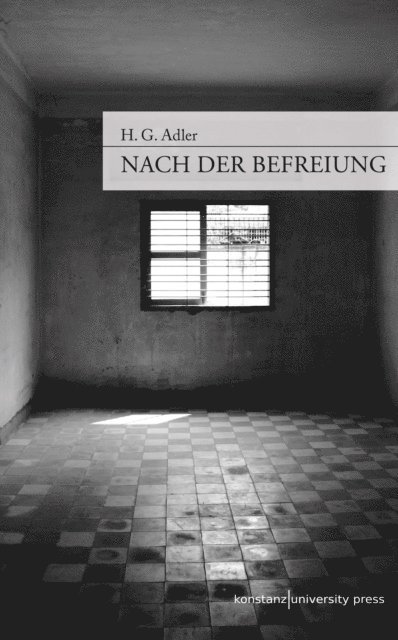
"Es kommt jetzt darauf an, der Welt zu zeigen, dass unser Aufenthalt in dem Inferno der Lager nicht vergeblich gewesen ist für den Fortgang der Menschheit, dass sich sogar aus diesem letzten Dunkel etwas gestalten lässt, das Licht sein darf." Sein Motiv, dem Grauen Bedeutung abzugewinnen, beschreibt H. G. Adler (1910–1988) in dem Essay "Nach der Befreiung" im Dezember 1945, sechs Monate nach seiner eigenen Befreiung aus dem KZ Langenstein. Adlers Studien über die Entstehung, Struktur, das Alltagsleben und die Auflösung der "Lagerwelt" arbeiten mit historiographischen, soziologischen und psychologischen Methoden. Als "teilnehmender Beobachter" gelangt er so zu einer der umfassendsten Darstellungen der "ordentlichen Regelung des Außerordentlichen", des Zusammenhangs von Verwaltung und Gewalt. Adler interpretierte diesen Zusammenhang als "extreme Alternative von beinahe unbegrenzter Willkür und völliger Ohnmacht, welche das SS-System der Konzentrationslager charakterisierte." Während im ersten Teil des Bandes Protagonisten des Nationalsozialismus (Adolf Hitler, Adolf Eichmann u. a.) sowie Praktiken der (Selbst-)Verwaltung in den Konzentrationslagern im Mittelpunkt stehen, entwerfen die soziologischen Studien der 1960er Jahre im zweiten Teil eine Theorie der Verfolgung in ihrem Zusammenspiel mit dem bürokratischen Apparat. Adlers Überlegungen zum Missbrauch der Verwaltung sind dabei grundsätzlicher Natur und auch für die Gegenwart einschlägig.