
Peter KrA¤mer – författare
732 kr
Läs direkt efter köp
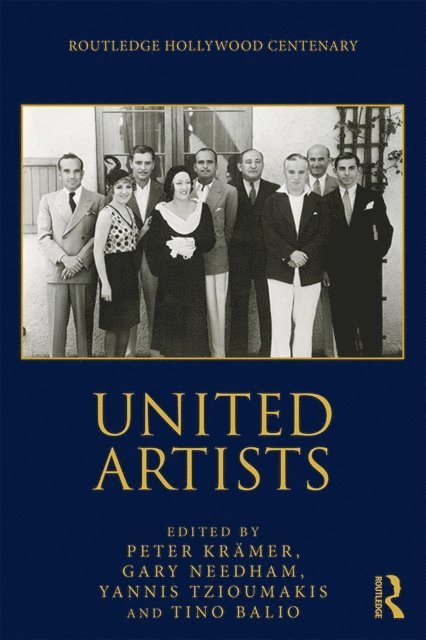
Established in 1919 by Hollywood''s top talent United Artists has had an illustrious history, from Hollywood minor to industry leader to a second-tier media company in the shadow of MGM. This edited collection brings together leading film historians to examine key aspects of United Artists'' centennial history from its origins to the sometimes chaotic developments of the last four decades. The focus is on several key executives – ranging from Joseph Schenck to Paula Wagner and Tom Cruise – and on many of the people making films for United Artists, including Gloria Swanson, David O. Selznick, Kirk Douglas, the Mirisch brothers and Woody Allen. Drawing on a wide range of primary sources, individual case studies explore the mutually supportive but also in places highly contentious relationships between United Artists and its producers, the difficult balance between artistic and commercial objectives, and the resulting hits and misses (among them The General, the Pink Panther franchise, Heaven’s Gate, Cruising, and Hot Tub Time Machine). The second volume in the Routledge Hollywood Centenary series, United Artists is a fascinating and comprehensive study of the firm’s history and legacy, perfect for students and researchers of cinema and film history, media industries, and Hollywood.
732 kr
Läs direkt efter köp
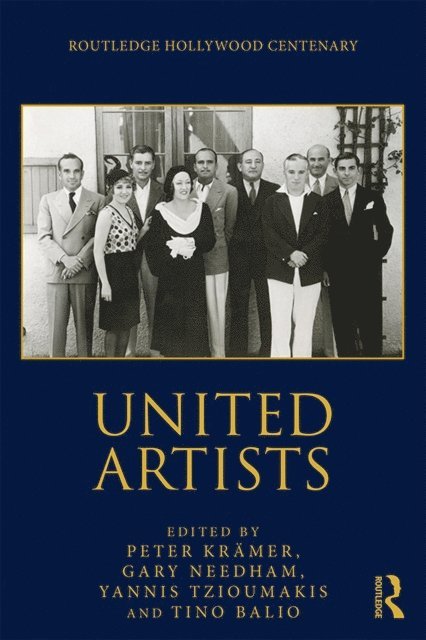
Established in 1919 by Hollywood''s top talent United Artists has had an illustrious history, from Hollywood minor to industry leader to a second-tier media company in the shadow of MGM. This edited collection brings together leading film historians to examine key aspects of United Artists'' centennial history from its origins to the sometimes chaotic developments of the last four decades. The focus is on several key executives – ranging from Joseph Schenck to Paula Wagner and Tom Cruise – and on many of the people making films for United Artists, including Gloria Swanson, David O. Selznick, Kirk Douglas, the Mirisch brothers and Woody Allen. Drawing on a wide range of primary sources, individual case studies explore the mutually supportive but also in places highly contentious relationships between United Artists and its producers, the difficult balance between artistic and commercial objectives, and the resulting hits and misses (among them The General, the Pink Panther franchise, Heaven’s Gate, Cruising, and Hot Tub Time Machine). The second volume in the Routledge Hollywood Centenary series, United Artists is a fascinating and comprehensive study of the firm’s history and legacy, perfect for students and researchers of cinema and film history, media industries, and Hollywood.
353 kr
Läs direkt efter köp
Combining a detailed film analysis with archival research and social science approaches, this book examines how American Graffiti (1973), a low-budget and star-less teen comedy by a filmmaker whose only previous feature had been a box office flop, became one of the highest grossing and most highly acclaimed films of all time in the United States, and one of the key expressions of the nostalgia wave washing over the country in the 1970s.
American Graffiti: George Lucas, the New Hollywood and the Baby Boom Generation explores the origins and development of the film, its form and themes as well as its marketing, reception, audiences and impact. It does so by considering the life and career of the film’s co-writer and director George Lucas; the development and impact of the baby boom generation to which he, many of his collaborators and the vast majority of the film’s audience belonged; the transformation of the American film industry in the late 1960s and 1970s; and broader changes in American society which gave rise to an intense sense of crisis and growing pessimism across the population.
This book is ideal for students, scholars and those with an interest in youth cinema, the New Hollywood and George Lucas as well as both Film and American Studies more broadly.