Tino Balio - Böcker
Visar alla böcker från författaren Tino Balio. Handla med fri frakt och snabb leverans.
15 produkter
15 produkter
434 kr
Skickas inom 10-15 vardagar
This work offers useful practical advice for teachers of chemistry.
276 kr
Skickas inom 10-15 vardagar
Among the countless gangster films produced by Hollywood, few are as haunting, complex, or ingeniously crafted as White Heat (1948). Students of film history and screen writing will appreciate this treatment—an engaging study of teh various artistic elements that turned what might have been just another gangster film into an innovative classic of the genre and a model of cooperative filmmaking at its best. Crucial to White Heat's success, McGilligan stresses, was the rare manner in which every aspect of production coalesced: studio, script, cast, crew, and director.
323 kr
Skickas inom 10-15 vardagar
This anthology has been expanded and revised to include a fresh introductory overview by editor Tino Balio and ten new chapters - seen written specifically for this edition - that explore such topics as the growth of exhibition as big business, the mode of production for feature films, the star as market strategy, and the changing economies and structure of contemporary entertainment companies. Balio divides the subject into four eras: 1894-1908 describes how motion pictures developed from a novelty into a business enterprise; 1908-1930 chronicles the industry's development into an economic oligopoly; 1930-1948 covers the behaviour and organization of the industy at its peak; 1948 to the present analyzes the results of technological, legal, and social events on the contemporary economic history of American movies.
282 kr
Skickas inom 10-15 vardagar
United Artists was a unique motion picture company in the history of Hollywood. Founded by Charlie Chaplin, Mary Pickford, Douglas Fairbanks, and director D.W. Griffith - four of the greatest names of the silent era - United Artists functioned as a distribution company for independent producers. In this lively and detailed history of United Artists from 1919 through 1951, film scholar Tino Balio chronicles the company's struggle for survival, its rise to prominence as the Tiffany of the industry, and its near extinction in the 1940s. This edition is updated with a new introduction by Balio that places in relief UA's operations for those readers who may be unfamiliar with film industry practices and adds new perspective to the company's place within Hollywood.
282 kr
Skickas inom 10-15 vardagar
In this second volume of Tino Balio's history of United Artists, he examines the turnaround of the company in the hands of Arthur Krim and Robert Benjamin in the 1950s, when United Artists devised a successful strategy based on the financing and distribution of independent production that transformed the company into an industry leader. Drawing on corporate records and interviews, Balio follows United Artists through its merger with Transamerica in the 1960s and its sale to MGM after the financial debacle of the film ""Heaven's Gate"". With its attention to the role of film as both an art form and an economic institution, ""United Artists: The Company That Changed the Film Industry"" is an indispensable study of one company's fortunes from the 1950s to the 1980s and a clear-eyed analysis of the film industry as a whole. This edition includes an expanded introduction that examines the history of United Artists from 1978 to 2008, as well as an account of Arthur Krim's attempt to mirror UA's success at Orion Pictures from 1978 to 1991.
291 kr
Skickas inom 10-15 vardagar
Largely shut out of American theaters since the 1920s, foreign films such as Open City, Bicycle Thief, Rashomon, The Seventh Seal, Breathless, La Dolce Vita, and L’Avventura played after World War II in a growing number of art houses around the country and created a small but influential art film market devoted to the acquisition, distribution, and exhibition of foreign-language and English-language films produced abroad. Nurtured by successive waves of imports from Italy, Great Britain, France, Sweden, Japan, and the Soviet Bloc, the renaissance was kick-started by independent distributors working out of New York; by the 1960s, however, the market had been subsumed by Hollywood. From Roberto Rossellini’s Open City in 1946 to Bernardo Bertolucci’s Last Tango in Paris in 1973, Tino Balio tracks the critical reception in the press of such filmmakers as François Truffaut, Jean-Luc Godard, Federico Fellini, Michelangelo Antonioni, Tony Richardson, Ingmar Bergman, Akira Kurosawa, Luis Buñuel, Satyajit Ray, and Milos Forman. Their releases paled in comparison to Hollywood fare at the box office, but their impact on American film culture was enormous. The reception accorded to art house cinema attacked motion picture censorship, promoted the director as auteur, and celebrated film as an international art. Championing the cause was the new “cinephile” generation, which was mostly made up of college students under thirty. The fashion for foreign films depended in part on their frankness about sex. When Hollywood abolished the Production Code in the late 1960s, American-made films began to treat adult themes with maturity and candor. In this new environment, foreign films lost their cachet and the art film market went into decline.
2 151 kr
Skickas inom 10-15 vardagar
Established in 1919 by Hollywood's top talent United Artists has had an illustrious history, from Hollywood minor to industry leader to a second-tier media company in the shadow of MGM. This edited collection brings together leading film historians to examine key aspects of United Artists' centennial history from its origins to the sometimes chaotic developments of the last four decades. The focus is on several key executives – ranging from Joseph Schenck to Paula Wagner and Tom Cruise – and on many of the people making films for United Artists, including Gloria Swanson, David O. Selznick, Kirk Douglas, the Mirisch brothers and Woody Allen. Drawing on a wide range of primary sources, individual case studies explore the mutually supportive but also in places highly contentious relationships between United Artists and its producers, the difficult balance between artistic and commercial objectives, and the resulting hits and misses (among them The General, the Pink Panther franchise, Heaven’s Gate, Cruising, and Hot Tub Time Machine). The second volume in the Routledge Hollywood Centenary series, United Artists is a fascinating and comprehensive study of the firm’s history and legacy, perfect for students and researchers of cinema and film history, media industries, and Hollywood.
580 kr
Skickas inom 10-15 vardagar
Established in 1919 by Hollywood's top talent United Artists has had an illustrious history, from Hollywood minor to industry leader to a second-tier media company in the shadow of MGM. This edited collection brings together leading film historians to examine key aspects of United Artists' centennial history from its origins to the sometimes chaotic developments of the last four decades. The focus is on several key executives – ranging from Joseph Schenck to Paula Wagner and Tom Cruise – and on many of the people making films for United Artists, including Gloria Swanson, David O. Selznick, Kirk Douglas, the Mirisch brothers and Woody Allen. Drawing on a wide range of primary sources, individual case studies explore the mutually supportive but also in places highly contentious relationships between United Artists and its producers, the difficult balance between artistic and commercial objectives, and the resulting hits and misses (among them The General, the Pink Panther franchise, Heaven’s Gate, Cruising, and Hot Tub Time Machine). The second volume in the Routledge Hollywood Centenary series, United Artists is a fascinating and comprehensive study of the firm’s history and legacy, perfect for students and researchers of cinema and film history, media industries, and Hollywood.
2 558 kr
Skickas inom 10-15 vardagar
This collection of papers examines the evolving relationship between the motion picture industry and television from the 1940s onwards. The institutional and technological histories of the film and TV industries are looked at, concluding that Hollywood and television had a symbiotic relationship from the start. Aspects covered include the movement of audiences, the rise of the independent producer, the introduction of colour and the emergence of network structure, cable TV and video recorders. Originally published in 1990.
Del 5 - History of the American Cinema
Grand Design
Hollywood as a Modern Business Enterprise, 1930-1939
Häftad, Engelska, 1996
715 kr
Skickas inom 3-6 vardagar
The advent of color, big musicals, the studio system, and the beginning of institutionalized censorship made the thirties the defining decade for Hollywood. The year 1939, celebrated as 'Hollywood's greatest year', saw the release of such memorable films as "Gone with the Wind", "The Wizard of Oz", and "Stagecoach". It was a time when the studios exercised nearly absolute control over their product as well as over such stars as Bette Davis, Clark Gable, and Humphrey Bogart. In this fifth volume of the award-winning series "History of the American Cinema", Tino Balio examines every aspect of the filmmaking and film exhibition system as it matured during the Depression era.
2 160 kr
Skickas inom 10-15 vardagar
The winner of the 2019 Peter C. Rollins Book AwardThis is the first comprehensive history of MGM from its origins in 1905 to the present. Following a straightforward chronology corresponding to specific periods of film industry history, each chapter describes how successive managements adjusted their production strategies and business practices in response to evolving industrial and market conditions.As the production subsidiary of the Loew’s Inc. theatre chain, MGM spent lavishly on its pictures and injected them with plenty of star power. The practice helped sustain MGM’s preeminent position during the heyday of Hollywood. But MGM was a conservative company and watched as other studios innovated with sound and widescreen, adjusted to television, and welcomed independent producers. By the 1960s, the company, sans its theatre chain, was in decline and was ripe for a takeover. A defining moment occurred in 1969, when Kirk Kerkorian, a Las Vegas entrepreneur, made a successful bid for the company. There followed a tumultuous thirty-six-year period when Kerkorian bought and sold MGM three times. Meanwhile, MGM never regained its former status and has functioned as a second-tier company to this day.Focusing on MGM’s top talent – such as Louis B. Mayer, Irving Thalberg, David O. Selznick, and Arthur Freed; directors King Vidor and Vincente Minnelli; and stars of the screen Greta Garbo, Judy Garland, Clark Gable, and Mickey Rooney – and award-winning films, this book highlights the studio’s artistic achievements and status within the industry.
582 kr
Skickas inom 10-15 vardagar
The winner of the 2019 Peter C. Rollins Book AwardThis is the first comprehensive history of MGM from its origins in 1905 to the present. Following a straightforward chronology corresponding to specific periods of film industry history, each chapter describes how successive managements adjusted their production strategies and business practices in response to evolving industrial and market conditions.As the production subsidiary of the Loew’s Inc. theatre chain, MGM spent lavishly on its pictures and injected them with plenty of star power. The practice helped sustain MGM’s preeminent position during the heyday of Hollywood. But MGM was a conservative company and watched as other studios innovated with sound and widescreen, adjusted to television, and welcomed independent producers. By the 1960s, the company, sans its theatre chain, was in decline and was ripe for a takeover. A defining moment occurred in 1969, when Kirk Kerkorian, a Las Vegas entrepreneur, made a successful bid for the company. There followed a tumultuous thirty-six-year period when Kerkorian bought and sold MGM three times. Meanwhile, MGM never regained its former status and has functioned as a second-tier company to this day.Focusing on MGM’s top talent – such as Louis B. Mayer, Irving Thalberg, David O. Selznick, and Arthur Freed; directors King Vidor and Vincente Minnelli; and stars of the screen Greta Garbo, Judy Garland, Clark Gable, and Mickey Rooney – and award-winning films, this book highlights the studio’s artistic achievements and status within the industry.
685 kr
Skickas inom 10-15 vardagar
This collection of papers examines the evolving relationship between the motion picture industry and television from the 1940s onwards. The institutional and technological histories of the film and TV industries are looked at, concluding that Hollywood and television had a symbiotic relationship from the start. Aspects covered include the movement of audiences, the rise of the independent producer, the introduction of colour and the emergence of network structure, cable TV and video recorders. Originally published in 1990.
402 kr
Skickas inom 7-10 vardagar
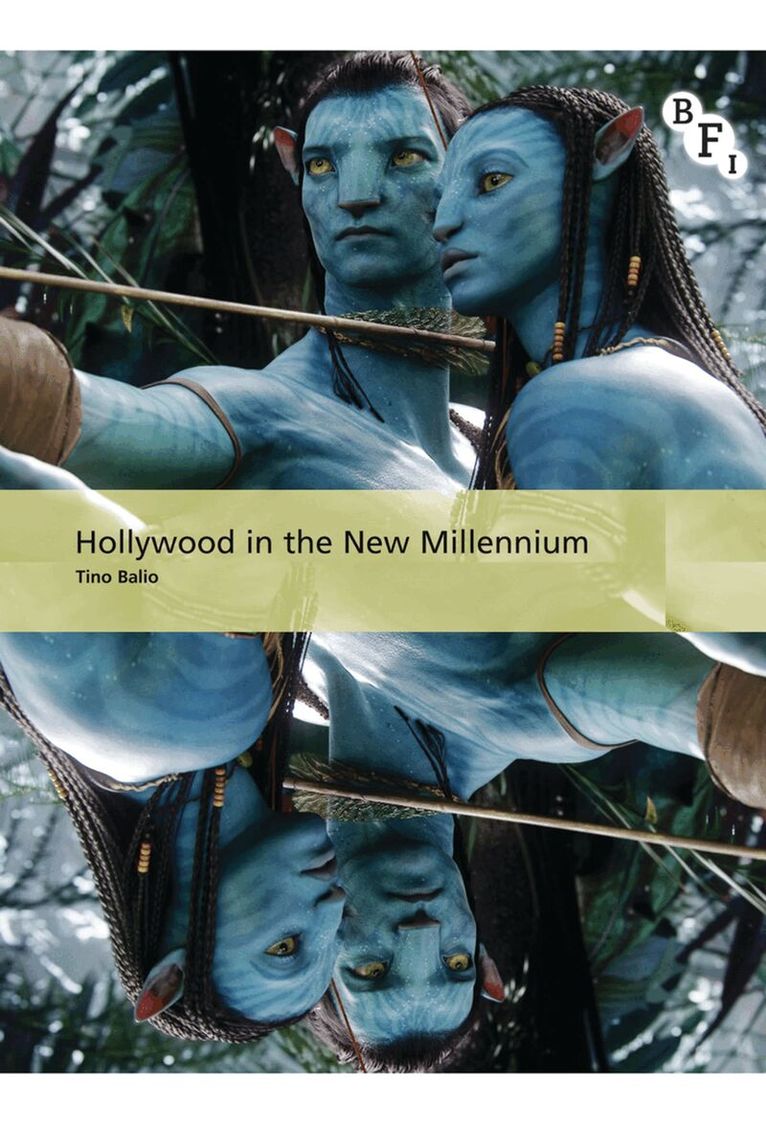
Hollywood is facing unprecedented challenges – and is changing rapidly and radically as a result. In this major new study of the contemporary film industry, leading film historian Tino Balio explores the impact of the Internet, declining DVD sales and changing consumer spending habits on the way Hollywood conducts its business. Today, the major studios play an insignificant role in the bottom lines of their conglomerate parents and have fled to safety, relying on big-budget tentpoles, franchises and family films to reach their target audiences. Comprehensive, compelling and filled with engaging case studies (TimeWarner, DreamWorks SKG, Spider Man, The Lord of the Rings, IMAX, Netflix, Miramax, Sony Pictures Classics, Lionsgate and Sundance), Hollywood in the New Millennium is a must-read for all students of film studies, cinema studies, media studies, communication studies, and radio and television.
1 314 kr
Skickas inom 10-15 vardagar
Hollywood is facing unprecedented challenges – and is changing rapidly and radically as a result. In this major new study of the contemporary film industry, leading film historian Tino Balio explores the impact of the Internet, declining DVD sales and changing consumer spending habits on the way Hollywood conducts its business. Today, the major studios play an insignificant role in the bottom lines of their conglomerate parents and have fled to safety, relying on big-budget tentpoles, franchises and family films to reach their target audiences. Comprehensive, compelling and filled with engaging case studies (TimeWarner, DreamWorks SKG, Spider Man, The Lord of the Rings, IMAX, Netflix, Miramax, Sony Pictures Classics, Lionsgate and Sundance), Hollywood in the New Millennium is a must-read for all students of film studies, cinema studies, media studies, communication studies, and radio and television.