Peter L. Lindseth - Böcker
Visar alla böcker från författaren Peter L. Lindseth. Handla med fri frakt och snabb leverans.
9 produkter
9 produkter
2 324 kr
Skickas inom 5-8 vardagar
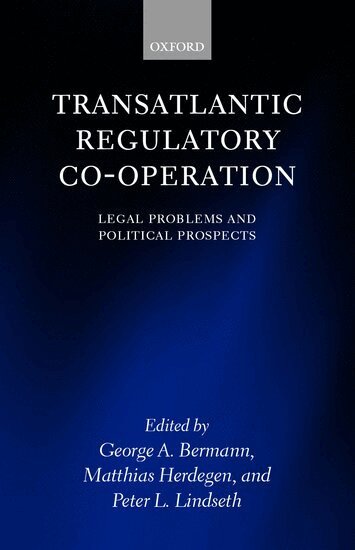
International regulatory relations have commonly been viewed through the prism of international organizations, on the one hand, and international trade disputes, on the other. However, neither of these perspectives offers an adequate understanding of the ways in which international regulatory relations are managed or may be managed more effectively. While the one risks overstating the readiness of states to cede regulatory authority to international institutions, the other risks ignoring the reality of and prospects for cooperative behavior.Transatlantic regulatory cooperation comprises a highly differentiated "bundle" of techniques for reconciling the needs of international trade with the diversity of national regulatory environments and public demands. The processes involved are still poorly understood, due partly to the fact that they have been very largely improvisational, with the result that the framework of regulatory cooperation is still very much a work in progress. Moreover, the main protagonists in this arena -- the US and EU -- have their own well-established domestic regulatory processes with which international initiatives may not readily be integrated, either in terms of values or institutions. While focusing on illustrative sectoral examples of transatlantic regulatory cooperation, this book thus also explores the more general challenge of accommodating regulatory cooperation with domestic legal and political institutions. The volume closes both by calling attention to inescapable legitimacy questions (e.g. reconciliation with principles of democracy and demands for public accountability) and by exploring certain strategic directions and institutional implications for the future.
3 140 kr
Skickas inom 5-8 vardagar
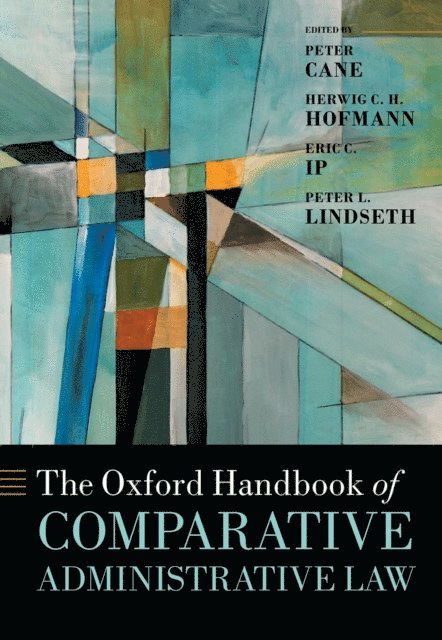
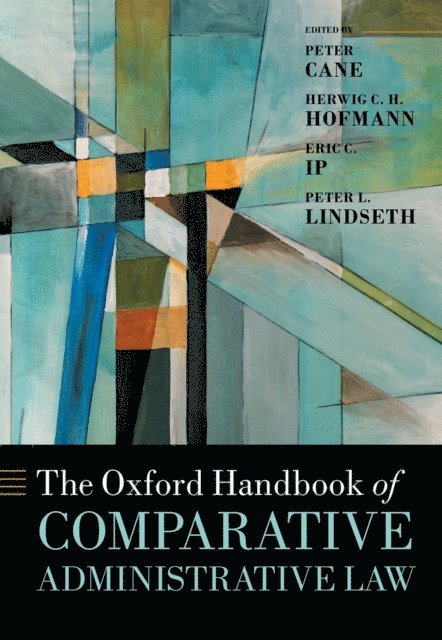
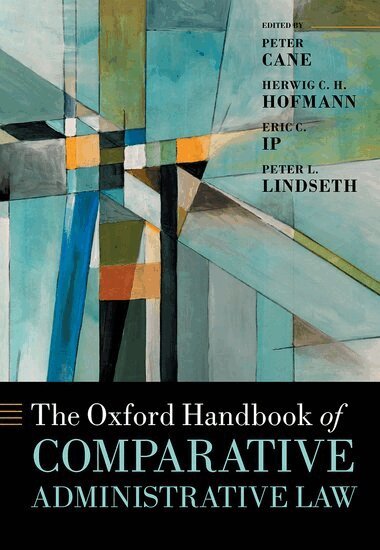
The comparative study of administrative law has a long history dating back more than 200 years. It has enjoyed a renaissance in the past 15 years or so and now sits alongside fields such as comparative constitutional law and global administrative law as a well-established area of scholarly research. This book is the first to provide a broad and systematic view of the subject both in terms of the topics covered and the legal traditions surveyed. In its various parts it surveys the historical beginnings of comparative administrative law scholarship, discusses important methodological issues, examines the relationship between administrative law and regime type, analyses basic concepts such as 'administrative power' and 'accountability', and deals with the creation, functions, and control of administrative power, and values of administration. The final part looks to the future of this young sub-discipline. In this volume, distinguished experts and leaders in the field discuss a wide range of issues in administrative law from a comparative perspective. Administrative law is concerned with the conferral, nature, exercise, and legal control of administrative (or 'executive') governmental power. It has close links with other areas of 'public law', notably constitutional law and international law. It is of great interest and importance not only to lawyers but also to students of politics, government, and public policy. Studying public law comparatively helps to identify both similarities and differences between the way government power and its control is managed in different countries and legal traditions.
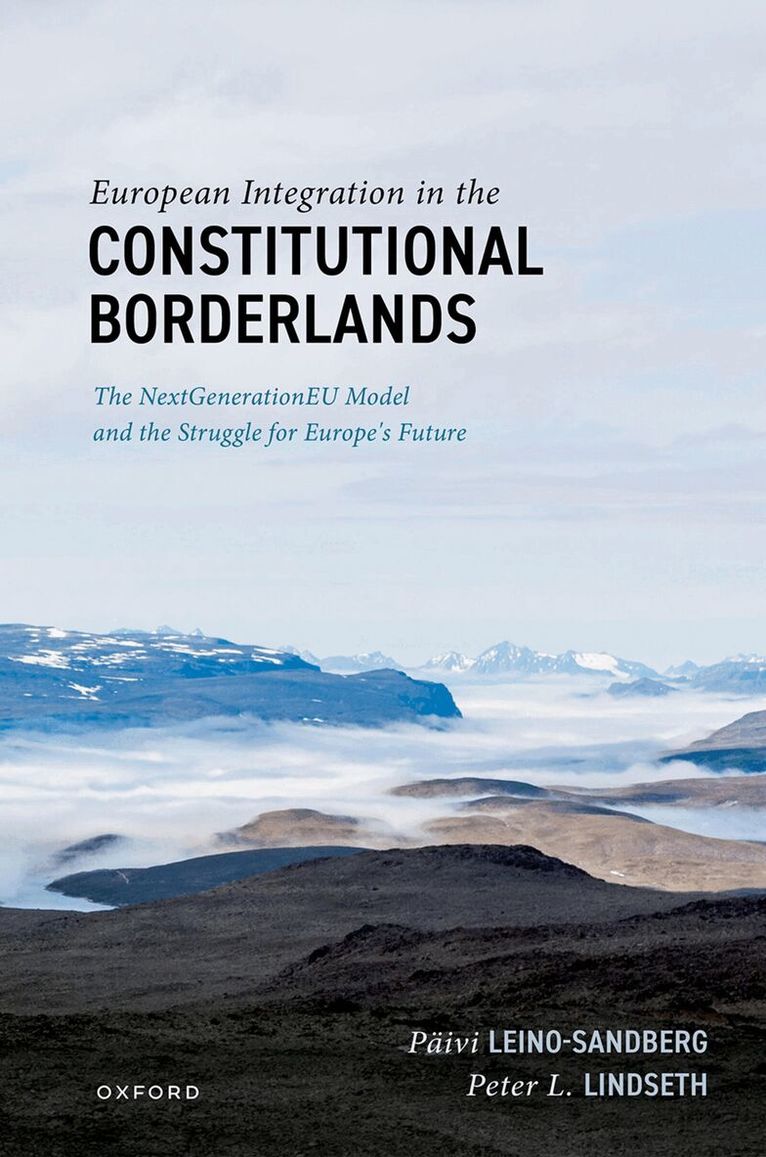
European Integration in the Constitutional Borderlands
The NextGenerationEU Model and the Struggle for Europe's Future
Inbunden, Engelska, 2026
1 596 kr
Kommande
The European Union now finds itself in a liminal space-a 'constitutional borderlands'-between its traditional role as a prodigious producer of regulatory norms and a nascent, yet incomplete, role that seeks to develop fiscal capacities to achieve its goals. The NextGenerationEU (NGEU) programme adopted in the wake of Covid is at the heart of this shift. It defined a new model of non-transparent, executive-technocratic governance that was then repurposed to address the many challenges of the Russian war on Ukraine as well as other pressing needs.This book provides the first comprehensive analysis of the design, implementation, and evolution of the NGEU model from its inception to today. It subjects the model's hidden mechanics to a critical examination, exposing the pivotal role of EU institutional legal advisers, operating behind closed doors, in facilitating revolutionary reinterpretations of the Treaties that effectively bypassed the democratic process to transform the nature of European governance. It shows that the advent of the NGEU model has had profound distributive and democratic consequences, shifting power toward executive and subordinate technocratic actors while sidelining parliamentary oversight and the involvement of other stakeholders. At the same time, the NGEU model created misaligned incentives, often prioritizing national spending envelopes over the production of genuine European public goods. These 'emergency' measures are fast becoming the new normal. The core innovations of the NGEU model-national planning, performance-based financing, and enhanced Commission discretion-form core elements of the Commission's proposals for the next Multiannual Financial Framework (2028-2034). This book warns that without a return to open democratic politics and constitutional deliberation, the EU's navigation of the borderlands in which it currently finds itself risks eroding legitimacy and creating a fragile system unable to meet future challenges.
3 001 kr
Skickas inom 7-10 vardagar
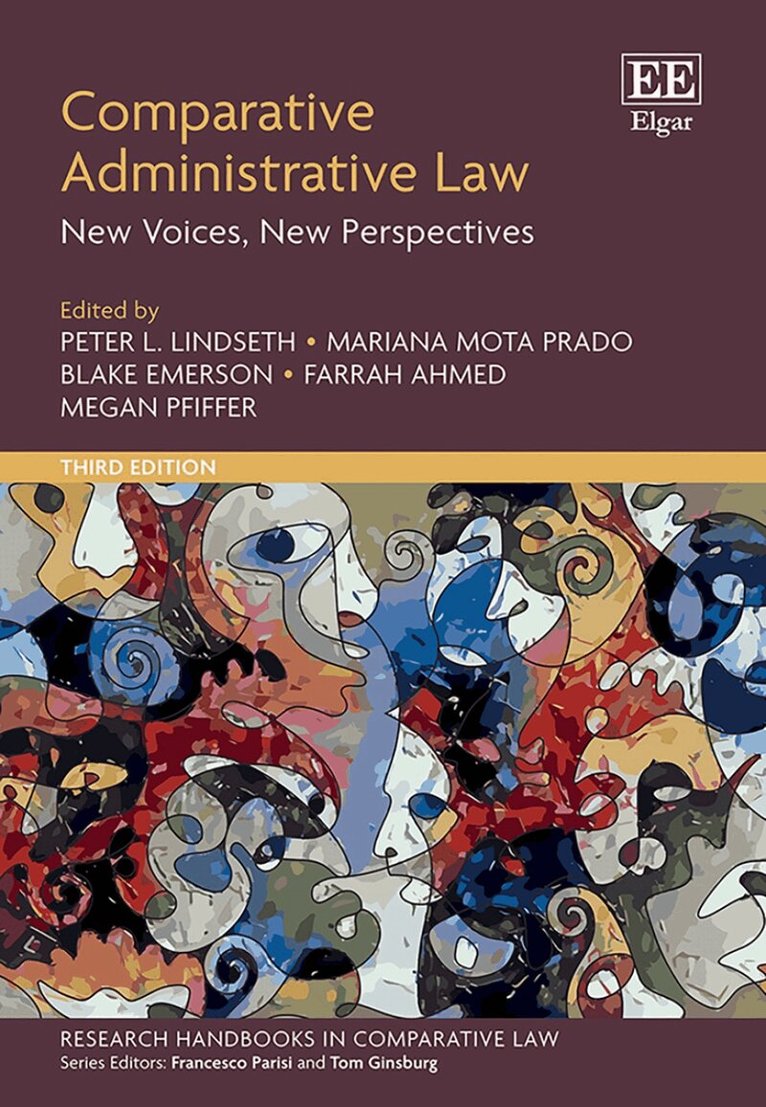
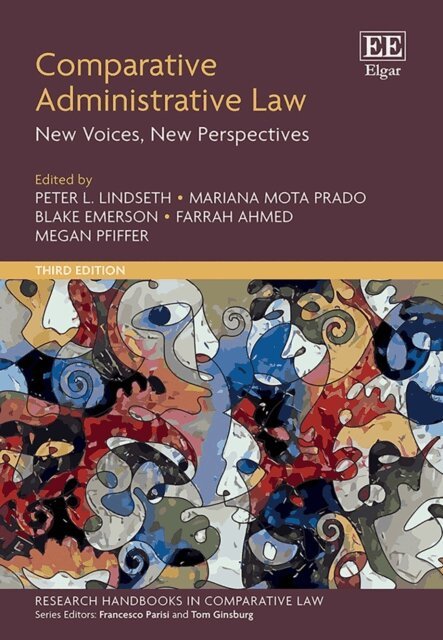
This thoroughly revised third edition of Comparative Administrative Law builds on the legacy of the first two editions, providing a redefined and reinvigorated analysis of pressing issues through original chapters, a renewed group of contributors and a broader geographic scope, with particular emphasis on the Global South.Leading scholars offer novel perspectives, investigating the intersecting differences between common law and civil law, including cultural traditions and political systems. Most chapters provide comparative analyses of administrative law across at least two legal orders, while others explore comparative law themes and issues within a single jurisdiction. The result of this combination is a rich and detailed description of legal doctrines, institutional arrangements and practices across multiple jurisdictions. Furthermore, key topics such as the plural legacies of decolonization in administrative law, the relationship of administrative law to constitutional politics, and the challenge of legality in administrative governance beyond the state are also covered.Scholars and students of comparative public law, international economic law, as well as law and development will benefit from this book’s insights. It is also a valuable resource for judges, lawyers, policymakers, regional integration bodies, and NGOs interested in comparative and legal perspectives on regulation, governance, and public bureaucracies.
4 170 kr
Skickas inom 7-10 vardagar
A comprehensive overview of the field of comparative administrative law that builds on the first edition with many new and revised chapters, additional topics and extended geographical coverage. This research handbook s broad, multi-method approach combines history and social science with more strictly legal analyses. This new edition demonstrates the growth and dynamism of recent efforts - spearheaded by the first edition - to stimulate comparative research in administrative law and public law more generally, reaching across different countries and scholarly disciplines.A particular focus is on administrative independence with its manifold implications for separation of powers, democratic self-government, and the boundary between law, politics, and policy. Several chapters highlight the tensions between impartial expertise and public accountability; others consider administrative litigation and the role of the courts in reviewing both individual decisions and secondary norms. The book concludes by asking how administrative law is shaping and is being shaped by the changing boundaries of the state, especially shifting boundaries between the public and the private, and the national and the supranational domains.This extensive and interdisciplinary appraisal of the field will be a vital resource for scholars and students of administrative and comparative law worldwide, and for public officials and representatives of interest groups engaged with government policy implementation and regulation. Contributors: B. Ackerman, A. Alemanno, M. Asimow, J.-B. Auby, D. Barek-Erez, J. Barnes, P. Cane, P. Craig, D. Custos, M. D'Alberti, L.A. Dickinson, C. Donnelly, Y. Dotan, B. Emerson, T. Ginsburg, D. Halberstam, H.C.H. Hofmann, G.B. Hola, C.-Y. Huang, N. Kadomatsu, K. Kovács, P. Lindseth, M.E. Magill, J. Mashaw, J. Massot, J. Mathews, J. Mendes, G. Napolitano, D.R. Ortiz, T. Perroud, M.M. Prado, A. Psygkas, V.V. Ramraj, D.R. Reiss, S. Rose-Ackerman, M. Ruffert, J. Saurer, K.L. Scheppele, J.-P. Schneider, M. Shapiro, B. Sordi, L. Sossin, P. Strauss, A.K. Thiruvengadam, A. Vosskuhle, J.B. Wiener, T. Wischmeyer, J.-r. Yeh
736 kr
Skickas inom 7-10 vardagar
A comprehensive overview of the field of comparative administrative law that builds on the first edition with many new and revised chapters, additional topics and extended geographical coverage. This research handbook s broad, multi-method approach combines history and social science with more strictly legal analyses. This new edition demonstrates the growth and dynamism of recent efforts - spearheaded by the first edition - to stimulate comparative research in administrative law and public law more generally, reaching across different countries and scholarly disciplines.A particular focus is on administrative independence with its manifold implications for separation of powers, democratic self-government, and the boundary between law, politics, and policy. Several chapters highlight the tensions between impartial expertise and public accountability; others consider administrative litigation and the role of the courts in reviewing both individual decisions and secondary norms. The book concludes by asking how administrative law is shaping and is being shaped by the changing boundaries of the state, especially shifting boundaries between the public and the private, and the national and the supranational domains.This extensive and interdisciplinary appraisal of the field will be a vital resource for scholars and students of administrative and comparative law worldwide, and for public officials and representatives of interest groups engaged with government policy implementation and regulation. Contributors: B. Ackerman, A. Alemanno, M. Asimow, J.-B. Auby, D. Barek-Erez, J. Barnes, P. Cane, P. Craig, D. Custos, M. D'Alberti, L.A. Dickinson, C. Donnelly, Y. Dotan, B. Emerson, T. Ginsburg, D. Halberstam, H.C.H. Hofmann, G.B. Hola, C.-Y. Huang, N. Kadomatsu, K. Kovács, P. Lindseth, M.E. Magill, J. Mashaw, J. Massot, J. Mathews, J. Mendes, G. Napolitano, D.R. Ortiz, T. Perroud, M.M. Prado, A. Psygkas, V.V. Ramraj, D.R. Reiss, S. Rose-Ackerman, M. Ruffert, J. Saurer, K.L. Scheppele, J.-P. Schneider, M. Shapiro, B. Sordi, L. Sossin, P. Strauss, A.K. Thiruvengadam, A. Vosskuhle, J.B. Wiener, T. Wischmeyer, J.-r. Yeh
2 252 kr
Skickas inom 7-10 vardagar
The transformative impacts of digitalization on society are visible both within nation states and across borders. Information and communication technologies are typically considered beneficial for democracy. Nevertheless, this book explores the challenges that technology brings to democracy, and in so doing advances our understanding of this crucial digital, social and political phenomenon. It contributes to the broader discussion of the relationship between international, national and sub-national norms, institutions and actors in an increasingly connected world. Insightful and current, this book offers a wide variety of perspectives in an area where there is still not yet an extensive body of research. It considers, for example: the extent to which new forms of digital political engagement change traditional democratic decision-making; how receptive national governments and authorities are to digital democratic movements; how governments can uphold the values of democratic society while also ensuring flexibility with regard to the private sector; and how we should judge these developments in light of the cross-border effects of digitalization. Understanding the influence of digitalization on democracy is crucial. As such, this book will appeal to a broad audience including, but not limited to, social scientists, policy makers, legal researchers, NGOs, governments, students and lawyers.Contributors include: M. Adams, A. Banerjee, E. Bayamlioglu, C.L. Blake, J. Cudmore, C. Cuijpers, A. Dumas, C.R. Farina, M.-J. Garot, T. Gylfason, H.L. Kong, E.A. Lazzari, P.L. Lindseth, N. Luka, A. Meuwese, L.F.M. Moncau, C. Nam, M. Newhart, U. Pagallo, I. Pernice, C. Prins, R. Radu, M.S.G. Rosina, R. Weill, K. van Aeken, B. Zhao, N. Zingales
3 688 kr
Skickas inom 7-10 vardagar
A comprehensive overview of the field of comparative administrative law, the specially commissioned papers in this landmark volume represent a broad, multi-method approach combining history and social science perspectives with more strictly legal analyses. Comparisons of the United States, continental Europe, and the British Commonwealth are complemented by contributions that focus on Latin America, Africa, and Asia. The work aims to stimulate comparative research on public law, reaching across countries and scholarly disciplines. Beginning with historical reflections on the emergence of administrative law over the last two centuries, the volume then turns to the relationship of administrative and constitutional law, with an additional section focusing on the key issue of administrative independence. Two further sections highlight the possible tensions between impartial expertise and public accountability, drawing insights from economics and political science as well as law. The final section considers the changing boundaries of the administrative state - both the public-private distinction and the links between domestic and transnational regulatory bodies such as the European Union. In covering this broad range of topics, the book illuminates a core concern of administrative law: the way individuals and organizations across different systems test and challenge the legitimacy of the modern state. This extensive, interdisciplinary appraisal of the field will prove a vital resource for scholars and students of administrative and comparative law. Historians of the state looking for a broad overview of a key area of public law, reformers in emerging economies, donor agencies looking for governance options, and policy analysts with an interest in the law/policy interface will also find this work a valuable addition to their library.
670 kr
Skickas inom 7-10 vardagar
A comprehensive overview of the field of comparative administrative law, the specially commissioned papers in this landmark volume represent a broad, multi-method approach combining history and social science perspectives with more strictly legal analyses. Comparisons of the United States, continental Europe, and the British Commonwealth are complemented by contributions that focus on Latin America, Africa, and Asia. The work aims to stimulate comparative research on public law, reaching across countries and scholarly disciplines. Beginning with historical reflections on the emergence of administrative law over the last two centuries, the volume then turns to the relationship of administrative and constitutional law, with an additional section focusing on the key issue of administrative independence. Two further sections highlight the possible tensions between impartial expertise and public accountability, drawing insights from economics and political science as well as law. The final section considers the changing boundaries of the administrative state - both the public-private distinction and the links between domestic and transnational regulatory bodies such as the European Union. In covering this broad range of topics, the book illuminates a core concern of administrative law: the way individuals and organizations across different systems test and challenge the legitimacy of the modern state. This extensive, interdisciplinary appraisal of the field will prove a vital resource for scholars and students of administrative and comparative law. Historians of the state looking for a broad overview of a key area of public law, reformers in emerging economies, donor agencies looking for governance options, and policy analysts with an interest in the law/policy interface will also find this work a valuable addition to their library.