Peter M. Whiteley - Böcker
Visar alla böcker från författaren Peter M. Whiteley. Handla med fri frakt och snabb leverans.
3 produkter
3 produkter
457 kr
Kommande
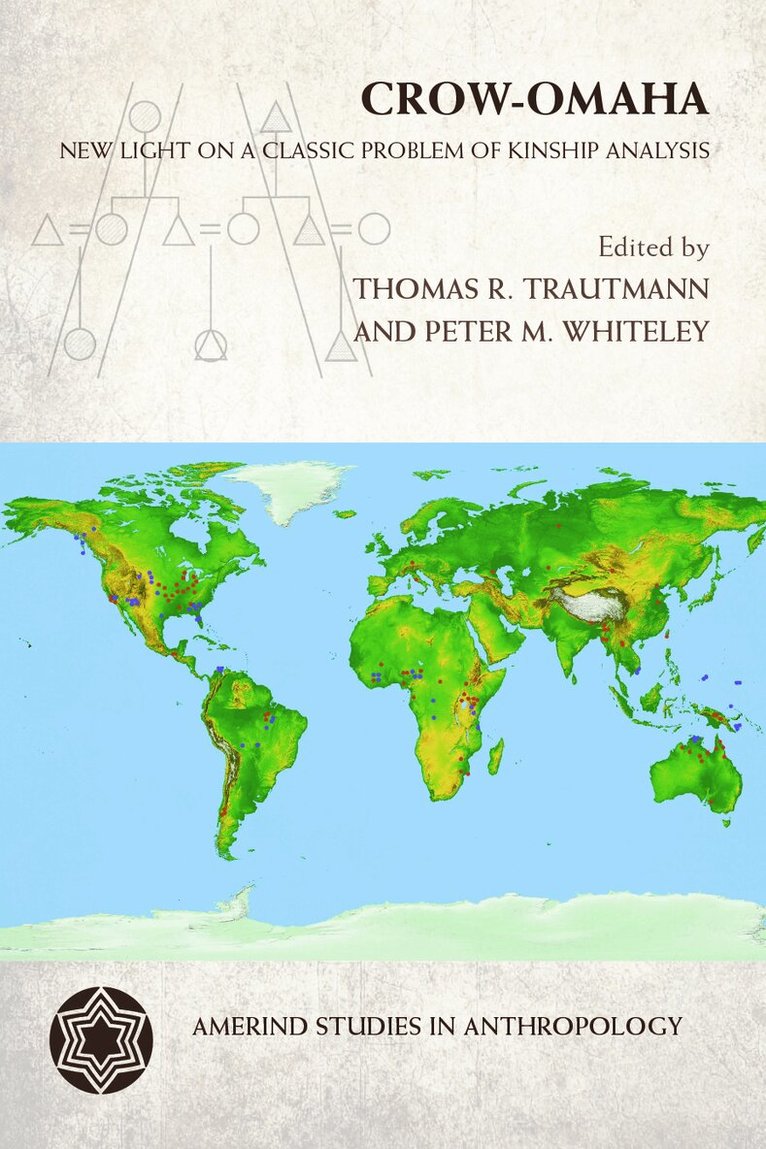
The “Crow-Omaha problem” has perplexed anthropologists since it was first described by Lewis Henry Morgan in 1871. During his worldwide survey of kinship systems, Morgan learned with astonishment that some Native American societies call some relatives of different generations by the same terms. Why? Intergenerational “skewing” in what came to be named “Crow” and “Omaha” systems has provoked a wealth of anthropological arguments, from Rivers to Radcliffe-Brown, from Lowie to LÉvi-Strauss, and many more. Crow-Omaha systems, it turns out, are both uncommon and yet found distributed around the world. For anthropologists, cracking the Crow-Omaha problem is critical to understanding how social systems transform from one type into another, both historically in particular settings and evolutionarily in the broader sweep of human relations. This volume examines the Crow-Omaha problem from a variety of perspectives—historical, linguistic, formalist, structuralist, culturalist, evolutionary, and phylogenetic. It focuses on the regions where Crow-Omaha systems occur: Native North America, Amazonia, West Africa, Northeast and East Africa, aboriginal Australia, northeast India, and the Tibeto-Burman area. The international roster of authors includes leading experts in their fields. The book offers a state-of-the-art assessment of Crow-Omaha kinship and carries forward the work of the landmark volume Transformations of Kinship, published in 1998. Intended for students and scholars alike, it is composed of brief, accessible chapters that respect the complexity of the ideas while presenting them clearly. The work serves as both a new benchmark in the explanation of kinship systems and an introduction to kinship studies for a new generation of students. Series Note: Formerly titled Amerind Studies in Archaeology, this series has recently been expanded and retitled Amerind Studies in Anthropology to incorporate a high quality and number of anthropology titles coming in to the series in addition to those in archaeology.
Peregrine Ethnography
Reinterpreting Francisco Garcés's Diary of Native Arizona and the Californias, 1775–1776
Inbunden, Engelska, 2026
1 156 kr
Kommande
In 1775–1776, Francisco Garcés, O.F.M., undertook a remarkable three-thousand-kilometer journey through modern Arizona and the Californias. As a participant in a side-branch of Juan Bautista de Anza's colonizing expedition to San Francisco, Garcés recorded a diary that provides a fascinating glimpse of Native peoples, several who had minimal or no prior contact with the Spanish empire. Garcés described customs, detailed alliances and enmities, and offered recommendations, both missionary and military. When he reached Hopi from the west (the first European to do so), Garcés completed a route between Monterey and Santa Fe, in effect completing a road across North America a generation before Lewis and Clark. The Hopi leaders, who clearly understood the implications, expelled him, declaring their independence on July 4, 1776.Garcés's diary remains vital for the Indigenous history of western North America. Yet the standard translation is flawed, not least owing to the state of ethnographic knowledge when it was made (1900), resulting in more than a century of reiterated misinterpretations of Indigenous history by anthropologists and historians. Peter M. Whiteley identifies the ur-version of Garcés's diary—a previously unknown copy written up by Pedro Font—and offers a new translation focusing on ethnographic significance in geographic context. Presenting also the Spanish text, Whiteley engages directly with Garcés's account and provides readers with new interpretation and context.Garcés was a genuine ethnographer and his accounts of Hopi, River Yumans, Takic, Yokuts, Numic, and Pai peoples, contain unparalleled and foundational insights.
427 kr
Skickas inom 7-10 vardagar
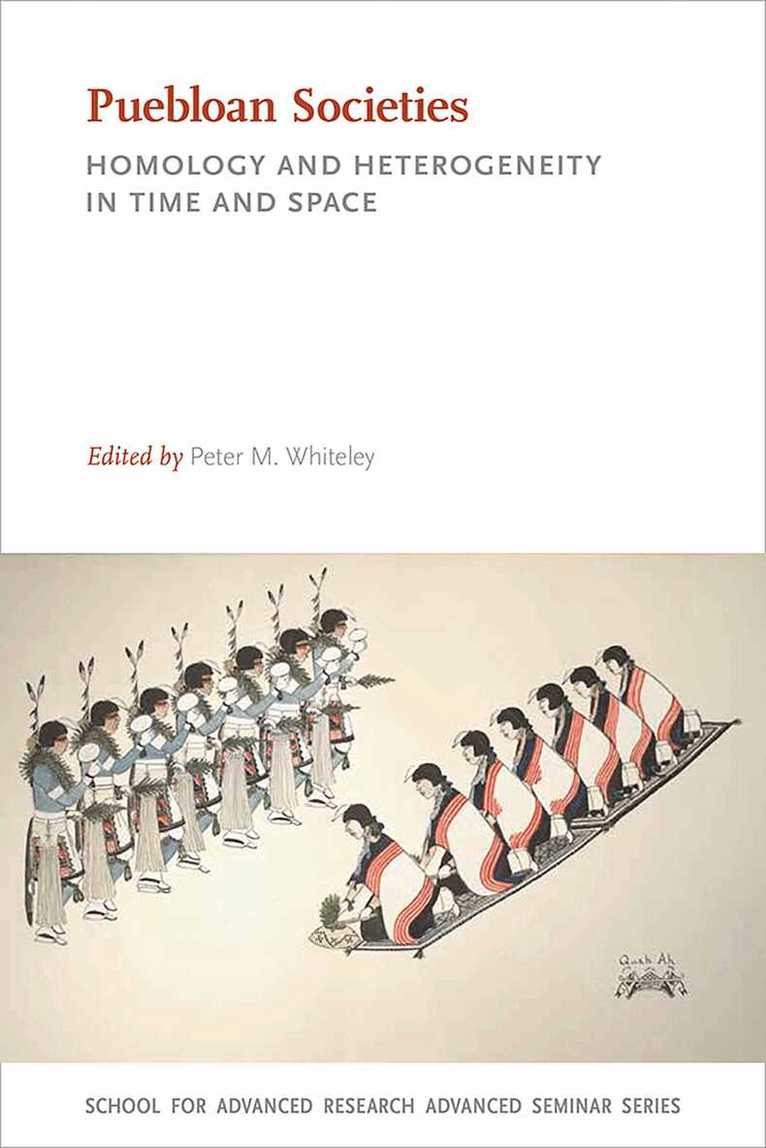
Puebloan sociocultural formations of the past and present are the subject of the essays collected here. The contributors draw upon the insights of archaeology, ethnology, and linguistic anthropology to examine social history and practice, including kinship groups, ritual sodalities, architectural forms, economic exchange, environmental adaptation, and political order, as well as their patterns of transmission over time and space. The result is a window onto how major Puebloan societies came to be and how they have changed over time.As an interdisciplinary conjunction, Puebloan Societies demonstrates the value of reengagement among anthropological subfields too often isolated from one another. The volume is an analytical whole greater than the sum of its parts: a new synthesis in this fascinating region of human cultural history.