Peter S. Soppelsa – författare
Visar alla böcker från författaren Peter S. Soppelsa. Handla med fri frakt och snabb leverans.
4 produkter
4 produkter
Inbunden, Engelska, 2026
1 677 kr
Skickas inom 5-8 vardagar
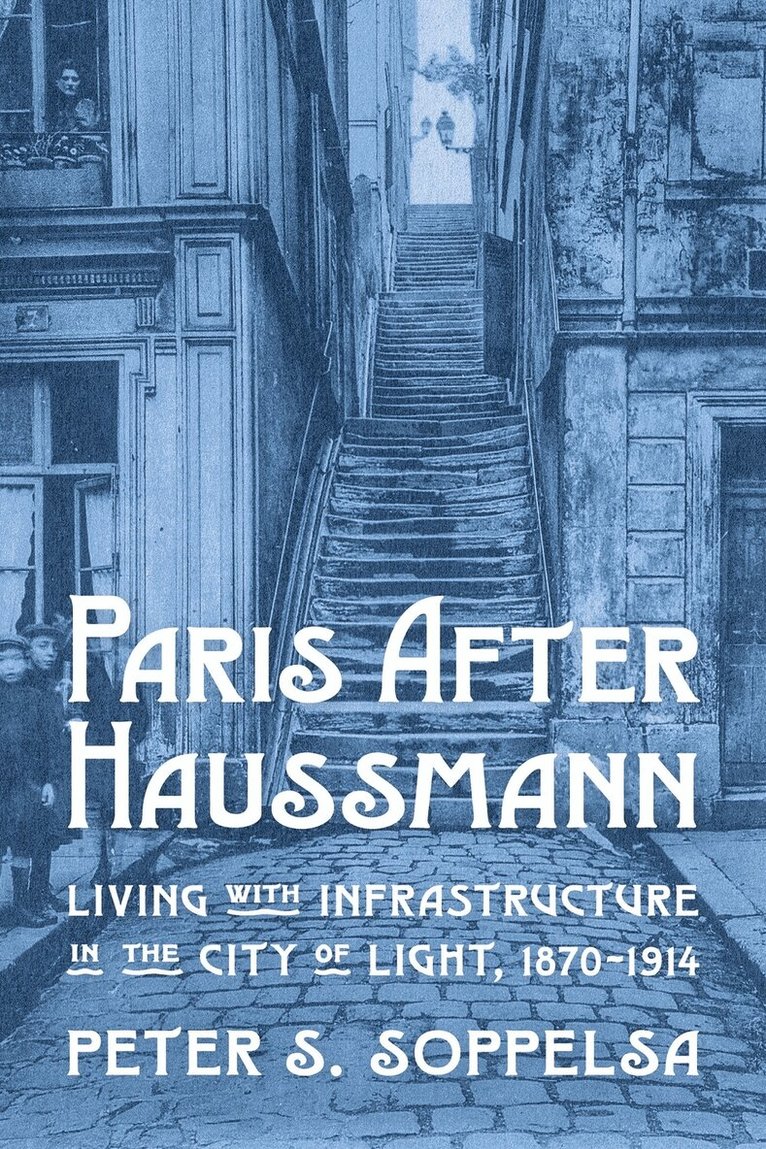
Modern Paris is often hailed as a capital of urban infrastructure. Baron Georges-Eugène Haussmann’s rebuilding of Paris in 1853–1870, branded “Haussmannization,” helped define urban modernity for cities worldwide. But even as infrastructures expanded and modernized, some Parisians were left behind: as late as 1928, 18 percent of houses still lacked direct sewerage. Haussmannization often hid infrastructures behind walls and floors, under streets, or in peripheral districts. In the forty years after 1870, a period that Peter Soppelsa calls “secondary Haussmannization,” Parisians inverted them—revealed their hidden components to scrutinize their workings and costs for society, environment, and health—and in turn politicized them. Drawing on French government archives, engineers’ maps, the illustrated press, and a collection of over 100 photographic postcards, Soppelsa charts the diverse embodied, emotional, and everyday experiences of living with expanding urban infrastructures—streets, housing, tramways, subways, the water supply, sewers, and rivers—in Paris from 1870 to 1914. Parisians learned that infrastructures were not simply technical solutions for the social and environmental problems of city life but could also bring about new dangers and dependencies.
Häftad, Engelska, 2026
504 kr
Skickas inom 5-8 vardagar
Modern Paris is often hailed as a capital of urban infrastructure. Baron Georges-Eugène Haussmann’s rebuilding of Paris in 1853–1870, branded “Haussmannization,” helped define urban modernity for cities worldwide. But even as infrastructures expanded and modernized, some Parisians were left behind: as late as 1928, 18 percent of houses still lacked direct sewerage. Haussmannization often hid infrastructures behind walls and floors, under streets, or in peripheral districts. In the forty years after 1870, a period that Peter Soppelsa calls “secondary Haussmannization,” Parisians inverted them—revealed their hidden components to scrutinize their workings and costs for society, environment, and health—and in turn politicized them. Drawing on French government archives, engineers’ maps, the illustrated press, and a collection of over 100 photographic postcards, Soppelsa charts the diverse embodied, emotional, and everyday experiences of living with expanding urban infrastructures—streets, housing, tramways, subways, the water supply, sewers, and rivers—in Paris from 1870 to 1914. Parisians learned that infrastructures were not simply technical solutions for the social and environmental problems of city life but could also bring about new dangers and dependencies.
11 629 kr
Skickas inom 5-8 vardagar
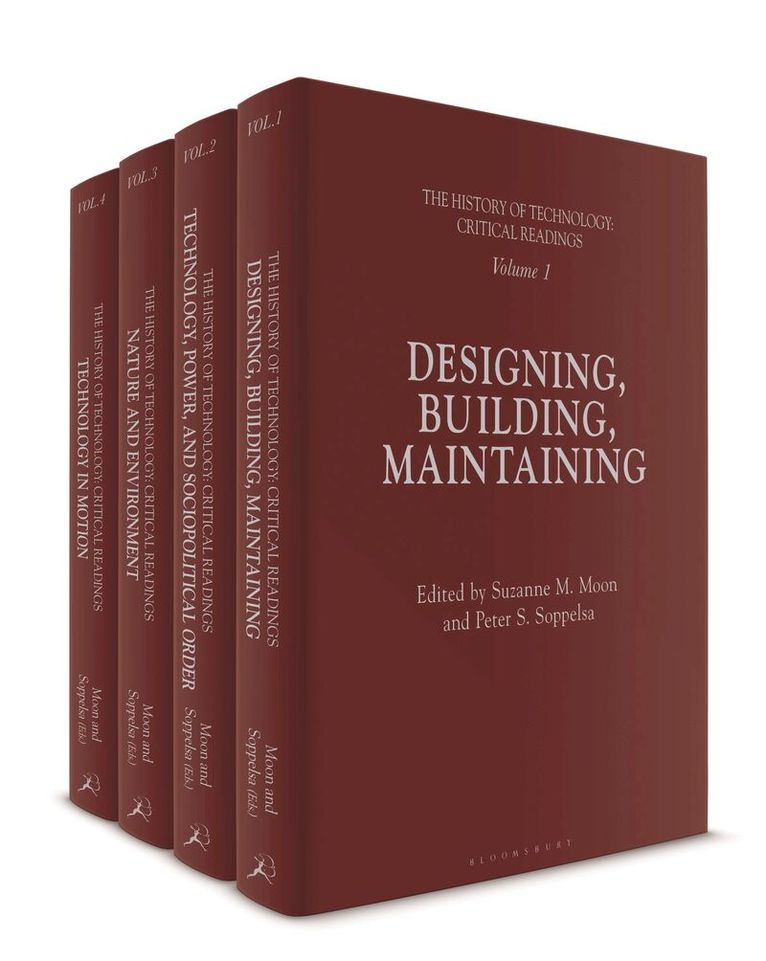
This four-volume reference set provides a comprehensive exploration of key themes in the history of technology.Drawing on material from the mid-1970s to the present day that examines diverse cultures and time periods, Suzanne M. Moon and Peter S. Soppelsa enable interested readers to explore key thematic divisions that structure research in the field and read influential works that bring the major concerns, methods, and insights of the history of technology to life. With 50 seminal articles included across the set as a whole, the volumes are broken down into four crucial thematic areas: Building, Creating, Designing, Maintaining; Technology, Power, and Sociopolitical Order; Technology, Nature and Environment; and Circulations and Connections. Four set-wide themes are then used to tie the collection together: technology and the body; technology’s relationship with science, globalization, information, and media; and cultures of technology – with critical editor introductions providing invaluable context for each volume.The History of Technology: Critical Readings is a vital resource for the study of the history of technology.
Häftad, Engelska, 2025
148 kr
Skickas
Topics cover the ways in which French and Francophone histories shape various themes, including transnational scientific exchange; technology and debates about modernity; gender in conceptions of mind, body, and disease; and the intersections of science and empire.Contributors. Margaret Carlyle, Zohar Sapir Dvir, Volny Fages, JÉrÔme Lamy, Florian Mathieu, April Shelford, Peter S. Soppelsa, Louise Thiroux, Yotam Tsal, Elizabeth Della Zazzera