Peter S. Ungar – författare
Visar alla böcker från författaren Peter S. Ungar. Handla med fri frakt och snabb leverans.
10 produkter
Evolution of the Human Diet
The Known, the Unknown, and the Unknowable
E-bok, 2006
1020 kr
Lägg i varukorg
We are interested in the evolution of hominin diets for several reasons. One is the fundamental concern over our present-day eating habits and the consequences of our societal choices, such as obesity prevalent in some cultures and starvation in others. Another is that humans have learned to feed …
Teeth
A Very Short Introduction
E-bok, 2014
95 kr
Lägg i varukorg
Teeth are amazing - the product of half a billion years of evolution. They provide fuel for the body by breaking apart other living things; and they must do it again and again over a lifetime without themselves being broken in the process. This means that plants and animals have developed tough or …
Teeth
A Very Short Introduction
E-bok, 2014
93 kr
Lägg i varukorg
Teeth are amazing - the product of half a billion years of evolution. They provide fuel for the body by breaking apart other living things; and they must do it again and again over a lifetime without themselves being broken in the process. This means that plants and animals have developed tough or …
Evolution of the Human Diet
The Known, the Unknown, and the Unknowable
Häftad, 2006
1066 kr
Lägg i varukorg
We are interested in the evolution of hominin diets for several reasons. One is the fundamental concern over our present-day eating habits and the consequences of our societal choices, such as obesity prevalent in some cultures and starvation in others. Another is that humans have learned to feed …
Evolution of the Human Diet
The Known, the Unknown, and the Unknowable
E-bok, 2006
906 kr
Lägg i varukorg
We are interested in the evolution of hominin diets for several reasons. One is the fundamental concern over our present-day eating habits and the consequences of our societal choices, such as obesity prevalent in some cultures and starvation in others. Another is that humans have learned to feed …
Teeth
A Very Short Introduction
Häftad, 2014
116 kr
Lägg i varukorg
Teeth are amazing - the product of half a billion years of evolution. They provide fuel for the body by breaking apart other living things; and they must do it again and again over a lifetime without themselves being broken in the process. This means that plants and animals have developed tough or …
Human Diet
its Origin and Evolution
Av Peter S. Ungar, Mark F. Teaford
E-bok, 2002
1284 kr
Lägg i varukorg
Diet is key to understanding the past, present, and future of our species. Much of human evolutionary success can be attributed to our ability to consume a wide range of foods. On the other hand, recent changes in the types of foods we eat may lie at the root of many of the health problems we face …
Mammal Teeth
Origin, Evolution, and Diversity
Inbunden, 2010
1244 kr
Lägg i varukorg
In this unique book, Peter S. Ungar tells the story of mammalian teeth from their origin through their evolution to their current diversity. Mammal Teeth traces the evolutionary history of teeth, beginning with the very first mineralized vertebrate structures half a billion years ago. Ungar …
Human Diet
Its Origin and Evolution
Av Peter S. Ungar, Mark F. Teaford m. fl.
Inbunden, 2002
1170 kr
Lägg i varukorg
Diet is key to understanding the past, present, and future of our species. Much of human evolutionary success can be attributed to our ability to consume a wide range of foods. On the other hand, recent changes in the types of foods we eat may lie at the root of many of the health problems we face …
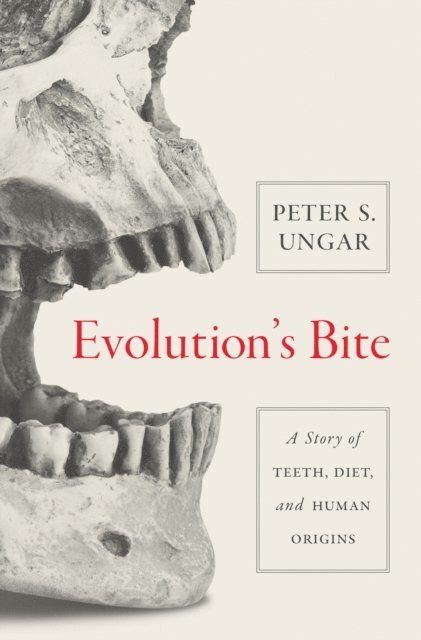
Evolution's Bite
A Story of Teeth, Diet, and Human Origins
E-bok, 2017
324 kr
Lägg i varukorg
What teeth can teach us about the evolution of the human species Whether we realize it or not, we carry in our mouths the legacy of our evolution. Our teeth are like living fossils that can be studied and compared to those of our ancestors to teach us how we became human. In Evolution''s Bite , …