Peter Sabo - Böcker
Visar alla böcker från författaren Peter Sabo. Handla med fri frakt och snabb leverans.
3 produkter
3 produkter
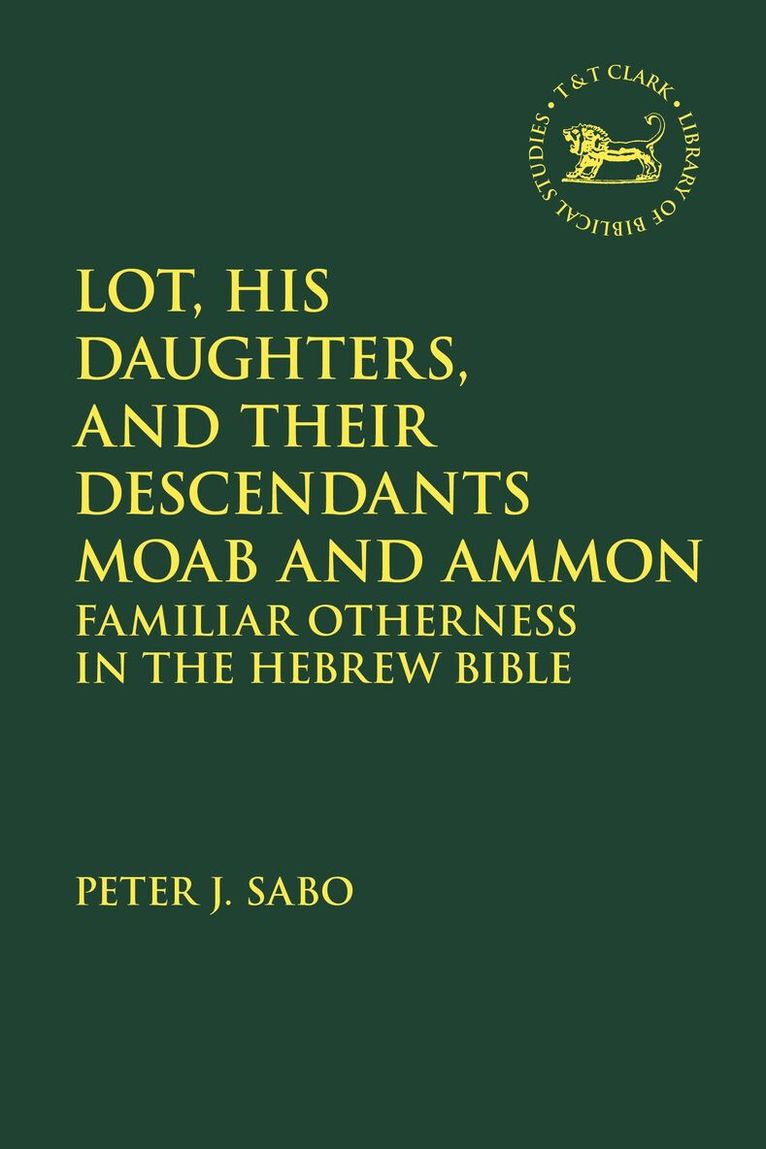
Lot, His Daughters, and Their Descendants Moab and Ammon
Familiar Otherness in the Hebrew Bible
Inbunden, Engelska, 2026
1 406 kr
Kommande
Peter J. Sabo explores the multifaceted biblical portrayal of Moab and Ammon, from their incestuous origins as the descendants of Lot and his daughters to the prohibitions of exogamy against them, to the marriage of Ruth and Boaz. Sabo demonstrates that Lot’s kinship with, yet separation from, Abraham functions as a paradigm of the relationship between the descendants of Lot and Abraham in the Hebrew Bible, thereby revealing a complex network of intertextual connections that play off each other. Furthermore, he analyzes the gendered dimensions of this relationship in which these Transjordanian neighbors are imagined as sexually deviant—subverting, threatening, but also establishing the patriarchal norms of ancient Israel.Beginning with a close reading of Lot's story in Genesis, Sabo focuses on how Moab and Ammon act as a foil to Israel in its desert wanderings, and explores how Moabite women subvert patriarchal gender roles and present a threat to Israelite identity, even as they are used to affirm it as well. Highlighting the supposedly tenuous connection of Rahab's aid of Israel, Sabo analyses how both the Lot and Rahab stories play with issues of insider-outsider relations, and further assess the archetypes of Moab and Ammon's descendants in Judges, Samuel and Kings; from Ehud the Benjaminite and Jephthah the Gileadite and his daughter to Nahash the Ammonite and Mesha the Moabite. Culminating in Ruth, a foreigner-kinswoman and a character who combines the identities of Israelite and Moabite and marries Boaz, Sabo argues that this intermingling of incest and exogamy relates to the complicated navigating of territorial boundaries, proper sexual behaviour, and kinship relations that are consistently present in biblical stories of Lot, his daughters, and their descendants.
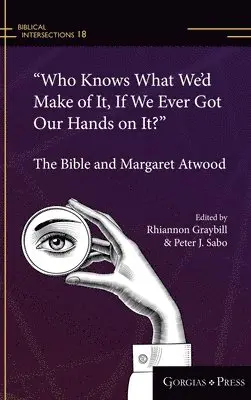
“Who Knows What We’d Make of It, If We Ever Got Our Hands on It?”
The Bible and Margaret Atwood
Inbunden, Engelska, 2020
2 297 kr
Skickas inom 5-8 vardagar
In the nightstands of hotel rooms, kept under lock and key, in the poetry of a pre-apocalyptic environmental cult, and quoted by children, atheists, and murderers alike - the Bible is omnipresent in the work of Margaret Atwood. The Bible is found not only in her novels but also in her poetry, short stories, and non-fiction work. “Who Knows What We’d Make of It, If We Ever Got Our Hands on It?” assembles cutting edge literary and critical readings of Margaret Atwood and the Bible.
"Who Knows What We'd Make of It, If We Ever Got Our Hands on It?"
The Bible and Margaret Atwood
Häftad, Engelska, 2020
959 kr
Skickas inom 5-8 vardagar
In the nightstands of hotel rooms, kept under lock and key, in the poetry of a pre-apocalyptic environmental cult, and quoted by children, atheists, and murderers alike - the Bible is omnipresent in the work of Margaret Atwood. The Bible is found not only in her novels but also in her poetry, short stories, and non-fiction work. "Who Knows What We'd Make of It, If We Ever Got Our Hands on It?” assembles cutting edge literary and critical readings of Margaret Atwood and the Bible. In the nightstands of hotel rooms, kept under lock and key, in the poetry of a pre-apocalyptic environmental cult, and quoted by children, atheists, and murderers alike—the Bible is omnipresent in the work of Margaret Atwood. This volume, the first of its kind, assembles cutting-edge literary and critical readings of Atwood and the Bible. The essays span the breadth of Atwood’s work, including The Handmaid’s Tale, Alias Grace, the MaddAddam trilogy (Oryx and Crake, The Year of the Flood, and MaddAddam), poetry, essays, and more. Taking as a model Atwood’s own playful dialogues with the Bible, the contributors employ a variety of theoretical approaches (feminist, deconstructionist, animal theory, affect theory, and so on) to explore both the ancient and modern corpus of texts in dialogue with each other. In The Handmaid’s Tale, the Bible is famously used as a text that structures an entire society—though for precisely this reason it is a dangerous text that must be controlled by the elite, kept out of the hands of those who may turn it into an “incendiary device.” This volume explores what happens when Atwood, and we as readers, take the Bible into our own hands.