Petri Uusikyla – författare
1 848 kr
Läs direkt efter köp
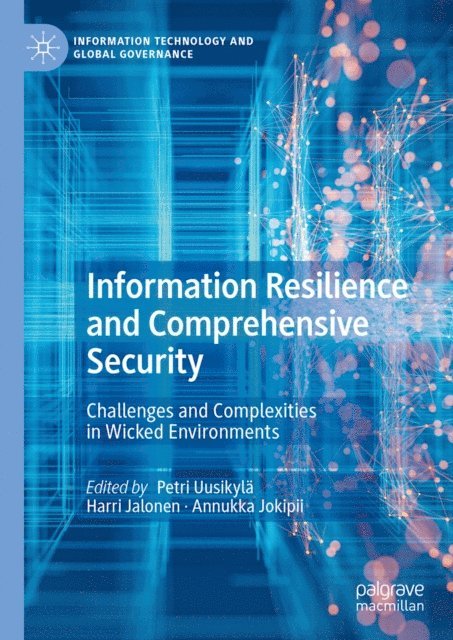
Changes in the global environment, the complexity of decision-making, and the new role of social media have challenged the operating models and practices of traditional crisis preparedness and security of supply. In a knowledge society context, securing the continuous flow of information and communication on different platforms is a huge challenge, and the role of information resilience is more crucial than ever. Bringing together leading specialists from many fields on information resilience, this book examines how to ensure the undisturbed flow of information, the functionality of information and communications networks, and reliable and secure information content in all circumstances, both from an individual and societal viewpoint. The book address issues around information resilience from the standpoint of management, national security, misinformation, social media, and commercial actors. It will appeal to scholars and students of public policy, disaster management, security studies and governance, as well as practitioners.
Chapter 1 is licensed under the terms of the Creative Commons Attribution 4.0 International License (http://creativecommons.org/licenses/by/4.0/). For further details see license information in the chapter
1 722 kr
Läs direkt efter köp
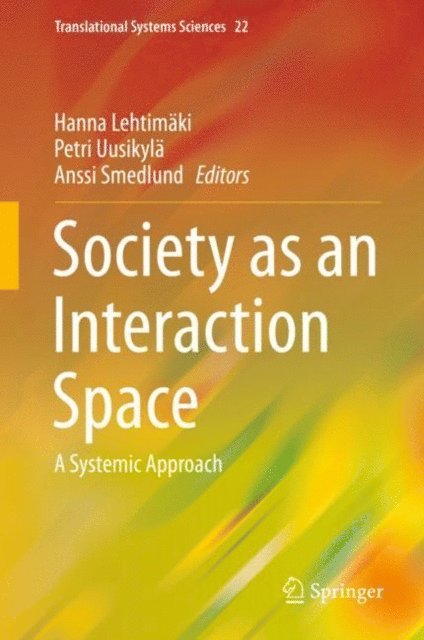
As digitalization and social media are increasingly blurring the boundaries between traditional societal, political, and economic institutions, this book provides a cross-disciplinary examination of value co-creation. From various standpoints, it examines how institutions contribute to service ecosystems and how digitalization is transforming value co-creation in these ecosystems. Further, the book shares new perspectives on relational dynamics among government, companies, and citizens. These insights fill the gaps between service science and political science by integrating institutional logics into the concept of value co-creation.
The book subsequently examines society as an interaction space. Topics discussed include the new logic and transformation mechanisms of economic activities, citizen participation, governance, and policy-making in the face of technological innovations, market-based reforms, and the risk of disconnect between citizens and policy-making. Here the focus is on value co-creation in complex adaptive systems where institutions, individuals, and businesses negotiate value and interests in networked relations.In closing, the book presents a range of empirical case studies on value co-creation, which provide examples of active networked citizenship, innovative governance and policy-making, democratic leadership, and trust-building dialogue among institutions. The studies address the context of Nordic countries, recognized as world-leading democracies. Pursuing a systems approach, the book articulates a social reality composed of interacting and interconnected elements that cannot be captured with only micro or macro levels of analysis. Service ecosystems are considered as configurations of people and technologies embedded in institutionalized rules, cultural meanings, and practices, offering valuable insights into the service-centered view of markets and society. Given the breadth and depth of its coverage, the book offers a valuable resource for all students and scholars interested in understanding and envisioning the future democratic landscape.