Philip Gummett - Böcker
Visar alla böcker från författaren Philip Gummett. Handla med fri frakt och snabb leverans.
6 produkter
6 produkter
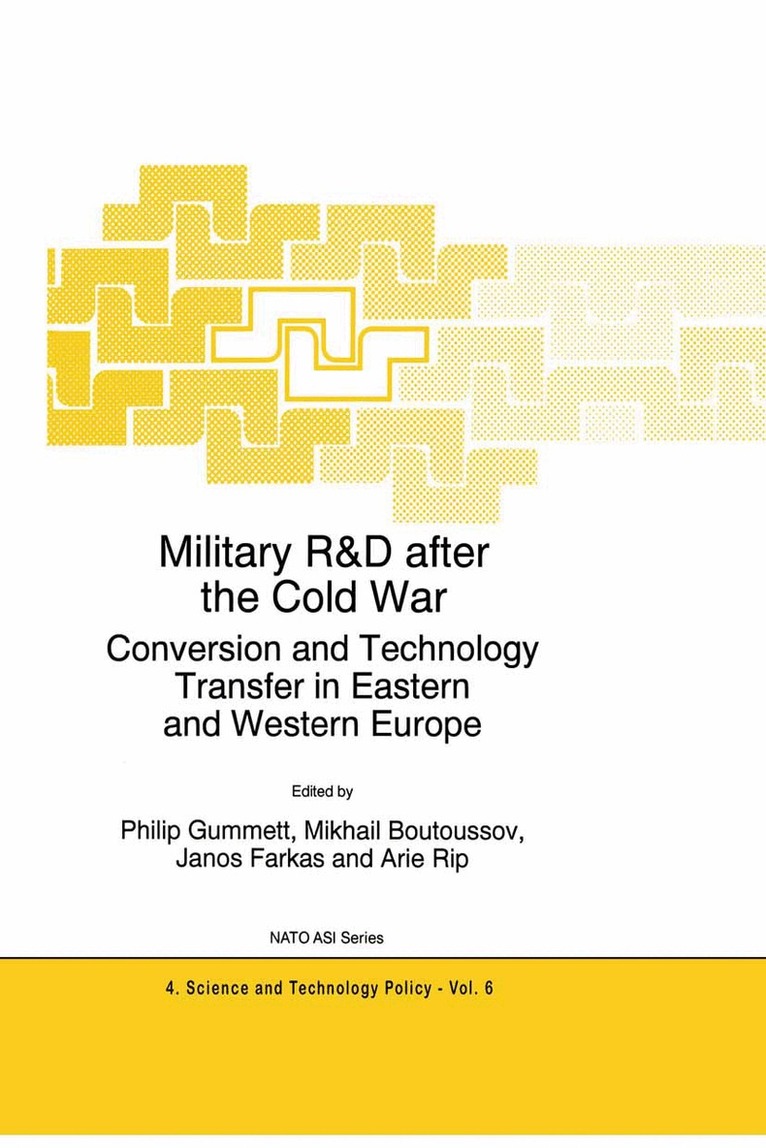
Military R&D after the Cold War
Conversion and Technology Transfer in Eastern and Western Europe
Inbunden, Engelska, 1996
1 096 kr
Skickas inom 10-15 vardagar
The particular emphasis of this text is on questions of conversion from military to civil purposes, and on the scope today for technology transfer between the traditional eastern and western sides of the Cold War. The book contains contributions from both academic analysts and practitioners with considerable experience of dealing with these issues. It therefore offers a unique combination of theoretical analysis and well founded case studies, together with important shared experiences between the very different economic circumstances found on the two sides of the old East-West divide.
346 kr
Skickas inom 10-15 vardagar
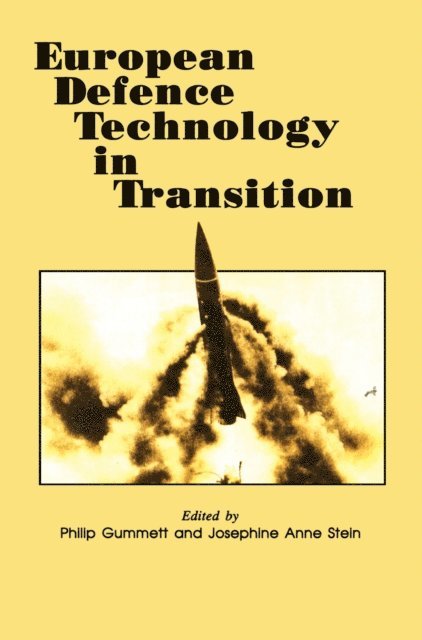
This book draws on the ten nation CREDIT (Capacity for Research on European Defence and Industrial Technology) network which was set up to tackle issue concerning defence science, technology and industrial policy, including the implications of the Cold War and a growing pan-European emphasis.By providing a comparative study of policy and practice in the countries of western Europe, the book provides vital insights into how governments and firms can begin to search for European-wide solutions to the dilemmas that face them.
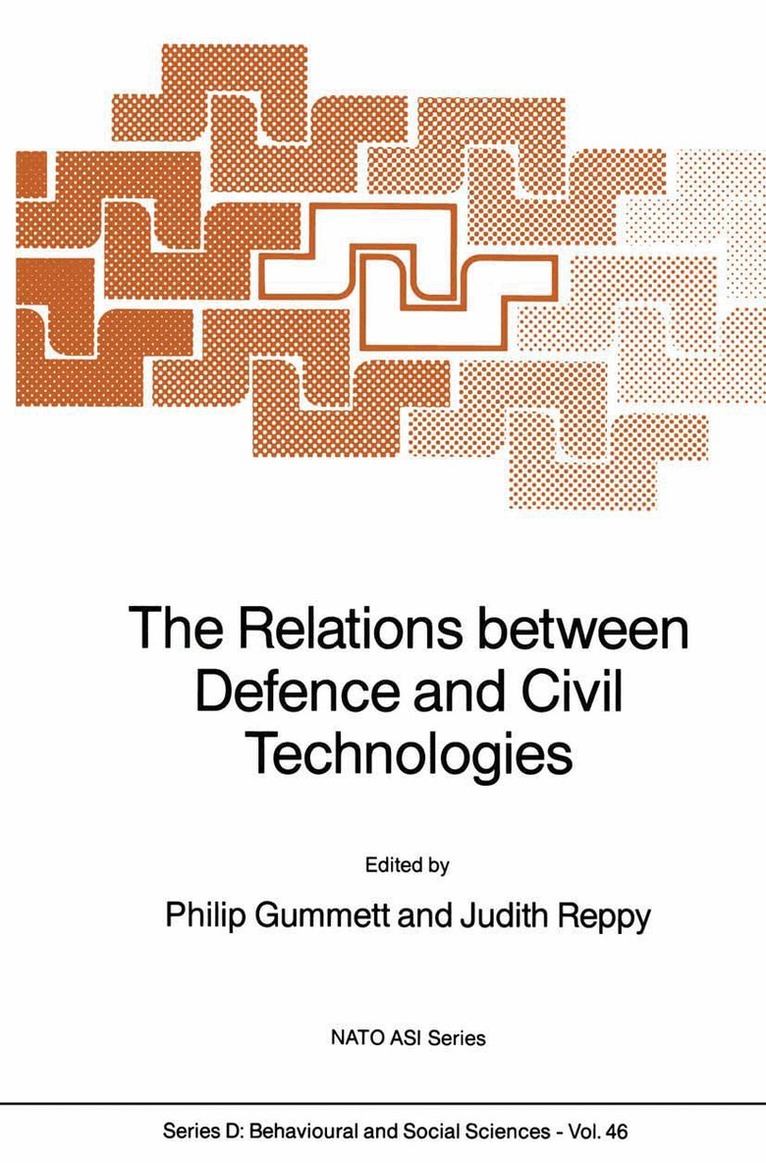
Del 46 - NATO Science Series D:
Relations between Defence and Civil Technologies
Inbunden, Engelska, 1988
2 101 kr
Skickas inom 10-15 vardagar
We thank the Leverhulme Trust for enabling assistance to be provided to the Workshop Directors, in the form of lain Bate, who himself played a major part in the success of the meeting.
2 101 kr
Skickas inom 10-15 vardagar
This book arises from a meeting held at Wiston House, Sussex, UK, in September 1987. The meeting brought together academic, governmental and industrial experts from eight countries to discuss the increasingly important sUbject of the relations between civil and defence technologies. It was primarily funded under the Advanced Research Workshops Programme of NATO's Scientific Affairs Division, and was the first science policy workshop funded by the Programme. Additional financial support came from the Leverhulme Trust. The choice of topic, of speakers and, finally, of papers to be published was entirely ours. The conclusions reached were our own and those of the partIcipants. They were not in any way guided by NATO; nor do they represent NATO policy. We speak for all the participants in offering our thanks to the NATO SCIentific Affairs Division, especially Secretary General Durand and Dr. Craig Sinclair, for rnei r- generosity and encouragement. WIthout them this book would not exist. We thank the Leverhulme Trust for enabling assistance to be provided to the Workshop Directors, in the form of lain Bate, who himself played a major part in the success of the meeting. The staff of Wiston House must also be thanked for prOViding an admirable environment for the meeting. For secretarial support prior to the meeting we thank Gill Miller and Lesley Price. Finally, we offer special thanks to Mrs. Yvonne Aspinall for converting all the papers, in whatever state they were presented, into camera-ready copy with such professionalism and gOOd humour.
549 kr
Skickas inom 10-15 vardagar
This book draws on the ten nation CREDIT (Capacity for Research on European Defence and Industrial Technology) network which was set up to tackle issue concerning defence science, technology and industrial policy, including the implications of the Cold War and a growing pan-European emphasis.By providing a comparative study of policy and practice in the countries of western Europe, the book provides vital insights into how governments and firms can begin to search for European-wide solutions to the dilemmas that face them.
Military R&D after the Cold War
Conversion and Technology Transfer in Eastern and Western Europe
Häftad, Engelska, 2011
1 064 kr
Skickas inom 10-15 vardagar
Countries establish defence industries for various reasons. Chief among these are usually a concern with national security, and a desire to be as independent as possible in the supply of the armaments which they believe they need. But defence industries are different from most other industries. Their customer is governments. Their product is intended to safeguard the most vital interests of the state. The effectiveness of these products (in the real, rather than the experimental sense) is not normally tested at the time of purchase. If, or when, it is tested, many other factors (such as the quality of political and military leadership) enter into the equation, so complicating judgments about the quality of the armaments, and about the reliability of the promises made by the manufacturers. All of these features make the defence sector an unusually political industrial sector. This has been true in both the command economies of the former Soviet Union and its satellites, and in the market or mixed economies of the west. In both cases, to speak only a little over-generally, the defence sector has been particularly privileged and particularly protected from the usual economic vicissitudes. In both cases, too, its centrality to the perceived vital interests of the state has given it an unusual degree of political access and support.