Judith Reppy – författare
Visar alla böcker från författaren Judith Reppy. Handla med fri frakt och snabb leverans.
10 produkter
10 produkter
Inbunden, Engelska, 1996
1 618 kr
Skickas inom 10-15 vardagar
Global environmental change raises profound moral issues with which society has only begun to grapple. What does fairness mean in dividing responsibilities for problems of global warming between rich and poor nations? Does the environment itself have moral standing and, if so, how should its conflicts with the interests of people who depend on the land for their livelihood be resolved? How can the interests of the poor, of indigenous peoples, and of future generations be properly accommodated in a political discourse about environmental policy which is dominated by industrialized states? This book extends the debate both within and across disciplines, engaging philosophers, geographers, political scientists, economists, sociologists, and environmental activists from four continents. The essays address the role of science in global change and argue that western science does not provide morally disinterested solutions to environmental problems. They discuss the role of state and substate actors in the international politics of the environment, and then use accounts of actual negotiations to argue for the centrality of social justice in reaching desirable and equitable agreements. They conclude that a framework for social justice under conditions of global environmental change must include community values and provide for participatory structures to arbitrate among competing interests.
Häftad, Engelska, 1996
410 kr
Skickas inom 10-15 vardagar
Global environmental change raises profound moral issues with which society has only begun to grapple. What does fairness mean in dividing responsibilities for problems of global warming between rich and poor nations? Does the environment itself have moral standing and, if so, how should its conflicts with the interests of people who depend on the land for their livelihood be resolved? How can the interests of the poor, of indigenous peoples, and of future generations be properly accommodated in a political discourse about environmental policy which is dominated by industrialized states? This book extends the debate both within and across disciplines, engaging philosophers, geographers, political scientists, economists, sociologists, and environmental activists from four continents. The essays address the role of science in global change and argue that western science does not provide morally disinterested solutions to environmental problems. They discuss the role of state and substate actors in the international politics of the environment, and then use accounts of actual negotiations to argue for the centrality of social justice in reaching desirable and equitable agreements. They conclude that a framework for social justice under conditions of global environmental change must include community values and provide for participatory structures to arbitrate among competing interests.
Inbunden, Engelska, 2011
1 541 kr
Skickas inom 5-8 vardagar
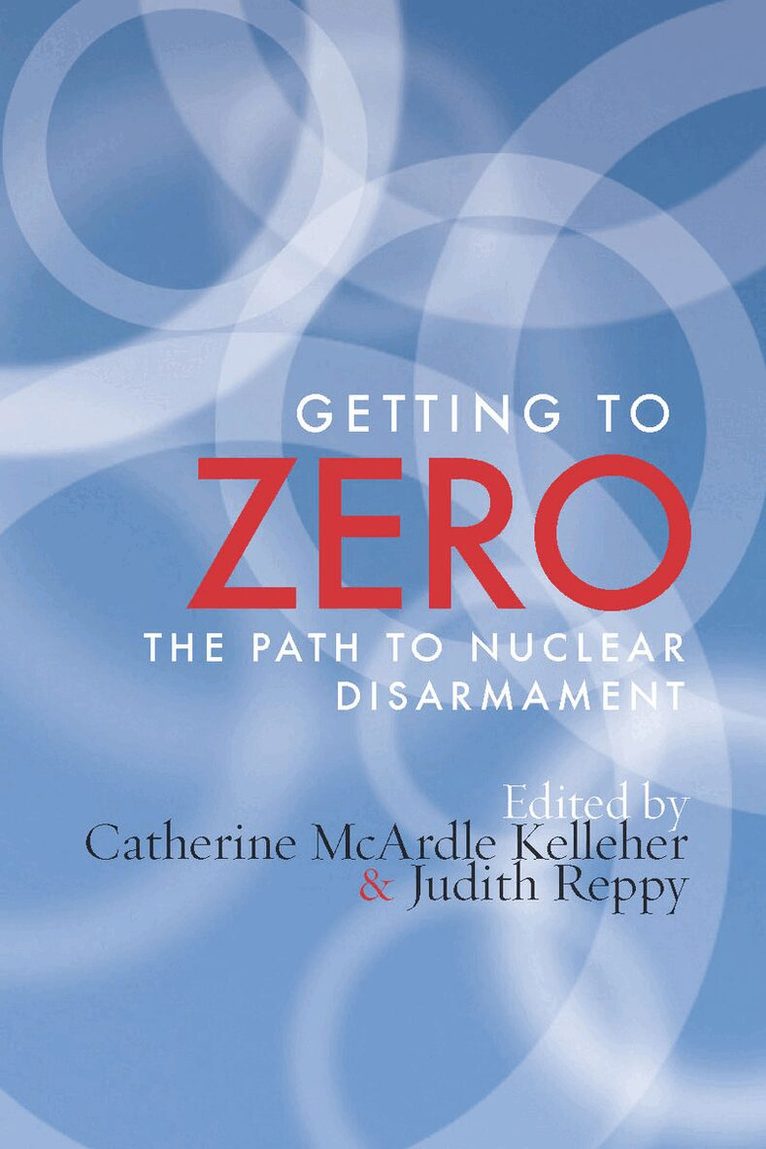
Getting to Zero takes on the much-debated goal of nuclear zero—exploring the serious policy questions raised by nuclear disarmament and suggesting practical steps for the nuclear weapon states to take to achieve it.It documents the successes and failures of six decades of attempts to control nuclear weapons proliferation and, within this context, asks the urgent questions that world leaders, politicians, NGOs, and scholars must address in the years ahead.
Häftad, Engelska, 2011
377 kr
Skickas inom 5-8 vardagar
Getting to Zero takes on the much-debated goal of nuclear zero—exploring the serious policy questions raised by nuclear disarmament and suggesting practical steps for the nuclear weapon states to take to achieve it.It documents the successes and failures of six decades of attempts to control nuclear weapons proliferation and, within this context, asks the urgent questions that world leaders, politicians, NGOs, and scholars must address in the years ahead.
E-bok
Engelska, 2011437 kr
Läs direkt efter köp
Getting to Zero takes on the much-debated goal of nuclear zero—exploring the serious policy questions raised by nuclear disarmament and suggesting practical steps for the nuclear weapon states to take to achieve it.It documents the successes and failures of six decades of attempts to control nuclear weapons proliferation and, within this context, asks the urgent questions that world leaders, politicians, NGOs, and scholars must address in the years ahead.
E-bok
PDF, Engelska, 2016902 kr
Läs direkt efter köp
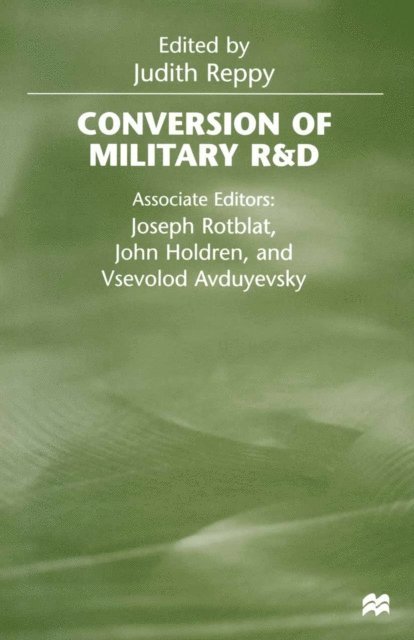
The book describes the scale, benefits and costs of military research and development. It discusses the process of converting military R&D to civilian applications, and examines specific opportunities for, and obstacles to, conversion in the USA, Russia, France, Germany, and the UK. Among a number of case studies, senior scientists from US and Russian nuclear weapons laboratories debate the futures for these massive complexes. Looking to the future, the dual military/civilian nature of technology is discussed.
E-bok
PDF, Engelska, 2013807 kr
Läs direkt efter köp
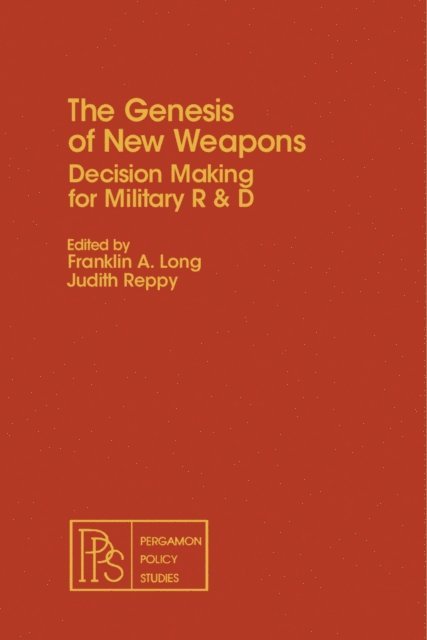
The Genesis of New Weapons: Decision Making for Military R&D covers the meeting held to convene military officers, civilian managers of R&D programs, and members of the research groups in industry and get insights from them regarding the decision-making process for initiation and carrying out of R&D programs. The book first gives an introductory overview of the decision making in the military R&D. Topics on the problems usually encountered are then examined. These problems include bureaucratic and other problems in planning and managing military, decision making, and defense. Then, the text discusses the birth of weapons and the R&D process. Finally, the book looks into the political intervention and its implications for the military R&D. The selection will be beneficial to those in the military, government offices, and related agencies or sectors.
Del 46 - NATO Science Series D:
Relations between Defence and Civil Technologies
Inbunden, Engelska, 1988
2 160 kr
Skickas inom 10-15 vardagar
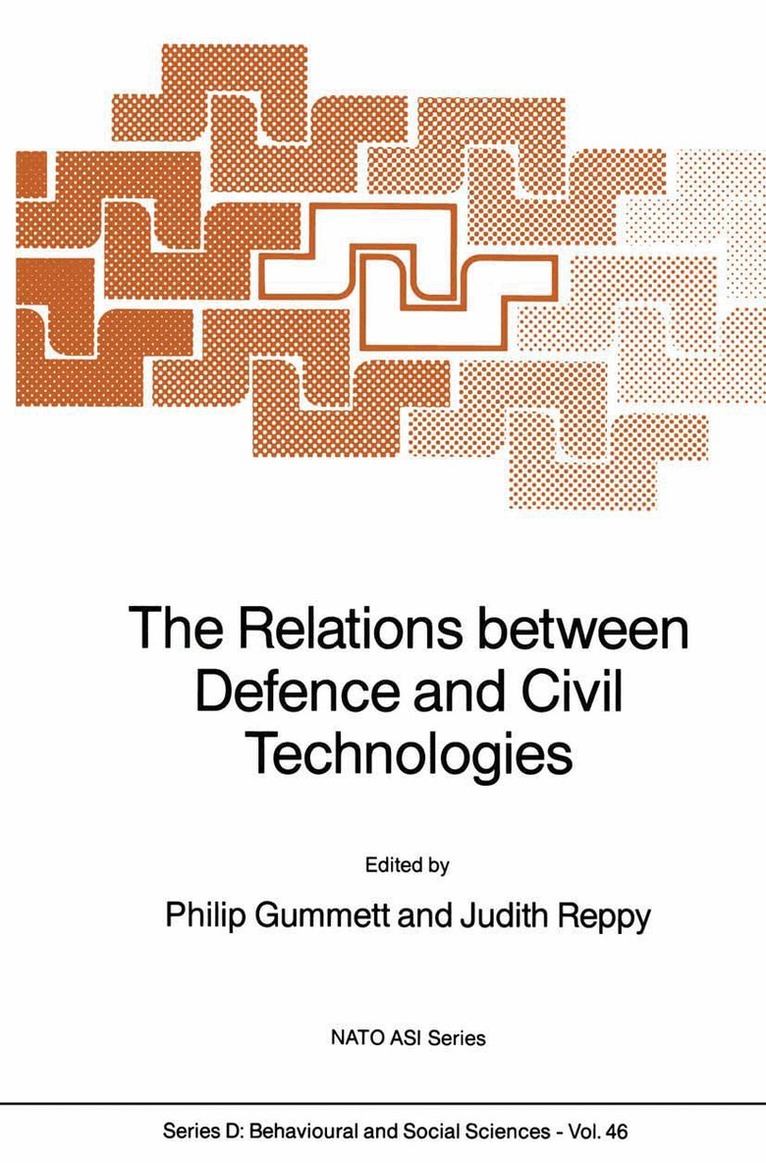
This book arises from a meeting held at Wiston House, Sussex, UK, in September 1987. The meeting brought together academic, governmental and industrial experts from eight countries to discuss the increasingly important sUbject of the relations between civil and defence technologies. It was primarily funded under the Advanced Research Workshops Programme of NATO's Scientific Affairs Division, and was the first science policy workshop funded by the Programme. Additional financial support came from the Leverhulme Trust. The choice of topic, of speakers and, finally, of papers to be published was entirely ours. The conclusions reached were our own and those of the partIcipants. They were not in any way guided by NATO; nor do they represent NATO policy. We speak for all the participants in offering our thanks to the NATO SCIentific Affairs Division, especially Secretary General Durand and Dr. Craig Sinclair, for rnei r- generosity and encouragement. WIthout them this book would not exist. We thank the Leverhulme Trust for enabling assistance to be provided to the Workshop Directors, in the form of lain Bate, who himself played a major part in the success of the meeting. The staff of Wiston House must also be thanked for prOViding an admirable environment for the meeting. For secretarial support prior to the meeting we thank Gill Miller and Lesley Price. Finally, we offer special thanks to Mrs. Yvonne Aspinall for converting all the papers, in whatever state they were presented, into camera-ready copy with such professionalism and gOOd humour.
Häftad, Engelska, 2010
2 160 kr
Skickas inom 10-15 vardagar
This book arises from a meeting held at Wiston House, Sussex, UK, in September 1987. The meeting brought together academic, governmental and industrial experts from eight countries to discuss the increasingly important sUbject of the relations between civil and defence technologies. It was primarily funded under the Advanced Research Workshops Programme of NATO's Scientific Affairs Division, and was the first science policy workshop funded by the Programme. Additional financial support came from the Leverhulme Trust. The choice of topic, of speakers and, finally, of papers to be published was entirely ours. The conclusions reached were our own and those of the partIcipants. They were not in any way guided by NATO; nor do they represent NATO policy. We speak for all the participants in offering our thanks to the NATO SCIentific Affairs Division, especially Secretary General Durand and Dr. Craig Sinclair, for rnei r- generosity and encouragement. WIthout them this book would not exist. We thank the Leverhulme Trust for enabling assistance to be provided to the Workshop Directors, in the form of lain Bate, who himself played a major part in the success of the meeting. The staff of Wiston House must also be thanked for prOViding an admirable environment for the meeting. For secretarial support prior to the meeting we thank Gill Miller and Lesley Price. Finally, we offer special thanks to Mrs. Yvonne Aspinall for converting all the papers, in whatever state they were presented, into camera-ready copy with such professionalism and gOOd humour.
E-bok
PDF, Engelska, 20132 840 kr
Läs direkt efter köp
This book arises from a meeting held at Wiston House, Sussex, UK, in September 1987. The meeting brought together academic, governmental and industrial experts from eight countries to discuss the increasingly important sUbject of the relations between civil and defence technologies. It was primarily funded under the Advanced Research Workshops Programme of NATO''s Scientific Affairs Division, and was the first science policy workshop funded by the Programme. Additional financial support came from the Leverhulme Trust. The choice of topic, of speakers and, finally, of papers to be published was entirely ours. The conclusions reached were our own and those of the partIcipants. They were not in any way guided by NATO; nor do they represent NATO policy. We speak for all the participants in offering our thanks to the NATO SCIentific Affairs Division, especially Secretary General Durand and Dr. Craig Sinclair, for rnei r- generosity and encouragement. WIthout them this book would not exist. We thank the Leverhulme Trust for enabling assistance to be provided to the Workshop Directors, in the form of lain Bate, who himself played a major part in the success of the meeting. The staff of Wiston House must also be thanked for prOViding an admirable environment for the meeting. For secretarial support prior to the meeting we thank Gill Miller and Lesley Price. Finally, we offer special thanks to Mrs. Yvonne Aspinall for converting all the papers, in whatever state they were presented, into camera-ready copy with such professionalism and gOOd humour.