Philip L. Gibbard - Böcker
Visar alla böcker från författaren Philip L. Gibbard. Handla med fri frakt och snabb leverans.
4 produkter
4 produkter
1 311 kr
Skickas inom 7-10 vardagar
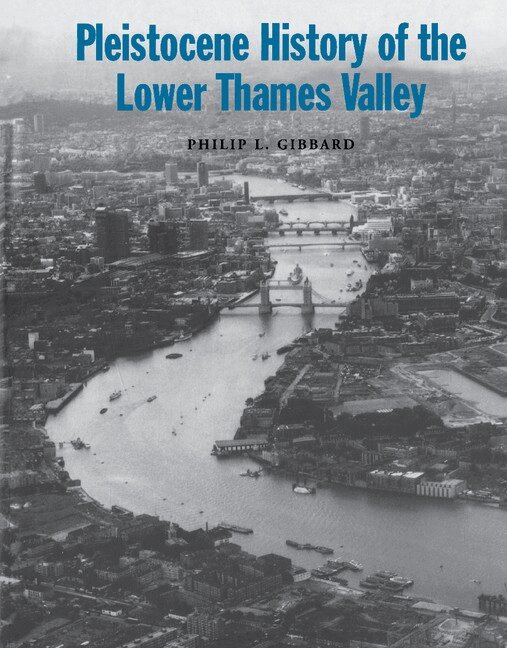
The Lower Thames Valley is a classic area for British Pleistocene studies. The valley contains a sequence of River Thames deposits representing approximately the last 300,000 years, including older, highly fragmented and eroded sediments derived from Thames tributaries and glaciation. The region includes some of the most important palaeolithic archaeological sites in the country which, although extensively studied, have never previously been fitted into a regional context. The area also includes some of the most important fossiliferous localities in the country, several of which have been at the centre of controversies regarding the sequence of events in the British Pleistocene. This regional investigation clarifies the problems by presenting the geological sequence in detail and establishing the relationship of these localities for the first time.
586 kr
Tillfälligt slut
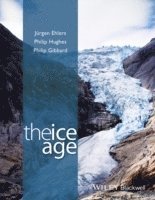
This book provides a new look at the climatic history of the last 2.6 million years during the ice age, a time of extreme climatic fluctuations that have not yet ended. This period also coincides with important phases of human development from Neanderthals to modern humans, both of whom existed side by side during the last cold stage of the ice age. The ice age has seen dramatic expansions of glaciers and ice sheets, although this has been interspersed with relatively short warmer intervals like the one we live in today. The book focuses on the changing state of these glaciers and the effects of associated climate changes on a wide variety of environments (including mountains, rivers, deserts, oceans and seas) and also plants and animals. For example, at times the Sahara was green and colonized by humans, and Lake Chad covered 350,000 km2 – larger than the United Kingdom. What happened during the ice age can only be reconstructed from the traces that are left in the ground. The work of the geoscientist is similar to that of a detective who has to reconstruct the sequence of events from circumstantial evidence. The book draws on the specialisms and experience of the authors who are experts on the glacial history of the Earth.Readership: Undergraduate and postgraduate students studying the Quaternary, researchers, and anyone interested in climate change, environmental change and geology. The book provides a rich collection of illustrations and photographs to help the readers at all levels visualise the dramatic consequences of glacier expansions during the Ice Age.
1 755 kr
Skickas inom 11-20 vardagar
This book provides a new look at the climatic history of the last 2.6 million years during the ice age, a time of extreme climatic fluctuations that have not yet ended. This period also coincides with important phases of human development from Neanderthals to modern humans, both of whom existed side by side during the last cold stage of the ice age. The ice age has seen dramatic expansions of glaciers and ice sheets, although this has been interspersed with relatively short warmer intervals like the one we live in today. The book focuses on the changing state of these glaciers and the effects of associated climate changes on a wide variety of environments (including mountains, rivers, deserts, oceans and seas) and also plants and animals. For example, at times the Sahara was green and colonized by humans, and Lake Chad covered 350,000 km2 – larger than the United Kingdom. What happened during the ice age can only be reconstructed from the traces that are left in the ground. The work of the geoscientist is similar to that of a detective who has to reconstruct the sequence of events from circumstantial evidence. The book draws on the specialisms and experience of the authors who are experts on the glacial history of the Earth.Readership: Undergraduate and postgraduate students studying the Quaternary, researchers, and anyone interested in climate change, environmental change and geology. The book provides a rich collection of illustrations and photographs to help the readers at all levels visualise the dramatic consequences of glacier expansions during the Ice Age.
2 568 kr
Skickas inom 10-15 vardagar
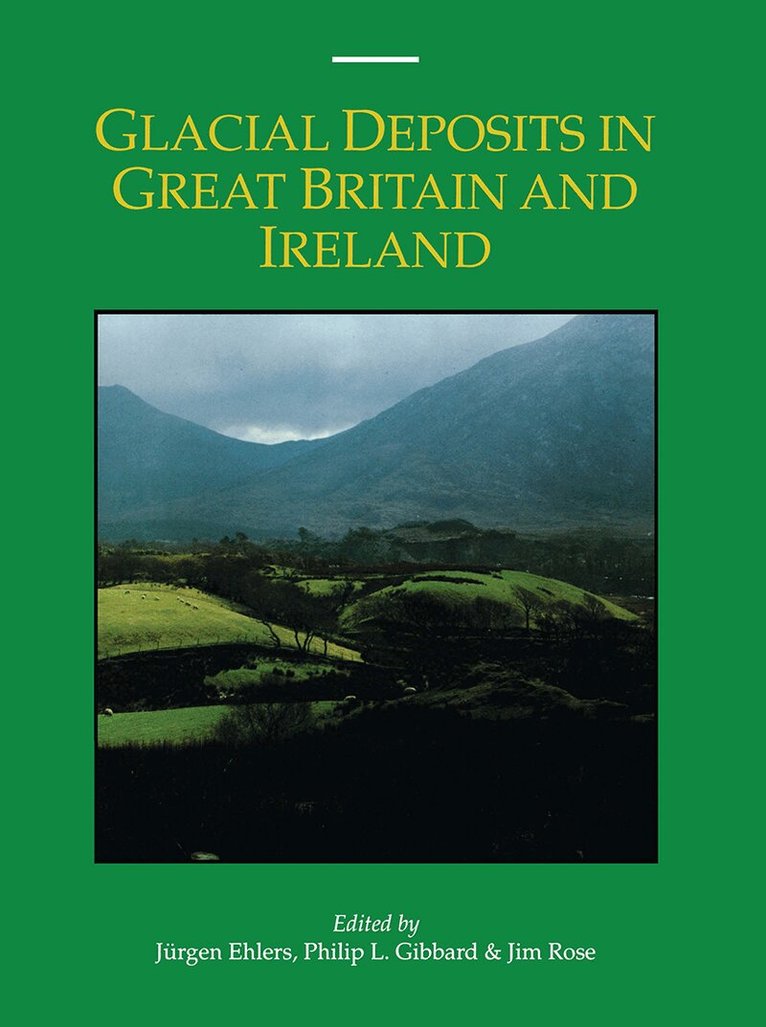
With the increasing awareness of environmental problems, there is a growing desire for a de¬tailed understanding of superficial deposits in general, and glacial deposits in particular. This is because these sediments have a profound influence on groundwater protection, waste management and nature conservation. They are also of vital importance to civil engineering, because they provide the foundation for, as well as the materials extracted to build our roads and buildings. The greater part of the British Isles was glaciated, at least once, during the Quater¬nary Era. In the regions subjected to glaciation, glacial deposits underlie much of the present land surface.Although there have been many recent publica¬tions on various Quaternary geological topics, the present volume is the first dedicated to a detailed assessment of the glacial deposits of Britain and Ireland. After introductory chapters presenting the glacial history, the sedimentary sequences in 24 critical regions are discussed. These regions include all of Ireland, the gla¬ciated area of Great Britain, and the adjoining offshore region of the North Sea. The controver¬sial evolution of the Irish Sea Basin during the Last Glaciation is discussed from various view¬points. A collection of 'critical topics' presented in the later part of the book range from the classification of glacigenic landforms and de¬posits to the results of geophysical, geotechnical and geochemical analyses.The book includes 368 figures, 40 tables and 51 colour photographs, a detailed index and a list of over 1000 references. With 45 contributions by 48 scientists, this volume represents a truly contemporary view of this field of research. To¬gether with its companion volume the Glacial deposits in North-West Europe, this book pro¬vides an excellent textbook for the advanced student or the amateur, as well as an indispen¬sible source- and guidebook for the professional scientist.