Philip Nord – författare
Visar alla böcker från författaren Philip Nord. Handla med fri frakt och snabb leverans.
14 produkter
France's New Deal
From the Thirties to the Postwar Era
Av Philip Nord
Häftad, 2012
396 kr
Lägg i varukorg
France's New Deal is an in-depth and important look at the remaking of the French state after World War II, a time when the nation was endowed with brand-new institutions for managing its economy and culture. Yet, as Philip Nord reveals, the significant process of state rebuilding did not begin at …
France 1940
Defending the Republic
Av Philip Nord
Inbunden, 2015
251 kr
Lägg i varukorg
A new perspective on the calamitous fall of France in 1940 and why blame has been misplaced ever sinceIn this revisionist account of France’s crushing defeat in 1940, a world authority on French history argues that the nation’s downfall has long been misunderstood. Philip Nord assesses France’s …
Republican Moment
Struggles for Democracy in Nineteenth-Century France
Av Philip Nord
Häftad, 1998
418 kr
Lägg i varukorg
France in the mid-nineteenth century was shaken by a surge of civic activism, the "resurrection of civil society." But unlike similar developments throughout Europe, this civic mobilization culminated in the establishment of democratic institutions. How, Philip Nord asks, did France effect a …
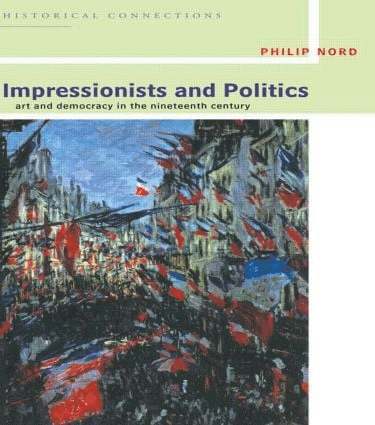
Impressionists and Politics
Art and Democracy in the Nineteenth Century
Av Philip Nord
Häftad, 2000
665 kr
Lägg i varukorg
Impressionists and Politics is an accessible introduction to the current debates about Impressionism. Was the artistic movement really radical and innovative? Is the term "Impressionism" itself an adequate characterization of the movement of painters and critics that took the mid-nineteenth century …
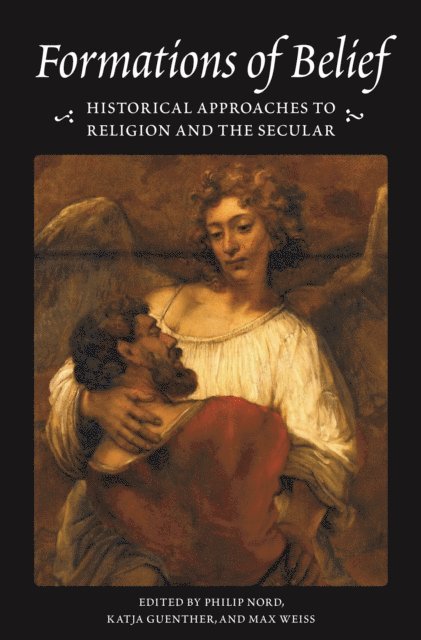
Formations of Belief
Historical Approaches to Religion and the Secular
Av Philip Nord, Katja Guenther m. fl.
Inbunden, 2019
479 kr
Lägg i varukorg
For decades, scholars and public intellectuals have been predicting the demise of religion in the face of secularization. Yet religion is undergoing an unprecedented resurgence in modern life—and secularization no longer appears so inevitable. Formations of Belief brings together many of today's …
Formations of Belief
Historical Approaches to Religion and the Secular
Av Max Weiss, Katja Guenther m. fl.
E-bok, 2019
642 kr
Lägg i varukorg
For decades, scholars and public intellectuals have been predicting the demise of religion in the face of secularization. Yet religion is undergoing an unprecedented resurgence in modern life—and secularization no longer appears so inevitable. Formations of Belief brings together many of today''s …
Civil Society Before Democracy
Lessons from Nineteenth-Century Europe
E-bok, 2000
429 kr
Lägg i varukorg
Bringing together historians and political scientists, this unique collaboration compares nineteenth-century civil societies that failed to develop lasting democracies with civil societies that succeeded. Much of the current literature on the connection between civil society and consolidating …
After the Deportation
Memory Battles in Postwar France
Av Philip Nord
Inbunden, 2020
526 kr
Lägg i varukorg
A total of 160,000 people, a mix of résistants and Jews, were deported from France to camps in Central and Eastern Europe during the Second World War. In this compelling new study, Philip Nord addresses how the Deportation, as it came to be known, was remembered after the war and how Deportation …
After the Deportation
Memory Battles in Postwar France
Av Philip Nord
E-bok, 2020
624 kr
Lägg i varukorg
A total of 160,000 people, a mix of résistants and Jews, were deported from France to camps in Central and Eastern Europe during the Second World War. In this compelling new study, Philip Nord addresses how the Deportation, as it came to be known, was remembered after the war and how Deportation …
After the Deportation
Memory Battles in Postwar France
Av Philip Nord
E-bok, 2020
624 kr
Lägg i varukorg
A total of 160,000 people, a mix of résistants and Jews, were deported from France to camps in Central and Eastern Europe during the Second World War. In this compelling new study, Philip Nord addresses how the Deportation, as it came to be known, was remembered after the war and how Deportation …
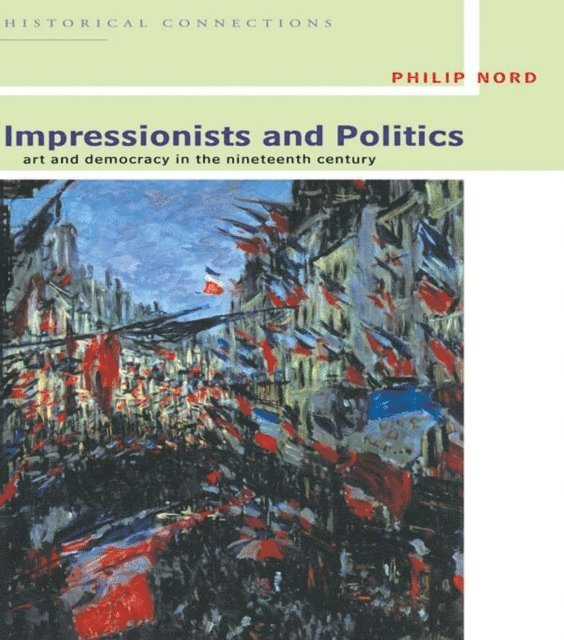
Impressionists and Politics
Art and Democracy in the Nineteenth Century
Av Philip Nord
E-bok, 2014
696 kr
Lägg i varukorg
Impressionists and Politics is an accessible introduction to the current debates about Impressionism. Was the artistic movement really radical and innovative? Is the term "Impressionism" itself an adequate characterization of the movement of painters and critics that took the mid-nineteenth century …
Impressionists and Politics
Art and Democracy in the Nineteenth Century
Av Philip Nord
E-bok, 2014
696 kr
Lägg i varukorg
Impressionists and Politics is an accessible introduction to the current debates about Impressionism. Was the artistic movement really radical and innovative? Is the term "Impressionism" itself an adequate characterization of the movement of painters and critics that took the mid-nineteenth century …
France's New Deal
From the Thirties to the Postwar Era
Av Philip Nord
E-bok, 2012
514 kr
Lägg i varukorg
France''s New Deal is an in-depth and important look at the remaking of the French state after World War II, a time when the nation was endowed with brand-new institutions for managing its economy and culture. Yet, as Philip Nord reveals, the significant process of state rebuilding did not begin at …
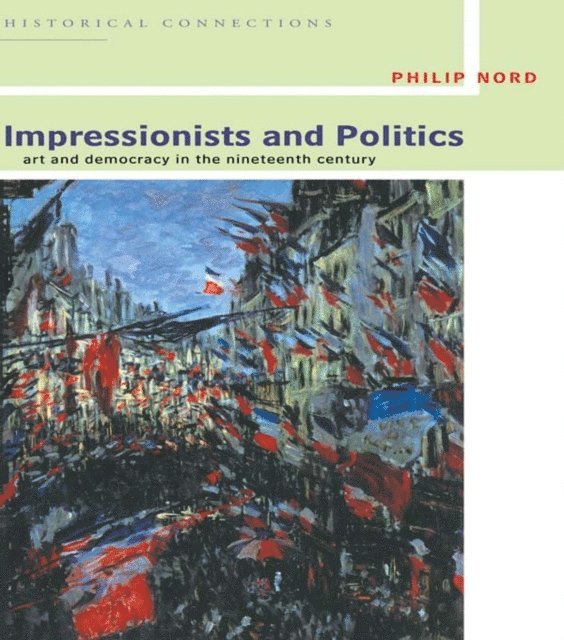
Impressionists and Politics
Art and Democracy in the Nineteenth Century
Av Philip Nord
Inbunden, 2000
1118 kr
Tillfälligt slut
Impressionists and Politics is an accessible introduction to the current debates about Impressionism. Was the artistic movement really radical and innovative? Is the term "Impressionism" itself an adequate characterization of the movement of painters and critics that took the mid-nineteenth century …