Philipp Blom – författare
Visar alla böcker från författaren Philipp Blom. Handla med fri frakt och snabb leverans.
23 produkter
23 produkter
Inbunden, Svenska, 2024
255 kr
Skickas
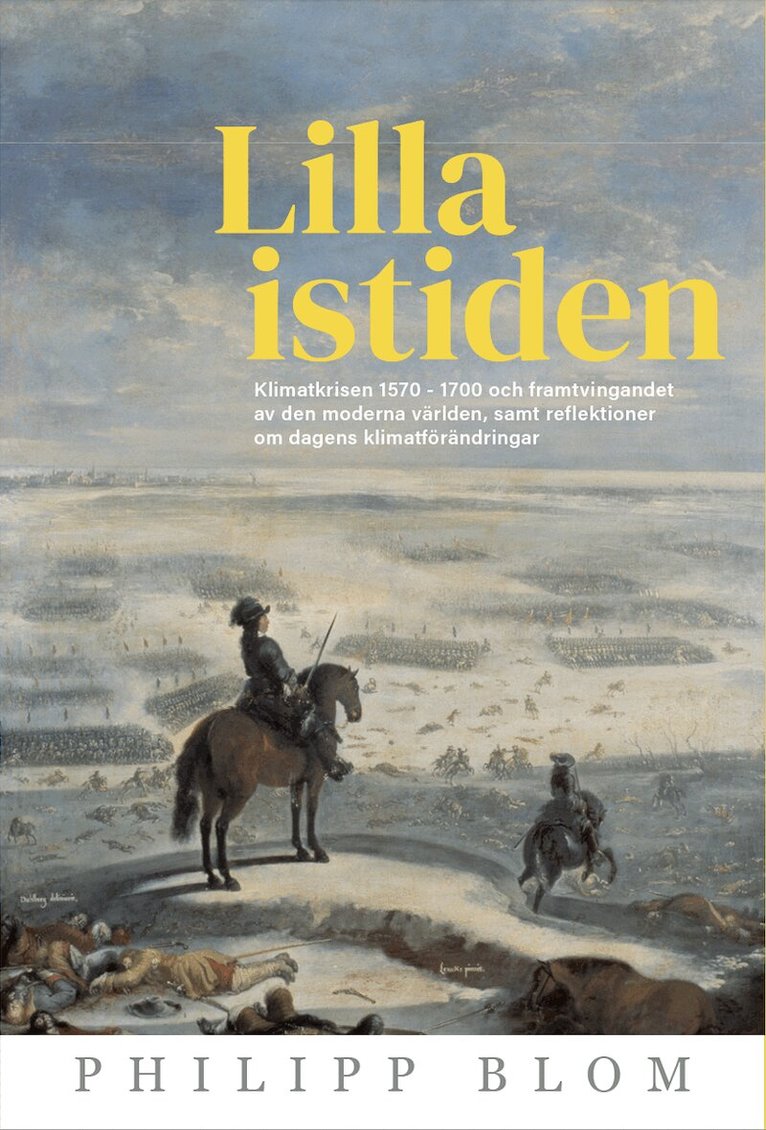
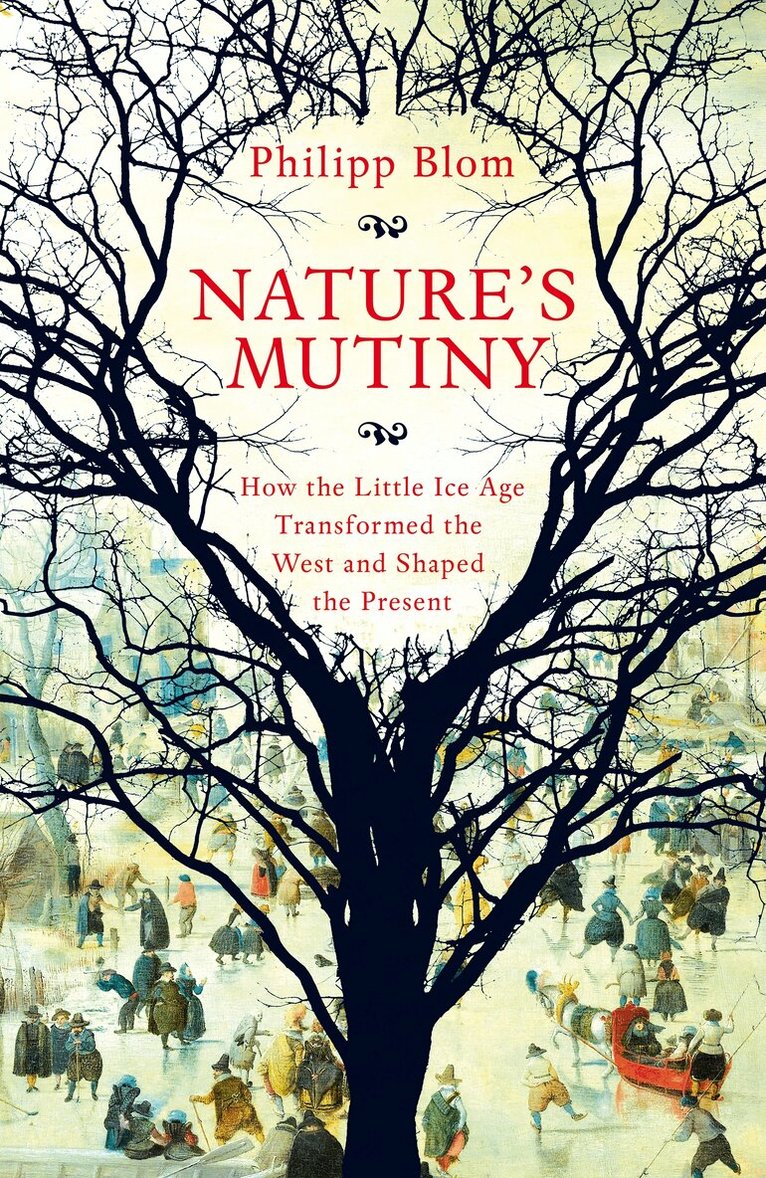
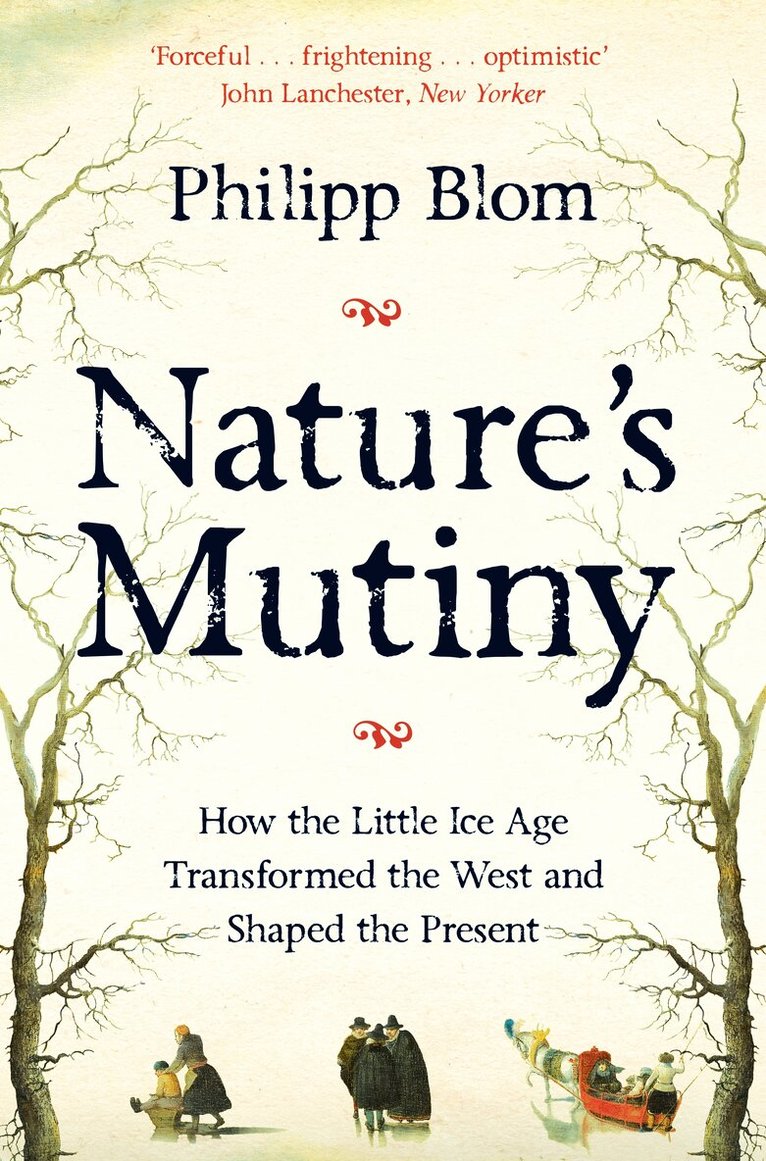
Vintrarna blev långa och kalla, somrarna korta och svala: under 1600-talet förändrades Europas klimat dramatiskt. Mat blev en bristvara, ekonomin stagnerade och samhället föll ner i en djup kris. Den lilla istiden , som varande ungefär mellan år 1570 och 1700, ger oss en uppfattning om de svåra umbäranden och stora samhällsomstörtningar en klimatkris kan föra med sig. Det kallare klimatet tvingade fram förändring och framsteg, där gamla världsåskådningar fick ge vika. Med hjälp av upplysning, vetenskap, teknik och nya jordbruksmetoder sökte människorna frigöra sig från naturens grepp. Lilla istiden blev på så vis början till vår moderna värld, vilken i dag tycks ha nått gränsen för vad planeten klarar av och nu riskerar att framkalla en ny klimatkatastrof. Philipp Blom, en av vår tids främsta historiker, vecklar ut ett storartat historiskt panorama där vi känner igen många av nutidens utmaningar
Häftad, Engelska, 2010
223 kr
Skickas inom 10-15 vardagar
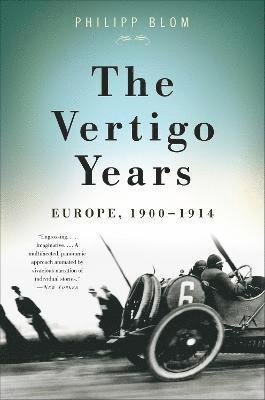
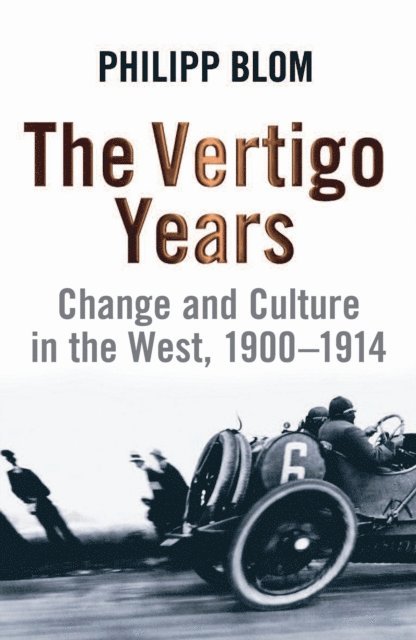
Europe, 1900-1914: a world adrift, a pulsating era of creativity and contradictions. The major topics of the day: terrorism, globalization, immigration, consumerism, the collapse of moral values, and the rivalry of superpowers. The twentieth century was not born in the trenches of the Somme or Passchendaele,but rather in the fifteen vertiginous years preceding World War I. In this short span of time, a new world order was emerging in ultimately tragic contradiction to the old. These were the years in which the political and personal repercussions of the Industrial Revolution were felt worldwide: Cities grew like never before as people fled the countryside and their traditional identities science created new possibilities as well as nightmares education changed the outlook of millions of people mass-produced items transformed daily life industrial labourers demanded a share of political power and women sought to change their place in society,as well as the very fabric of sexual relations. From the tremendous hope for a new century embodied in the 1900 World's Fair in Paris to the shattering assassination of a Habsburg archduke in Sarajevo in 1914, historian Philipp Blom chronicles this extraordinary epoch year by year. Prime Ministers and peasants, anarchists and actresses, scientists and psychopaths intermingle on the stage of a new century in this portrait of an opulent, unstable age on the brink of disaster. Beautifully written and replete with deftly told anecdotes, The Vertigo Years brings the wonders, horrors, and fears of the early twentieth century vividly to life.
Häftad, Engelska, 2012
375 kr
Skickas inom 3-6 vardagar
Inbunden, Engelska, 2013
364 kr
Skickas
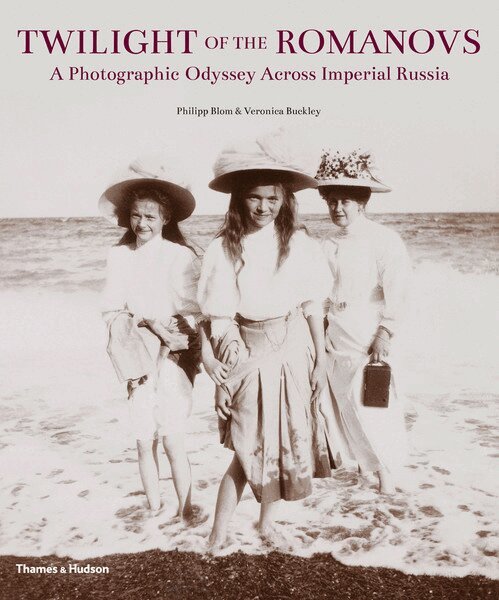
Twilight of the Romanovs opens a door onto the world of pre-revolutionary Russia in original photographs taken during the last decades of Romanov rule. They include many remarkable colour images created using an early three-colourplate technique; these bring the remote past to life with an especially vivid jolt. We discover a world of exceptional diversity, seemingly timeless, almost archaic, marked by persistent poverty, yet also abundantly rich and often surprisingly modern. These photographs are snapshots of a vanished world. The Russian Empire was soon to be destroyed, and, in the ensuing blood-soaked decades, rendered unrecognizable. Yet these images reveal a surprising continuity: despite the subsequent cataclysm, faces, postures, buildings and landscapes still resonate with those who see them a century and more later.
Häftad, Engelska, 2009
166 kr
Skickas inom 5-8 vardagar
Europe, early in the twentieth century: a world adrift, a pulsating era of creativity and contradictions. But did this era vanish in the trenches of the Somme, of Ypres, and of Passchendaele? Look closer and the more this world seems like ours: feminism, democratisation, commercial branding, genetics, consumerism and racism, radioactivity and psychoanalysis are all terms first used during this period. This was a time in which old certainties broke down and many people lost their bearings. At the heart of this vibrant Europe, was a contradiction that would cause its collapse: the new, modern world of mass production, urban life, technological warfare and a rapidly growing working class that was still ruled by men who preferred the image of dashing cavalry officers to the prosaic slaughter of the machine gun, and national mythology to political cohesion and democracy. The eventual scope of the catastrophe often obscures the fact that the great cultural divide in Europe's history lies before 1914. This book brings to life the immediacy of the lives and issues of this fascinating and flawed period.
Inbunden, Engelska, 2024
223 kr
Skickas inom 5-8 vardagar
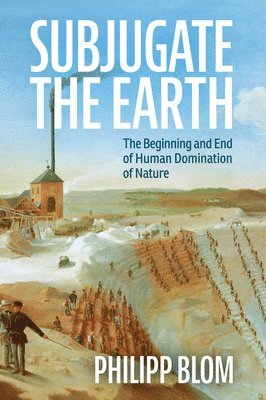
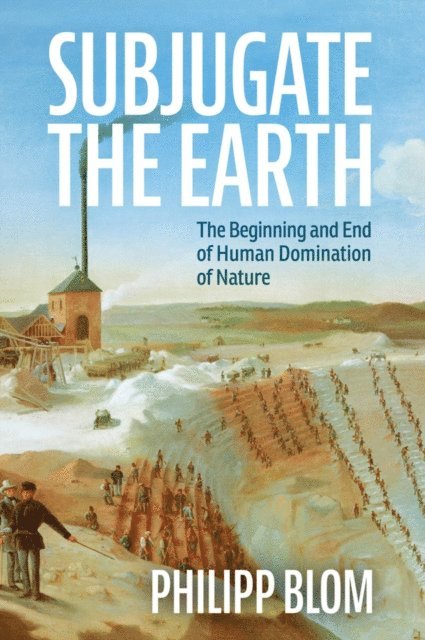
Subjugate the Earth traces the biography of a strange idea: the idea that human beings can subdue nature and rule over it. Born in Mesopotamia at the dawn of civilization, the idea of subjugating the Earth was included in the Bible, reached Europe through Christianity, and spread to the entire world through colonialism. The Enlightenment gave a scientific appearance to the ambition of controlling nature but did not change the ambition itself. Yet every birth presages a death. Only with the climate crisis has it become apparent that the subjugation of nature must be a self-defeating ambition, because it alters and deregulates natural systems which humans depend on for their survival, precisely because they are part of nature and not separate from it. Subjugating the Earth is an idea that is dying around us.The polycrisis threatening to engulf humanity is inextricably linked to how humans see themselves and their relationship with nature. Based on developments in the natural sciences, a new understanding of this relationship looks not at individual phenomena but at systems, connections and entanglements between humans and other manifestations of nature. Is it possible to build a new understanding of humanity in nature by turning the traditional vision of free, rational individuals on its head and seeing humans as fascinating, irrational and system-dependent beings within the vast system of nature?Interlacing historical episodes, individual life stories, works of art and scientific discoveries, Subjugate the Earth tells the story of the rise and fall of an idea that has shaped our world, and weaves a rich tapestry that is as surprising as it is enriching.
Inbunden, Engelska, 2019
204 kr
Skickas inom 7-10 vardagar
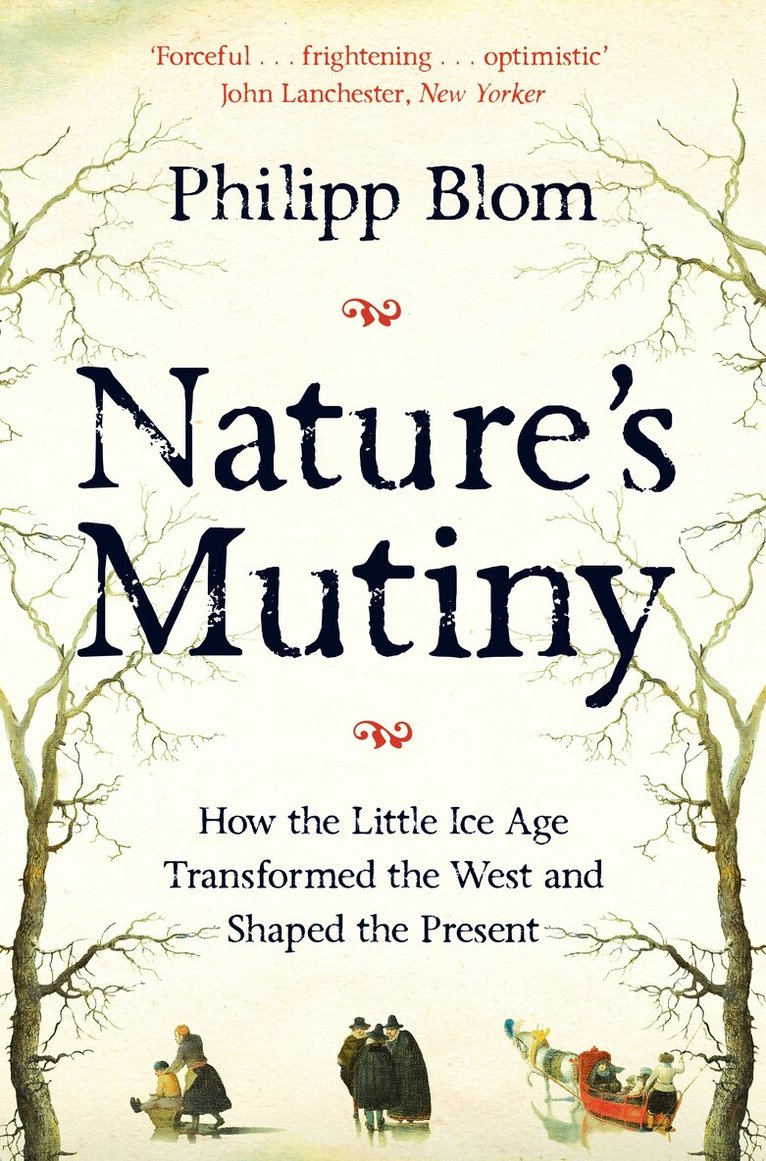
Blom’s hypothesis is forceful, and has the potential to be both frightening and, if you hold it up to the light at just the right angle, a little optimistic. The idea can be put like this: climate change changes everything' John Lanchester, New YorkerIn this innovative and compelling work of environmental history, Philipp Blom chronicles the great climate crisis of the 1600s, a crisis that would transform the entire social and political fabric of Europe.While hints of a crisis appeared as early as the 1570s, by the end of the sixteenth century the temperature plummeted so drastically that Mediterranean harbours were covered with ice, birds literally dropped out of the sky, and ‘frost fairs’ were erected on a frozen Thames – with kiosks, taverns, and even brothels that become a semi-permanent part of the city.Recounting the deep legacy and sweeping consequences of this ‘Little Ice Age’, acclaimed historian Philipp Blom reveals how the European landscape had ineradicably changed by the mid-seventeenth century. While apocalyptic weather patterns destroyed entire harvests and incited mass migrations, Blom brilliantly shows how they also gave rise to the growth of European cities, the appearance of early capitalism, and the vigorous stirrings of the Enlightenment. A sweeping examination of how a society responds to profound and unexpected change, Nature’s Mutiny will transform the way we think about climate change in the twenty-first century and beyond.
Häftad, Engelska, 2020
135 kr
Skickas inom 7-10 vardagar
Europe where the sun dares scarce appearFor freezing meteors and congealed cold.' - Christopher MarloweIn this innovative and compelling work of environmental history, Philipp Blom chronicles the great climate crisis of the 1600s, a crisis that would transform the entire social and political fabric of Europe.While hints of a crisis appeared as early as the 1570s, by the end of the sixteenth century the temperature plummeted so drastically that Mediterranean harbours were covered with ice, birds literally dropped out of the sky, and ‘frost fairs’ were erected on a frozen Thames – with kiosks, taverns, and even brothels that become a semi-permanent part of the city.Recounting the deep legacy and sweeping consequences of this ‘Little Ice Age’, acclaimed historian Philipp Blom reveals how the European landscape had ineradicably changed by the mid-seventeenth century. While apocalyptic weather patterns destroyed entire harvests and incited mass migrations, Blom brilliantly shows how they also gave rise to the growth of European cities, the appearance of early capitalism, and the vigorous stirrings of the Enlightenment. A sweeping examination of how a society responds to profound and unexpected change, Nature’s Mutiny will transform the way we think about climate change in the twenty-first century and beyond.
Inbunden, Engelska, 2014
358 kr
Skickas inom 5-8 vardagar
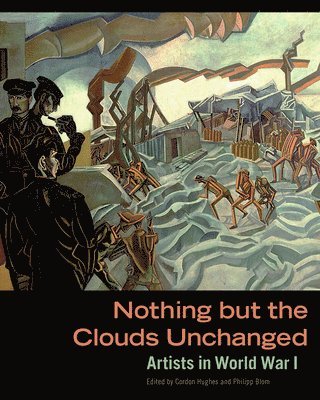
This is a fascinating and superbly illustrated look at how the First World War influenced an entire generation of visual artists. Much of how WWI is understood today is rooted in the artistic depictions of the brutal violence and extensive destruction that marked the conflict. Nothing but the Clouds Unchanged examines how the physical and psychological devastation of the war altered the course of 20th-century artistic Modernism. Following the lives and works of fourteen artists before, during, and after the war, this book demonstrates how the conflict and the resulting trauma actively shaped artistic production. Materials from the Getty Research Institute's special collections, including letters, popular journals, posters, sketches, books, propaganda, and photographs - situate the works of the artists within the historical context, both personal and cultural, in which they were created.
Inbunden, Engelska, 2019
266 kr
Skickas inom 5-8 vardagar
Häftad, Engelska, 2020
168 kr
Skickas inom 5-8 vardagar
Hailed as an “arresting” (Lawrence Klepp, New Criterion) account, Nature’s Mutiny chronicles the great climate crisis of the seventeenth century that totally transformed Europe’s social and political fabric. Best-selling historian Philipp Blom reveals how a new, radically altered Europe emerged out of the “Little Ice Age” that diminished crop yields across the continent, forcing thousands to flee starvation in the countryside to burgeoning urban centers, and even froze London’s Thames, upon which British citizens erected semipermanent frost fairs with bustling kiosks, taverns, and brothels. Highlighting how politics and culture also changed drastically, Blom evokes the era’s most influential artists and thinkers who imagined groundbreaking worldviews to cope with environmental cataclysm.As we face a climate crisis of our own, “Blom’s prodigious synthesis delivers a sharply-focused lesson for the twenty-first century: the profound effects of just a few degrees of climate change can alter the course of civilization, forever” (Laurence A. Marschall, Natural History).
Häftad, Engelska, 2012
166 kr
Skickas inom 5-8 vardagar
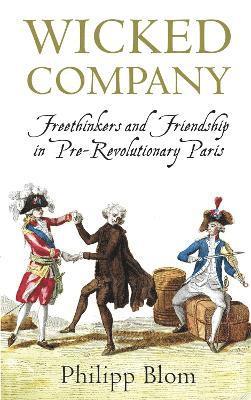
Dazzling recreation of the world of radical free-thinkers in 18th-century FranceFrom the 1750s to the 1770s, the Paris salon of Baron d'Holbach was an epicenter of debate, intellectual daring and revolutionary ideas, uniting around one table vivid personalities from Denis Diderot, Adam Smith, Benjamin Franklin, the radical ex-priest Guillaume Raynal, the Italian Count Beccaria and Jean-Jacques Rousseau, who later turned against his friends.It was a moment of astonishing racicalism in European thought, so uncompromising and bold that it was viciously opposed by rival philosophers such as Voltaire and the turncoat Rousseau, and finally suppressed by Robespierre and his Revolutionary henchmen. In Wicked Company, acclaimed historian Philipp Blom retraces the fortunes and characters of this exceptional group of friends and brings to life their startling ideas, largely forgotten by historians. Brilliant minds full of wit, courage and humanity, their thinking created a different and radical French Enlightenment based on atheism, passion, empathy and a compellingly insightful perspective on society. Their ideas force us to confront the debates about our own society and its future with new eyes.
Inbunden, Tyska, 2009
305 kr
Skickas inom 3-6 vardagar
Inbunden, Tyska, 2014
321 kr
Skickas inom 3-6 vardagar
Inbunden, Tyska, 2017
285 kr
Skickas inom 3-6 vardagar
Inbunden, Tyska, 2022
294 kr
Skickas inom 3-6 vardagar
Inbunden, Tyska, 2024
235 kr
Skickas inom 3-6 vardagar
Häftad, Tyska, 2026
155 kr
Skickas inom 3-6 vardagar
Häftad, Tyska, 2026
185 kr
Skickas inom 3-6 vardagar
Inbunden, Tyska, 2023
230 kr
Skickas inom 3-6 vardagar
Häftad, Spanska, 2026
336 kr
Kommande
Inbunden, Engelska, 2015
355 kr
Tillfälligt slut
Häftad, Engelska, 2017
170 kr
Tillfälligt slut
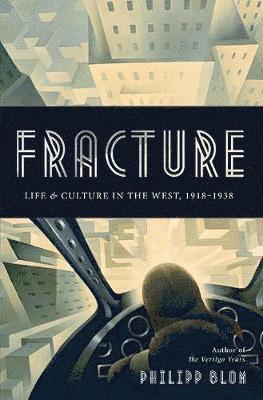
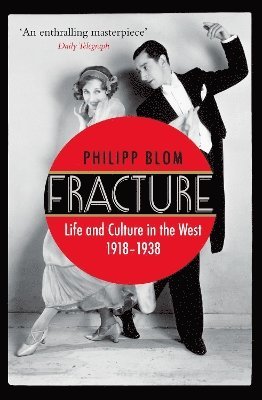
When the Great War ended in 1918, the West was broken. Religious faith, patriotism and the belief in human progress had all been called into question by the mass carnage experienced by both sides. Shell shocked and traumatized, the West faced a world it no longer recognized: the old order had collapsed, replaced by an age of machines. The world hurtled forward on gears and crankshafts, and terrifying new ideologies arose from the wreckage of past belief.In Fracture, critically acclaimed historian Philipp Blom argues that in the aftermath of the First World War, citizens of the West directed their energies inwards, launching into hedonistic, aesthetic and intellectual adventures of self-discovery. It was a period of both bitter disillusionment and visionary progress. From Surrealism to Oswald Spengler's The Decline of the West; from Fritz Lang's Metropolis to theoretical physics, and from Art Deco to Jazz and the Charleston dance, artists, scientists and philosophers grappled with the question of how to live and what to believe in a broken age. Morbid symptoms emerged simultaneously from the decay of the First World War: progress and innovation were everywhere met with increasing racism and xenophobia. America closed its borders to European refugees and turned away from the desperate poverty caused by the Great Depression. On both sides of the Atlantic, disenchanted voters flocked to Communism and fascism, forming political parties based on violence and revenge that presaged the horror of a new World War.Vividly recreating this era of unparalleled ambition, artistry and innovation, Blom captures the seismic shifts that defined the interwar period and continue to shape our world today.