Philippa Strum - Böcker
Visar alla böcker från författaren Philippa Strum. Handla med fri frakt och snabb leverans.
7 produkter
7 produkter
333 kr
Skickas inom 10-15 vardagar
A biography of the life and work of Louis Brandeis who became the first Jewish justice on his appointment to the US Supreme Court in 1916. A crusader for progressive causes, he helped draft social-welfare and labour legislation.
319 kr
Skickas inom 7-10 vardagar
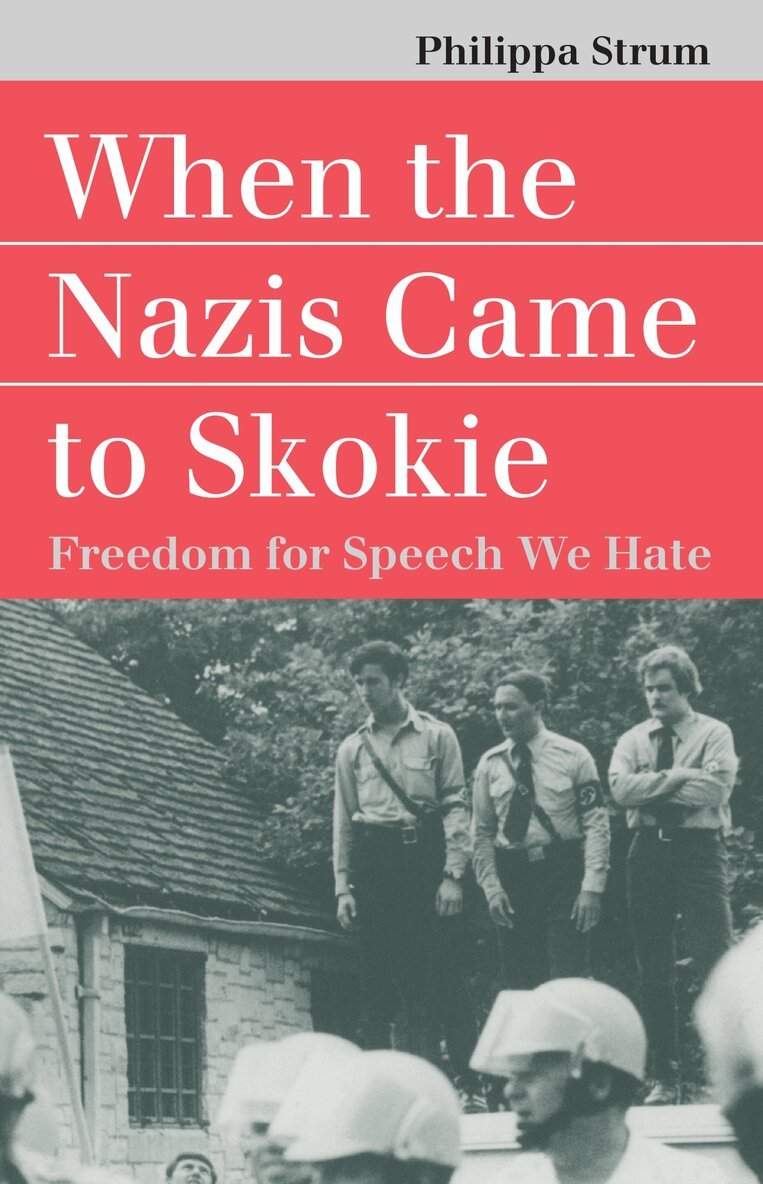
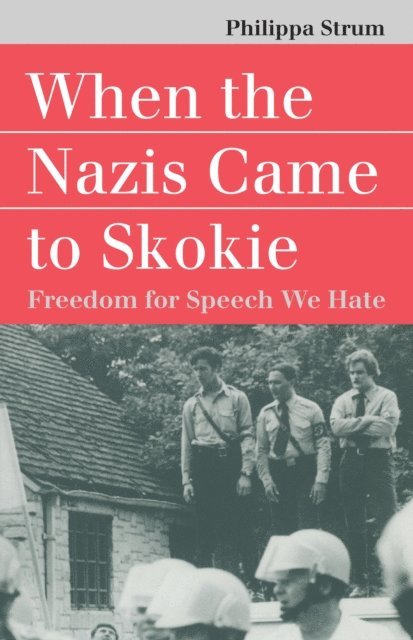
In the Chicago suburb of Skokie, one out of every six Jewish citizens in the late 1970s was a survivor--or was directly related to a survivor--of the Holocaust. These victims of terror had resettled in America expecting to lead peaceful lives free from persecution. But their safe haven was shattered when a neo-Nazi group announced its intention to parade there in 1977. Philippa Strum's dramatic retelling of the events in Skokie (and in the courts) shows why the case ignited such enormous controversy and challenged our understanding of and commitment to First Amendment values.The debate was clear-cut: American Nazis claimed the right of free speech while their Jewish "targets" claimed the right to live without intimidation. The town, arguing that the march would assault the sensibilities of its citizens and spark violence, managed to win a court injunction against the marchers. In response, the American Civil Liberties Union took the case and successfully defended the Nazis' right to free speech.Skokie had all the elements of a difficult case: a clash of absolutes, prior restraint of speech, and heated public sentiment. In recreating it, Strum presents a detailed account and analysis of the legal proceedings as well as finely delineated portraits of the protagonists: Frank Collin, National Socialist Party of America leader and the son of a Jewish Holocaust survivor; Skokie community leader Sol Goldstein, a Holocaust survivor who planned a counterdemonstration against the Nazis; Skokie mayor Albert Smith, who wanted only to protect his townspeople; and ACLU attorney David Goldberger, caught in the ironic position of being a Jew defending the rights of Nazis against fellow Jews. While the ACLU did win the case, it was a costly victory--30,000 of its members left the organization. And in the end, ironically, the Nazis never did march in Skokie.Forcefully argued, Strum's book shows that freedom of speech must be defended even when the beneficiaries of that defense are far from admirable individuals. It raises both constitutional and moral issues critical to our understanding of free speech and carries important lessons for current controversies over hate speech on college campuses, inviting readers to think more carefully about what the First Amendment really means.This book is part of the Landmark Law Cases and American Society series.
362 kr
Skickas inom 10-15 vardagar
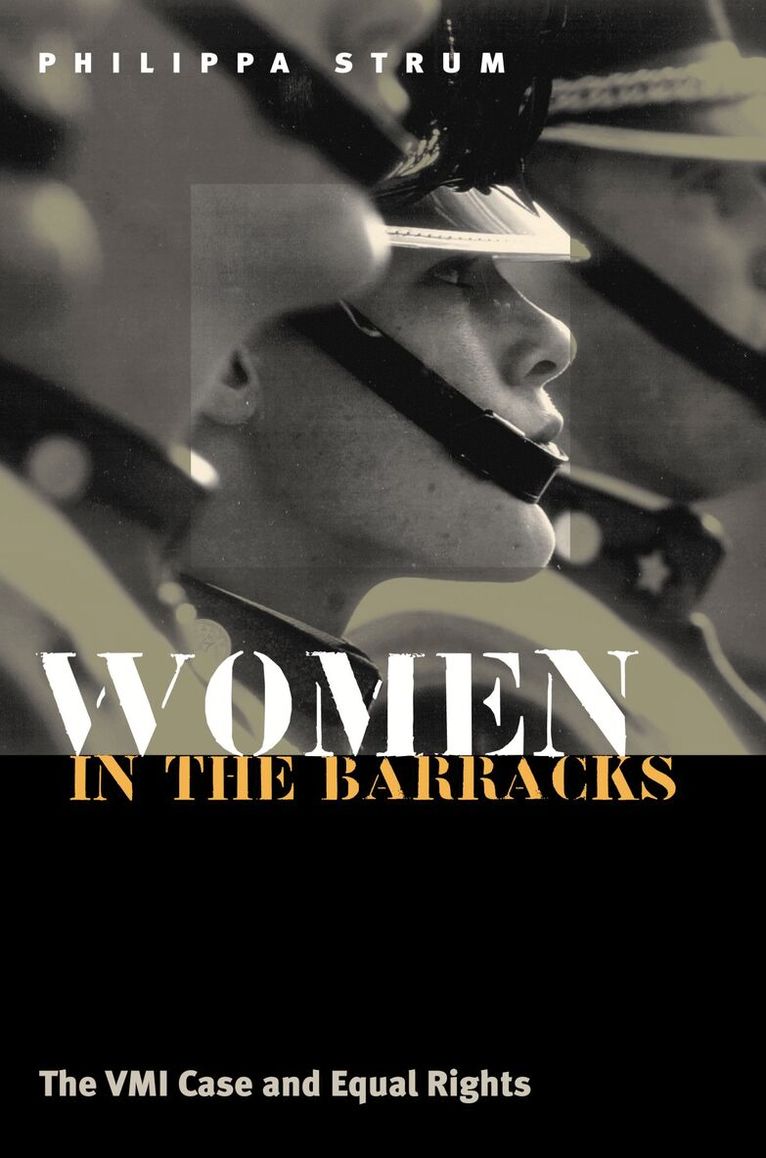
In 1989 a female applicant wishing to go to the all-male Viginia Military Institute (VMI) complained of discrimination to the Justice Department, which brought a suit the following year to integrate women into VMI. This text traces the origins of this case back to VMI's founding and evolution.
591 kr
Skickas inom 5-8 vardagar
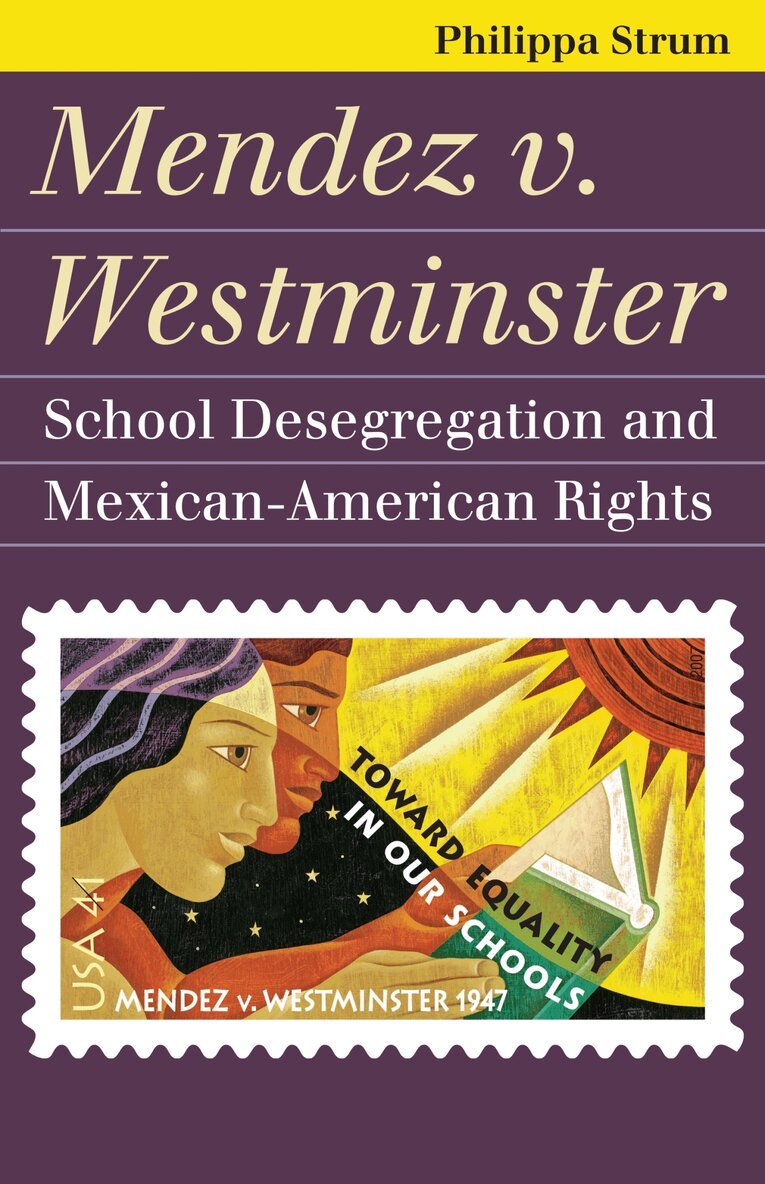
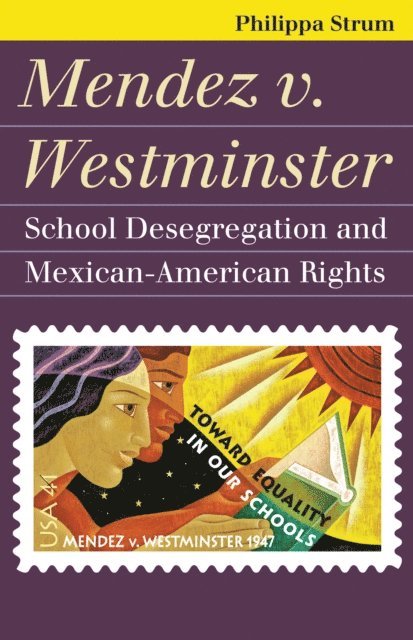
While Brown v. Board of Education remains much more famous, Mendez v. Westminster School District (1947) was actually the first case in which segregation in education was successfully challenged in federal court. Finally giving Mendez its due, Philippa Strum provides a concise and compelling account of its legal issues and legacy, while retaining its essential human face: that of Mexican Americans unwilling to accept second-class citizenship. In 1945 Gonzalo and Felicitas Mendez, California farmers, sent their children off to the local school, only to be told that the youngsters would have to attend a separate facility reserved for Mexican Americans. In response the Mendezes and other aggrieved parents from nearby school districts went to federal court to challenge the segregation. Uniquely, they did not claim racial discrimination, since Mexicans were legally considered white, but rather discrimination based on ancestry and supposed 'language deficiency' that denied their children their Fourteenth Amendment rights to equal protection under the law. Strum tells how, thanks to attorney David Marcus' carefully crafted arguments, federal district court judge Paul McCormick came to support the plaintiffs on the grounds that the social, psychological, and pedagogical costs of segregated education were damaging to Mexican-American children. The school districts claimed that federal courts had no jurisdiction over education, but the Ninth Circuit upheld McCormick's decision, ruling that the schools' actions violated California law. The appeal to the Ninth Circuit was supported by amicus briefs from leading civil liberties organizations, including the NAACP, which a few years later would adapt the arguments of Mendez in representing the plaintiffs in Brown. Strum effectively weaves together narrative and analysis with personality portraits to create a highly readable and accessible story, allowing us to hear the voices of all the protagonists. She also presents the issues evenhandedly, effectively balancing her presentation of arguments by both the plaintiffs and the schools that sought to continue the segregation of Mexican-American students. Ultimately, Mendez highlights how Mexican Americans took the lead to secure their civil rights and demonstrates how organization, courage, and persistence in the Mexican-American communities could overcome the racism of the school boards. Their inspiring example is particularly timely given the current controversies over immigration and the growing national interest in Latino life.
477 kr
Skickas inom 3-6 vardagar
While Brown v. Board of Education remains much more famous, Mendez v. Westminster School District (1947) was actually the first case in which segregation in education was successfully challenged in federal court. Finally giving Mendez its due, Philippa Strum provides a concise and compelling account of its legal issues and legacy, while retaining its essential human face: that of Mexican Americans unwilling to accept second-class citizenship. In 1945 Gonzalo and Felicitas Mendez, California farmers, sent their children off to the local school, only to be told that the youngsters would have to attend a separate facility reserved for Mexican Americans. In response the Mendezes and other aggrieved parents from nearby school districts went to federal court to challenge the segregation. Uniquely, they did not claim racial discrimination, since Mexicans were legally considered white, but rather discrimination based on ancestry and supposed 'language deficiency' that denied their children their Fourteenth Amendment rights to equal protection under the law. Strum tells how, thanks to attorney David Marcus' carefully crafted arguments, federal district court judge Paul McCormick came to support the plaintiffs on the grounds that the social, psychological, and pedagogical costs of segregated education were damaging to Mexican-American children. The school districts claimed that federal courts had no jurisdiction over education, but the Ninth Circuit upheld McCormick's decision, ruling that the schools' actions violated California law. The appeal to the Ninth Circuit was supported by amicus briefs from leading civil liberties organizations, including the NAACP, which a few years later would adapt the arguments of Mendez in representing the plaintiffs in Brown. Strum effectively weaves together narrative and analysis with personality portraits to create a highly readable and accessible story, allowing us to hear the voices of all the protagonists. She also presents the issues evenhandedly, effectively balancing her presentation of arguments by both the plaintiffs and the schools that sought to continue the segregation of Mexican-American students. Ultimately, Mendez highlights how Mexican Americans took the lead to secure their civil rights and demonstrates how organization, courage, and persistence in the Mexican-American communities could overcome the racism of the school boards. Their inspiring example is particularly timely given the current controversies over immigration and the growing national interest in Latino life.
911 kr
Skickas inom 5-8 vardagar
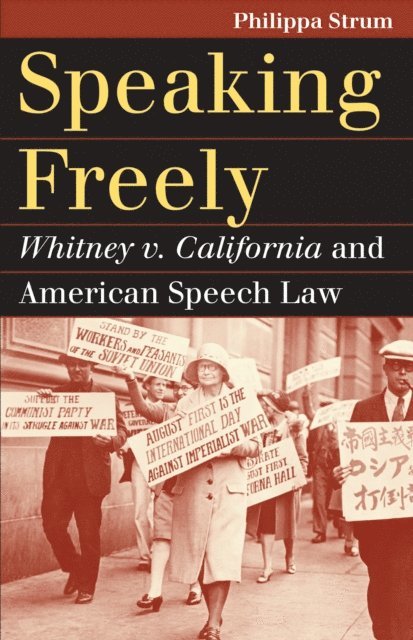
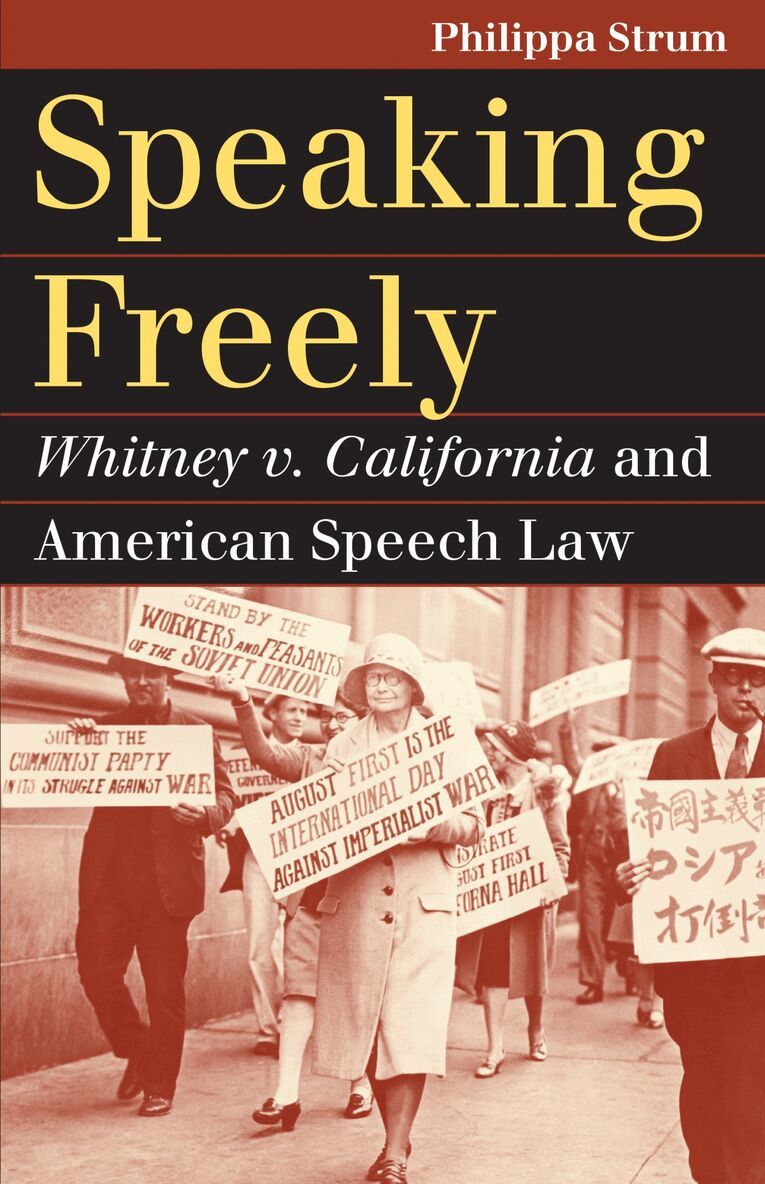
Anita Whitney was a child of wealth and privilege who became a vocal leftist, early in the twentieth century, became a vocal leftist, supporting radical labor groups such as the Wobblies and helping to organize the Communist Labor Party. In 1919 she was arrested and charged with violating California’s recently passed laws banning any speech or activity intended to change the American political and economic systems. The story of the Supreme Court case that grew out of Whitney’s conviction, told in full in this book, is also the story of how Americans came to enjoy the most liberal speech laws in the world. In clear and engaging language, noted legal scholar Philippa Strum traces the fateful interactions of Whitney, a descendant of Mayflower Pilgrims; Supreme Court Justice Louis D. Brandeis, a brilliant son of immigrants; the teeming immigrant neighborhoods and left wing labor politics of the early twentieth century; and the lessons some Harvard Law School professors took from World War I–era restrictions onspeech. Though the Supreme Court upheld Whitney’s conviction, it included an opinion by Justice Brandeis—joined by Justice Oliver Wendell Holmes, Jr.—that led to adecisive change in the way the Court understood First Amendment free speech protections. Speaking Freely takes us into the discussions behind this dramatic change, as Holmes, Brandeis, Judge Learned Hand, and Harvard Law professors Zechariah Chafee and Felix Frankfurter debate the extent of the First Amendment and the important role of free speech in a democratic society. In Brandeis’s opinion, we see this debate distilled in a statement of the value of free speech and the harm that its suppression does to a democracy, along with reflections on the importance of freedom from government control for the founders and the drafters of the First Amendment. Through Whitney v. California and its legacy, Speaking Freely shows how the American approach to speech, differing as it does that of every other country, reflects the nation’s unique history. Nothing less than a primer in the history of free speech rights in the US, the book offers a sobering and timely lesson as fear once more raises the specter of repression.
328 kr
Skickas inom 7-10 vardagar
Before she became the “Notorious R.B.G.” famous for her passionate dissents while serving as an associate justice of the United States Supreme Court, Ruth Bader Ginsburg made her most significant contributions as a lawyer who litigated cases on gender equality before the high court in the 1970s. Beginning with Reed v. Reed (1971)—for which Ginsburg wrote her first full Supreme Court brief, and which was the first time the Court held a sex-based classification to be unconstitutional—Ginsburg became known for her work on the issue of gender equality. For Ginsburg, this was not merely a matter of women’s rights, because inequality harms men as well. Several of the cases she argued concerned gender equality for men, beginning with Moritz v. Commissioner of Internal Review (1972). Ginsburg established the Women’s Rights Project at the ACLU in 1972 and coedited the first law school casebook on sex discrimination as a professor at Columbia Law School. During the rest of the decade, until President Carter appointed her for the US Court of Appeals in 1980, she litigated cases that further developed gender equality jurisprudence on the basis of the Equal Protection Clause and Title VII of the Civil Rights Act of 1964.Drawing on interviews with RBG herself and those who knew her, as well as extensive knowledge of the cases themselves, Philippa Strum has provided a legal history of Ginsburg's landmark litigation on behalf of women’s rights and gender equality. Those cases changed the meaning of the Fourteenth Amendment and, along with two Supreme Court cases of the 1980s and 1990s (Mississippi v. Hogan and U.S. v. Virginia), remain the foundation of constitutional gender jurisprudence today. On Account of Sex shows why RBG became the rock star of the legal world and gives readers an accessible guide to these widely forgotten but momentous decisions.